Warfarin Alcohol Risk Calculator
This tool estimates how alcohol consumption might affect your INR levels when taking warfarin. Based on medical research, one drink can affect your INR levels, especially if you have certain risk factors. Remember: even moderate drinking can increase your bleeding risk.
Estimated INR Increase
Based on your input, your INR may increase by approximately 0.0 points.
When you're on a blood thinner like warfarin, even a small change in your routine can have big consequences. One of the most common but often misunderstood risks comes from something many people think is harmless: alcohol. Drinking alcohol while taking warfarin doesn't just add a little extra risk-it can send your INR levels soaring, turning a routine drink into a potential emergency.
What Is INR, and Why Does It Matter?
INR stands for International Normalized Ratio. It’s a blood test that measures how long it takes your blood to clot. If you’re not on any blood thinner, your INR should be around 0.8 to 1.1. But if you’re taking warfarin, your doctor wants you to stay between 2.0 and 3.5, depending on your condition. For atrial fibrillation, that’s usually 2.0-3.0. For a mechanical heart valve, it might be 2.5-3.5. Go above 3.5, and your bleeding risk jumps. Above 9.0? That’s a medical red flag.Each 0.5-point increase above your target range means a 30-50% higher chance of bleeding. That’s not a small bump. That’s a steep climb. And alcohol? It’s one of the top three reasons people end up with INR levels above 9, along with older age and kidney problems.
How Alcohol Messes With Warfarin
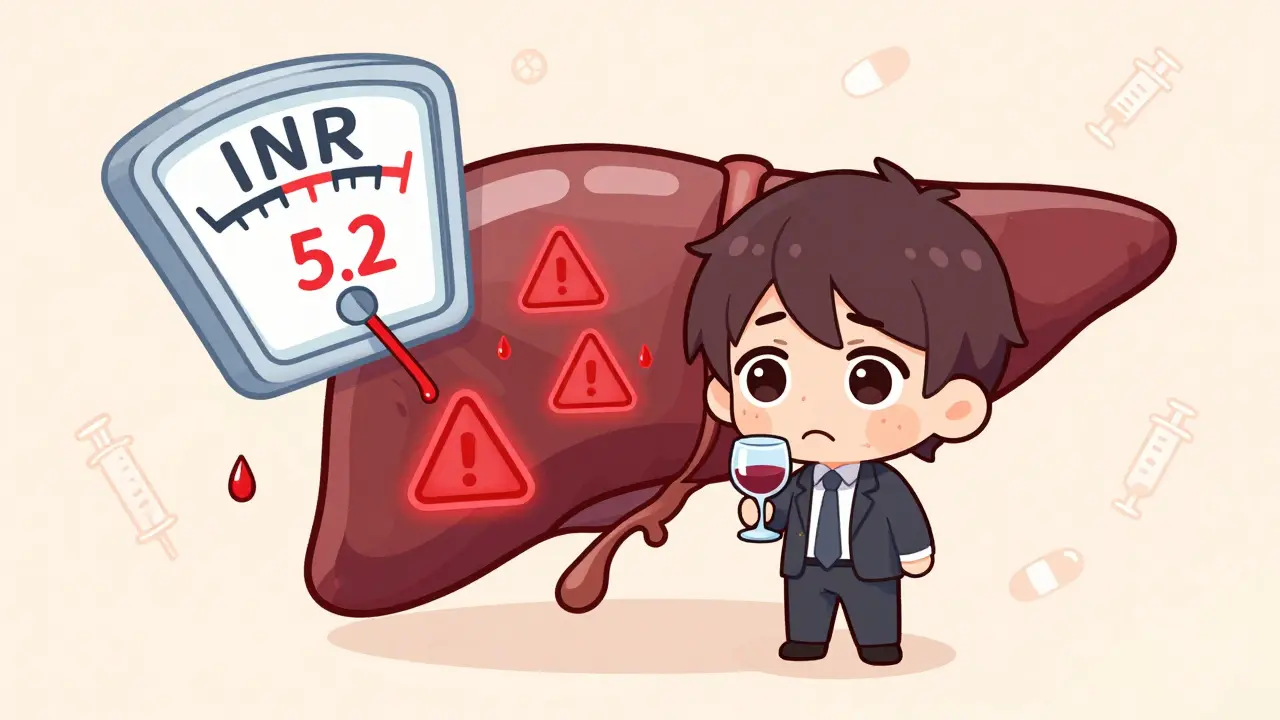
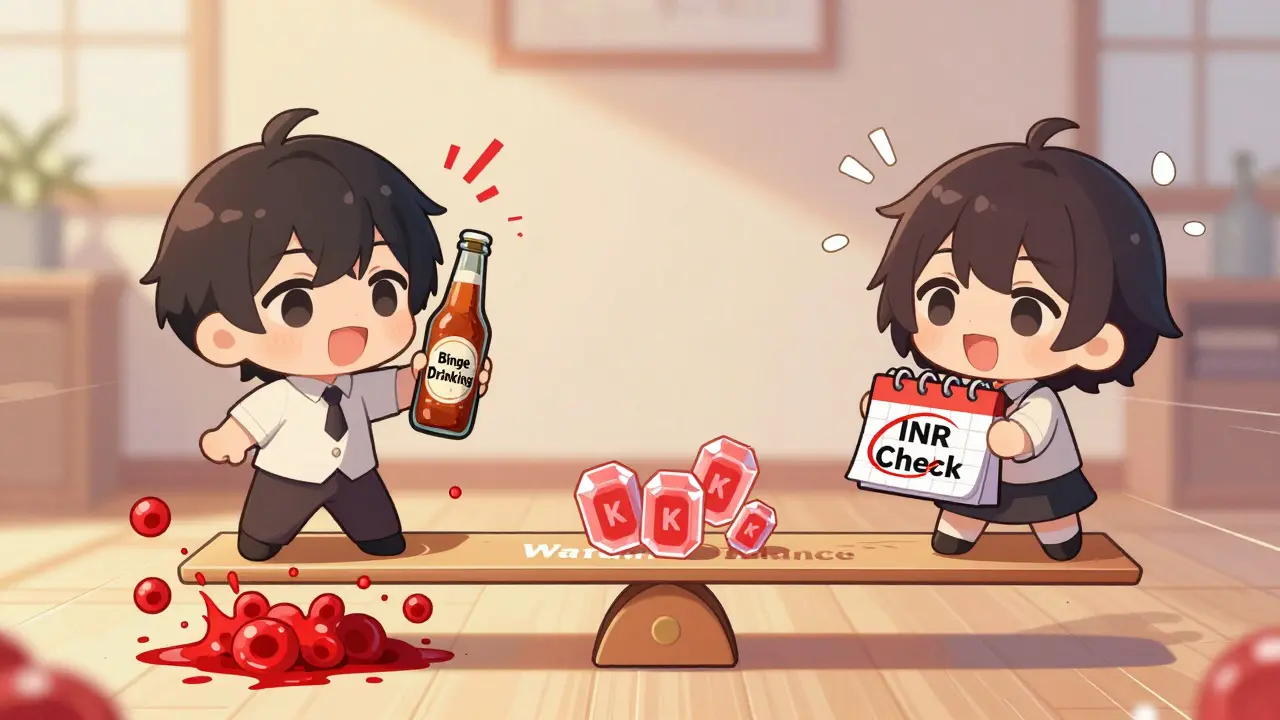
Warfarin doesn’t work the same way as newer blood thinners like apixaban or rivaroxaban. Those drugs have fewer interactions. Warfarin? It’s finicky. It’s broken down by your liver using enzymes called CYP2C9. Alcohol messes with those same enzymes. Sometimes it slows down warfarin’s breakdown, making it build up in your system. Other times, heavy drinking damages your liver, making it worse at processing the drug. The result? Unpredictable spikes in your INR.It’s not just about how much you drink-it’s about how you drink. Binge drinking-four or more drinks in one sitting-causes wild swings. A single night of heavy drinking can push your INR from 2.6 to 4.8 in 48 hours. That’s what happened to a 62-year-old man in the UK who had six pints of beer and ended up with gastrointestinal bleeding. His INR jumped from 2.8 to 5.2. He needed hospitalization.
Even moderate drinking can cause trouble. One Reddit user shared that after four glasses of wine over a weekend, their INR rose from 2.4 to 3.8. Their doctor said it was common. Another user reported needing a warfarin dose reduction after just two drinks a day for three days. These aren’t rare cases. Studies show 30-40% of people on warfarin drink alcohol regularly. And for many, it’s the reason their INR keeps drifting out of range.
Genetics Can Make It Worse
Not everyone reacts the same way. Your genes play a role. If you have certain variants of the CYP2C9 or VKORC1 genes, your body processes warfarin differently. People with CYP2C9*2 or *3 variants break down warfarin slower. Those with VKORC1 1173G>A are more sensitive to it. When you add alcohol to the mix, the effect multiplies. A 2015 NIH study found that people with these gene variants had a much higher risk of major bleeding when drinking alcohol-even at moderate levels. The difference wasn’t small. The statistical link was clear: p = 0.04. That means it’s not random. It’s biological.If you’ve been on warfarin for over a year and you drink regularly, your risk isn’t just theoretical. It’s real. And it’s not just about INR numbers. It’s about what happens when your blood can’t clot. Internal bleeding. Brain bleeds. Bleeding into your stomach or intestines. These aren’t just side effects-they’re life-threatening events.
What Counts as ‘Heavy’ Drinking?
There’s no safe amount of alcohol for everyone on warfarin. But there are guidelines that can help you reduce risk.The UK Chief Medical Officers recommend no more than 14 units of alcohol per week-spread over three or more days. That’s about six standard drinks: three pints of beer or two bottles of wine. For men, that’s the upper limit. For women, it’s the same. Medical News Today defines heavy drinking as more than 14 drinks per week for men or 7 for women. Binge drinking? That’s four or more drinks in two hours for women, five or more for men.
But here’s the catch: even if you stay under those limits, consistency matters more than quantity. Having one drink every day is less risky than saving all your drinks for Friday night. Why? Because your liver can adjust to steady alcohol use. But sudden spikes? They throw your INR off balance.
What Happens When INR Gets Too High?
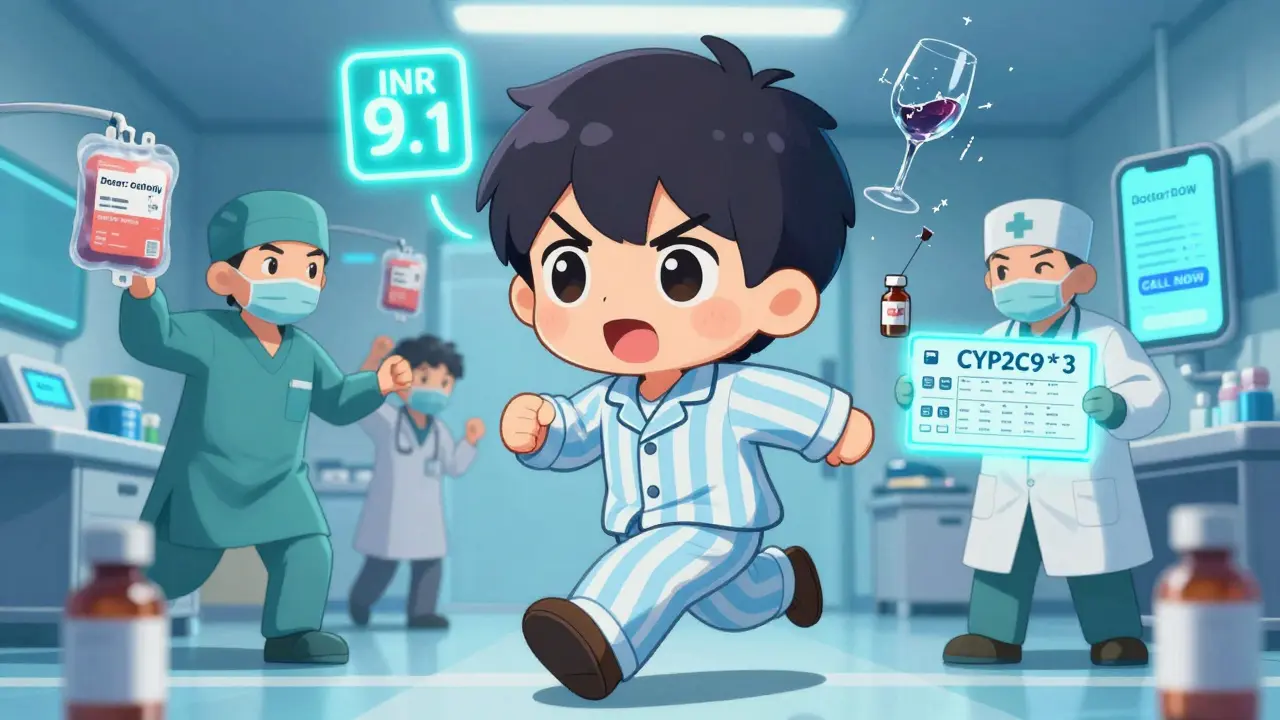
If your INR hits 5.0 or higher, your doctor will likely hold your next warfarin dose. But that’s not always enough. If your INR is above 9, you’re in danger. Studies show that 11% of outpatients with INR above 9 had bleeding. In the hospital? That number jumps to 35%. And 17% of those patients died.Standard treatments like vitamin K or stopping warfarin don’t always work fast enough. A 2012 study found that when INR was above 9, plasma infusion was the only treatment that brought it down quickly-within hours. Vitamin K took days. That’s why hospitals often use plasma for severe cases. It’s not just about stopping the drug. It’s about replacing the clotting factors your body can’t make.
And here’s something most people don’t realize: even if you’re not on warfarin, an INR above 9 is deadly. In people without anticoagulant therapy, 67% of those with INR above 9 bled, and 74% died. Alcohol doesn’t just make warfarin dangerous-it can cause life-threatening clotting failure on its own.
Signs You’re Bleeding (Don’t Wait)
If you’re on warfarin and drink alcohol, know the warning signs. Don’t wait for dizziness or fainting. Bleeding starts quietly:- Red or brown urine
- Tar-like or bright red stools
- Nosebleeds that won’t stop
- Bleeding gums when brushing your teeth
- Unusual bruising, especially without injury
- Heavier menstrual bleeding than normal
- Brown or bright red vomit
- Severe headaches, confusion, or weakness (possible brain bleed)
If you notice any of these, get medical help immediately. Don’t call your doctor tomorrow. Go to the ER. An INR of 8 or higher can kill you before the next day.
Warfarin vs. Newer Blood Thinners
You might be wondering: should I switch to a newer drug like apixaban or dabigatran? They don’t need INR checks. They have fewer food and drug interactions. And they’re not affected by alcohol the same way warfarin is.But here’s the catch: they’re not always an option. They cost more. Insurance doesn’t always cover them. And if you have a mechanical heart valve, you can’t use them at all. Warfarin is still the only choice for many people.
Even if you’re on a DOAC, alcohol isn’t risk-free. Heavy drinking can still raise your bleeding risk. But the danger isn’t as sharp or sudden. There’s no INR spike to warn you. That’s why some doctors say DOACs are safer for people who drink occasionally. But if you drink heavily, even DOACs aren’t a free pass.
What Should You Do?
If you’re on warfarin:- Stick to no more than 14 units of alcohol per week, spread out over several days.
- Avoid binge drinking at all costs. Even one night of heavy drinking can trigger a dangerous INR rise.
- Tell your doctor if you drink-even if you think it’s “just a glass of wine.”
- Get your INR checked more often if you’ve had alcohol recently.
- Consider genetic testing if you’ve had unexplained INR spikes or bleeding episodes.
- Ask about switching to a DOAC if you drink regularly and your condition allows it.
If you’re not on warfarin but drink heavily and have liver disease, heart problems, or a history of clotting issues, talk to your doctor. Alcohol alone can cause coagulopathy. You don’t need to be on a blood thinner to be at risk.
What’s New in 2025?
In 2023, the FDA approved andexanet alfa as a reversal agent for factor Xa inhibitors like apixaban. But warfarin still relies on plasma or vitamin K. There’s no quick fix for warfarin overdose.Telemedicine programs now offer specialized warfarin management, including alcohol counseling. One study showed a 25% drop in INR-related emergencies when patients got regular coaching on drinking habits. That’s not just helpful-it’s life-saving.
The message is clear: alcohol and warfarin don’t mix safely. It’s not about being perfect. It’s about being smart. One drink might be fine. Two drinks might be okay. But if you’re drinking to forget, to cope, or to celebrate with abandon-you’re playing Russian roulette with your blood.
Can I have one glass of wine while taking warfarin?
Yes, one glass of wine is usually okay if you drink it consistently and don’t binge. But even one drink can affect your INR, especially if you’re genetically sensitive or have liver issues. Always tell your doctor about any alcohol use and get your INR checked regularly.
Does beer affect warfarin differently than wine or spirits?
No, the type of alcohol doesn’t matter-it’s the amount and pattern that count. One pint of beer, one glass of wine, and one shot of whiskey all contain about the same amount of alcohol. What matters is whether you drink it slowly over the week or all at once. Binge drinking any kind of alcohol is dangerous.
What should I do if I drank too much and my INR is high?
Call your doctor or go to the ER immediately. Do not wait. If your INR is above 5.0, you may need to skip your next warfarin dose. If it’s above 9.0, you may need plasma to reverse the effect. Vitamin K takes too long to work in emergencies. Time matters.
Can alcohol cause bleeding even if I’m not on blood thinners?
Yes. Heavy, long-term alcohol use damages your liver, which makes it harder to produce clotting factors. People with alcohol-related liver disease can have dangerously high INR levels-even without taking warfarin. Studies show that 74% of people with INR above 9 and no anticoagulants died from bleeding complications.
Should I stop drinking alcohol completely if I’m on warfarin?
You don’t have to quit entirely, but you must be extremely careful. For most people, limiting alcohol to 14 units per week, spread out, is the safest approach. If you have a history of bleeding, liver disease, or genetic risk factors, your doctor may advise complete abstinence. The goal isn’t perfection-it’s control.
Do newer blood thinners like Eliquis or Xarelto interact with alcohol?
They don’t affect INR, but alcohol still increases bleeding risk. Heavy drinking can cause stomach bleeding or brain hemorrhages even on DOACs. The risk is lower than with warfarin, but it’s not zero. If you drink heavily, DOACs are safer-but not safe.
12 Comments
Hannah Taylor
i swear the gov't knows alcohol messes with warfarin but lets pharma push it anyway... they dont want you healthy they want you dependent on tests and meds. my uncle died from a bleed after 2 beers. they called it 'unexplained' lol. #bigpharma
Cara C
this is such an important post. i was on warfarin for afib and drank wine every night without thinking. my INR went to 5.1 and i ended up in the ER. i stopped completely for 6 months and now i have one glass on weekends. it's not worth the scare.
Grace Rehman
so we're supposed to believe that alcohol is the enemy because it messes with enzymes but sugar and processed food dont mess with anything right? we live in a world where the only sin is a glass of wine but a bag of chips is fine. ironic much? also my liver is fine thanks
Orlando Marquez Jr
The physiological interaction between ethanol and CYP2C9-mediated warfarin metabolism is well-documented in peer-reviewed literature. The variability in INR response is further modulated by genetic polymorphisms in VKORC1 and CYP2C9, as elucidated by the FDA's pharmacogenomic guidelines published in 2021. Consistent alcohol consumption, even at low doses, introduces pharmacokinetic instability that compromises therapeutic efficacy.
Jackie Be
OMG I JUST REALIZED I DRANK 3 GLASSES OF WINE LAST WEEK AND MY INR WAS 4.2 THE NEXT DAY I'M SO SCARED I'M GONNA DIE IN MY SLEEP PLEASE SOMEONE TELL ME I'M NOT ALONE
John Hay
You're not alone. I've been on warfarin for 8 years. I don't drink. Not because I'm scared. Because I respect the drug. One drink can kill you. That's not an opinion. It's science. Don't gamble with your life.
Jon Paramore
CYP2C9*3 carriers exhibit 70% reduced enzyme activity. Ethanol competitively inhibits CYP2C9, increasing S-warfarin half-life. Add in hepatic steatosis from chronic use? INR spikes >9 are inevitable. Genetic testing + alcohol abstinence = 92% reduction in major bleeds (JAMA 2022). Stop guessing. Get tested.
Swapneel Mehta
I'm from India and we have a lot of people on warfarin here. Most think alcohol is fine if it's 'just one drink'. But the real issue is consistency. In our villages, people drink heavily on weekends and then skip their INR check. That's when things go wrong. Small, steady habits save lives.
Stacey Smith
Americans are weak. We turn everything into a crisis. One glass of wine? Big deal. If you can't handle a little alcohol, maybe you shouldn't be on warfarin. Stop being so paranoid.
Ben Warren
The normalization of alcohol consumption in the context of anticoagulant therapy represents a profound societal failure of medical education and public health policy. The conflation of social habit with medical safety is not merely irresponsible-it is ethically indefensible. Patients who engage in even moderate alcohol use while on warfarin demonstrate a fundamental disregard for the biological fragility of their coagulopathic state. The data are unequivocal: any alcohol intake increases bleeding risk exponentially. To suggest otherwise is not only medically unsound, it is morally negligent.
Teya Derksen Friesen
I appreciate the thoroughness of this post. As a pharmacist, I counsel patients daily on this exact issue. The most common mistake? Assuming that because their INR was fine last week, it will be fine this week-even with alcohol. The liver doesn't remember. It responds to each exposure. Consistency isn't a suggestion. It's survival.
Sandy Crux
Actually, the entire premise is flawed. The INR is a flawed metric-it was developed in the 1950s, based on outdated thromboplastin reagents. Modern DOACs don't require monitoring precisely because INR is unreliable. Why are we still clinging to this archaic system? And why does no one mention that alcohol-induced INR elevation is often transient and self-correcting? This post reads like fearmongering disguised as science.