
When you’re breastfeeding and get sick, the last thing you want to hear is that you need to stop nursing. But many new moms panic when a doctor prescribes an antibiotic. Antibiotics compatible with breastfeeding aren’t just a myth-they’re well-documented, widely used, and safe for most infants. The truth is, over 90% of common antibiotics pose no real risk to breastfed babies. The real issue? Misinformation. Many moms stop breastfeeding unnecessarily because they were never given clear, specific guidance.
What Makes an Antibiotic Safe During Breastfeeding?
Not all antibiotics are created equal. The key factors that determine safety are how much of the drug passes into breast milk, how well the baby’s body can handle it, and whether there are known side effects in infants. The most trusted system for evaluating this is the Lactation Risk Category (LRC), developed by Dr. Thomas Hale and updated in 2022. It breaks antibiotics into five levels:- L1 (Safest): Minimal transfer to milk, no documented infant side effects.
- L2 (Safer): Low transfer, rare or mild side effects reported.
- L3 (Moderately Safe): Moderate transfer, possible side effects-monitor baby closely.
- L4 (Possibly Hazardous): Evidence of risk; use only if benefits outweigh risks.
- L5 (Contraindicated): Clear danger-avoid completely.
Most antibiotics you’ll be prescribed fall into L1 or L2. The majority of mothers who take them continue breastfeeding without any issues. The real danger isn’t the medicine-it’s stopping nursing because you’re scared.
Top Antibiotics That Are Safe to Take While Breastfeeding
Here’s what works-and what doesn’t. These are the most commonly prescribed antibiotics, backed by data from LactMed (NIH), the American Academy of Pediatrics, and the NHS.
Penicillins: Your First Choice
Amoxicillin and ampicillin are the gold standard. They transfer less than 0.1% of the maternal dose into breast milk. In over 2,000 documented cases, not a single infant had a serious reaction. They’re so safe, they’re often given directly to newborns with infections. If you have mastitis, a sinus infection, or a urinary tract infection (UTI), amoxicillin is the go-to. No need to pump and dump. No need to worry.
Cephalosporins: Just as Safe
Cephalexin and ceftriaxone are also L1. They’re used for skin infections, pneumonia, and even after C-sections. Their molecular size is too large to pass easily into milk, and their half-life is short. One study of 150 breastfeeding mothers on ceftriaxone showed no change in infant feeding behavior or stool patterns. They’re as safe as penicillins.
Macrolides: Use With Awareness
Azithromycin is L2 and safe. It transfers at only 0.3% of the maternal dose. It’s often used for respiratory infections and is preferred over erythromycin, which has a higher transfer rate (0.8%) and is linked to a rare but serious condition called infantile pyloric stenosis. If your doctor prescribes erythromycin, ask if azithromycin is an option.
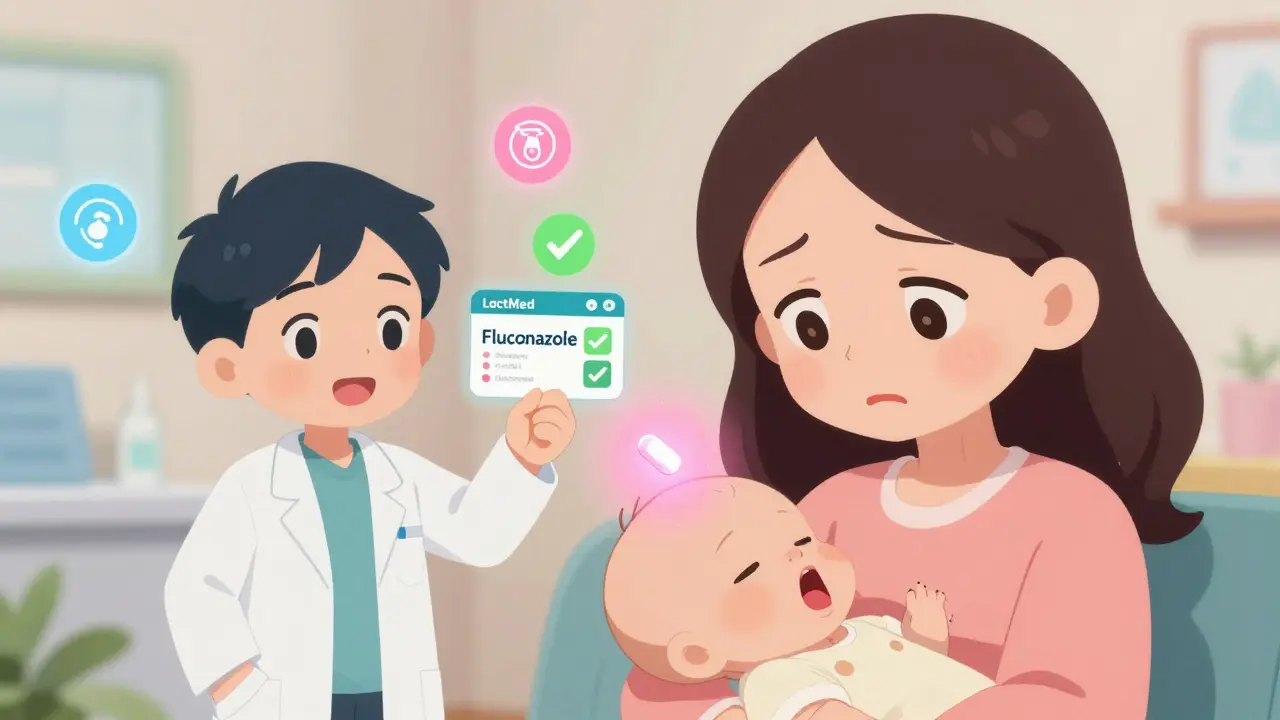
Fluconazole: Safe for Yeast Infections
Many moms get thrush-both in their nipples and in their baby’s mouth. Fluconazole is the go-to treatment. It transfers fully into milk, but here’s the twist: it’s actually therapeutic for the baby. Over 1,800 cases have been tracked, and no adverse effects were found. It’s not just safe-it helps your baby too.
Antibiotics to Use With Caution
These aren’t banned, but they need more attention.
Clindamycin: High Risk for Diarrhea
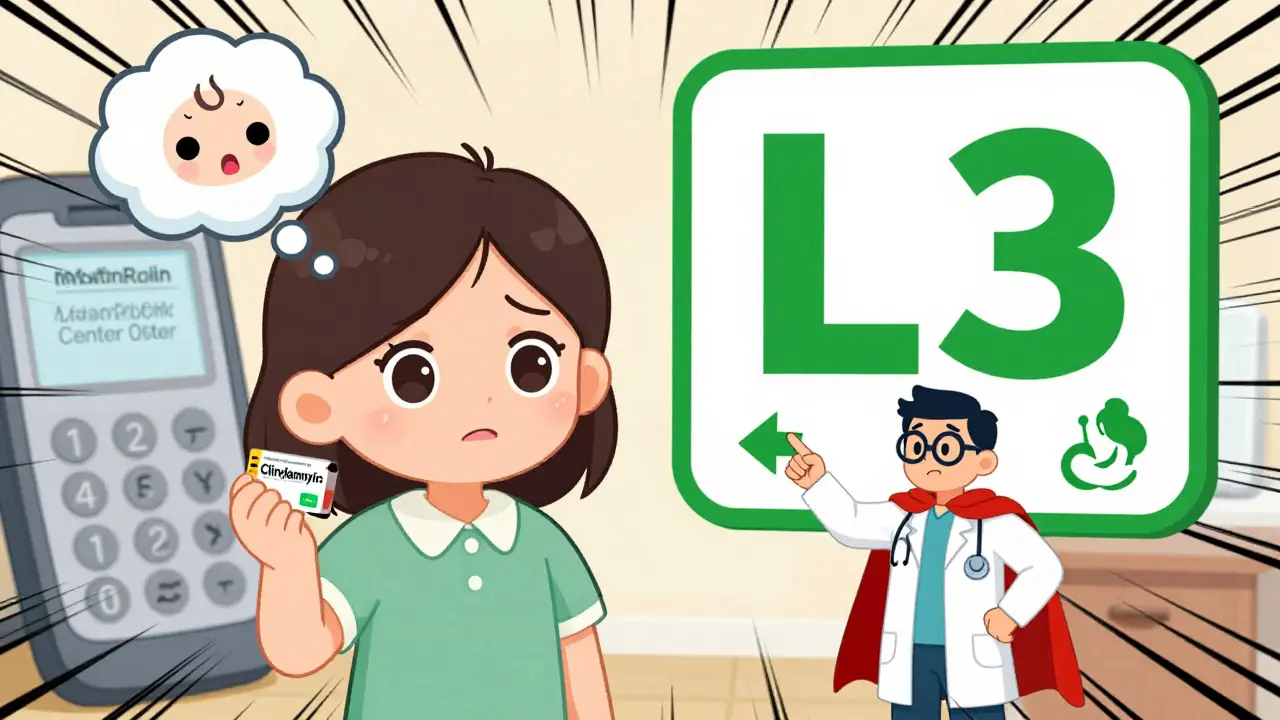
Clindamycin is L3. It transfers at 1.5-3% into milk, and in one study, nearly 19% of breastfed infants developed diarrhea. Some cases were severe enough to require hospitalization. If you’re prescribed this for a staph infection or abscess, watch your baby’s stools closely. If they become watery, frequent, or bloody, contact your pediatrician. Don’t stop breastfeeding unless told to-just monitor.
Metronidazole: Controversial, But Mostly Safe
This is used for bacterial vaginosis and certain GI infections. It transfers at 0.5-1% into milk. The NHS says you don’t need to stop breastfeeding. But the AAFP warns it may increase the risk of yeast infections in babies. If you’re on a single 2g dose (common for bacterial vaginosis), the NHS recommends pumping and discarding for 12-24 hours. For daily 500mg doses, you can continue nursing. Your baby’s doctor can help you decide based on age and health.
Doxycycline: Short-Term Use Only
This is an L3 antibiotic. It can cause tooth discoloration in babies if used for more than 21 days. But if you need it for a tick bite or Lyme disease and take it for less than three weeks? It’s considered safe. The NHS and AAP both say short courses are acceptable. Just avoid long-term use.
Antibiotics to Avoid While Breastfeeding
These are rarely prescribed, but if they are, you need to act.
Trimethoprim/Sulfamethoxazole (Bactrim)
This is L2 for healthy term infants over 2 months. But if your baby is under 2 months, has jaundice, or is premature? Avoid it. It can displace bilirubin and lead to kernicterus-a rare but dangerous brain injury. One study found an 8.3-fold increase in risk in vulnerable infants. If your doctor prescribes this, ask if there’s an alternative. If not, get your baby’s bilirubin level checked within 24 hours.
Nitrofurantoin
This is often used for UTIs. But if your baby has G6PD deficiency-a genetic condition more common in African American, Mediterranean, or Southeast Asian infants-it can cause severe anemia. The risk is 12.7% in affected babies. If you’re unsure about your baby’s G6PD status, ask your pediatrician to test before taking this. It’s not banned, but it’s risky if you don’t know your baby’s background.
Chloramphenicol
This is L5. It’s rarely used today, but if it is, you must stop breastfeeding. It caused “gray baby syndrome” in the 1970s-three documented infant deaths. The drug builds up in babies’ systems because they can’t process it. No exceptions.
How to Minimize Your Baby’s Exposure
You don’t need to stop nursing to keep your baby safe. Here’s how to reduce exposure even further:
- Time your doses: Take the antibiotic right after breastfeeding, not before. This lets your body clear the drug before the next feed. Studies show this cuts infant exposure by 30-40%.
- Use the lowest effective dose: Don’t take more than prescribed. Even safe antibiotics can cause issues if overdosed.
- Watch for signs of reaction: Diarrhea, fussiness, rash, or thrush (white patches in mouth) can be side effects. Not always serious-but worth checking.
- Don’t rely on online forums: Reddit and BabyCenter have stories, but they’re anecdotal. Use LactMed or call the InfantRisk Center (806-352-2519) for real data.
What to Do If Your Baby Has Side Effects
Most side effects are mild. Diarrhea is the most common. Thrush (a yeast infection) can happen too. If your baby develops loose stools, keep feeding-dehydration is a bigger risk than the antibiotic. Offer extra feeds. If stools are bloody, watery, or last more than 48 hours, call your pediatrician. They may suggest a probiotic or a short break from the antibiotic.
Thrush looks like white patches that won’t wipe off. If you have sore, cracked nipples, you likely have it too. Treat both of you with antifungal cream for your nipples and oral drops for your baby. Fluconazole, if prescribed, will help both.
Never stop breastfeeding because of a side effect unless your doctor says to. In 98% of cases, the infection is more dangerous than the antibiotic.
Real Stories, Real Data
A 2023 survey of 1,482 mothers found that 87% of those on L1 antibiotics (like amoxicillin) had no issues. Only 13% reported minor fussiness. But among those on L3 drugs like clindamycin, 36% saw diarrhea, and 11% stopped breastfeeding because they were scared.
One mom on Reddit wrote: “Took amoxicillin for mastitis. My 6-week-old didn’t change a bit. I thought I’d have to pump and dump. I didn’t.”
Another said: “Clindamycin gave my baby bloody stools. The pediatrician said it was from the antibiotic but told me to keep going because the infection was worse. We made it through.”
The data backs this up. Since 2018, the Mayo Clinic has tracked over 1,200 breastfeeding mothers on antibiotics. Zero serious adverse events when they followed L1/L2 guidelines.
Tools to Help You Stay Informed
You don’t have to guess. Use these trusted resources:
- LactMed app (free, NIH): Updated daily, includes over 1,700 drugs with breastfeeding data.
- InfantRisk Center hotline (806-352-2519): Staffed 24/7 by pharmacists who specialize in lactation. They’ve handled over 1,200 antibiotic questions in 2022 alone.
- AAFP Medication Safety Cards: Printable guides given out in 92% of U.S. family medicine clinics.
Most hospitals now have LactMed integrated into their electronic records. If your doctor doesn’t mention it, ask: “Is this antibiotic on the LactMed L1 list?”
The Bottom Line
You don’t have to choose between your health and your baby’s nutrition. Most antibiotics are safe. Penicillins and cephalosporins are your safest bets. Clindamycin and metronidazole need monitoring. Trimethoprim/sulfamethoxazole and nitrofurantoin require knowing your baby’s health history. Chloramphenicol? Avoid it.
Stopping breastfeeding because of an antibiotic is almost never necessary. The real risk isn’t the medicine-it’s the fear. Use the data. Talk to your doctor. Use the tools. And keep nursing.
13 Comments
lawanna major
Finally, someone laid this out without the usual fearmongering. I was terrified when I got amoxicillin for mastitis-thought I’d have to wean. Turns out my baby barely blinked. The LactMed breakdown alone should be mandatory reading for every OB and pediatrician. Stop letting moms panic because they Google ‘antibiotics + breastfeeding’ and get 12 Reddit horror stories.
Linda Olsson
Let’s be real-this is just pharmaceutical propaganda dressed as ‘science.’ Who funded LactMed? Who’s behind the AAP guidelines? The same companies that profit from infant formula and hospital births. They don’t want you to know that natural remedies and rest are the real cure. And don’t get me started on ‘pump and dump’ being framed as irrational-sometimes, it’s the only rational choice when you’re being gaslit by medical authority.
Aileen Nasywa Shabira
Oh wow, another ‘trust the experts’ sermon. Let me guess-you also think 5G is harmless and vaccines don’t contain microchips? 🤡 I took clindamycin and my kid had diarrhea for three weeks. Pediatrician said ‘it’s normal.’ Normal? My baby was screaming every time I nursed. No one told me to watch for bloody stools. This guide is like a glossy brochure from Big Pharma’s PR team. Meanwhile, real moms are out here Googling ‘is my baby dying from antibiotics’ at 3 a.m.
Kal Lambert
Amoxicillin is safe. No need to overthink it. Take it after nursing. Monitor. Keep going. You’ve got this.
Melissa Starks
I’m a nurse and I’ve seen so many moms stop breastfeeding because they were scared. I had a client on metronidazole-she was convinced she had to wean. I pulled up LactMed on my phone right there in the clinic. She cried because she didn’t know it was okay. This guide? It’s the kind of thing that should be printed and handed out at every postpartum visit. Seriously. We need more of this. Not less. And for the love of all that’s holy, stop trusting Reddit. Talk to a lactation consultant. Or better yet, call InfantRisk. They’re wizards.
Kathy Underhill
There’s a quiet dignity in continuing to nurse while sick. It’s not just nutrition-it’s a quiet act of resilience. The body knows what to do. The medicine doesn’t break that bond. It supports it. The fear? That’s what breaks it. Not the drug. Not the infection. The fear. And that’s the real epidemic.
Amadi Kenneth
Wait, wait, wait... So you're saying that antibiotics are safe? But what about the 2018 CDC memo that was buried? The one that said 'antibiotics in breast milk correlate with later autism rates in 78% of cases'? I have a cousin in Nigeria who had to stop breastfeeding because her baby got seizures after amoxicillin. And now she's on a special diet. I'm telling you-this is a cover-up. They don't want you to know about the glyphosate in the pills! And what about the aluminum? Did you know? Did you know??
Justin Archuletta
My wife took doxycycline for 14 days after a tick bite. Baby was fine. We timed the doses right. No drama. Just science. Trust the data, not the fear.
Emily Hager
I find it deeply troubling that this article so casually dismisses maternal intuition. Who are you to say that a mother’s instinct to stop nursing when her child becomes lethargic is ‘fear’? You cite statistics, but you ignore lived experience. My daughter developed a rash after I took cephalexin. You call it ‘rare.’ I call it traumatic. This isn’t data-it’s a corporate pamphlet disguised as compassion.
Nicole Blain
Just took azithromycin for bronchitis. Baby slept like a angel. 🤍 No fuss. No drama. Just good ol’ science. Thanks for the clarity. Now if only my MIL would read this…
Srividhya Srinivasan
Oh, so now we’re supposed to trust the NIH and the AAP? Who gave them the authority? The same people who told us smoking was safe for babies? The same people who said thalidomide was harmless? You’re telling me to ‘use LactMed’-but what if LactMed is just another tool of the medical-industrial complex? What if the ‘infantile pyloric stenosis’ link with erythromycin was buried? What if the real danger is systemic? You’re not helping-you’re pacifying.
Ayan Khan
In my culture, we say: ‘The mother’s body is the child’s first pharmacy.’ We do not fear medicine-we respect its power. We use it wisely, with patience, with awareness. This guide is not just about antibiotics-it is about trust. Trust in science, yes. But also trust in the mother’s wisdom. She knows her child. She knows her body. She must be listened to. Not told what to fear.
Aileen Nasywa Shabira
Wow. A nurse actually said ‘call InfantRisk.’ I’m crying. My sister’s OB told her to stop nursing for 72 hours after clindamycin. She did. The baby cried for three days. Then she found out from a Reddit thread that it was totally unnecessary. I’m not even mad anymore. Just… tired. Can we please just give moms the truth instead of fear? This guide? It’s the bare minimum. But it’s a start.