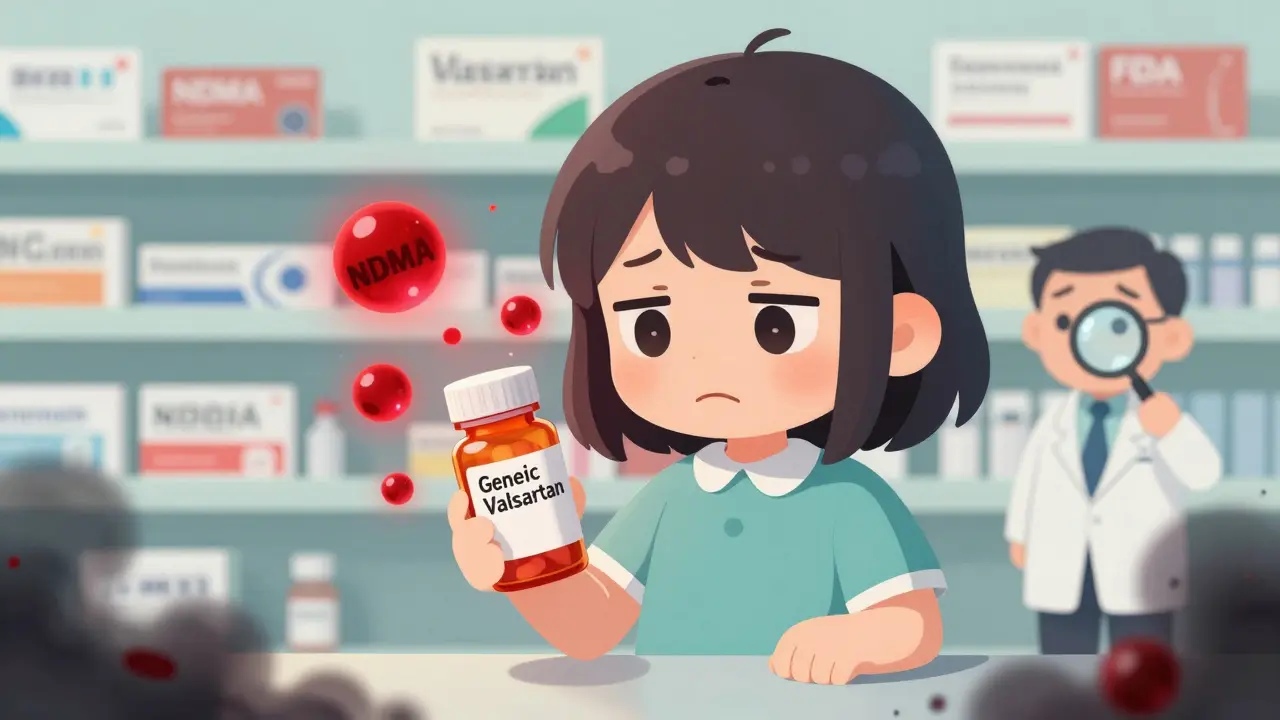
Every day, millions of people in the U.S. take generic drugs. They’re cheaper, widely available, and often just as effective as brand-name medications. But behind the low price tag, a hidden risk has been growing for years: contamination. In recent years, generic drugs have been linked to dangerous impurities-some cancer-causing, others life-threatening-that slipped through quality controls and ended up in medicine bottles across the country.
What’s Going Wrong in Generic Drug Manufacturing?
Generic drugs aren’t made in the same way as brand-name ones. Under the Hatch-Waxman Act of 1984, manufacturers don’t need to repeat expensive clinical trials. Instead, they only need to prove their version is bioequivalent-meaning it delivers the same active ingredient at the same rate and amount. That sounds efficient. But it also means less oversight of how the drug is actually made. The problem? Many generic drugs are produced overseas. About 80% of the active ingredients in U.S. generics come from China. India makes 40% of the finished pills and capsules sold here. These countries have thousands of manufacturing plants, but the FDA inspects fewer than 13% of them each year. With over 28,000 foreign facilities needing review and only 1,200 inspections funded in 2025, it’s no surprise mistakes slip through. And when mistakes happen, they’re not small. Contaminants like NDMA, benzene, and unapproved chemicals have been found in drugs meant to treat high blood pressure, cancer, asthma, and chronic pain. These aren’t random errors-they’re often the result of cost-cutting, poor training, or even deliberate cover-ups.Recent Cases: The Real Dangers
One of the worst contamination scandals involved valsartan, a blood pressure drug. Between 2018 and 2025, multiple batches were found to contain NDMA, a known carcinogen. At its worst, some pills had 200 times the FDA’s safe limit-96 nanograms per day. The source? A Chinese manufacturer, Zhejiang Huahai Pharmaceutical, changed their production process to save money. They added sodium nitrite, which reacted with another chemical to form NDMA. They didn’t test for it. They didn’t tell anyone. Patients who took these pills for years saw cancer rates jump. One study found colorectal cancer occurred in 27 out of every 100,000 exposed patients-nearly seven times higher than in the general population. Over 1,300 lawsuits have been filed, with victims claiming they were never warned. Then there’s Mucinex, a common cold and flu medicine sold at Walgreens. Independent testing found benzene in some batches-up to 4.7 parts per million. The FDA’s limit is 2 ppm. Benzene is a known cause of leukemia. Two women who took the drug regularly for 18 months developed bone marrow damage consistent with long-term benzene exposure. Their lawsuit, filed in June 2025, is one of many. In oncology, the stakes are even higher. A 2025 investigation found 17 chemotherapy drugs from Indian manufacturers failed basic quality tests. Twelve of them contained less than 80% of the labeled active ingredient. The FDA’s acceptable range is 85-115%. Patients receiving these drugs saw treatment failure rates nearly triple-34% compared to 12% in those on verified brands. At Memorial Sloan Kettering, 7 out of 11 patients on contaminated cisplatin didn’t respond to treatment at all. And it’s not just chemicals. Fentanyl patches have been recalled over 52 million times since 2002 because of seal failures. In one 2023 case, 0.8% of Duragesic patches leaked more than 15% of their dose. That’s enough to kill someone who didn’t expect such a powerful opioid to be leaking through their skin.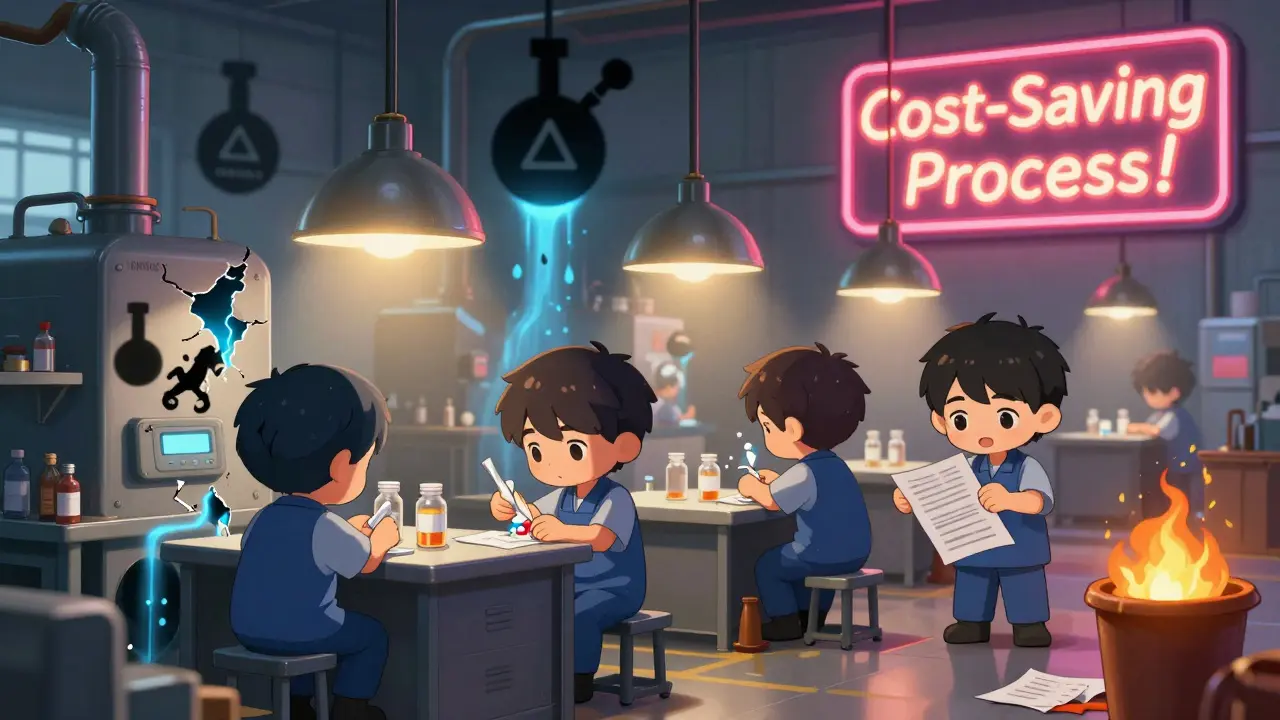
Why Do These Problems Keep Happening?
It’s not just bad actors. It’s a broken system. The FDA doesn’t have the resources to keep up. With only $78 million allocated for foreign inspections in 2025, they’re trying to cover 28,000 facilities. That’s less than $3,000 per plant per year. Many plants in India and China have no automated systems for monitoring quality. Workers hand-seal packages. Records are shredded. In one case, Intas Pharmaceuticals in Ahmedabad was caught burning quality documents after an inspection was announced. Transparency is another issue. The FDA has long redacted the names of drugs linked to contaminated factories in its inspection reports. ProPublica revealed this practice has been ongoing since at least 2008. So even if a doctor knows a plant has problems, they can’t tell which drugs came from it. Patients are left in the dark. Even when recalls happen, they’re often too late. The Valsartan recall didn’t start until 2018-even though internal documents showed ZHP knew about NDMA risks as early as 2012. By then, hundreds of thousands of people had already been exposed.What’s Being Done to Fix It?
There are signs of change. In April 2025, the FDA took a new step: they publicly named ZHP for document destruction. That’s rare. In June 2025, new rules under GDUFA III required real-time stability testing for high-risk drugs like chemotherapy and blood pressure meds. That means manufacturers can’t wait until the product is shipped to check if it’s safe-they have to monitor it during production. The FDA’s 2026-2030 plan includes AI tools to predict contamination risks and blockchain systems to track every pill from factory to pharmacy. That could help. But experts remain skeptical. Dr. Dinesh Thakur, a former pharma insider turned whistleblower, says: “Without real penalties, companies will keep cutting corners. They know the fines are cheaper than fixing the factory.” Some pharmacists are taking matters into their own hands. A 2025 survey found 68% check FDA recall lists weekly. Many now avoid generics from manufacturers with repeated violations. One pharmacist in Ohio told me: “I’ve seen three different batches of generic levothyroxine fail potency tests in six months. Patients’ TSH levels went wild until we switched back to brand. I won’t risk it anymore.”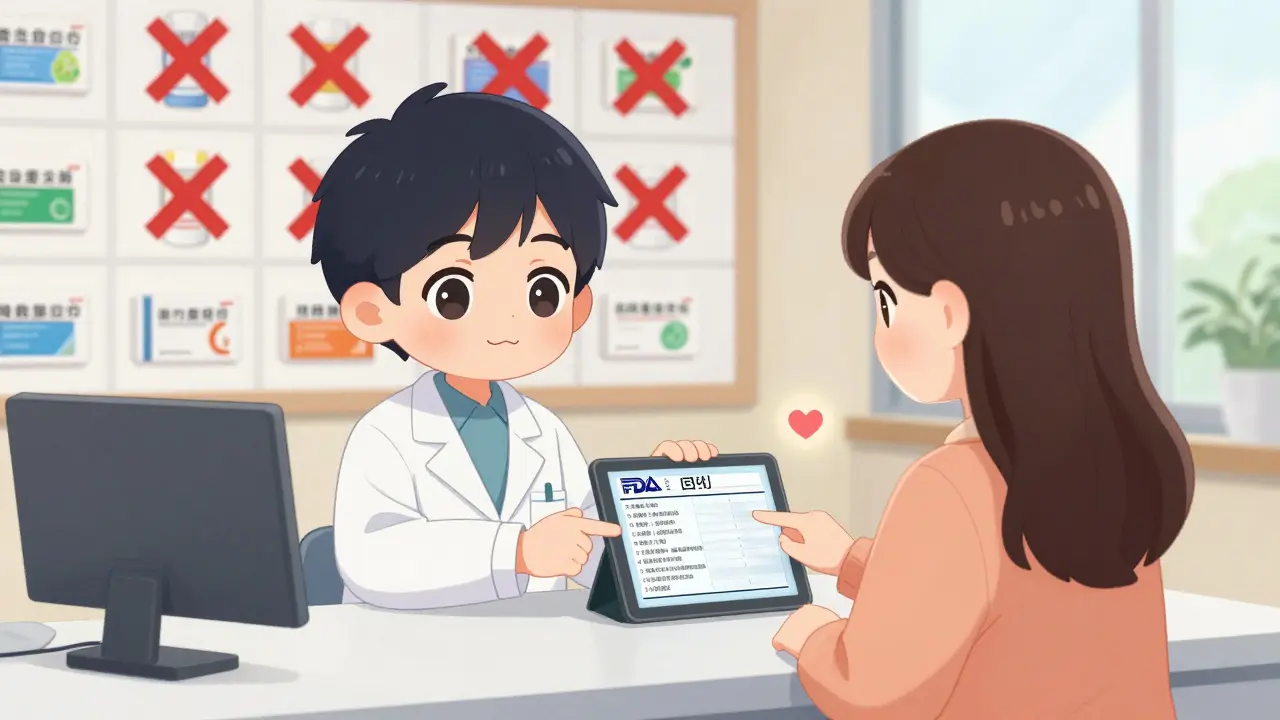
How to Protect Yourself
You don’t have to accept this risk. Here’s what you can do:- Check the FDA’s recall list monthly. Visit fda.gov/drugs/drug-safety-and-availability/drug-recalls and search by drug name.
- Ask your pharmacist where your generic drug is made. If they don’t know, ask them to check.
- Look up the manufacturer. If you see names like Zhejiang Huahai, Intas, or Zee Laboratories, be cautious. These companies have multiple FDA warning letters.
- Consider switching to brand-name if you’re on a critical medication-like thyroid hormone, chemotherapy, or blood thinners. The cost difference may be worth the safety.
- Report side effects. If you feel something’s off after starting a new generic, tell your doctor and file a report with MedWatch (fda.gov/medwatch).
The Bigger Picture
Generic drugs saved the U.S. healthcare system over $1.7 trillion in the last decade. That’s huge. But if we keep sacrificing safety for savings, those savings will come at a terrible cost: lives lost, cancers developed, treatments that fail. The system isn’t broken because of bad science. It’s broken because of bad incentives. Companies are rewarded for being cheap, not for being careful. Regulators are stretched too thin. Patients are treated like afterthoughts. Change is possible-but only if we demand it. Not just from the FDA, but from our doctors, our pharmacists, and our elected leaders. Because when you swallow a pill, you shouldn’t have to wonder if it’s safe. You should know.Are all generic drugs unsafe?
No. Most generic drugs are safe and effective. The vast majority of the 10,000+ approved generics on the market meet FDA standards. But recent cases show that contamination risks are real-and concentrated in specific manufacturers and drug classes. High-risk drugs include blood pressure meds (like valsartan), chemotherapy, and certain pain patches. Always check for recalls and know your manufacturer.
Can I trust generics made in India or China?
Some are, some aren’t. India produces 40% of U.S. generics, and China makes 80% of the active ingredients. But quality varies wildly. Companies like Zhejiang Huahai, Intas, and Zee Laboratories have been cited dozens of times for violations. Others have clean records. There’s no blanket rule. The key is to look up the specific manufacturer and check their FDA inspection history. If a company has multiple warning letters, avoid their products if you can.
What should I do if I’ve been taking a recalled generic drug?
Don’t stop your medication without talking to your doctor. For drugs like valsartan or levothyroxine, suddenly stopping can be dangerous. Instead, contact your pharmacist to get a replacement batch from a different manufacturer. Then, check if your drug was part of a recall by visiting fda.gov/drug-recalls. If you’ve been taking a contaminated drug for over a year and have unexplained symptoms-like fatigue, unusual bruising, or digestive issues-ask your doctor for blood tests. Early detection can save your life.
Why doesn’t the FDA shut down bad manufacturers?
The FDA can issue warning letters, block imports, or even sue-but shutting down a factory is rare. Many foreign plants are too big to replace quickly. If one Indian plant is closed, millions of patients could lose access to their meds overnight. The FDA often gives companies time to fix problems. But critics say this leniency lets bad actors keep operating. In the case of ZHP, the FDA waited six years after internal emails showed they knew about NDMA before taking serious action.
Is there a way to know which generics are safest?
Yes. The FDA’s Orange Book lists approved generics and their manufacturers. You can also check the FDA’s Inspection Reports database to see which companies have been cited for violations. Look for manufacturers with zero warning letters in the last five years. Also, some pharmacies now label generics by manufacturer. Ask your pharmacist to show you the label. If you’re on a critical drug, consider paying a little more for a brand-name version-especially if your generic comes from a company with a history of recalls.
12 Comments
BETH VON KAUFFMANN
Let’s be real-this isn’t about generic drugs being inherently dangerous. It’s about regulatory capture and the FDA’s chronic underfunding. The Hatch-Waxman Act was never meant to be a backdoor for offshore cost-cutting. We outsourced manufacturing to maximize profit margins, then pretended oversight wasn’t needed. Now we’re shocked when the system collapses under its own weight? The math is simple: $3,000 per facility annually to inspect 28,000 foreign plants? That’s not negligence-it’s institutional abandonment.
And don’t get me started on the redacted names. The FDA’s opacity isn’t bureaucratic inefficiency; it’s corporate protectionism. ProPublica’s findings aren’t anomalies-they’re policy. We’re not dealing with rogue manufacturers. We’re dealing with a system that incentivizes risk-taking because the penalties are laughably low.
Meanwhile, patients are left to play Russian roulette with their prescriptions. I’ve seen three different generic metformin batches with inconsistent bioavailability. My A1C went from 6.2 to 7.8 in six weeks. No one told me the manufacturer changed. No one even tracked it. That’s not healthcare. That’s negligence dressed up as cost-saving.
And yet, the same people who scream about ‘socialized medicine’ are the first to defend this corporate regulatory farce. It’s not socialism if the government’s not doing its job-it’s capitalism with a blindfold on.
Fix this? Fund inspections. Mandate real-time blockchain tracking. Name and shame manufacturers publicly. And stop pretending ‘bioequivalence’ means ‘safe.’ It doesn’t. Not anymore.
Also, the FDA’s AI and blockchain ‘plan’? Cute. Like putting a Band-Aid on a hemorrhage. Without teeth, it’s theater.
Raven C
One cannot help but observe, with profound dismay, the alarming degradation of pharmaceutical integrity in the United States-a nation that once prided itself on the sanctity of its medical standards. The notion that life-saving medications, often ingested by elderly, immunocompromised, or chronically ill individuals, are now subject to the capricious whims of underregulated, profit-driven manufacturing conglomerates in distant jurisdictions, is not merely a policy failure-it is a moral catastrophe.
The FDA’s inability-or perhaps, unwillingness-to enforce basic quality controls on over 28,000 foreign facilities, while allocating a paltry $78 million for inspections, constitutes a dereliction of duty of the highest order. One must ask: at what point does cost-efficiency become complicity in harm?
And yet, the public’s response remains astonishingly passive. People swallow these pills without question, as though the FDA were some infallible, omniscient guardian. It is not. It is a skeletal bureaucracy, starved of resources, and deliberately obstructed by industry lobbying. The fact that Zhejiang Huahai was allowed to continue operations for six years after internal emails revealed NDMA contamination is not incompetence-it is corruption.
Let us not be naive: this is not an accident. It is the logical outcome of deregulation, globalization, and the commodification of health. We have traded safety for savings, and now, we are paying in lives.
And for those who suggest switching to brand-name drugs? Please. The cost differential is often prohibitive for working-class families. This is not a ‘personal responsibility’ issue. It is a systemic one. And systemic problems require systemic solutions-not pamphlets on ‘checking FDA recall lists.’
Donna Packard
I just want to say thank you for writing this. I’ve been scared to talk about this with anyone because I didn’t want to sound paranoid. But I’ve been on generic levothyroxine for years, and my TSH levels have been all over the place since last fall. My pharmacist finally switched me to Synthroid after I asked-no one had ever told me to check the manufacturer.
It’s scary how little we’re told. But I’m so glad there are people out there who are pushing for transparency. I’m going to start checking the FDA site every month now. Small steps, right?
You’re not alone in this. I’m here, and I’m listening.
Patrick A. Ck. Trip
Thank you for this thorough and well-researched post. I’ve been a nurse for 22 years and have seen too many patients suffer from inconsistent generic meds. I’ve had three cases where patients on generic warfarin had INR spikes that led to hospitalization-all traced back to a single manufacturer change.
It’s not that generics are bad. It’s that the oversight is broken. I’ve started keeping a list of approved manufacturers for critical meds in my clinic. Patients appreciate it. I’ve even printed out a small card with the top 5 safe manufacturers for thyroid, blood thinners, and epilepsy meds.
And yes, the FDA needs more funding. But we can’t wait for them. We have to be proactive. Check your pills. Ask questions. Report side effects. Even if it feels like a drop in the ocean, it adds up.
Also, I’m sorry for the typos-I’m typing this on my phone between shifts.
Jessica Salgado
Okay, so I’m not a doctor, but I’ve been reading every single FDA recall notice since my dad had a stroke after taking a contaminated generic blood thinner. He didn’t even know it was recalled until the pharmacy called him six weeks later.
And now I’m obsessed. I’ve started a spreadsheet. Every generic I take, I look up the manufacturer. I screenshot the FDA inspection history. I print it out and keep it in my pill organizer. I know that sounds obsessive. But when your life depends on it, you don’t take chances.
I just wish I’d known this sooner. I wish someone had told me that ‘bioequivalent’ doesn’t mean ‘identical.’ I wish the FDA had been more honest. I wish the system didn’t treat patients like afterthoughts.
So now I’m here. I’m not silent anymore. And if this helps even one person check their meds? Worth it.
Michael Whitaker
Interesting that you blame China and India while ignoring the fact that the U.S. pharmaceutical industry itself has been outsourcing for decades. The same companies that make brand-name drugs also own the generic subsidiaries. The problem isn’t geography-it’s corporate consolidation. Pfizer, Novartis, Merck-they all have stakes in these factories. You’re blaming the factory worker while the boardroom laughs all the way to the bank.
And let’s be clear: the FDA isn’t powerless. It’s complicit. They’ve had the data for years. They’ve known about Zhejiang Huahai since 2012. Why wait until 2018 to act? Because the cost of a recall is less than the cost of enforcement.
Stop pretending this is a foreign problem. It’s an American problem. We created this system. We demanded cheaper drugs. Now we’re shocked when the cheapness comes with poison? Pathetic.
Naomi Lopez
Actually, the real issue isn’t contamination-it’s the myth that generics are ‘just as good.’ They’re not. Bioequivalence is a statistical average. It doesn’t mean your body gets the same dose every time. I’ve seen patients on generic SSRIs have mood swings so severe they lost jobs. The FDA’s 85–115% range? That’s a 30% swing in active ingredient. That’s not medicine. That’s gambling.
And yes, some generics are fine. But you can’t know which ones without a PhD in pharmacology and a subscription to the FDA’s obscure databases. That’s not accessibility. That’s exploitation.
Stop telling people to ‘check the label.’ Most patients can’t read the tiny print. Most pharmacists don’t even know the manufacturer’s history. This system is designed to fail the vulnerable.
Kent Peterson
So let me get this straight-because some Chinese factory made a bad pill, we’re supposed to scrap the entire generic drug system? That’s insane. We’ve saved trillions with generics. Now you want to go back to paying $500 for a blood pressure pill? Are you kidding me?
There are bad actors everywhere. You think brand-name drugs are pure? They’re just better at hiding it. The FDA inspects U.S. plants more often-but they still miss things. Ever heard of the 2018 ranitidine recall? That was a brand-name drug. Benzene. Same stuff. But nobody screamed about ‘American corruption.’
And why is it always ‘China bad’? Because it’s easier than blaming the FDA, Congress, or the insurance companies that force patients into generics. You’re not solving anything. You’re just fueling xenophobia with a side of fear-mongering.
Fix the regulators. Don’t punish the patients.
Josh Potter
Bro. I just found out my generic Adderall is from Zee Labs. I’ve been having heart palpitations for months. I thought it was stress. Turns out it’s the filler. I switched to brand and my anxiety dropped 80%.
DO NOT IGNORE THIS. I’m not a doctor, but I’m not dumb. If your meds feel ‘off,’ it’s not in your head. Check the manufacturer. Ask your pharmacist. Print out the FDA warning letters. I made a Reddit thread with a list. Link in bio.
Also, if you’re on chemo or thyroid meds? Pay the extra $10. Your life is worth it. I’m not joking. I almost died.
Victoria Rogers
Everyone’s acting like this is new. Newsflash: this has been going on since the 90s. The FDA has been warned. Congress has been lobbied. The problem isn’t ignorance. It’s willful inaction. And the people screaming about ‘Chinese contamination’ are the same ones who voted for politicians who slashed FDA funding and pushed for free trade deals that made inspections optional.
It’s not the factory workers. It’s the CEOs. It’s the lobbyists. It’s the voters who said ‘cheaper is better’ without asking what ‘better’ means.
Stop blaming the powerless. Start holding the powerful accountable. Or keep swallowing your pills and pretending you’re safe.
Jane Wei
I’ve been on generic metformin for 8 years. Never had an issue. My sugar’s perfect. Maybe the system’s not perfect, but most of it works. I don’t need to panic. I just take my pill, check the bottle once in a while, and trust that my pharmacist knows what they’re doing.
Not every generic is a bomb. Most are fine. Don’t scare people into overthinking their meds.
Kaylee Esdale
Hey. I’m a pharmacy tech. I’ve seen the inside of these factories-well, the paperwork. I’ve seen the handwritten logs, the torn boxes, the ‘expired’ samples that never got thrown out.
But I’ve also seen the good ones. The ones with clean floors, automated sealers, and techs who check every batch. They exist. They’re just harder to find.
So here’s my tip: ask for the ‘FDA-approved’ version. That’s the one with the manufacturer name printed on the bottle. If they say ‘it’s the same,’ ask again. If they don’t know? Find a new pharmacy.
And if you’re scared? Talk to someone. You’re not alone. We’re all just trying to stay alive.