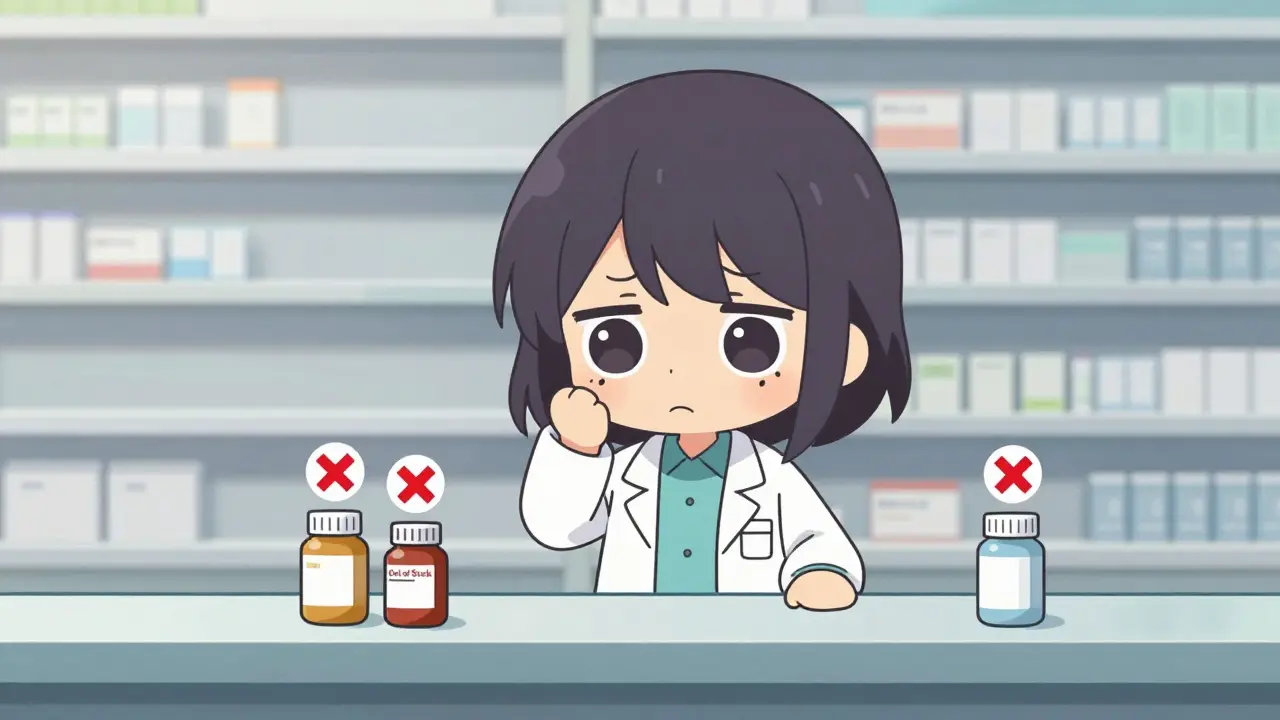
Shelves in your local pharmacy are looking emptier than they used to. You walk in for a standard prescription, maybe for antibiotics or heart medication, and the pharmacist shakes their head. "We’re out of stock," they say. "It might be weeks." This isn’t just bad luck; it is a symptom of a deep financial crisis hitting pharmaceutical manufacturers, specifically those making generic drugs.
The core problem is simple but brutal: many companies cannot make money on these essential medicines. When the price you can charge is lower than what it costs to run the factory, buy ingredients, and meet strict safety rules, production stops. This article breaks down exactly why this happens, how pricing pressure squeezes margins, and why fixing it is harder than just raising prices.
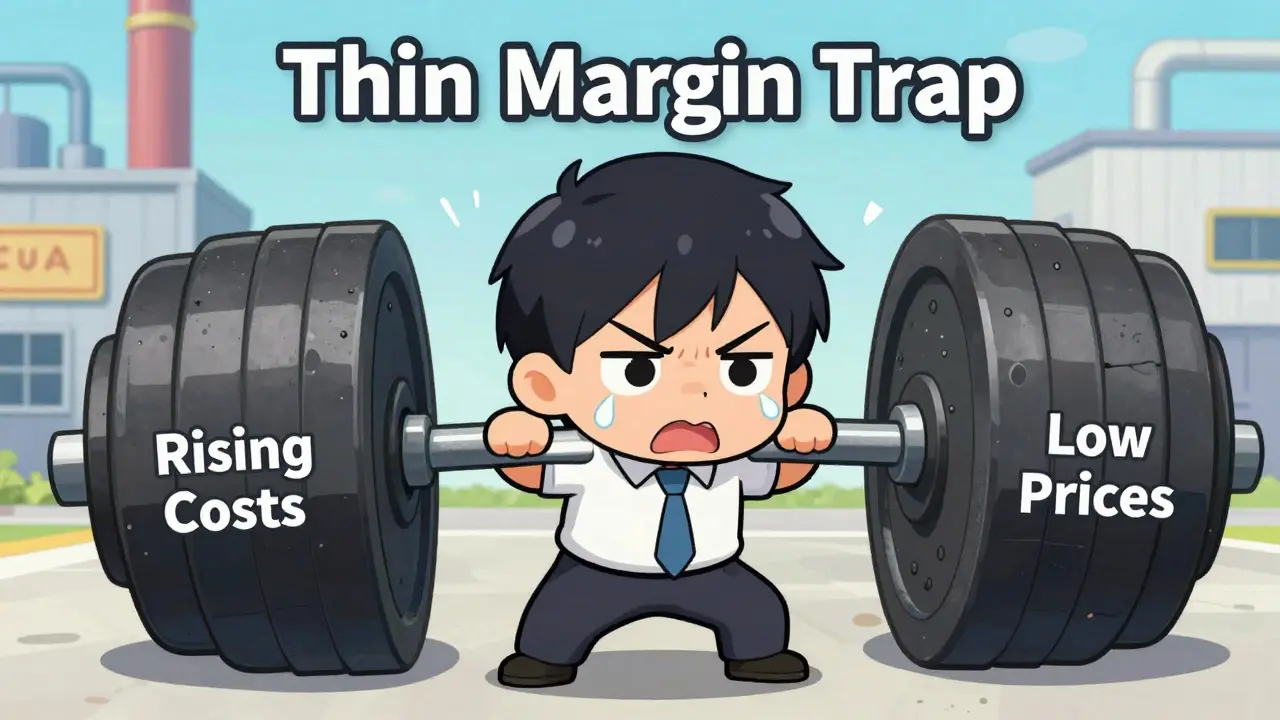
The Thin Margin Trap
To understand why factories close, you have to look at the math behind generic drugs. Unlike brand-name medications that carry high research and development costs, generics are commodities. Once a patent expires, multiple companies can make the same pill. This competition drives prices down, which is great for patients but dangerous for producers.
In recent years, the cost of raw materials has skyrocketed. Think about active pharmaceutical ingredients (APIs). Many of these come from overseas, often from regions with volatile supply chains. When global shipping costs rise or geopolitical tensions disrupt trade, the price of these inputs jumps. Meanwhile, the price the government or insurance companies pay for the drug stays flat or even drops due to rebate structures.
Manufacturers Alliance data shows that rising input costs are the number one stressor for manufacturers today. For some low-cost generics, the margin is razor-thin-sometimes less than 5%. If the cost of packaging goes up by 2%, or if energy bills spike during winter, that profit vanishes. Suddenly, making the drug loses money. The logical business decision? Stop producing it.
Regulatory Costs and the Compliance Burden
Making medicine is not like making widgets. It is heavily regulated. In the United States, the Food and Drug Administration (FDA) enforces strict Good Manufacturing Practices (GMP). These rules ensure every pill is safe, effective, and consistent. But compliance is expensive.
Every time a facility wants to update equipment, change a supplier, or even expand production, it needs regulatory approval. This process takes time and money. For large companies with blockbuster drugs, these costs are negligible. For smaller firms relying on a few generic products, they are existential threats.
If a plant fails an inspection, it gets shut down until fixed. During that time, no product ships. If only two or three companies make a specific antibiotic, and one shuts down, supply tightens immediately. The remaining companies rush to fill the gap, but they can't just flip a switch. They need to validate new batches, ensure quality control, and manage logistics. This lag creates the shortage you see on shelves.
Supply Chain Fragility
The supply chain for pharmaceuticals is long and complex. It starts with chemical precursors, moves to API synthesis, then to formulation (mixing the API with binders and coatings), and finally to packaging. Each step adds risk.
Consider the issue of single-source dependencies. Many manufacturers rely on a single supplier for a critical ingredient. If that supplier faces its own issues-like a power outage, labor strike, or natural disaster-the entire line halts. We saw this play out repeatedly during the pandemic when demand surged while supply remained static.
Furthermore, inventory buffers are shrinking. To save money, companies adopted "just-in-time" manufacturing models. They keep minimal stock on hand to reduce warehousing costs. This efficiency works fine in stable times. But in a crisis, there is no cushion. A delay of a few weeks in shipping containers from Asia translates directly into empty pharmacy shelves months later.
| Factor | Impact on Manufacturer | Result for Supply |
|---|---|---|
| Rising Input Costs | Erodes thin profit margins | Production halted for unprofitable drugs |
| Regulatory Compliance | High fixed operational costs | Barriers to entry for new competitors |
| Supply Chain Disruptions | Unpredictable delays and shortages | Inability to ramp up production quickly |
| Pricing Caps/Rebates | Limits revenue potential | Reduced incentive to maintain capacity |
The Vicious Cycle of Shortages
Here is where things get tricky. When a shortage occurs, demand spikes. Patients who usually take Drug A suddenly need alternatives. If Drug B is the only option, everyone switches to it. This surge overwhelms the remaining suppliers of Drug B. Soon, Drug B runs out too.
This phenomenon, known as "demand shifting," turns a manageable shortage into a widespread crisis. Manufacturers see this volatility and become hesitant. Why invest millions in expanding capacity for a drug whose price is capped and whose demand is unpredictable? The financial risk outweighs the reward.
Additionally, when shortages hit, regulators may allow temporary imports from other countries. While this helps in the short term, it undermines domestic production. Local manufacturers lose market share to cheaper foreign options, further reducing their ability to invest in resilience. It becomes a race to the bottom.

Solutions Beyond Price Hikes
Simply raising prices is not a viable solution. Patients and insurers would bear the burden, leading to higher healthcare costs and reduced access. Instead, we need structural changes that address the root causes of financial strain.
First, governments could offer tax incentives or subsidies for maintaining domestic production of critical drugs. By treating certain medications as strategic assets, similar to food or energy security, we can encourage companies to keep spare capacity online. This ensures that even if a drug isn't profitable month-to-month, the infrastructure remains ready.
Second, improving supply chain transparency is crucial. If regulators and manufacturers can track ingredients in real-time, they can anticipate disruptions before they cause shortages. Digital tools and shared data platforms can help identify bottlenecks early, allowing for proactive adjustments rather than reactive panic.
Third, diversifying suppliers reduces risk. Encouraging multiple sources for APIs, both domestically and internationally, prevents any single point of failure. This requires coordination between industry leaders and policymakers to create a more robust ecosystem.
What This Means for You
As a patient, you are on the front lines of this issue. Understanding the mechanics behind drug shortages empowers you to advocate for better solutions. Talk to your pharmacist. Ask if there are therapeutic alternatives available. If you face difficulties getting your medication, report it to your doctor and relevant health authorities.
Support policies that prioritize supply chain resilience over pure cost-cutting. Recognize that keeping essential medicines affordable requires balancing economic realities with public health needs. The goal is not just to lower prices, but to ensure availability. Without reliable supply, low prices mean nothing.
Why do generic drug manufacturers go out of business?
Generic drug manufacturers often operate on very thin profit margins. When the cost of raw materials, energy, or regulatory compliance rises, these costs can exceed the price paid for the drug. Since they cannot easily raise prices due to competition and reimbursement caps, continuing production becomes financially unsustainable, leading them to stop making the drug or exit the market entirely.
How does pricing pressure lead to drug shortages?
Pricing pressure limits the revenue manufacturers can earn from selling drugs. If input costs increase but selling prices remain static or decrease, profits shrink. To avoid losses, manufacturers may reduce production volume or halt manufacturing of less profitable drugs. With fewer companies producing the same medication, any disruption in supply leads to immediate shortages because there is no backup capacity.
What role do regulations play in drug shortages?
Regulations ensure drug safety and quality, which is vital. However, strict compliance requirements add significant fixed costs to manufacturing. For small-batch or low-margin generics, these costs can be prohibitive. Additionally, lengthy approval processes for new facilities or changes in production methods can delay the entry of new competitors, limiting supply diversity and making the system vulnerable to shocks.
Can raising drug prices solve the shortage problem?
Raising prices might temporarily incentivize production, but it is not a sustainable solution. High prices can make medications unaffordable for many patients, reducing overall access. Furthermore, if the underlying supply chain issues or regulatory burdens are not addressed, higher prices alone will not prevent future shortages. Structural reforms focusing on supply chain resilience and fair costing are more effective long-term strategies.
Why are some drugs more prone to shortages than others?
Drugs made by only one or two manufacturers are highly susceptible to shortages. If that single source faces a production issue, there is no alternative supply. Additionally, older, off-patent generic drugs with low profit margins are often produced by fewer companies compared to newer, branded medications. Complex manufacturing processes also increase the risk of errors or delays, contributing to vulnerability.