Medication Side Effect Risk Checker
This tool helps you assess potential danger of symptoms related to medications. It does not replace professional medical advice.
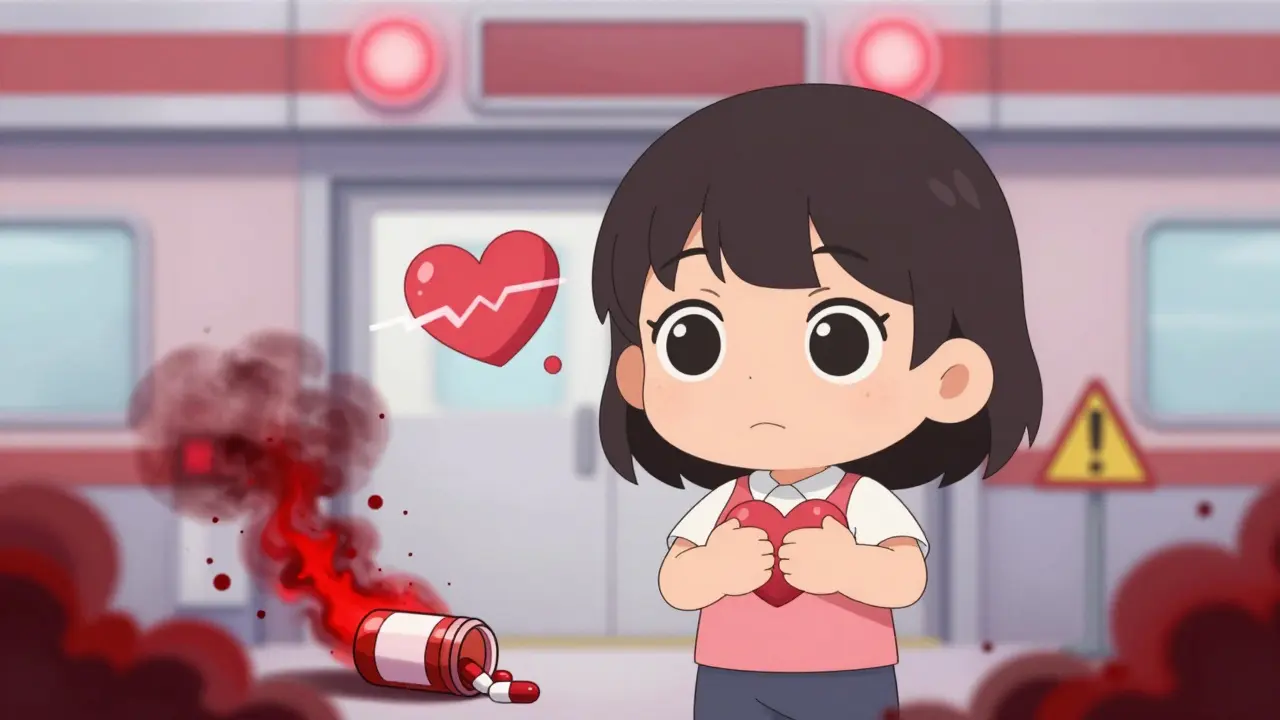
Most people take medication without a second thought. But what if that pill, injection, or patch could silently trigger something life-threatening? You might not feel sick right away. The warning signs can be subtle-just a rash, a weird heartbeat, or feeling more tired than usual. But these aren’t just side effects. They could be your body screaming for help before it’s too late.
What Makes a Side Effect Dangerous?
Not all side effects are created equal. A dry mouth from an antihistamine? Annoying, but harmless. A sudden swelling of your throat after taking a new antibiotic? That’s an emergency. The difference lies in speed, severity, and system-wide impact. According to the FDA, a serious side effect is one that leads to death, hospitalization, disability, or permanent damage. In 2022, over 1.3 million people in the U.S. ended up in the emergency room because of adverse drug reactions. About 128,000 died. Many of these cases could have been prevented if the early signs had been recognized. Dangerous reactions don’t always come with a siren. Sometimes, they whisper. A slight change in skin color. A new dizziness when standing up. A cough that won’t go away. These aren’t just "bad luck." They’re signals your body is reacting in ways that could damage your organs, your heart, or your lungs.Red Flags That Require Immediate Action
If you take any medication-prescription, over-the-counter, or even supplements-know these six signs. If even one shows up within hours of taking a new drug, call 911 or go to the nearest ER:- Difficulty breathing or tightness in your throat-This isn’t just a cold. It could be anaphylaxis, a severe allergic reaction. Your airways are swelling shut. Minutes matter.
- Swelling of the face, lips, tongue, or eyes-Especially if it comes on fast. This often pairs with hives or a rash that spreads quickly.
- Chest pain or a racing heart (over 100 beats per minute)-Some medications, especially those for blood pressure or diabetes, can throw your heart rhythm off. Untreated, this can lead to cardiac arrest.
- Unusual bleeding or bruising-If you’re taking blood thinners, aspirin, or even some antibiotics, this could mean your blood can’t clot properly. Bleeding inside your brain or gut can be fatal.
- Severe vomiting, bloody stool, or intense abdominal pain-Medications like semaglutide (Ozempic, Wegovy) or methotrexate can trigger pancreatitis. The pain is sharp, constant, and often radiates to your back. Left untreated, mortality rates hit 15-30%.
- Seizures, confusion, or inability to wake up-This is a red flag for central nervous system depression, especially with opioids, benzodiazepines, or sleep aids. Your brain is being suppressed.
These aren’t "maybe" signs. They’re clear alarms. Dr. Lisa Thompson, Chief Allergist at Mayo Clinic, says: "Any breathing trouble combined with skin changes after taking a new medication? Treat it as anaphylaxis until proven otherwise." That means epinephrine and emergency help-right now.
The Silent Killers: Symptoms You Might Ignore
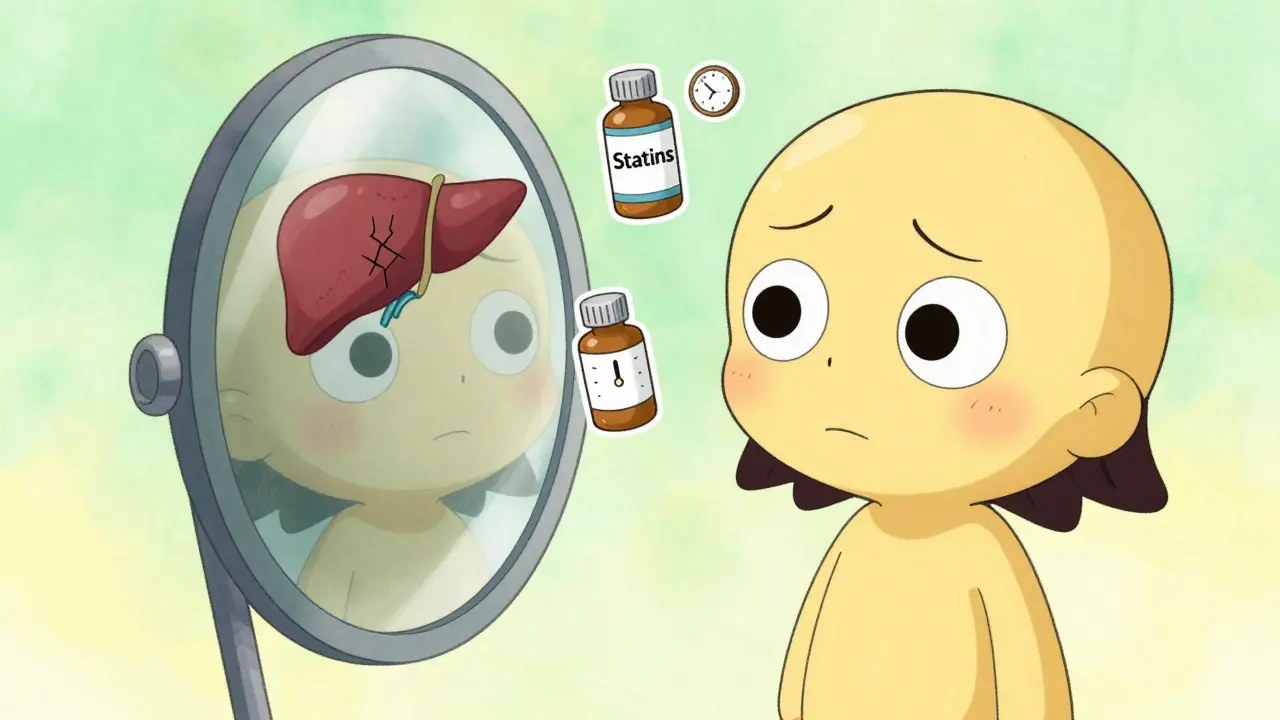
Some of the most dangerous reactions don’t scream. They creep in slowly. You might brush them off as stress, aging, or just "feeling off."- Yellow skin or eyes (jaundice)-This isn’t just a bad night’s sleep. It’s a sign your liver is failing. Medications like statins, antibiotics, or even some herbal supplements can cause toxic hepatitis. Left unchecked, it can lead to liver failure in days.
- Decreased urine output or swelling in your legs-Your kidneys are filtering your blood. If they’re damaged by a drug, waste builds up. You might feel tired, confused, or bloated. This is acute kidney injury-and it’s reversible if caught early.
- High fever with a widespread rash and swollen lymph nodes-This could be DRESS syndrome (Drug Rash with Eosinophilia and Systemic Symptoms). It affects multiple organs. It’s rare, but deadly if missed.
- Extreme fatigue, dizziness, or irregular heartbeat-These can signal drug-induced anemia. Your body isn’t making enough red blood cells. You’re slowly suffocating from the inside.
These symptoms often appear days or weeks after starting a medication. That’s why they’re so dangerous. People think, "I’ve been taking this for a month-I’m fine." But your body doesn’t work that way. Damage can build silently.
Who’s at Highest Risk?
You’re not equally vulnerable to dangerous side effects. Certain groups face much higher risks:- People over 65-Your body metabolizes drugs slower. The American Geriatrics Society found older adults experience side effects 2.7 times more often than younger people.
- Those taking five or more medications-Polypharmacy increases dangerous interactions by 300%. One drug can change how another is processed, leading to overdose-like effects.
- People with kidney or liver disease-These organs clear drugs from your system. If they’re weak, even normal doses can become toxic.
- Those with known allergies-If you’ve reacted to penicillin, sulfa, or NSAIDs before, your risk of another reaction is higher. Don’t assume "it’s different this time."
Look-alike, sound-alike medications cause 12% of dangerous errors. Heparin and insulin are often confused. A wrong dose of either can kill you in minutes.
What to Do When You Notice Something Wrong
Don’t wait. Don’t Google it. Don’t hope it goes away.- Life-threatening signs (breathing trouble, chest pain, swelling, seizures)? Call 911 immediately. Don’t drive yourself. Emergency responders have epinephrine and can start treatment on the way.
- Unusual bleeding, jaundice, severe nausea, or confusion? Call your doctor or pharmacist within 24 hours. Don’t wait for your next appointment. These need urgent evaluation.
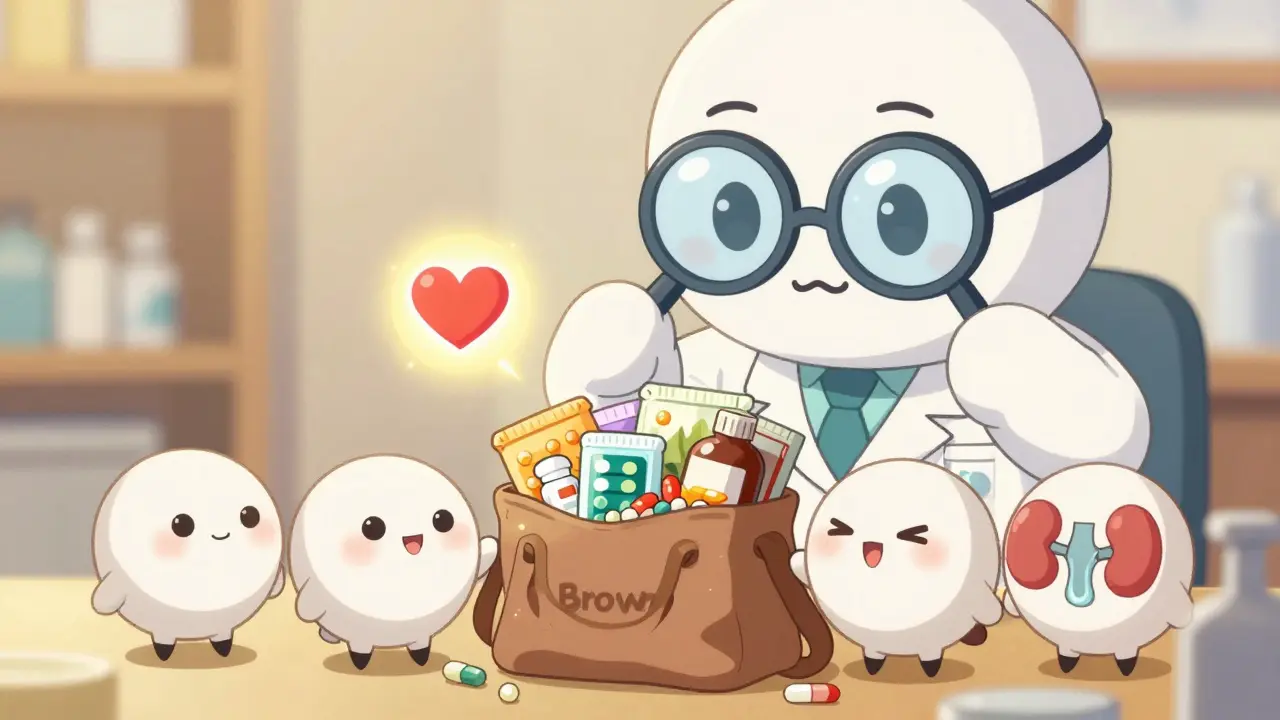
- Worried about a new symptom but not sure? Use the "Brown Bag Method." Take every pill, vitamin, and supplement you’re taking-right now-to your doctor. They’ll spot hidden interactions you didn’t know existed.
- Never stop a medication cold turkey. Stopping beta-blockers, antidepressants, or seizure meds suddenly can trigger heart attacks, seizures, or extreme withdrawal. Talk to your provider first.
One study showed that patients who reviewed their meds with a pharmacist every three months had 40% fewer dangerous side effects. Knowledge is protection.
What’s Changing in Medication Safety
The system is catching up. In 2024, the FDA began requiring real-time monitoring of high-risk drugs using electronic health records. AI tools now predict side effect risks with 89% accuracy by analyzing your age, weight, kidney function, and other meds you take. Genetic testing is also becoming part of care. For drugs like carbamazepine (used for seizures), a simple DNA test before prescribing can cut severe reactions by nearly half. New "smart packaging" for high-risk meds is coming by 2026. These bottles will track when you take your pill and send alerts if you miss a dose or show signs of overdose. Wearables from Apple and others now detect irregular heart rhythms caused by certain drugs. But none of this replaces your awareness. Technology helps. But you’re still the first line of defense.Final Thought: Your Body Knows Before You Do
Medications save lives. But they also carry risk. The key isn’t avoiding them-it’s knowing when they’re working and when they’re hurting you. If you feel different after starting a new drug-physically, mentally, emotionally-listen. Don’t dismiss it. Write it down. Show it to your doctor. That small step could be the difference between a hospital visit and a life saved.Don’t wait for a crisis. Watch. Listen. Act.
Can you have a dangerous reaction to a medication you’ve taken before?
Yes. Your body can develop a new sensitivity over time-even to drugs you’ve taken safely for years. This is common with antibiotics, painkillers, and even some supplements. Just because you didn’t react before doesn’t mean you won’t react now.
How long after taking a medication can a dangerous side effect appear?
It varies. Severe allergic reactions like anaphylaxis usually happen within minutes to an hour. But other dangerous reactions-like liver damage, DRESS syndrome, or kidney injury-can take days, weeks, or even months to show up. Always monitor your body for new or worsening symptoms, even long after starting a new drug.
Are over-the-counter drugs safer than prescription ones?
No. Many people assume OTC meds are harmless, but that’s not true. Ibuprofen and naproxen can cause stomach bleeding or kidney damage. Acetaminophen (Tylenol) is the leading cause of acute liver failure in the U.S. when taken in excess. Always follow dosage instructions and never mix them with alcohol or other meds without checking.
Should I stop taking my medication if I think I’m having a side effect?
Never stop abruptly unless you’re having a life-threatening reaction like anaphylaxis. Stopping suddenly can cause withdrawal symptoms that are just as dangerous-like seizures, heart attacks, or rebound high blood pressure. Call your doctor first. They’ll tell you how to safely adjust or switch your medication.
Can drug interactions cause dangerous side effects even if I take my meds correctly?
Absolutely. Mixing medications-even ones prescribed by different doctors-can create toxic combinations. For example, taking a statin with grapefruit juice can spike drug levels in your blood. Antidepressants combined with certain painkillers can cause serotonin syndrome, a potentially fatal condition. Always tell every provider you see what you’re taking, including vitamins and herbal supplements.
Is there a way to test if I’m genetically prone to bad reactions?
Yes. Pharmacogenomic testing looks at your genes to predict how your body will process certain drugs. It’s already being used for medications like warfarin, clopidogrel, and carbamazepine. If you’ve had unexplained side effects before, ask your doctor if genetic testing might help. It’s not routine yet, but it’s growing fast.
Stay informed. Stay alert. Your life depends on it.
12 Comments
Kathy Scaman
Just started a new blood pressure med last week and noticed my fingers feel tingly when I wake up. Thought it was just sleeping funny. Now I’m gonna call my doc tomorrow-better safe than sorry. Thanks for the wake-up call.
Anna Lou Chen
Ah yes, the neoliberal pharmacopeia-where corp-controlled pharmaceuticals weaponize biopolitical vulnerability under the guise of therapeutic intervention. We’ve pathologized normalcy into a commodity, and now we’re expected to surveil our own somatic integrity through algorithmic anxiety. The real danger isn’t the drug-it’s the epistemic violence of medicalized self-surveillance.
Bryan Fracchia
I love how this post doesn’t scare people-it empowers them. I used to ignore tiny changes until my mom had a reaction to a statin and ended up in the hospital. Now I keep a little notebook next to my pill organizer. Small stuff, big impact. You’re not overreacting if you feel off. Trust that.
Lance Long
Let me tell you something-I’m a nurse, and I’ve seen this too many times. A guy took OTC ibuprofen for his back pain, didn’t think twice… ended up with a GI bleed and a 3-day ICU stay. He said, ‘I thought it was just a pill.’ No, buddy. It’s chemistry. It’s biology. It’s your body’s alarm system. Listen to it. Don’t Google it. Call someone. Your life isn’t a Reddit thread.
Timothy Davis
Typical fearmongering. 1.3 million ER visits? That’s 0.4% of the U.S. population. Most of those were overdoses or people mixing alcohol with meds. The real issue is people who don’t read labels. Also, ‘smart packaging’? Please. We’re not toddlers. If you can’t follow basic instructions, maybe you shouldn’t be managing your own meds. This article reads like a PSA for the clinically paranoid.
fiona vaz
Just wanted to add that if you’re on multiple meds, ask for a med review with your pharmacist. They’re underused heroes. I had a patient who was taking 8 prescriptions and 5 supplements-turns out two of them canceled each other out and caused her dizziness. She didn’t even know. Took 15 minutes for the pharmacist to sort it out. Free service, life-changing.
Sue Latham
OMG I’m so glad someone finally said this. I took melatonin for a month and woke up one day with a rash that looked like someone poured hot sauce on my skin. My dermatologist said it was probably the ‘natural’ supplement. 🤦♀️ Like, what even is ‘natural’ anymore? Also, why is everyone so obsessed with ‘wellness’ but refuses to admit that even ‘natural’ can be toxic? 🙄
John Rose
One thing this article doesn’t emphasize enough: timing matters. If you start a new medication on a Friday, you’re more likely to ignore symptoms until Monday. That delay can be fatal. I always tell patients to take new prescriptions on a Monday if possible-so you have the whole week to monitor and call your doctor if something feels off. Simple, practical, effective.
Brittany Fiddes
Oh, so now Americans are being told to panic about every little twinge? In the UK, we’ve had the NHS for decades-doctors know what they’re doing. We don’t need AI tracking our pill bottles or Apple Watches screaming about ‘possible arrhythmia.’ You’re creating a nation of hypochondriacs. I’ve been on statins for 12 years. I’m fine. Your fear is not my reality.
Colin Pierce
My grandma took a new antibiotic and started acting confused-thought she was in 1978. We thought it was dementia. Turns out it was the drug. She was 82, on 5 meds, and no one checked interactions. We got lucky she didn’t have a fall. This article? Lifesaver. Please share it with your elderly relatives. They need to hear it from someone who cares.
Mark Alan
🚨 BRO. I took a new painkiller and my tongue felt like it was melting. I thought I was dying. Called 911. Turns out it was a rare allergy. They gave me epinephrine. I’m alive. DON’T WAIT. 🚨 I’m still scared to take anything now. But I carry an EpiPen. You should too. 🧠💊 #MedicationSafety
matthew martin
Look-I’ve been taking metformin for 7 years. Never had a problem. Then last year, I started feeling like I was underwater every morning. Didn’t think much of it. Then I read this and realized-my kidneys were probably struggling. Got my levels checked. My eGFR dropped 15 points. Doc adjusted my dose. No hospital. No panic. Just awareness. This stuff isn’t about fear. It’s about being a detective for your own body. And honestly? It’s kinda empowering. You’re not a passive patient. You’re the CEO of your health. Pay attention. Write it down. Talk to your pharmacist. They’re your secret weapon.