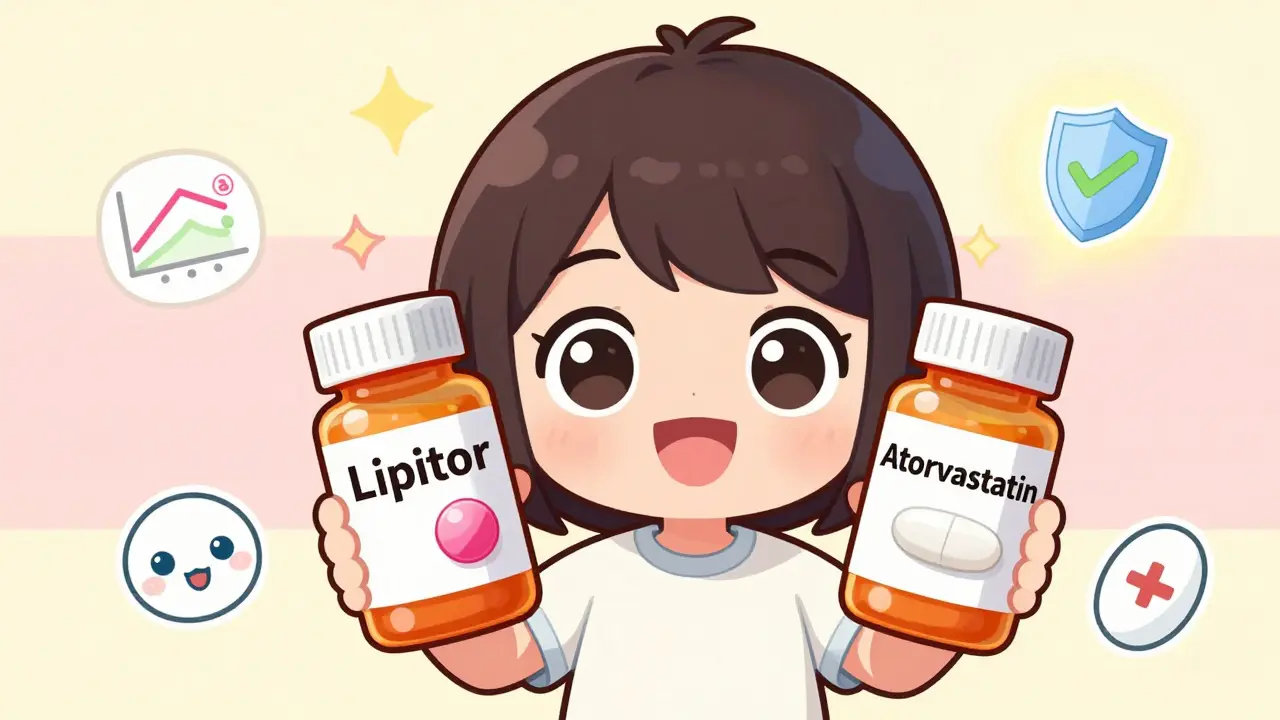
Ever opened your prescription bottle and wondered why it looks different from last time? Maybe the pill is white instead of blue, or the name on the label isn’t the one your doctor said. That’s not a mistake - it’s probably a generic drug. And if you’re paying less for it, you’re not alone. In the U.S., nearly 9 out of 10 prescriptions filled are for generics. But many people still worry: Are they really the same?
They’re Not Copies - They’re Identical in Effect
Generic drugs aren’t knockoffs. They’re not cheaper because they’re weaker or made with lower-quality ingredients. By law, they must contain the exact same active ingredient, in the same strength, and work the same way in your body as the brand-name version. The FDA requires every generic to prove it delivers the same amount of medicine into your bloodstream at the same speed as the original. This is called bioequivalence. The acceptable range? 80% to 125% - meaning your body absorbs it just as well.For example, if you take lisinopril for high blood pressure, the generic version works just like Zestril. Metformin for diabetes? Identical to Glucophage. Atorvastatin? Same as Lipitor. Thousands of patients switch every day without noticing any difference in how they feel or how well their condition is controlled.
Why Are Generics So Much Cheaper?
Brand-name drug companies spend years and billions developing a new medicine. They pay for clinical trials, marketing, patent protection, and sales teams. Once that drug hits the market, they have exclusive rights for about 12 to 14 years - sometimes longer due to legal loopholes. That’s how they recover their costs and make a profit.Generic manufacturers don’t have to repeat those expensive trials. They only need to prove their version behaves the same way in the body. That cuts their development costs by 90%. No marketing campaigns. No patent fees. No expensive advertising. So they can sell the same medicine for 80% to 85% less.
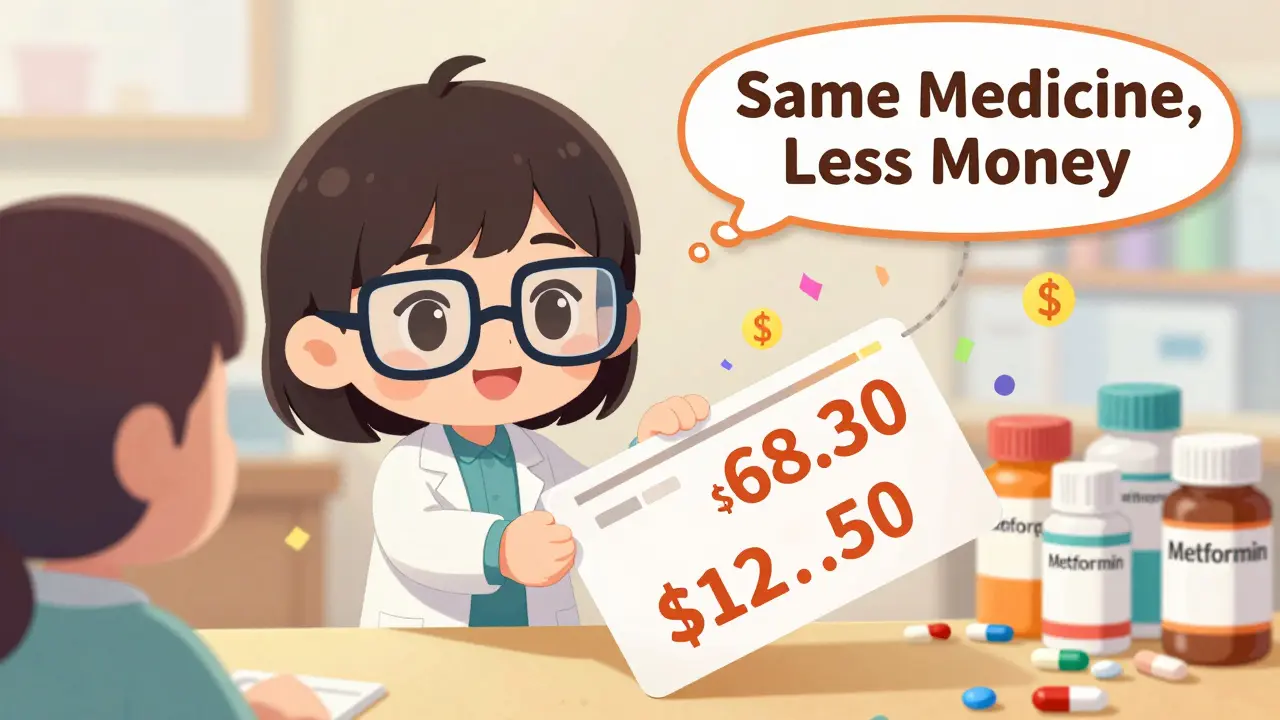
In 2022, the average cost of a brand-name prescription was $68.30 with insurance. The generic version? Just $12.50. That’s a $55.80 savings per fill. For someone taking medication every day - like for thyroid issues, diabetes, or high cholesterol - that adds up to thousands a year.
What’s Different About Generics?
The only differences between a generic and its brand-name counterpart are things that don’t affect how the drug works:- Color, shape, or size - These are changed to avoid trademark infringement. A generic pill might be oval and white; the brand version might be round and pink.
- Inactive ingredients - Things like fillers, dyes, or flavorings can vary. This is usually harmless, but in rare cases, someone with a specific allergy might react to a dye in the generic version.
- Packaging - The bottle, label design, and even the blister pack might look totally different.
These differences are purely cosmetic. They don’t change how the medicine works inside your body. The FDA makes sure of that before approving any generic.
When Might You Notice a Difference?
Most people won’t notice any difference. But there are exceptions - and they’re rare.Some medications have what’s called a narrow therapeutic index. That means the difference between a dose that works and one that’s too high (or too low) is very small. Examples include:
- Warfarin (blood thinner)
- Levothyroxine (thyroid hormone)
- Lamotrigine (seizure medication)
- Cyclosporine (organ transplant drug)
For these, even tiny changes in how your body absorbs the drug could matter. That’s why the FDA requires stricter bioequivalence testing for these drugs - 90% to 111% instead of 80% to 125%. Studies, including one in JAMA Internal Medicine that tracked 38,000 patients on levothyroxine, found no meaningful difference in outcomes between brand and generic versions.
Still, some patients - or their doctors - prefer to stick with one version for consistency. If you’ve been stable on a brand-name drug and your doctor recommends switching, talk about it. Don’t assume the change is unsafe, but do monitor how you feel in the first few weeks.
What About Patient Experiences?
Real-world feedback tells a clear story. A 2022 survey by Consumer Reports of over 1,200 people found that 89% believed generics were just as effective as brand-name drugs. On Reddit’s r/Pharmacy community, 86% of users reported no difference when switching from brand to generic for common meds like atorvastatin, metformin, and lisinopril.But 14% did report issues - mostly with seizure meds or thyroid drugs. One user wrote: “My mom’s seizures came back after switching from Lamictal to generic lamotrigine. We had to go back to the brand.” That’s rare, but it happens. And it’s why pharmacists and doctors are trained to pay attention to these cases.
Here’s the key: if you notice a change in how you feel after switching - whether it’s more side effects, less control of your condition, or just a weird feeling - tell your doctor. Don’t assume it’s “all in your head.” Sometimes, it’s a real issue. Other times, it’s just your brain noticing a new pill shape.
Can You Always Get a Generic?
No. About 30% of brand-name drugs still don’t have generic versions. Why?- Patents haven’t expired - The original maker still has legal protection.
- Complex manufacturing - Some drugs, like inhalers, injectables, or topical creams, are hard to copy exactly. These are called “complex generics,” and the FDA is working to speed up their approval.
- Low demand - If a drug is only used by a small group, companies may not see enough profit to justify making a generic.
But the tide is turning. Over 450 brand-name drugs are expected to lose patent protection by 2028. That means more generics will hit the market - and more savings for patients.
What Should You Do?
Here’s what you can do right now:- Ask your pharmacist - When you get a prescription, ask: “Is there a generic version?” They’re trained to know.
- Check your prescription - If your doctor wrote “dispense as written” or “no substitution,” the pharmacy can’t switch it. You can ask your doctor to remove that note if you’re okay with generics.
- Use price comparison tools - Apps like GoodRx or SingleCare can show you the cash price for both brand and generic versions - even without insurance.
- Keep a list - Write down both the brand and generic names of your meds. That way, if your pharmacy switches them, you’ll know what you’re taking.
And remember: if you’ve been on a brand-name drug for years and it’s working fine, there’s no rush to switch. But if you’re paying a lot, and your doctor says a generic is available - it’s safe to try.
The Big Picture: Why This Matters
Generic drugs aren’t just about saving money on your co-pay. They’re about making healthcare sustainable. In 2022, generics saved the U.S. healthcare system over $250 billion. Since 2007, that total is over $1.6 trillion. That’s billions of dollars that went back into people’s pockets, or into funding other care.Every time you choose a generic, you’re helping reduce pressure on the entire system. And you’re getting the same result - better health - at a fraction of the cost.
The FDA says it plainly: “All drugs, including brand-name and generic, must work well and are safe.” That’s not marketing. That’s science. And it’s backed by data, real-world experience, and decades of use.
So next time you see a generic on your receipt, don’t think “cheaper.” Think: “Same medicine. Less money. Same results.”
Are generic drugs as safe as brand-name drugs?
Yes. Generic drugs must meet the same FDA standards for safety, strength, quality, purity, and performance as brand-name drugs. The FDA inspects manufacturing facilities for both types and monitors side effects after approval. There’s no evidence that generics are less safe.
Can I switch from a brand-name drug to a generic without talking to my doctor?
In most cases, yes - pharmacists are legally allowed to substitute generics unless your doctor wrote “dispense as written.” But it’s still smart to let your doctor know you switched, especially if you’re taking a drug with a narrow therapeutic index. They can monitor your response.
Why do some generics look different from the brand version?
U.S. trademark laws prevent generic drugs from looking identical to brand-name versions. That’s why the color, shape, or size might be different. But the active ingredient, dose, and how it works in your body are the same. The difference is only in appearance and inactive ingredients.
Do generics take longer to work?
No. The FDA requires generics to be bioequivalent - meaning they’re absorbed into your bloodstream at the same rate and to the same extent as the brand-name drug. If you take a generic blood pressure pill, it starts working just as quickly as the brand version.
Why do some people say generics don’t work as well?
In rare cases, people report differences - often with drugs that have a narrow therapeutic index, like thyroid or seizure meds. But large studies show no clinical difference in outcomes. What people notice might be due to placebo effect, changes in inactive ingredients, or psychological factors. If you feel different after switching, talk to your doctor - don’t assume the generic failed.
If you’re on long-term medication, switching to a generic could save you hundreds - or even thousands - of dollars a year. And you won’t lose anything in effectiveness. The science is clear. The data is solid. And millions of people are already benefiting from the switch.
11 Comments
MARILYN ONEILL
OMG I switched to generic lisinopril and my face swelled up!! My pharmacist didn’t even tell me!! Now I have to go to the ER every time I take it!! This is a conspiracy!!
Glenda Marínez Granados
So we’re just supposed to trust the FDA? 😏 Meanwhile, the same people who approved thalidomide are now telling us generics are ‘just as good.’ Thanks, I’ll stick with my $200/month brand-name pills and my existential dread.
Gerard Jordan
Hey everyone, just wanted to say - if you’re worried about generics, you’re not alone. I’ve seen folks from Nigeria to Nebraska switch and thrive. 💪 The science is solid, the savings are real, and your body doesn’t care what color the pill is. Keep asking questions, but don’t let fear cost you your health. You got this.
michelle Brownsea
Let’s be clear: the FDA’s bioequivalence standard of 80%-125% is not a guarantee of therapeutic equivalence - it’s a statistical loophole that permits up to a 45% variation in absorption rates. And yet, millions are being pressured into this “cost-saving” experiment without informed consent. Where’s the transparency? Where’s the accountability? This isn’t healthcare - it’s corporate-enabled negligence.
Roisin Kelly
My cousin’s dog took a generic flea pill and turned into a zombie. Now I don’t trust anything that doesn’t come in a branded box with a logo.
Samuel Mendoza
Generics are fine. Unless they’re not. Then they’re dangerous. Stick with brand. Always.
shubham rathee
in india we use generics all the time and no one dies. why is america so scared of cheap medicine? also my uncle takes levothyroxine generic and his thyroid is better than before. you guys overthink everything
Ashok Sakra
you think the FDA is protecting you? nah they’re just doing what the pharma giants tell them. i heard a guy on youtube say the active ingredient in generics is just sugar with a sprinkle of real drug. you’re all being played
lokesh prasanth
bioequivalence is a myth. if your body absorbs 80% of the drug is that really the same? what about the 20% that’s missing? you’re not getting the full dose. this is basic math. why are people okay with this?
Steve Hesketh
Bro I was skeptical too - but I switched my atorvastatin to generic and saved $70 a month. My cholesterol is lower, my bank account is happier, and I didn’t turn into a pumpkin. 🙌 If you’re scared, talk to your doc - but don’t let fear keep you from saving your life and your wallet.
Philip Williams
It is imperative to acknowledge that while generic pharmaceuticals are subject to stringent regulatory oversight, the psychological impact of perceived inferiority may influence patient adherence and subjective outcomes. A structured, physician-guided transition protocol is recommended to ensure continuity of therapeutic efficacy and patient confidence.