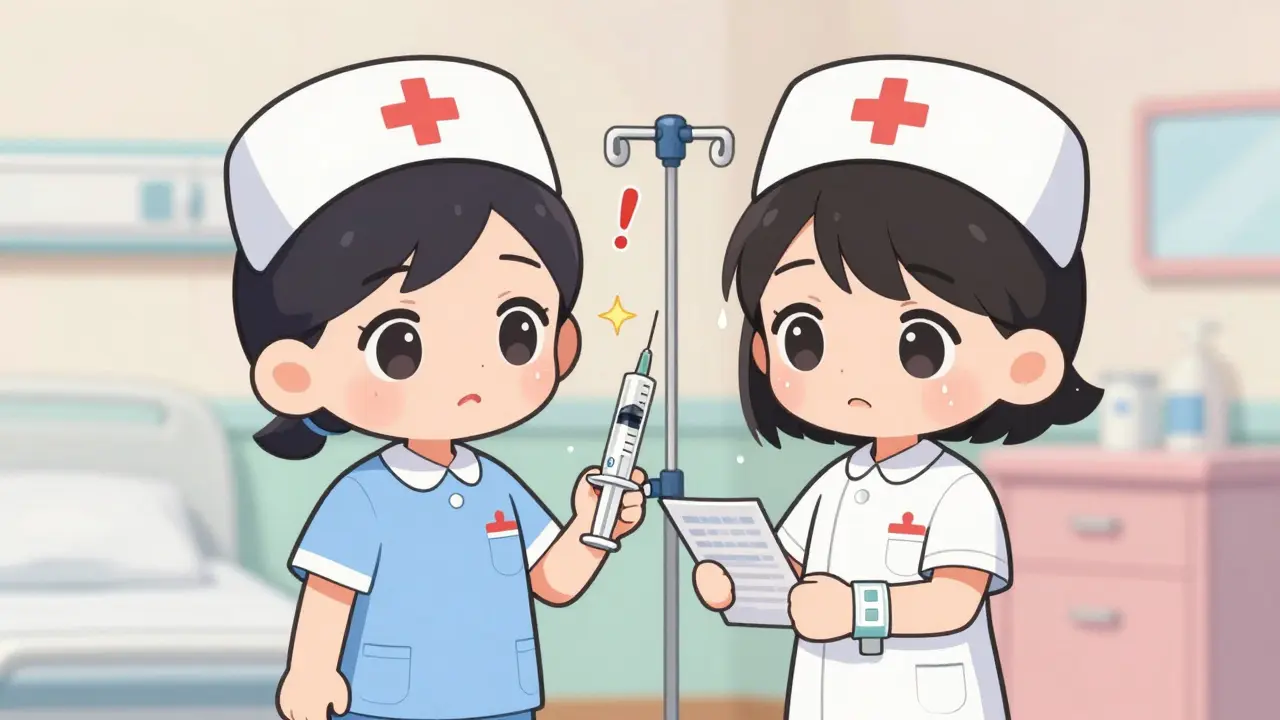
One wrong dose of IV insulin can kill a patient. Not in a few days. Not in a week. Sometimes, in under an hour. That’s why hospitals and clinics across the UK and beyond have strict rules for handling certain medications - rules that demand not one, but two trained professionals to verify every step before it’s given. These aren’t just guidelines. They’re lifelines.
What Makes a Medication High-Risk?
Not all drugs are created equal. A missed dose of antibiotics might delay recovery. A wrong dose of blood pressure pills might cause dizziness. But some medications? One small mistake can trigger cardiac arrest, brain damage, or death. These are called high-alert medications. The Institute for Safe Medication Practices (ISMP) defines them as drugs with a heightened risk of causing significant patient harm when used incorrectly - even if they’re used properly most of the time.
It’s not about how strong the drug is. It’s about how little room there is for error. For example:
- IV insulin: Too much causes deadly low blood sugar. Too little lets blood sugar soar, leading to diabetic ketoacidosis.
- IV heparin: An anticoagulant. A tiny overdose can cause uncontrolled bleeding. A tiny underdose can trigger a fatal clot.
- Concentrated potassium chloride: Used to fix low potassium. But if given too fast or without proper dilution? Cardiac arrest.
- Chemotherapy agents: Designed to kill fast-growing cells. That includes cancer - and healthy ones. Wrong dose, wrong patient, wrong timing? Permanent organ damage or death.
- IV opioids like morphine or fentanyl: Overdose causes respiratory failure. In a busy ward, it can happen before anyone notices.
The Joint Commission, which sets safety standards for hospitals in the UK and US, requires every facility to list its own high-alert medications. That list isn’t copied from a textbook. It’s built from real data: past errors, local prescribing habits, patient populations, and reports from pharmacists and nurses on the front lines.
The Double Check: How It’s Supposed to Work
The standard safety step for these drugs is the independent double check. Two people - both qualified - verify every detail before the medication is given. Not one person checks, then the other just signs off. They work independently.
Here’s how it’s done right:
- The first person prepares the medication: checks the prescription, calculates the dose, draws it up, labels it.
- The second person walks over - without looking at what the first person did. They pick up the prescription, the label, the vial, the patient’s wristband.
- They recalculate the dose themselves. They confirm the patient’s name, date of birth, allergy history. They check the expiration date. They inspect the fluid for discoloration or particles.
- They both verify the Nine Rights: right patient, right drug, right dose, right route, right time, right documentation, right reason, right response, right to refuse.
- Only then do they both sign the Medication Administration Record (MAR). The drug is given.
This isn’t just paperwork. It’s a safety net. Studies show that in chemotherapy units, where double checks are mandatory, nearly 90% of errors are caught before the drug reaches the patient. But only if they’re done right.
Who Can Perform the Check?
Not just anyone. The second checker must be a licensed professional with training in medication safety. That means:
- Registered nurses (RNs)
- Pharmacists
- Physicians (MDs/DOs)
- Advanced practice providers (NPs, PAs)
Student nurses, pharmacy technicians, or unlicensed assistants cannot serve as the second checker. They don’t have the legal authority or clinical judgment to catch subtle errors - like a misread decimal point, a confusing drug name, or a hidden interaction.
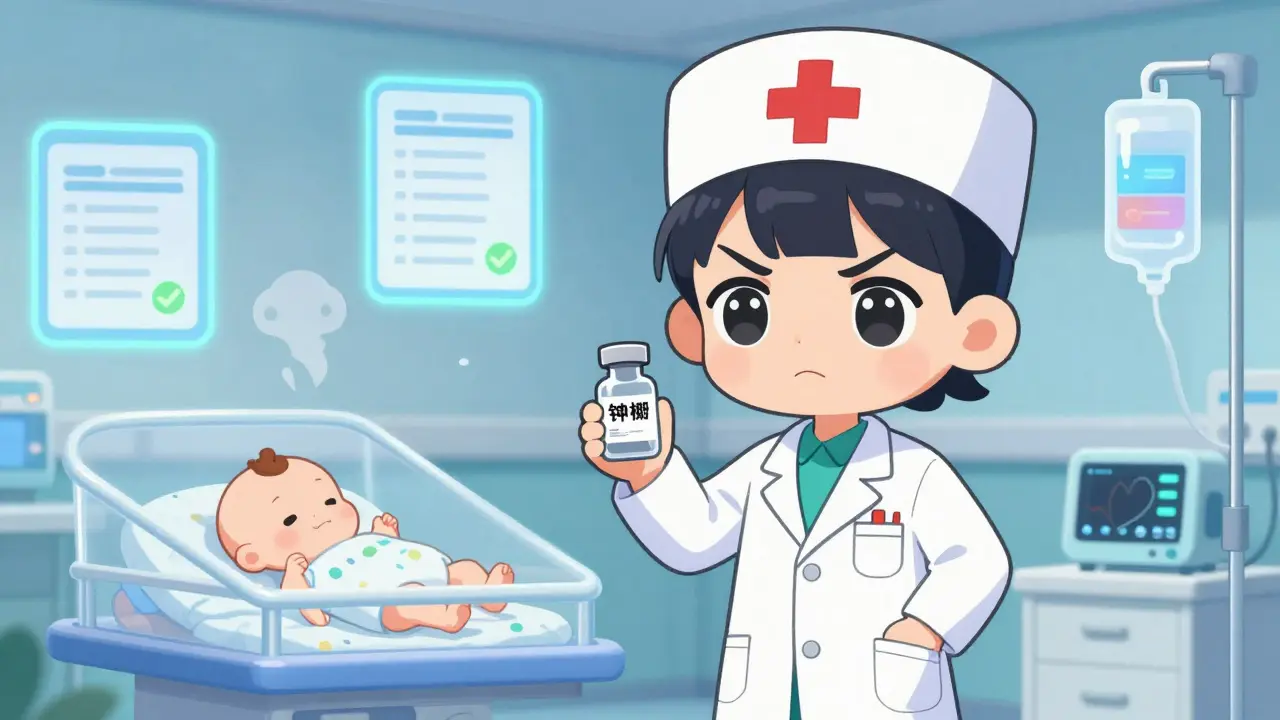
In neonatal intensive care units (NICUs), the rules are even tighter. Every high-alert medication - even if it’s a tiny dose of epinephrine - requires two qualified staff members. Babies don’t have the body mass to absorb errors. A 0.1 mL mistake can be fatal.
Where It Goes Wrong
Double checks sound simple. But in real life? They’re often broken.
A 2022 survey by ISMP found that 68% of nurses admitted skipping required double checks during busy shifts. Why? The top reason: no one else was available. The second checker was busy with another patient. Or they were on break. Or they were already doing two other checks.
Then there’s the “rubber stamp” problem. One nurse does the check. The other just nods along. They don’t recalculate. They don’t look at the vial. They don’t verify the patient. They just sign. That’s not a double check. That’s a false sense of security.
And time pressure? It’s real. Nurses in the UK often manage 6-8 patients per shift. When you’re rushing between calls, meds, and charting, a 5-minute double check feels like a luxury. But that’s exactly when you need it most.
Technology Is Changing the Game
Barcode scanning at the bedside is now standard in most hospitals. Before giving a drug, the nurse scans the patient’s wristband and the medication’s barcode. The system checks: Is this the right drug? Right dose? Right patient? Right time?
It catches 80-90% of dosing errors. But it can’t catch everything.
It won’t know if a vial was mislabeled before it reached the unit. It won’t spot a crushed tablet in a syringe. It won’t catch a nurse who programmed an IV pump to run 10 times faster than ordered. That’s where the human eye still matters.
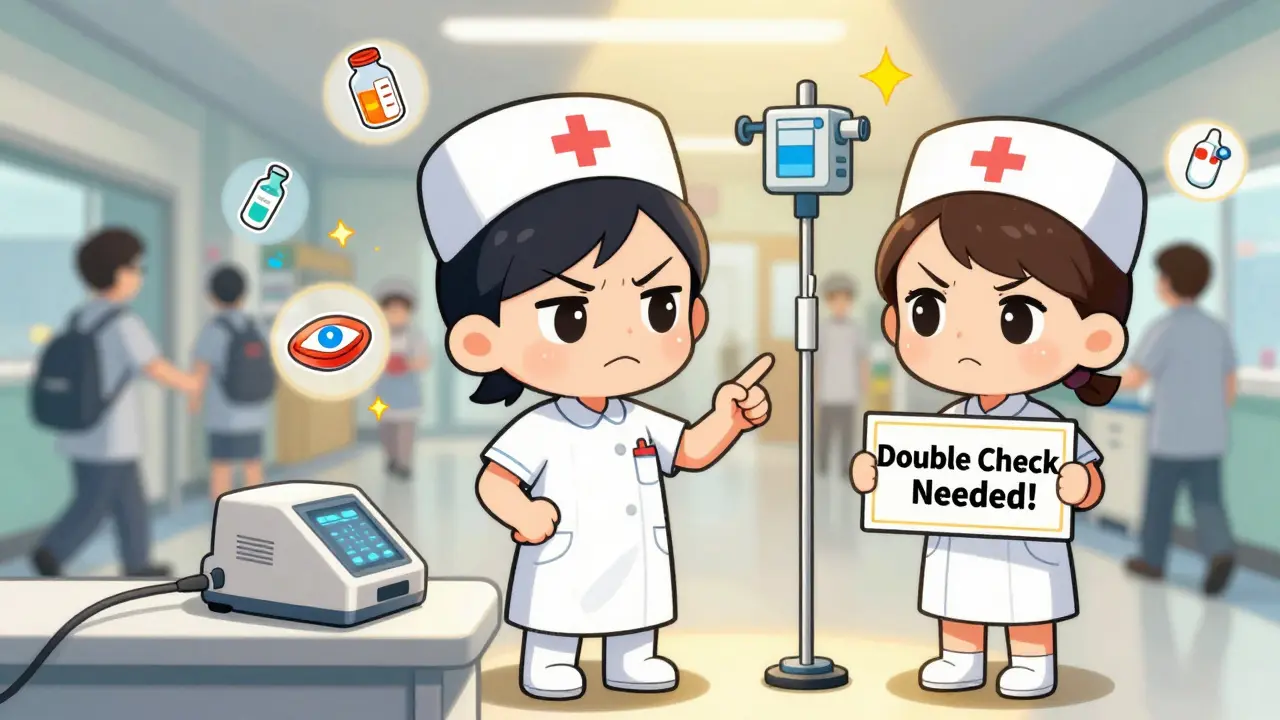
So the smart move isn’t to ditch double checks. It’s to use them smarter.
The New Strategy: Fewer Checks, Better Focus
Organizations are moving away from checking all high-alert meds. Instead, they’re focusing on the top 5-7 that cause the most harm.
According to ECRI Institute and ISMP guidance, the most critical medications for mandatory double checks are:
- IV insulin
- IV heparin
- IV chemotherapy
- IV opioids (morphine, fentanyl, hydromorphone)
- Concentrated potassium chloride
- Calcium gluconate (for cardiac arrest)
- Neuromuscular blocking agents (like succinylcholine)
For drugs like oral antibiotics or oral diabetes pills? Standard checks are enough. No need to slow down the whole system for low-risk meds.
Some hospitals now use a “risk-based trigger” system. If a patient is in the ICU, on a ventilator, or has kidney failure, the system flags certain meds for mandatory double check - even if they’re not on the usual list. That’s smarter than blanket rules.
What Patients and Families Can Do
You don’t have to be a nurse to help prevent errors. If you’re caring for someone on high-risk meds:
- Ask: “Is this a high-risk drug? Will two people check it before they give it?”
- Confirm the drug name and dose with the nurse. Don’t assume they know what’s in the syringe.
- If you see someone rushing - say something. “Can we wait just a minute? I want to make sure this is right.”
- Know the signs of overdose: confusion, slow breathing, cold skin, fainting. Report them immediately.
Your voice matters. Hospitals can’t catch every mistake. But a family member who asks a question? That’s often the last line of defense.
The Future: Smarter Systems, Not Just More Checks
The goal isn’t to make nurses do more paperwork. It’s to make errors impossible.
Leading hospitals are now combining:
- Barcode scanning at the bedside
- Smart infusion pumps that auto-calculate safe rates
- Electronic prescribing with built-in dose alerts
- AI-driven alerts that flag unusual orders (e.g., 100 units of insulin for a diabetic who’s not in ketoacidosis)
But even with all this tech, human verification still has a role - especially for complex preparations. Like mixing chemotherapy in a sterile hood, or preparing a custom neonatal dose. Machines can’t replace judgment there.
The future isn’t about doubling up on checks. It’s about placing them where they matter most. And training staff to treat every high-risk med like it’s a loaded gun - because it is.
What are the most common high-risk medications that need a double check?
The top medications requiring independent double checks are IV insulin, IV heparin, IV chemotherapy, concentrated potassium chloride, IV opioids (like morphine and fentanyl), calcium gluconate, and neuromuscular blocking agents. These drugs have narrow safety margins - even small errors can cause death.
Can a nurse do a double check on themselves?
No. A double check must be independent. That means two different people, each verifying the medication on their own, without seeing the other’s work. If one person does it and then checks their own work, it’s not a true double check - it’s just a single check with a second look, and it doesn’t catch the same kinds of errors.
Why do some hospitals skip double checks during busy times?
Staff shortages and high patient loads make it hard to find a second qualified person. Nurses may feel pressured to move quickly, especially when they’re managing multiple patients. But skipping checks increases the risk of fatal errors. Many hospitals now use safety huddles or backup staffing to ensure checks aren’t skipped.
Are double checks effective?
Yes - but only when done properly. Studies show they catch up to 90% of errors in chemotherapy and high-alert drug settings. But if staff are rushed, distracted, or just going through the motions, they become ineffective. The key is quality, not quantity. Focusing checks on the highest-risk meds improves outcomes more than checking everything.
What’s replacing manual double checks?
Barcode scanning at the bedside, smart infusion pumps, and electronic prescribing with built-in safety alerts are replacing blanket double checks. These technologies catch dosing errors automatically. But they don’t replace human judgment for complex tasks - like preparing IV chemo or verifying custom doses. The best systems combine both.
13 Comments
Oladeji Omobolaji
Man, I saw a nurse skip a double check once in the ER. Just nodded and pushed the button. Scary as hell. We all get rushed, but one typo on a fentanyl label and you’re looking at a funeral.
Sue Stone
My aunt got the wrong chemo dose because they were short-staffed. She’s fine now, but I’ll never trust a hospital again without asking if the double check happened.
Susannah Green
Let me just say-double checks aren’t optional. They’re non-negotiable. And if your hospital lets techs do them? Fire them. Or fire the admin. Either way, someone’s got to wake up.
Anna Pryde-Smith
THIS. IS. NON-NEGOTIABLE. I’ve seen the aftermath. I’ve held the hand of a mother whose child died because someone 'didn’t have time.' Stop pretending this is about efficiency. It’s about murder by negligence.
Janet King
High-alert medications require a second pair of trained eyes. No exceptions. The math must be done twice, independently. The patient’s ID must be confirmed verbally and visually. The vial must be inspected. No shortcuts. Lives depend on this.
Sallie Jane Barnes
It’s not about being slow-it’s about being safe. I’ve worked in NICUs. A 0.1 mL mistake with epinephrine? That’s a baby who won’t wake up. We don’t cut corners when the patient weighs seven pounds.
Andrew Smirnykh
In my home country, Nigeria, we don’t have barcode scanners or smart pumps. We rely on nurses who memorize doses and double-check with each other. It’s not perfect, but it’s what saves lives when tech fails.
dana torgersen
Why do we even have to argue about this?? People die because someone was 'too busy'... and we call it 'systemic pressure'?? No. It's negligence. It's laziness. It's the fact that we've normalized rushing through life-saving steps... and we're all complicit.
Dawson Taylor
Technology reduces error rates. But judgment prevents catastrophe. Machines don’t notice a vial that looks cloudy. They don’t hear a nurse say, 'I think that’s wrong.' Human verification remains irreplaceable.
charley lopez
The risk stratification model is statistically sound. Focusing double checks on the top seven agents-insulin, heparin, chemo, opioids, KCl, calcium gluconate, NMBAs-reduces cognitive load while maximizing safety yield. The data supports targeted protocols over blanket enforcement.
Kerry Moore
I’ve been a nurse for 18 years. I’ve seen good double checks and bad ones. The difference isn’t the checklist-it’s the culture. When the team treats every high-risk med like it’s a loaded gun, errors drop. When it’s just a box to tick? People die.
Laura Rice
My brother’s ICU nurse asked him if he wanted to hear the meds being checked. He said yes. She read the name, dose, route, time-out loud. He said, 'Wait, that’s not right.' She stopped. It was 10x the dose. He’s alive because he asked. You can do this too.
Kerry Evans
Anyone who skips a double check shouldn’t be allowed near a syringe. Period. If you’re too tired, too busy, or too arrogant to do it right-you’re not a nurse. You’re a liability. And hospitals that let you work like that are guilty of manslaughter.