
HIV Drug Interaction & Resistance Risk Checker
Treatment Profile
Analysis Results
Enter your treatment details to see interaction risks and resistance potential.
Imagine taking a pill that saves your life, only to find it stops working because of another medication you take for high blood pressure or anxiety. For the millions of people living with HIV, this isn't just a hypothetical scenario-it’s a daily reality managed through careful medical planning. Antiretroviral therapy (ART) has transformed HIV from a fatal diagnosis into a manageable chronic condition. However, the path to viral suppression is paved with complex chemistry. The central challenge lies in balancing HIV drug interactions while preventing the virus from mutating into resistant strains.
If you are starting treatment, switching regimens, or simply trying to understand why your doctor ordered specific tests, understanding these mechanisms is crucial. This guide breaks down how these medications work, why they clash with other drugs, and how resistance develops-giving you the knowledge to navigate your treatment safely.
How Antiretroviral Medications Work
To understand why interactions happen, you first need to know what these drugs are doing inside your body. HIV replicates by inserting its genetic material into human cells. ART works by blocking specific steps in this process. There are six major classes of FDA-approved medications, but three dominate modern treatment protocols.
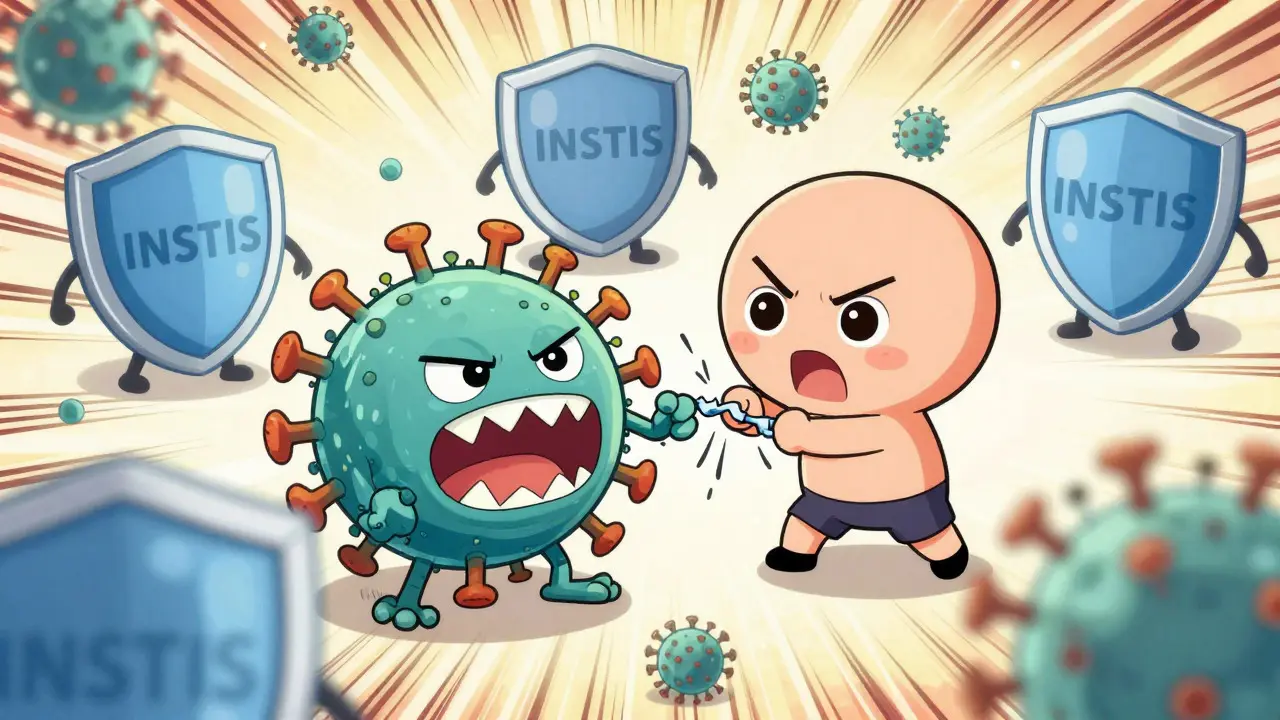
Integrase Strand Transfer Inhibitors (INSTIs) are medications like dolutegravir and bictegravir that block the integrase enzyme, preventing HIV DNA from integrating into the host cell's genome. These are currently the preferred first-line agents due to their high barrier to resistance and fewer side effects.
Nucleoside Reverse Transcriptase Inhibitors (NRTIs), such as tenofovir and emtricitabine, act as fake building blocks. When the virus tries to copy itself, it incorporates these blocks, causing the replication chain to terminate prematurely. Non-Nucleoside Reverse Transcriptase Inhibitors (NNRTIs), like efavirenz and doravirine, bind directly to the reverse transcriptase enzyme, deforming it so it can no longer function.
The shift toward INSTI-based regimens has been dramatic. As of 2025, approximately 78% of new HIV treatments in the U.S. start with an INSTI. This is not accidental. INSTIs suppress viral load faster and more reliably than older classes, reducing the window of opportunity for the virus to mutate.
The Mechanism of Drug Resistance
HIV is a notorious shape-shifter. It replicates rapidly and makes errors during copying. Most of these errors kill the virus, but occasionally, a mutation allows the virus to survive despite the presence of medication. This is drug resistance.
Resistance is not inevitable; it is usually a result of incomplete viral suppression. If the drug level in your blood drops too low-due to missed doses, poor absorption, or interactions with other drugs-the virus continues to replicate. Over time, the population of viruses shifts from susceptible to resistant strains.
- Low Barrier to Resistance: Older NNRTIs like efavirenz can lose effectiveness with a single mutation (e.g., K103N). If you miss a few doses, the virus may quickly become immune.
- High Barrier to Resistance: Modern INSTIs like dolutegravir require multiple simultaneous mutations (e.g., R263K plus G118R) to fail. This gives patients a wider safety margin for occasional adherence slips.
- Cross-Resistance: Some mutations confer resistance to an entire class. For example, the M184V mutation causes resistance to both lamivudine and emtricitabine, which are chemically similar NRTIs.
Data from the CDC shows that about 16.7% of new HIV diagnoses in the U.S. involve transmitted drug resistance. This means the person was infected with a strain already resistant to common drugs. This is why baseline resistance testing is mandatory at diagnosis.
Navigating Complex Drug Interactions
This is where many patients stumble. Your liver uses enzymes, particularly the Cytochrome P450 system (CYP3A4), to break down medications. Many HIV drugs interfere with these enzymes, either speeding them up or slowing them down.
| Drug Class | Interaction Mechanism | Common Conflicting Drugs |
|---|---|---|
| Protease Inhibitors (PIs) | Inhibit CYP3A4 (slow breakdown) | Statins (simvastatin), sedatives (midazolam), certain antifungals |
| NNRTIs (Efavirenz) | Induce CYP3A4 (speed up breakdown) | Blood thinners (warfarin), hormonal contraceptives, some antidepressants |
| INSTIs (Dolutegravir) | Minimal CYP interaction | Antacids containing magnesium/aluminum (reduce absorption) |
Consider the case of Protease Inhibitors (PIs). They are potent inhibitors of CYP3A4. If you take a PI along with simvastatin, a common cholesterol medication, the liver cannot break down the statin fast enough. Levels of the statin build up in your blood, leading to a risk of rhabdomyolysis-a serious condition involving muscle breakdown that can damage the kidneys. In fact, boosted PIs are contraindicated with 12 major drug classes.
In contrast, newer INSTIs like bictegravir have minimal impact on liver enzymes. This makes them safer for patients who also manage hypertension, diabetes, or mental health conditions. However, they are sensitive to metal cations. Taking dolutegravir within two hours of an antacid containing aluminum or magnesium can reduce its absorption by up to 40%, potentially leading to subtherapeutic levels and resistance.
Why Adherence Matters More Than Ever
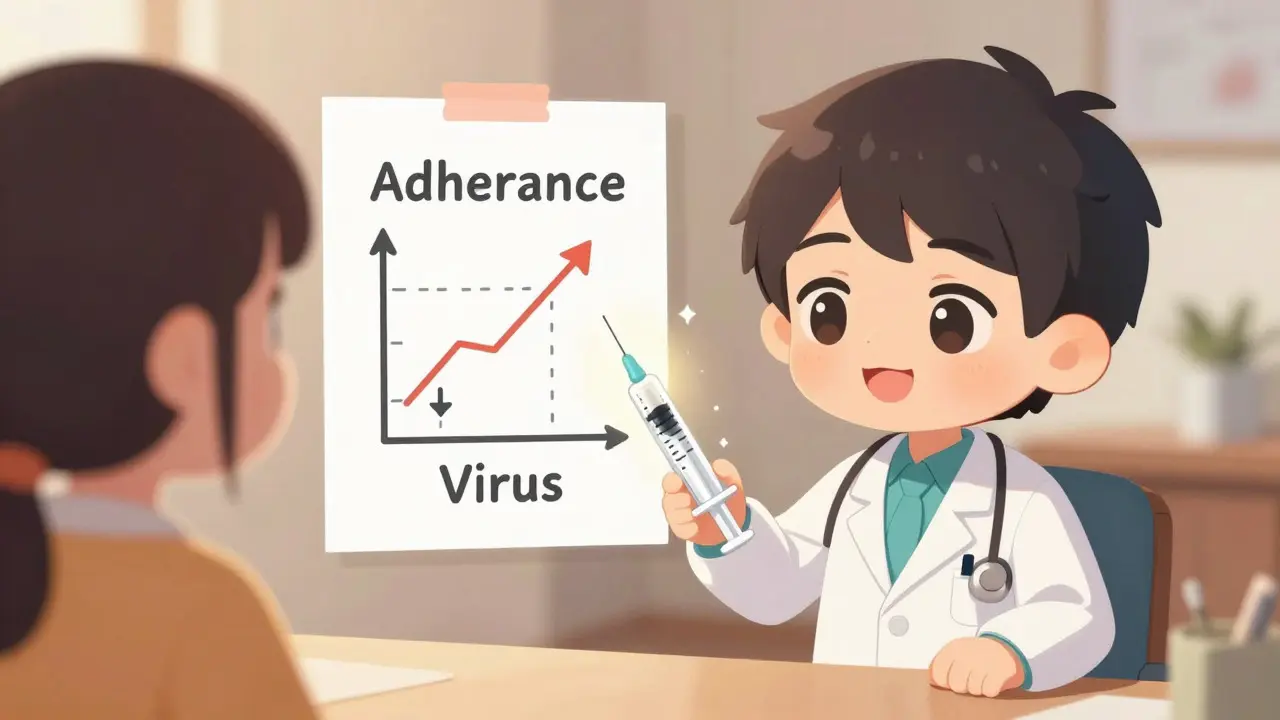
You might think, "If I miss one pill, it won’t matter." With modern long-acting injectables, this mindset is even more dangerous. Long-acting therapies, such as Cabenuva (cabotegravir/rilpivirine), deliver medication over weeks or months. While convenient, they introduce a unique risk: if you miss an injection appointment, drug levels decline slowly but steadily over weeks. This prolonged period of subtherapeutic exposure is a breeding ground for resistance.
Oral medications clear your system in days. If you miss a dose, the gap is short. With injectables, the gap is wide. Studies show that 94% of users prefer monthly injections over daily pills, yet 12% discontinue due to injection site reactions or logistical issues. The key is consistency. Virologic failure often stems not from the drug’s inefficacy, but from inconsistent delivery.
For oral regimens, the goal is undetectable viral load (<50 copies/mL). Achieving this requires taking medication at roughly the same time every day. Even with high-barrier INSTIs, chronic non-adherence (taking less than 80% of doses) significantly increases the risk of developing resistance mutations.
Monitoring and Managing Resistance
If your viral load rebounds after being undetectable, the immediate next step is not to guess-it’s to test. Genotypic resistance testing identifies exactly which mutations are present in your virus. This report guides your clinician in selecting a new regimen that remains effective against your specific strain.
Current DHHS guidelines mandate genotype testing at diagnosis and at any point of virologic failure. Turnaround times vary, averaging 14 days at academic centers and 21 days at community labs. During this waiting period, clinicians often advise continuing the current regimen unless toxicity is severe, to avoid further selective pressure on the virus.
Emerging tools are making this process smarter. AI-driven platforms like HIV-TRACE analyze genetic sequences to predict transmission clusters and resistance patterns with 87% accuracy. Additionally, pharmacokinetic monitoring-measuring actual drug levels in your blood-is becoming more accessible for patients with unexplained virologic failure despite reported good adherence.
Future Directions: Beyond Daily Pills
The landscape of HIV treatment is evolving rapidly. We are moving beyond daily oral pills toward long-acting injectables and implants. Lenacapavir, a capsid inhibitor approved in 2022, is administered only twice a year. It works by clamping down on the HIV capsid, preventing the virus from uncoating and releasing its genetic material. This novel mechanism offers activity against viruses resistant to all other classes.
However, innovation brings caution. Merck’s islatravir implant, designed to provide 12 months of therapy, was placed on clinical hold in early 2025 due to observed declines in CD4+ lymphocytes in some participants. This highlights the delicate balance between convenience and safety. As we push for fewer doses, we must ensure we do not compromise immune protection.
For now, the best strategy remains personalized care. Work with your provider to choose a regimen that fits your lifestyle, minimizes interactions with your other medications, and maximizes your ability to stay adherent. Use resources like the NIH HIV Drug Interaction Checker before adding new supplements or prescriptions. Your health depends on the synergy between science and your daily habits.
What happens if I develop HIV drug resistance?
If you develop resistance, your current medication will stop suppressing the virus effectively, leading to a rising viral load and declining CD4 count. Your doctor will order a genotypic resistance test to identify specific mutations. Based on this report, they will switch you to a new regimen containing drugs to which your virus is still susceptible. Early detection is key to preserving future treatment options.
Can I take antacids with my HIV medication?
It depends on the drug. Integrase inhibitors like dolutegravir and bictegravir bind to metals like aluminum and magnesium found in antacids, reducing their absorption. You should typically wait at least two hours after taking your HIV pill before using an antacid, or take the antacid four hours later. Always check with your pharmacist for specific timing instructions.
Are INSTIs better than older HIV drugs?
Yes, for most patients. INSTIs (integrase strand transfer inhibitors) have a higher barrier to resistance, meaning the virus needs more mutations to overcome them. They also tend to have fewer side effects and fewer drug-drug interactions compared to Protease Inhibitors and older NNRTIs. This is why they are the preferred first-line treatment in current guidelines.
How often should I get tested for drug resistance?
You should be tested for resistance at the time of your initial HIV diagnosis. After that, testing is recommended only if you experience virologic failure-meaning your viral load becomes detectable (>200 copies/mL) despite taking your medication as prescribed. Routine testing is not necessary if your viral load remains undetectable.
Do long-acting injections cause more resistance?
Not inherently, but they carry a different risk profile. Because the drug stays in your system for weeks, missing an injection leads to a slow decline in drug levels rather than a sudden drop. This prolonged period of low-level exposure can allow resistant viruses to emerge. Strict adherence to the injection schedule is critical to prevent this.