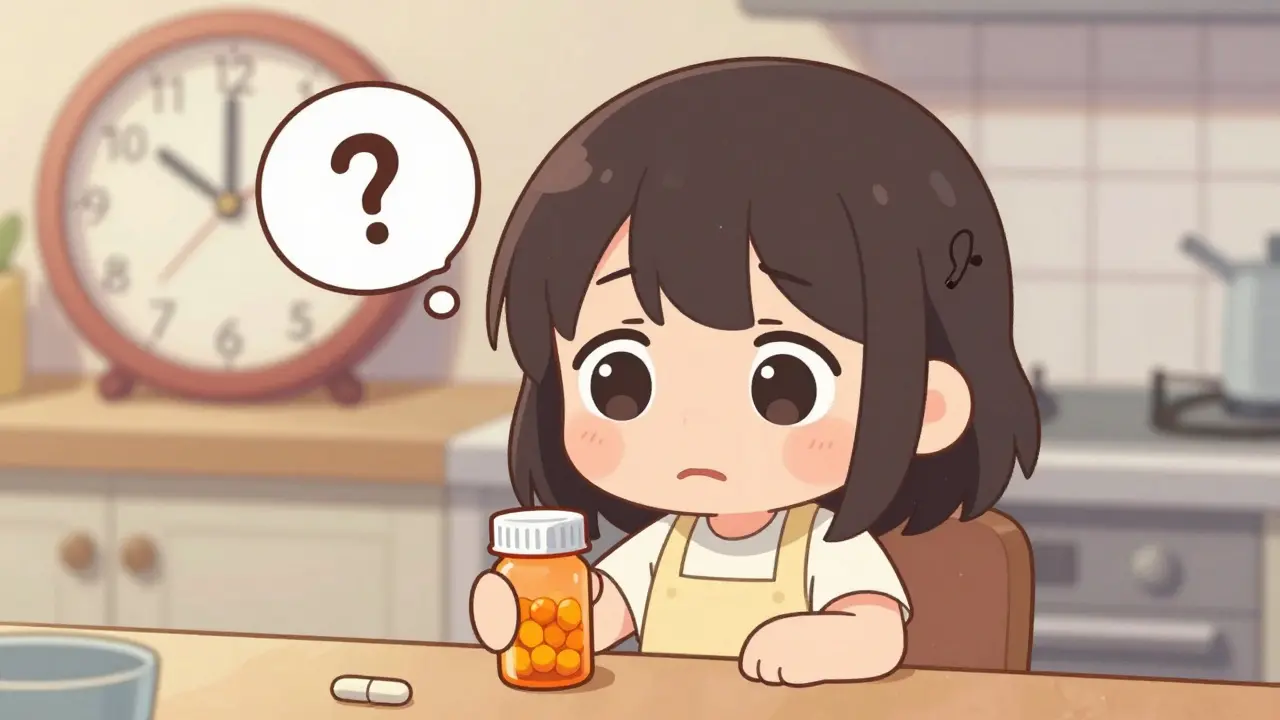
Have you ever realized it’s 2 PM and you forgot your morning pill? Or worse, did you accidentally take two pills because you weren’t sure if you’d taken one earlier? You are not alone. Missing a dose is one of the most common frustrations in managing chronic health conditions, but how you react matters more than the mistake itself. The golden rule that every pharmacist repeats is simple: never double up. Taking extra medication to "catch up" doesn't fix the missed dose; it creates a dangerous spike in your system that can lead to toxicity, hospital visits, or worse.
Understanding what to do when you miss a dose isn't just about following instructions-it's about understanding how your body processes drugs. This guide breaks down the science behind missed doses, explains why timing matters, and gives you clear, actionable steps for different types of medications so you can stay safe without second-guessing yourself.
The Golden Rule: Why Doubling Up Is Dangerous
It feels logical to think that if you missed one pill, taking two will balance things out. But medicine doesn't work like paying off a debt. Your body absorbs drugs based on concentration levels in your blood. When you take a standard dose, your blood levels rise to a therapeutic range where the drug works effectively. If you take double the dose, those levels skyrocket into a toxic range.
This risk is especially high with narrow-therapeutic-index drugs medications where the difference between a helpful dose and a harmful dose is very small. Examples include warfarin, digoxin, and many anti-seizure medications. A study published in the Journal of Clinical Pharmacy and Therapeutics found that over 17% of adverse drug events in elderly patients resulted directly from improper handling of missed doses. Dr. John Smith, Chief Pharmacist at the MHRA, noted that taking double doses accounts for nearly 15% of preventable hospital admissions related to medication errors in England alone.
Even for safer medications, doubling up can cause unpleasant side effects like nausea, dizziness, or stomach cramps. The goal of any missed-dose protocol is to maintain steady drug levels while avoiding these dangerous peaks. Always skip the double dose and resume your normal schedule unless your doctor has given you specific, written instructions otherwise.
Understanding the Midpoint Rule
So, if you shouldn't double up, what should you do? For most medications, the answer depends on the "midpoint." This is a simple calculation that helps you decide whether to take the missed dose or skip it entirely.
Here is how the midpoint rule works:
- Calculate the time between doses: If you take a medication twice a day (every 12 hours), your midpoint is 6 hours after your scheduled time.
- Check the clock: If you realize you missed the dose before the midpoint, take it immediately.
- Skip if late: If you realize you missed the dose after the midpoint, skip it completely. Do not make up for it later. Just take your next dose at the regular time.
For example, if you usually take your blood pressure medication at 8 AM and 8 PM, the midpoint for the morning dose is 2 PM. If you remember at 1 PM, take it. If you remember at 3 PM, skip it and wait until 8 PM. This approach prevents doses from being too close together, which keeps your blood levels stable.
High-Risk Medications Require Special Attention
Not all medications follow the same rules. Some drugs are classified as "red" risk by safety agencies like the National Patient Safety Agency (NPSA) because missing or mishandling them can cause immediate harm. These require strict adherence to specific protocols.
| Medication Type | Risk Category | Action if Missed | Why It Matters |
|---|---|---|---|
| Warfarin | Red (High) | Take if remembered before midnight; skip if after midnight. | Doubling can cause dangerous bleeding due to INR spikes. |
| Oral Contraceptives | Amber (Moderate) | Take within 12 hours of usual time. Use backup protection if >12 hours late. | Delays reduce contraceptive effectiveness for that cycle. |
| GLP-1 Agonists (e.g., Semaglutide) | Amber (Moderate) | Take within 4 days of missed date. Never double. | Late resumption may cause severe gastrointestinal discomfort. |
| Methotrexate | Red (High) | Never double. Contact doctor immediately if missed. | Narrow therapeutic window; overdose can be fatal. |
For instance, with warfarin, the NHS Specialist Pharmacy Service advises taking the dose if you remember it before midnight. If you wake up at 2 AM and realize you forgot it, skip it. Warfarin affects blood clotting, and a sudden surge in dosage can push your International Normalized Ratio (INR) into a dangerous zone, increasing the risk of major bleeding. Similarly, methotrexate is an immunosuppressant used for autoimmune diseases and cancer. Its safety margin is tiny. Taking a double dose can lead to life-threatening toxicity. In these cases, when in doubt, call your pharmacist or doctor rather than guessing.
The Role of Half-Life in Timing
Why do some drugs need strict timing while others are flexible? It comes down to half-life the time it takes for half of the drug to leave your body. Medications with short half-lives (less than 6 hours) leave your system quickly. If you miss a dose, the drug level drops fast, so you might feel symptoms sooner. However, they also clear out quickly, meaning you have less risk of accumulation if you take a dose late.
Conversely, drugs with long half-lives stay in your body for days. Levothyroxine, used for thyroid issues, has a half-life of about 7 days. Because it stays in your system so long, missing one dose occasionally has minimal impact on your overall hormone levels. This is why levothyroxine is often considered lower risk for single missed doses compared to something like metoprolol, a beta-blocker with a 3-4 hour half-life that requires more consistent dosing to control heart rate.
Understanding this concept helps you prioritize. If you miss a statin (cholesterol medication) once, don't panic-they generally have forgiving pharmacokinetics. If you miss an antibiotic, however, timing is crucial to ensure the bacteria are fully eradicated. Always check your specific medication's profile or ask your pharmacist about its half-life.

Practical Tips to Avoid Future Mistakes
Prevention is always better than correction. While no one is perfect, you can significantly reduce the chance of missing doses by building better habits. Here are some proven strategies:
- Use digital reminders: Apps like MyTherapy have shown a 42% reduction in missed dose incidents. Set alarms on your phone specifically for medication times.
- Link to daily routines: Take your morning pill with breakfast and your evening pill with dinner. Associating medication with existing habits reduces reliance on memory alone.
- Use a pill organizer: Weekly pill boxes provide a visual cue. If you see an empty slot, you know you’ve taken it. This is particularly helpful for people managing multiple medications.
- Travel planning: Time zone changes affect 38% of frequent travelers' medication schedules. Plan ahead by adjusting your timing gradually before the trip or consulting your doctor for a travel-specific schedule.
If you find yourself frequently missing doses, talk to your healthcare provider. They may switch you to a once-daily formulation or a combination pill that simplifies your regimen. Remember, medication adherence is a partnership. Your doctors want you to succeed, so communicate openly about any difficulties you face.
When to Call the Doctor
There are certain scenarios where standard guidelines aren't enough. You should contact your healthcare provider or pharmacist if:
- You missed more than one dose in a row.
- You are unsure whether you took today's dose (do not double up; seek advice).
- You experience unusual symptoms after skipping a dose, such as severe pain, confusion, or rapid heartbeat.
- You are taking a high-risk medication like warfarin, insulin, or methotrexate and missed a dose.
In these cases, professional guidance ensures you adjust your treatment plan safely without compromising your health. Don't hesitate to reach out-pharmacists are experts in medication management and are available to help clarify confusing instructions.
What should I do if I missed my dose yesterday?
If you missed a dose from the previous day, do not try to make up for it by taking extra medication today. Simply resume your normal dosing schedule at the next scheduled time. Taking a double dose increases the risk of side effects and toxicity without providing additional benefit.
Is it safe to take a missed dose if it's been 12 hours?
It depends on the medication. For twice-daily medications, the general rule is to skip the dose if more than 6 hours have passed since the scheduled time. For once-daily medications, if you remember it within the same calendar day, you can usually take it. However, if it's close to the time for your next dose, skip it. Always refer to your specific medication's leaflet or consult a pharmacist.
Why can't I just take two pills to catch up?
Taking two pills creates a sudden spike in drug concentration in your bloodstream, which can lead to overdose symptoms, toxicity, or severe side effects. This is especially dangerous for medications with a narrow therapeutic index, where the difference between a safe dose and a harmful dose is very small. It does not "balance out" the missed dose but instead introduces new risks.
How do I handle missed doses when traveling across time zones?
Time zone changes can disrupt your medication schedule. For short trips, consider keeping your home time for medication purposes. For longer trips, gradually adjust your dosing time each day leading up to the trip. Consult your doctor for a personalized plan, especially for critical medications like insulin or anticoagulants, to ensure you maintain therapeutic levels without doubling up.
What if I'm not sure if I took my morning pill?
If you cannot confirm whether you took your dose, assume you did not and follow the missed dose guidelines for your specific medication. Generally, if it is close to the time for your next dose, skip the uncertain dose to avoid accidental doubling. Using a pill organizer or setting a confirmation alarm can help prevent this uncertainty in the future.