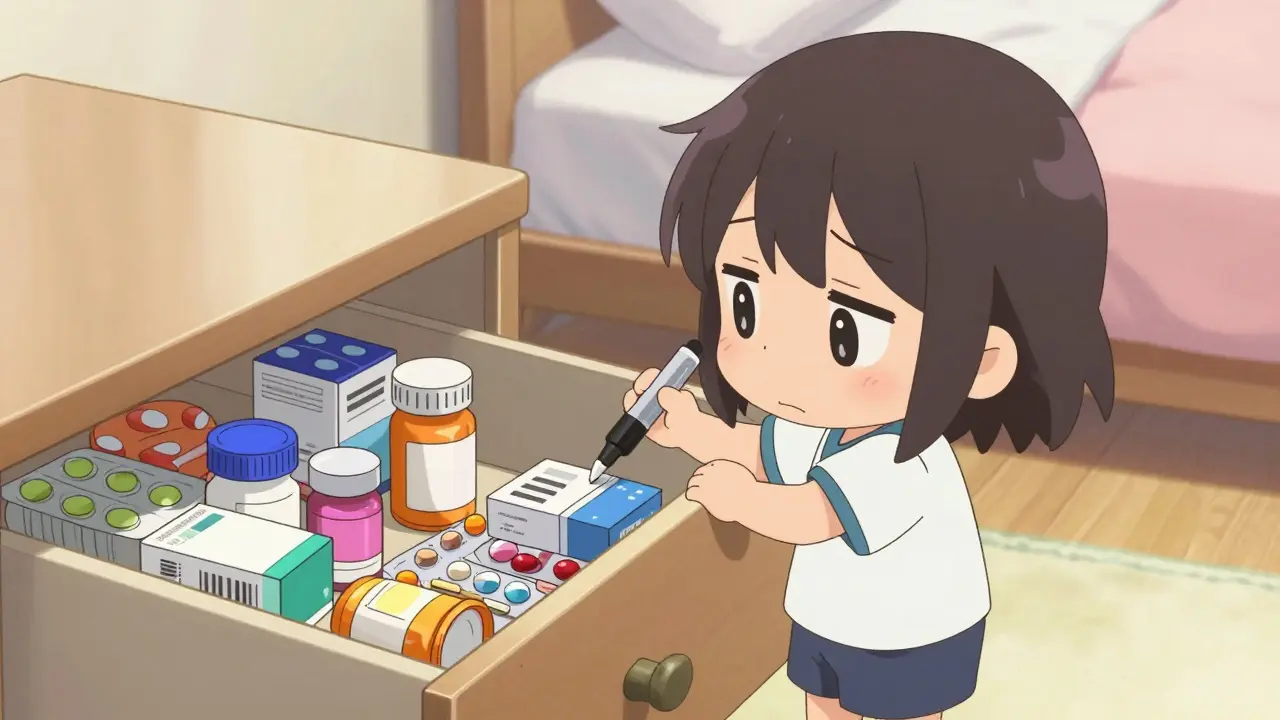
You have a drawer full of old pills. Maybe it’s leftover antibiotics from last winter, or painkillers you never touched after surgery. Keeping them feels wasteful, but flushing them scares you because of the environmental damage. Throwing them in the trash feels risky because kids or pets might find them. This is where medication take-back events come in. They are the safest way to get rid of these drugs, but only if you prepare them correctly.
Many people show up at collection bins with their meds in plastic bags, mixed together, or still labeled with their names. Often, staff turn them away. Why? Because preparation matters for privacy and safety. Getting it wrong means you walk home with your stash of expired drugs again. Let’s fix that. Here is exactly how to prepare your medications so they get accepted every time.
Why Preparation Matters More Than You Think
It is not just about following rules. It is about protecting your identity and preventing misuse. When you drop off drugs at a take-back event, a program authorized by the Drug Enforcement Administration (DEA) to collect unused pharmaceuticals for safe destruction, those containers go through a processing chain. If your name and address are visible, that information could theoretically be accessed. The Food and Drug Administration (FDA) updated its guidelines in June 2023 to emphasize that removing personal data is non-negotiable for privacy protection under HIPAA standards.
Beyond privacy, proper preparation ensures the drugs are destroyed safely. In 2024 alone, companies like Stericycle incinerated nearly 30,000 tons of pharmaceutical waste. That heat destroys the chemicals so they don’t end up in our water supply. Studies by the USGS have found traces of drugs in 80% of U.S. streams. By preparing your meds right, you stop this pollution at the source. You also prevent someone else from finding your opioids or stimulants and misusing them. According to the National Institute on Drug Abuse, 18.4 million Americans misused prescription medications in 2022. Most came from friends or family cabinets. Closing that loop starts with how you pack your bag.
The Golden Rule: Remove All Personal Information
This is the single most important step. Before you do anything else, grab a black permanent marker. Go over every label on every bottle, box, and blister pack. Cover your name, address, doctor’s name, pharmacy details, and the prescription number. Do not leave any gaps. Even a partial zip code can be a problem.
Dr. Sarah Wakeman, Medical Director at Massachusetts General Hospital, points out that hiding this info isn't just bureaucratic. It prevents prescription details from falling into the wrong hands, which could facilitate drug diversion. If you throw a bottle in a public bin with your name on it, you are essentially advertising what you take and where you live. Scrubbing the labels takes two minutes but protects you completely. If the label is on a patch or a small vial that cannot be covered, see the section below on special formats.
Container Rules: Original vs. Sealed Bags
Here is where things get tricky because rules vary slightly by location. However, there is a general hierarchy of acceptance.
Option 1: Keep them in original containers. This is the gold standard. Ninety-two percent of authorized collection sites prefer or require medications in their original pharmacy-labeled bottles or boxes. It helps the collectors identify what they are handling and ensures the drug hasn’t leaked. If you have the original bottle, keep the pills inside. Do not empty them into a Ziploc bag unless you have no other choice.
Option 2: Use a sealed secondary container. If you threw away the original bottle, do not panic. You can place loose pills in a small, sealed plastic bag or an empty, clean plastic bottle. The Pennsylvania Department of Drug and Alcohol Programs specifies that a "small sealed container" is acceptable when originals are missing. Just make sure the bag is tightly closed so pills don’t spill out during transport.
What to avoid: Do not mix different medications from different prescriptions into one bag unless you have no original containers. Some strict programs, like those in the Military Health System, prohibit mixing meds entirely. To be safe, keep distinct medications separate. Label the outside of the new bag with the drug name if you know it, using a dry-erase marker or a piece of tape that you can remove later.
Handling Liquids, Patches, and Sharps
Solid pills are easy. Other forms require extra care. If you bring liquids, patches, or needles, you need specific steps to avoid rejection.
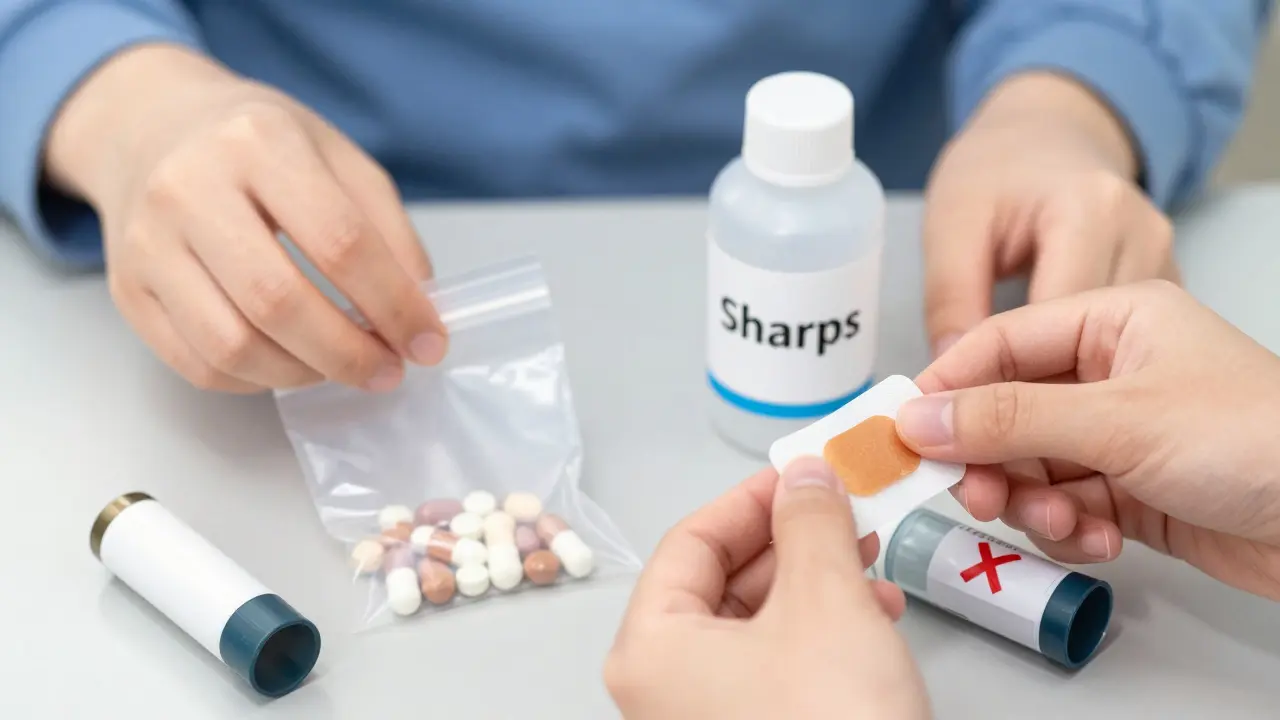
- Liquid Medications: These must stay in their original container if possible. The cap must be tight. If the original cap is lost, transfer the liquid to a securely sealed plastic bottle. Washington State’s Safe Medication Return program explicitly requires liquids to be in "the original container or a securely sealed container." Never pour medicine down the sink. Bring the whole bottle.
- Transdermal Patches: Think of nicotine patches or pain relief patches. These still contain active drugs. Fold the patch in half so the sticky sides touch each other. This seals the adhesive. Then, place the folded patch in its original packet or a sealed bag. One hundred percent of collection sites require this folding step to prevent skin contact with handlers.
- Sharps (Needles/Syringes): This is a major point of confusion. Most standard drug take-back bins do not accept sharps. You need a dedicated sharps container. If you don’t have one, use a hard plastic laundry detergent bottle. Put the capped needles inside, seal the lid with duct tape, and label it "Sharps." Check with your local collection site beforehand. Only 32% of retail pharmacies accept insulin pens or needles; hospital sites are more likely to say yes (89%).
What You Cannot Drop Off
Not everything goes in the blue bin. Trying to dispose of certain items can cause safety hazards for the workers. The DEA and most state health departments explicitly reject these items:
- Aerosols and Compressed Gases: Asthma inhalers, nitroglycerin sprays, and deodorant cans are pressurized. Incinerating them can cause explosions. These usually go in household hazardous waste collections, not drug take-backs.
- Hydrogen Peroxide and Iodine: These are considered chemical hazards rather than pharmaceuticals in many jurisdictions.
- Thermometers: Mercury thermometers are toxic and banned from disposal. Digital ones are e-waste.
- Illicit Drugs: While some police stations accept illegal substances, most civilian take-back events (pharmacies, hospitals) strictly follow federal law and only accept legal prescriptions and OTC meds. Check local laws before bringing anything illegal.
| Medication Type | Preparation Required | Accepted? |
|---|---|---|
| Pills/Capsules | Original bottle or sealed bag; redact labels | Yes |
| Liquids/Syrups | Original container with tight cap | Yes |
| Transdermal Patches | Folded adhesive-side-in, sealed | Yes |
| Inhalers/Aerosols | N/A | No (Hazardous Waste) |
| Needles/Sharps | Hard plastic container, taped shut | Selective (Check Site) |
| Pet Medicines | Same as human meds; redact owner info | Yes |
Finding Your Local Collection Site
You don’t need to wait for a national "Take-Back Day." The DEA launched the "Every Day is Take Back Day" initiative in January 2024. Now, thousands of locations accept drugs year-round. About 71% of the U.S. population lives less than five miles from a permanent collection site.
Where should you look?
- Pharmacies: Chains like Walgreens and CVS have kiosks in over 2,300 and 4,000 stores respectively. Their rules are simple: bring the meds, hide the labels. No appointment needed.
- Hospitals and Clinics: These often have higher acceptance rates for complex items like insulin pumps or large volumes of liquid meds.
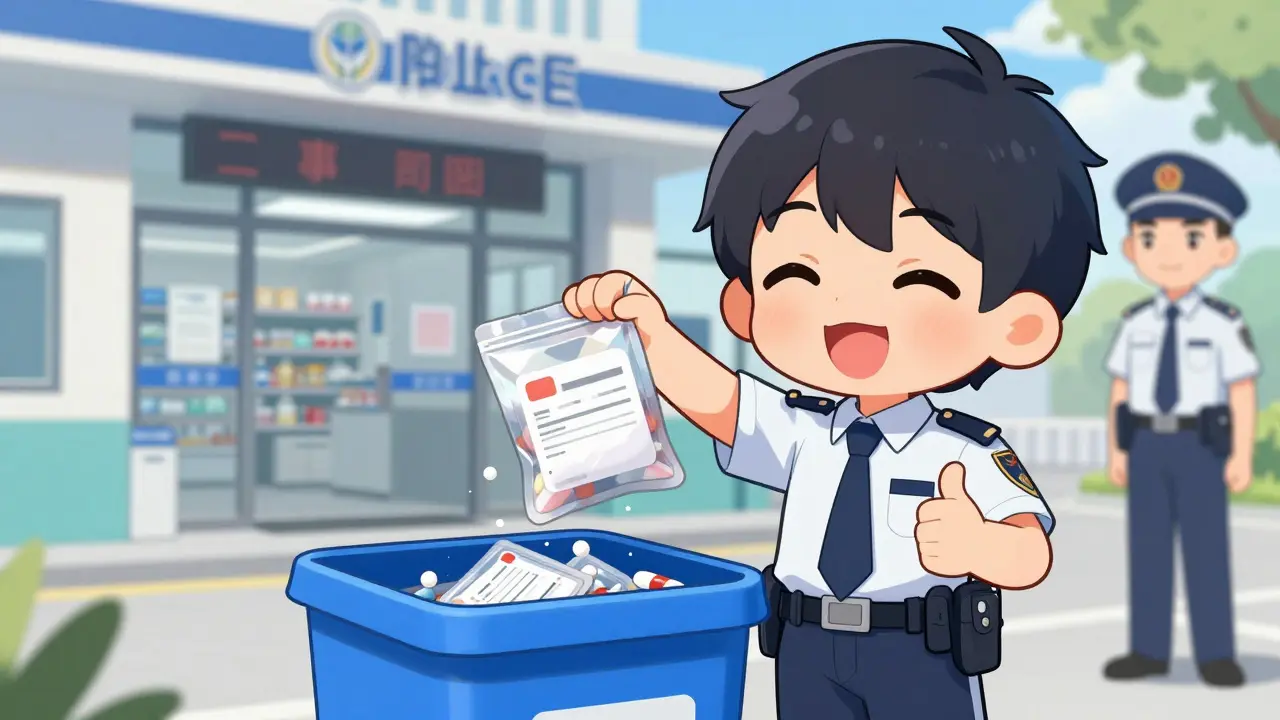
- Law Enforcement: Many police precincts and sheriff offices have drop boxes. These are great for controlled substances like oxycodone or adderall.
Use the DEA’s online locator tool to find the nearest spot. Call ahead if you have sharps or large quantities. Rural areas sometimes have stricter staff verification processes, adding 2-5 minutes to your visit. Be patient. Staff members are trained to verify that your prep meets safety standards.
Common Mistakes That Get You Rejected
Even well-meaning people mess this up. A 2023 Consumer Reports survey found that 37% of people had properly prepared meds rejected due to misunderstood protocols. Avoid these pitfalls:
- Incomplete Redaction: Leaving a sliver of your name visible is the #1 reason for rejection (41% of cases). Cover it all.
- Loose Liquids: Bringing a liquid med without its original secure cap leads to leaks. Staff will refuse it to protect themselves.
- Mixing Everything: Dumping all your pills into one giant bag makes it impossible to identify dangerous combinations or check for recalls. Keep categories separate.
- Bringing Expired Inhalers: Remember, aerosols are explosives in an incinerator. Take them to hazardous waste instead.
By taking five minutes to scrub labels, seal containers, and separate special items, you ensure your unused medications vanish safely. You protect your privacy, you protect the environment, and you close the door on potential misuse. It is a small effort with a massive impact.
Can I put my unused medications in the regular trash?
The FDA advises against throwing medications in the trash unless there is no take-back option available. If you must do it, mix the drugs with an unappealing substance like used coffee grounds or cat litter, seal them in a plastic bag, and throw that bag in the trash. However, take-back events are far superior because they guarantee complete destruction via incineration and prevent children or animals from accessing the drugs.
Do I need to crush my pills before dropping them off?
No. Do not crush, dissolve, or alter the physical form of your medications. Leave them exactly as they are in their containers. Crushing pills creates dust that can be harmful to handle and does not improve the disposal process. The incinerators at collection facilities are designed to handle intact pills, capsules, and liquids efficiently.
Are pet medications accepted at take-back events?
Yes, most DEA-authorized collection sites accept veterinary medications. Treat them the same as human meds: remove any personal information (like your vet's name or your address), keep them in original containers if possible, and seal them properly. This prevents pets from accidentally ingesting leftovers and keeps veterinary drugs out of the water supply.
What if I lost the original bottle for my liquid medicine?
If you do not have the original container, transfer the liquid into a clean, securely sealed plastic bottle. Ensure the cap is tight and does not leak. Label the outside with the drug name if known. While original containers are preferred, a securely sealed secondary container is generally accepted by most sites, including those following Washington State and Pennsylvania guidelines.
Is there a limit to how much medication I can drop off?
For household users, there is typically no strict limit. However, if you are bringing a very large quantity (e.g., hundreds of bottles), call the site first. Large volumes may trigger questions about commercial disposal or illegal diversion. For normal household cleanup, you can drop off as much as you have prepared correctly.
Why can't I just flush my medications?
Flushing is discouraged for almost all drugs because it contaminates waterways. The EPA notes that pharmaceutical pollution is found in 80% of U.S. streams. Only a small list of highly dangerous drugs (like certain potent opioids or fentanyl patches) carry a "flush" warning due to immediate overdose risks if left in the home. For the vast majority of medications, take-back or trash-with-coffee-grounds is the safer environmental choice.
12 Comments
Brett Aungst
As a pharmacist, I can confirm this is spot on. The biggest issue we see isn't the drugs themselves, but the lack of preparation. People bring in open bags of loose pills and it's a nightmare for sorting and safety. If you don't have the original bottle, just use a small ziplock bag and tape it shut. It takes two seconds and makes our jobs infinitely easier. Also, please stop bringing inhalers to the drug drop boxes. They are pressurized cans and they literally explode in the incinerators. We've had to shut down bins because someone threw in an albuterol inhaler. Just take those to hazardous waste.
Mary Howarth
Oh my goodness, thank you so much for sharing this!!! I have been sitting on a drawer full of old antibiotics for literally years because I was terrified of doing it wrong! I never knew about the black marker trick, that is such a simple idea but I would have never thought of it myself. I am definitely going to do this weekend, it feels like such a relief to know there is a safe way to get rid of them without hurting the environment or risking my privacy. You really saved me from having a panic attack over my medicine cabinet!
Sean Estabrooks
The whole "privacy" angle is a massive red herring designed to keep you compliant with a surveillance state that doesn't care about your data anyway. They want you to scrub the labels so they can process the chemical compounds for mass spectrometry analysis without linking it back to specific citizens, creating a perfect database of who was taking what and when. The DEA isn't interested in your safety; they are interested in tracking pharmaceutical supply chains to predict social unrest patterns based on opioid distribution maps. Do not trust the collection bins. They are data harvesting points disguised as public service initiatives.
Marlon Tomio
You're all missing the point. The system is broken. Why are we even discussing how to dispose of trash properly when the root cause is the over-prescription epidemic? Doctors push these pills like candy. The real moral failing isn't how you throw away the bottle, it's that you were given the bottle in the first place. Stop playing along with the bureaucracy of disposal and question why you need to dispose of them at all. The solution isn't better bins, it's fewer prescriptions.
Casey Eickhoff
I appreciate the detailed guide, particularly the section on transdermal patches. It is often overlooked that the adhesive side retains significant active ingredients. Folding them sticky-side-to-sticky-side is a crucial step that many people neglect, assuming the patch is inert once removed. Furthermore, the distinction between household hazardous waste and pharmaceutical waste regarding aerosols is vital. One cannot simply assume all medical devices are interchangeable in terms of disposal protocols. Precision in these matters ensures both environmental integrity and personal safety.
rob van oudernallern
thats actually really helpful info. i always just threw mine in the trash mixed with coffee grounds like my mom told me to do back in the day. didnt know about the take back events being everywhere now. gonna check if my local cvs has one. thanks for posting this stuff, its good to know what to do with the old meds instead of just letting them sit there forever.
Sherrie Trecker
This is absolutely ridiculous. Who has time to go around with a black marker covering every single label? I'm busy! And why should I have to protect my privacy from the very government agencies that are supposed to be serving us? It's insulting to think that my pharmacy information is something I need to hide like I'm doing something wrong. Plus, mixing everything into one bag is way more efficient. If the staff can't handle sorting a few mixed pills, maybe they shouldn't be running the program. This whole process is designed to frustrate people into giving up.
Brett Aungst
@Sherrie Trecker - Look, I get that it's annoying, but it's not about frustration. It's about liability and safety. If you mix opioids with stimulants in one bag, and that bag leaks or breaks, we have no idea what we're dealing with. And yes, you need to cover the labels because HIPAA violations carry huge fines for the pharmacies and hospitals hosting these bins. They aren't trying to spy on you; they are trying to avoid getting sued by you if your data leaks. It's a win-win if you do it right.
Gavin Edley
Brett, you sound like a robot. Nobody cares about your 'liability.' I brought a bag of mixed vitamins and leftover ibuprofen last week and they accepted it fine. The rules are made up on the fly to keep people confused. I asked the guy at the police station and he just shrugged and took it. Don't listen to the experts who try to complicate simple things. Just dump it in and leave. Life is too short to worry about marker smudges.
Blythe Ward
It is fascinating how the masses struggle with basic organizational skills. If you cannot manage to separate your medications into their respective containers, perhaps you should reconsider your capacity for independent living. The elitist might scoff, but proper disposal is a mark of a civilized society. Those who mix their pills are akin to barbarians looting a library. Use the original containers. It is not rocket science. 🧐💊
Kimberly Simbulan
Sarcasm aside, this guide is gold. I love how thorough it is. I was worried about my insulin pens, but seeing that some places accept them while others don't is super helpful. I'll definitely call ahead. Thanks for breaking down the liquid meds part too, I always wondered if I could just pour them out (spoiler: I didn't, but still). Great resource!
kavitha kumar
i have so many questions why cant we just burn them in our backyard is that illegal too everything is regulated now nothing is free anymore