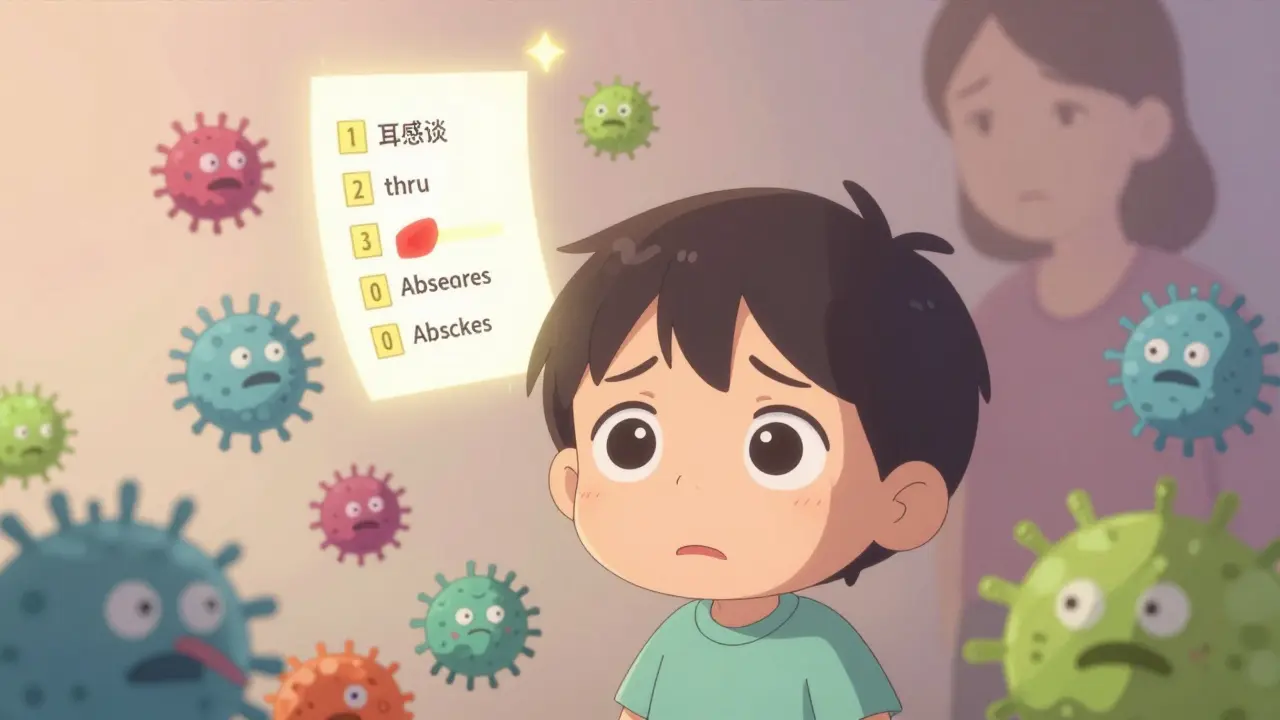
When a child keeps getting sick - ear infections, pneumonia, sinus infections - it’s easy to blame it on daycare, cold weather, or a weak immune system. But what if it’s not just bad luck? What if it’s a sign that something deeper is wrong? Recurrent infections aren’t always normal. In fact, they can be the earliest and most telling red flag of an underlying primary immunodeficiency - a hidden flaw in the body’s defense system that, if caught early, can change a person’s life.
When Is an Infection Not Just an Infection?
Most healthy kids get 6 to 12 colds a year. That’s normal. But if a child has four or more ear infections in 12 months, two or more serious sinus infections, or two or more pneumonias in a year, it’s time to look beyond germs. These aren’t random events. They’re patterns. And patterns mean something’s off. The same goes for adults. If someone needs intravenous antibiotics just to clear a simple infection, or if fungal infections like oral thrush stick around past age one, that’s not typical. Thrush after age one? That’s a red flag. It shouldn’t happen in a healthy immune system. And if infections don’t respond to two months of standard antibiotics, or if they keep coming back in the same spot - deep skin abscesses, lung infections, bone infections - that’s a signal the body can’t fight back the way it should. Family history matters too. If a sibling or close relative had a rare infection, died young from something simple like pneumonia, or was diagnosed with an immune disorder, that raises the risk. It’s not just about the patient. It’s about the whole genetic picture.What Doctors Look For: The 10 Warning Signs
There’s no single test that catches all immunodeficiencies. But there’s a clear, evidence-backed list of red flags that guide doctors. These aren’t guesses. They’re based on decades of data from the American Academy of Allergy, Asthma & Immunology and the European Society for Immunodeficiencies:- Four or more ear infections in one year
- Two or more serious sinus infections in one year
- Two or more pneumonias in one year
- Persistent oral thrush after age one
- Two or more deep-seated infections (like septicemia or meningitis)
- Recurrent deep skin or organ abscesses
- Need for intravenous antibiotics to clear infections
- Failure to gain weight or grow normally
- Infections caused by unusual organisms (like Pneumocystis jirovecii or certain fungi)
- A family history of primary immunodeficiency
Beyond the Symptoms: What the Lab Shows
If these red flags show up, the next step isn’t more antibiotics. It’s blood work. Not just a basic CBC. A full immune workup starts with a few key tests:- Complete blood count (CBC) with differential: Low lymphocyte counts - under 1,500 cells/μL in kids over one year - can signal T-cell problems. In infants under one, anything under 3,000 is a concern.
- Immunoglobulin levels: IgG, IgA, IgM. These are the body’s antibodies. Normal levels change with age. At three months, IgG averages 243 mg/dL. By age five, it’s 700-1,600 mg/dL. A level of 420 mg/dL might seem fine if you don’t know the age-adjusted range - but for an 8-year-old, it’s dangerously low. That’s why one pediatrician in Ohio saw three kids misdiagnosed as having chronic bronchitis - their IgG was just above the adult cutoff, but way below what’s normal for their age.
- Lymphocyte subsets (flow cytometry): This test counts CD3, CD4, CD8, CD19, and CD56 cells. If CD3+ T-cell counts are under 1,000 cells/μL in a child over two, it’s abnormal. This can point to conditions like SCID or DiGeorge syndrome.
- Vaccine response testing: This is the gold standard. You give a vaccine - like tetanus or pneumococcal - then check antibody levels four to six weeks later. Protective tetanus titers need to be at least 0.1 IU/mL. For pneumococcal, it’s 1.3 μg/mL. If the body doesn’t respond, the immune system isn’t working.
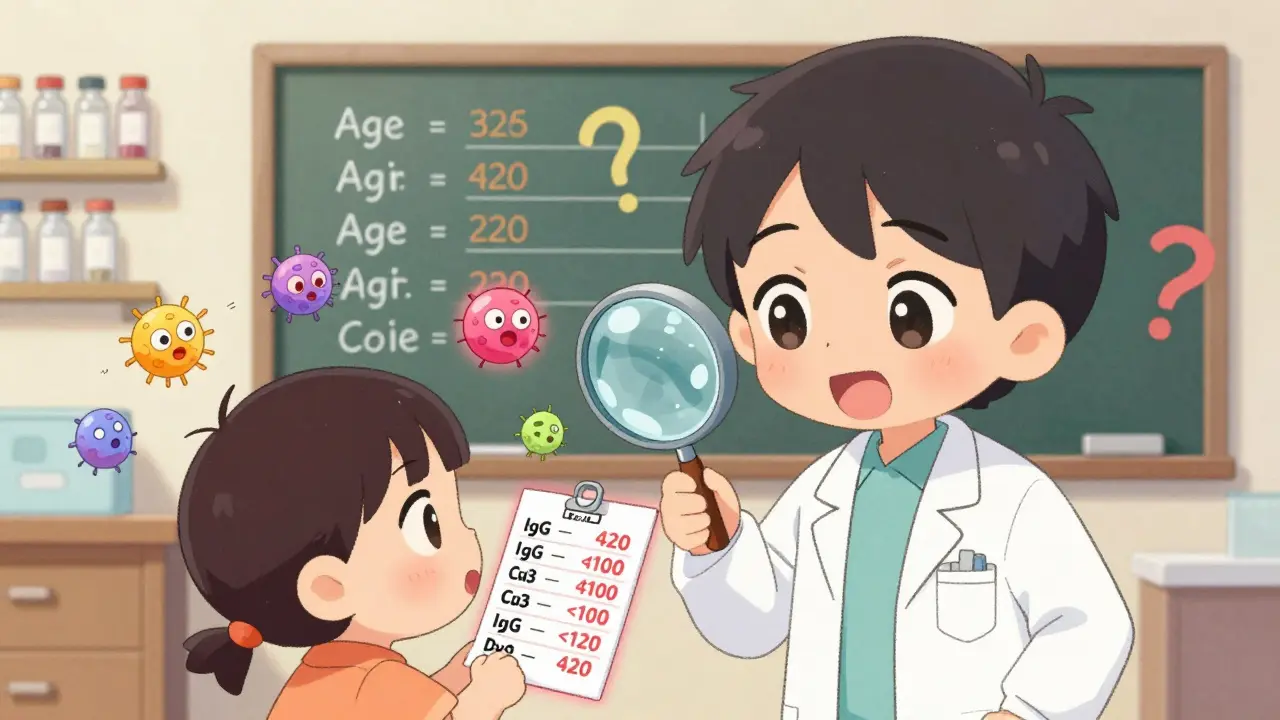
What’s Not Immunodeficiency? Ruling Out the Look-Alikes
Not every recurrent infection is an immune problem. In fact, up to 43% of cases are caused by something else. That’s why the first rule of immunodeficiency workup is: rule out the mimics.- Cystic fibrosis: This genetic disease causes thick mucus that traps bacteria in the lungs. It looks like recurrent pneumonia but is treated with airway clearance, not immunoglobulin.
- Structural issues: A deviated septum, enlarged adenoids, or a foreign object stuck in the airway can cause repeated sinus or lung infections. One study found 18% of kids with recurrent pneumonia had an inhaled foreign body - something a chest X-ray can catch.
- Autoimmune diseases: Lupus, rheumatoid arthritis, or even untreated celiac disease can lower antibody levels. Up to 14% of patients labeled as having CVID actually have an autoimmune condition.
- Medications: Steroids, chemotherapy, or even long-term proton-pump inhibitors can suppress immunity. You can’t treat a fake immunodeficiency with real immune therapy.
- Transient hypogammaglobulinemia: Some babies have low IgG for the first year or two. It’s normal. It fixes itself. But 41% of pediatricians in one survey started IVIG therapy anyway - unnecessary, expensive, and risky.
What Happens Next? The Path to Diagnosis
Once the red flags are there and the basic tests point toward a problem, the next step is deeper. Genetic testing is now a game-changer. In 2023, the FDA approved next-generation panels that screen 484 immune-related genes. These tests find the root cause in 35% of cases - nearly double what traditional methods found. For example, a child with recurrent infections and no tonsils? That’s a classic sign of X-linked agammaglobulinemia. A gene test confirms mutations in the BTK gene. No guesswork. No delay. Treatment starts immediately. But even with advanced tools, the biggest barrier isn’t technology. It’s awareness. A 2022 study showed the average time from first symptoms to diagnosis was 9.2 years. When doctors used the 10-warning-sign checklist? It dropped to 2.1 years. That’s eight years of suffering, missed school, hospital stays, and antibiotics that didn’t work - cut down to under two years.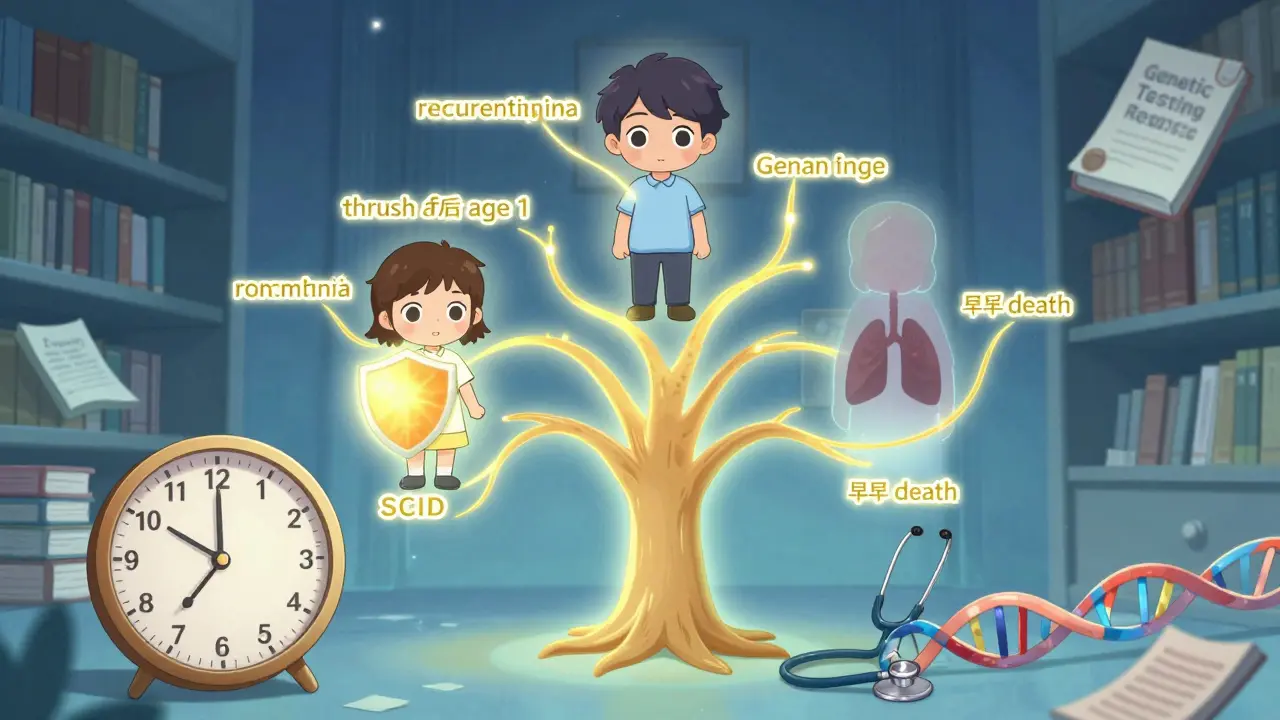
What You Can Do
If you’re a parent and your child keeps getting sick despite treatment, ask: Is this normal? Keep a log. How many infections? What kind? How long did they last? Were antibiotics used? Did they work? Bring this to your doctor. Don’t wait for them to notice. If you’re a clinician, don’t rely on adult lab ranges for kids. Use age-adjusted norms. Order vaccine response tests before IVIG. Rule out cystic fibrosis and structural issues before calling it immunodeficiency. And if you’re unsure? Refer early. You don’t need to be the expert. You just need to recognize when you’re out of your depth.Why Timing Matters
Every month without treatment in a child with SCID means more infections, more organ damage, more risk of death. For CVID, each year of delay increases the chance of permanent lung scarring, liver disease, or autoimmune complications. Early diagnosis doesn’t just prevent death. It prevents lifelong disability. And it’s not just kids. Adults with undiagnosed antibody deficiencies often go years with chronic bronchitis, asthma, or sinusitis - treated with inhalers and antibiotics - when what they really need is immunoglobulin replacement or targeted therapy. The science is clear. The tools are available. What’s missing is awareness.Can recurrent infections be normal in children?
Yes, but only up to a point. Healthy children can have 6 to 12 upper respiratory infections per year, especially in daycare or school settings. However, if infections are severe, frequent, persistent, or caused by unusual organisms - like fungal infections after age one or pneumonia requiring hospitalization - it’s not normal. These patterns suggest an underlying immune problem.
What is the most common type of primary immunodeficiency?
Common Variable Immunodeficiency (CVID) is the most frequently diagnosed antibody deficiency in adults, accounting for 68% of cases. In children, X-linked agammaglobulinemia is the most common inherited antibody disorder, making up about 85% of pediatric antibody deficiencies. Both involve low antibody levels and poor response to vaccines.
Do I need to get genetic testing if I have recurrent infections?
Not always. First, basic blood tests - immunoglobulin levels, lymphocyte counts, and vaccine response - should be done. If those point to a likely immune defect and standard treatments fail, then genetic testing is the next step. It’s not the first test, but it’s often the key to confirming a diagnosis and guiding family planning or targeted therapies.
Can immunodeficiency be cured?
Some types can. Severe Combined Immunodeficiency (SCID) can be cured with bone marrow transplant or gene therapy if caught early. For others like CVID or X-linked agammaglobulinemia, there’s no cure - but lifelong immunoglobulin replacement therapy can allow normal life expectancy and quality. The goal isn’t always cure. It’s control.
Why do some doctors miss immunodeficiency?
Because the symptoms look like common illnesses - bronchitis, asthma, sinusitis. Many doctors don’t know the 10 warning signs or how to interpret age-adjusted lab values. A 2023 survey of physicians found 68% struggled with interpreting immunoglobulin levels in children. Without training and awareness, these conditions stay hidden.
Is immunoglobulin therapy safe?
Yes, when used correctly. IVIG or SCIG therapy is safe and effective for confirmed antibody deficiencies. But giving it without proof of functional antibody failure - like low vaccine response - can be unnecessary and carries small risks like allergic reactions or kidney stress. Always confirm the diagnosis before starting treatment.
Immunodeficiency isn’t rare. It’s just underdiagnosed. And every day without recognition costs time, health, and sometimes life. The tools exist. The signs are clear. All it takes is asking the right question: Is this just illness - or is it immune failure?
9 Comments
Manish Singh
Been there. My cousin’s kid kept getting pneumonia every winter. Doctors kept saying "it’s just daycare," "boost his immunity," blah blah. Then one day, the pediatrician actually asked about family history - turns out his uncle died at 22 from "pneumonia" but no one knew it was SCID. Got tested. Diagnosed at 18 months. IVIG started. Now he’s 7, plays soccer, no hospital visits in 3 years.
It’s not magic. It’s just paying attention. Stop blaming the kid. Start asking the right questions.
Nilesh Khedekar
they say its immunodeficiency but what if its the vaccines? i mean, think about it - kids get 10+ shots by age 2, and then boom, infections start piling up. what if the immune system just got overwhelmed? i read this one guy on reddit who said his daughter got sick after the hib shot and never recovered. they gave her ivig like it was candy. i think the system is hiding the truth. big pharma doesn’t want you to know how many kids they break with all these shots.
Robin Hall
While the clinical criteria outlined are empirically sound and align with the 2022 IUIS guidelines, one must not overlook the confounding influence of environmental epigenetics and microbiome dysbiosis in pediatric recurrent infection patterns. The assertion that 43% of cases are misattributed to immunodeficiency warrants further scrutiny, as recent studies (e.g., Nature Microbiology, 2023) suggest that gut-lung axis disruption may precipitate recurrent respiratory infections independently of humoral immunity. Thus, while the 10 warning signs serve as a necessary heuristic, they are insufficient without comprehensive metagenomic and cytokine profiling. To diagnose solely on IgG thresholds and lymphocyte counts is to engage in reductionist medicine.
jared baker
Simple version: if your kid keeps getting the same infections over and over, and antibiotics don’t fix it, it’s not luck. It’s your body not working right.
Get the blood test. Not just a basic one - the full immune panel. Check antibody levels for their age. Test if they respond to vaccines. If not, they need real help.
Don’t wait. If it’s SCID, every month counts. I’ve seen kids die because doctors thought it was just asthma. It’s not.
Michelle Jackson
Okay but let’s be real - how many of these cases are just lazy parenting? Kids get sick because they’re not washed properly, fed junk, or forced into daycare too early. I’ve seen moms who bring their 3-year-old to the ER for a runny nose and then blame the immune system.
And don’t even get me started on IVIG. It’s $10k a month. Are we really just throwing money at a problem because we don’t want to teach basic hygiene?
Maybe stop treating every sniffle like a medical emergency and start teaching kids to wash their hands.
Paul Ratliff
My niece had 7 ear infections in 9 months. We thought she was just unlucky. Then we found out her IgG was 380 at age 5. Normal range? 700+.
Turns out her older brother had the same thing. He got diagnosed at 8. She got diagnosed at 3. Now she’s fine.
Just log the infections. Bring it to your doc. Don’t wait for them to notice. You’re the parent. You know your kid better than any chart.
SNEHA GUPTA
There’s something deeply human here - the way we dismiss patterns as coincidence. We say, "oh, kids get sick," as if biology is a lottery. But the body doesn’t lie. It whispers through fever, abscesses, thrush. We’ve trained ourselves to ignore the whispers until they scream.
Perhaps the real immunodeficiency isn’t in the child’s T-cells, but in our collective refusal to listen - to the history, to the numbers, to the quiet repetition of suffering.
Diagnosis isn’t just science. It’s humility. It’s saying: maybe I don’t know what’s happening. Maybe I need to look deeper.
Gaurav Kumar
Let me tell you something - in India, we don’t have access to flow cytometry or next-gen panels in 90% of districts. But we do have something better: common sense. My cousin’s daughter had thrush at age 4. We took her to a local doctor who’d seen three similar cases last year. He didn’t need a lab. He said, "This isn’t normal. Go to Delhi."
They found a BTK mutation. Treatment started in 11 days.
Stop overcomplicating. Sometimes, the 10 signs are enough. You don’t need a PhD to know a child who can’t fight a yeast infection isn’t healthy.
David Robinson
Look, I get it. You want to save kids. But let’s talk about the elephant in the room - insurance. IVIG costs $12,000 per dose. Hospitals push it because they get reimbursed. Labs push testing because they get paid. Pediatricians push referrals because they’re scared of lawsuits.
Meanwhile, the kid with 4 ear infections? They get amoxicillin. Again. And again. And again.
Who benefits? Not the child. Not the parents. The system.
I’ve seen parents bankrupted by "necessary" testing. I’ve seen kids get IVIG for 5 years because their IgG was "low for age" - but their vaccine response was normal.
So tell me - is this medicine? Or is this profit-driven overdiagnosis disguised as vigilance?