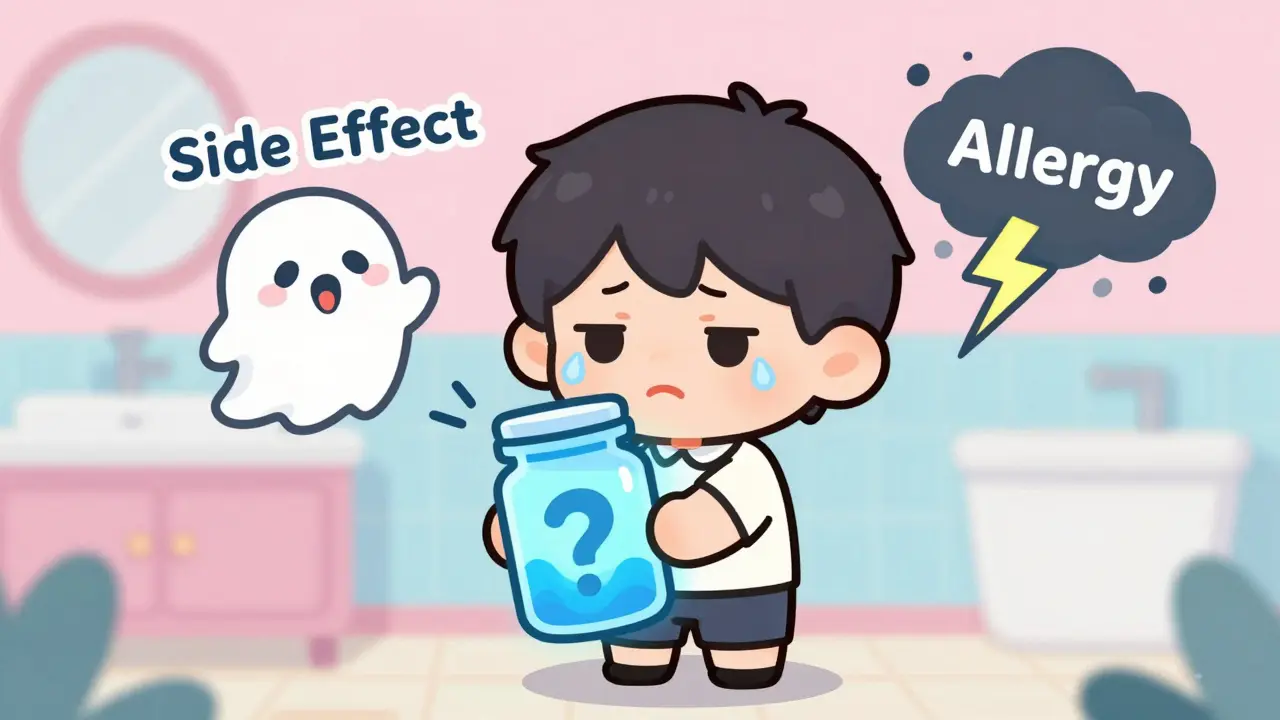
Have you ever taken a pill and felt sick afterward? Maybe your stomach turned, or you broke out in a mild rash. Your instinct might be to label it an "allergy" and avoid that drug forever. But here is the catch: most of the time, that reaction was just a side effect, not a true allergy. Confusing the two can cost you access to better, cheaper, and more effective treatments down the road.
Understanding the difference between medication side effects and unwanted pharmacological responses that do not involve the immune system and allergic drug reactions and immune-mediated responses where the body attacks the drug as a foreign invader is critical for your health. This distinction isn't just medical jargon; it determines whether you can safely take first-line antibiotics like penicillin or if you need broader, more expensive alternatives. Let’s break down exactly how these reactions differ, how to spot them, and what steps you should take next.
The Core Biological Difference
At their heart, side effects and allergies are completely different biological events. A side effect is simply a known, unintended consequence of a drug doing its job. It happens because the medication interacts with your body’s normal systems. For example, antihistamines make you drowsy because they cross into the brain and block histamine receptors there, not just in your nose. This is predictable, dose-dependent, and does not involve your immune system fighting back.
In contrast, a drug allergy is an overreaction by your immune system. Your body mistakenly identifies the medication as a harmful invader, like a virus or bacteria, and launches an attack. This involves specific immune components, such as Immunoglobulin E (IgE) antibodies or T-cells. Dr. Clemens von Pirquet coined the term "allergy" in 1906 to describe this hypersensitivity. When you have a true allergy, even a tiny amount of the drug can trigger a response because your immune memory has been primed to react.
- Side Effect: Pharmacological action. The drug affects a receptor or enzyme it wasn't supposed to target. No immune involvement.
- Allergy: Immune response. The body creates antibodies or activates cells to destroy the drug. High risk of recurrence upon re-exposure.
Timing Is a Major Clue
When did the symptoms start? Timing is one of the most reliable ways to distinguish between the two. Side effects usually appear shortly after starting a medication or increasing the dose, often within hours to days. They tend to be consistent every time you take the drug at that dose. For instance, metformin, a common diabetes medication, causes gastrointestinal issues in 20-30% of patients according to American Diabetes Association guidelines. These symptoms often fade after 2-4 weeks as your body adjusts.
Allergic reactions follow different timelines based on the type of immune response involved. Immediate-type allergies, mediated by IgE, happen fast-usually within minutes to two hours after exposure. This is when you see hives, swelling, or difficulty breathing. Delayed reactions, driven by T-cells, take longer. They might not show up until 48 to 72 hours after taking the drug, or even a week later. A classic example is a maculopapular rash from antibiotics, which often appears several days into treatment. If you took a pill yesterday and feel fine today, but break out in a rash three days later, that delay points more toward an allergic mechanism than a simple side effect.
Symptom Profiles: What to Look For
The specific symptoms you experience provide strong evidence for what kind of reaction occurred. Side effects are often related to the drug's primary function or its metabolism. Nausea, headache, dizziness, dry mouth, and muscle aches are common side effects across many drug classes. Statins, for example, cause muscle pain in about 5-10% of users. These symptoms are uncomfortable but rarely life-threatening and often improve with dose adjustment or taking the drug with food.
Allergic symptoms are distinct because they involve inflammation and immune mediators. Look for signs like:
- Hives (Urticaria): Raised, itchy welts on the skin.
- Angioedema: Swelling of the lips, tongue, eyes, or throat.
- Bronchospasm: Wheezing or shortness of breath.
- Anaphylaxis: A severe, whole-body reaction involving low blood pressure, rapid pulse, and potential loss of consciousness. This occurs in approximately 0.05-0.5% of medication exposures.
- Stevens-Johnson Syndrome: A rare but severe delayed reaction causing blistering and skin detachment.
If you experienced nausea alone, it’s likely a side effect. If you had hives and swelling, it’s almost certainly an allergy. Gastrointestinal symptoms like diarrhea or vomiting are frequently mislabeled as allergies, especially with antibiotics like amoxicillin, but they are typically side effects unless accompanied by other immune signs.

The Penicillin Misconception
Penicillin is the poster child for misunderstood drug reactions. It accounts for 80% of reported severe drug allergies. However, research shows that 80-90% of people who claim to be allergic to penicillin do not have a true allergy when tested. Many confuse a childhood rash or stomach upset with a life-threatening allergy. This misconception has serious consequences. Patients labeled as allergic are often prescribed broader-spectrum antibiotics, which are more expensive, have more side effects, and contribute to antibiotic resistance. A study found that penicillin allergy labels increase the risk of methicillin-resistant Staphylococcus aureus (MRSA) infection by 69%.
Dr. Elina Jerschow, Chair of the American College of Allergy, Asthma & Immunology's Drug Allergy Committee, notes that mislabeling contributes significantly to healthcare costs and patient risk. If you have a "penicillin allergy" listed in your records, especially if it happened years ago, it is worth getting evaluated. Most people can safely take penicillin once the label is cleared through proper testing.
| Feature | Side Effect | Allergic Reaction |
|---|---|---|
| Mechanism | Pharmacological (drug action) | Immune-mediated (IgE or T-cell) |
| Dose Dependency | Often increases with higher doses | Can occur at any therapeutic dose |
| Onset Time | Hours to days; consistent | Minutes to hours (immediate) or days (delayed) |
| Common Symptoms | Nausea, headache, drowsiness, muscle ache | Hives, swelling, wheezing, anaphylaxis |
| Management | Dose adjustment, timing change, supportive care | Avoidance, desensitization protocols |
| Prevalence | Common (varies by drug) | Rare (5-10% of adverse reactions) |
Diagnostic Pathways: How Doctors Confirm the Cause
You cannot diagnose a drug allergy based on symptoms alone. Proper evaluation requires a structured approach. The American Academy of Allergy, Asthma & Immunology (AAAAI) recommends a detailed history taking 15-20 minutes per patient. Doctors look for the timing, nature of symptoms, and circumstances of the reaction. For penicillin, tools like the PEN-FAST clinical decision rule help identify low-risk patients who can be safely cleared without extensive testing.
If the history is unclear, skin testing is the next step. Prick tests and intradermal injections check for IgE-mediated sensitivity. Skin testing has a 97% negative predictive value, meaning if the test is negative, you are very unlikely to have an immediate allergy. For delayed reactions, patch testing may be used. In some cases, an oral drug challenge is performed under strict medical supervision. This involves giving small, increasing doses of the drug to see if a reaction occurs. The reaction rate in low-risk patients during these challenges is only 0.2%, making it a safe and definitive diagnostic tool.
Newer technologies are also improving accuracy. The basophil activation test (BAT), approved by the FDA in 2023, measures immune cell activity in blood samples, offering high specificity for penicillin allergy. Additionally, pharmacogenomic testing, such as HLA-B*57:01 screening for abacavir, can predict genetic susceptibility to certain hypersensitivity reactions before treatment begins.

Impact on Healthcare Costs and Treatment Options
Mislabeled allergies create a ripple effect in healthcare. When a patient avoids first-line drugs, doctors must prescribe alternatives. These alternatives are often less effective, more expensive, and associated with higher rates of adverse events. Research from Brigham and Women's Hospital indicates that penicillin allergy labels increase annual healthcare costs by $4,000 per patient. On a national scale, mislabeled drug allergies cost the U.S. healthcare system $1.1 billion annually.
Hospital stays are also affected. Patients with documented drug allergies have longer lengths of stay, averaging 0.5 to 1.5 additional days per admission. This is due to delays in finding appropriate medications and managing complications from alternative drugs. Furthermore, the use of broad-spectrum antibiotics drives antibiotic resistance, making future infections harder to treat. Clarifying drug allergies is not just a personal health issue; it is a public health imperative.
What You Should Do Next
If you suspect you have a drug allergy, do not simply stop taking the medication without consulting your doctor. Abruptly stopping essential drugs can be dangerous. Instead, document your symptoms carefully. Note when you took the drug, when symptoms started, what they looked like, and how long they lasted. Photos of rashes or swelling can be helpful for your allergist.
Consider seeking a referral to an allergist or immunologist for evaluation, especially if the allergy limits your treatment options. Programs that clarify drug allergies are becoming more common, with adoption growing from 15% of U.S. hospitals in 2018 to 65% in 2023. These programs use standardized protocols to remove incorrect allergy labels, allowing patients to access safer and more effective medications.
For minor side effects, talk to your prescriber about management strategies. Taking a drug with food, changing the time of day you take it, or adjusting the dose can often resolve the issue. Remember, side effects are manageable; true allergies require avoidance. Getting the right diagnosis ensures you get the best possible care.
Can a side effect turn into an allergy?
No, a side effect cannot turn into an allergy. They are fundamentally different mechanisms. A side effect is a direct result of the drug's chemical action on the body, while an allergy is an immune system response. However, repeated exposure to a drug can sensitize the immune system, potentially leading to an allergic reaction upon subsequent exposures, but this is the development of a new condition, not a transformation of a side effect.
How long does a drug allergy last?
Most drug allergies wane over time. Studies suggest that up to 80% of people with a penicillin allergy will lose their sensitivity within 10 years. However, this varies by drug and individual. Never assume an allergy has disappeared without medical testing. Re-exposure without confirmation can lead to severe reactions, including anaphylaxis.
What should I do if I have a mild rash after taking a medication?
Stop taking the medication and contact your healthcare provider immediately. While a mild rash can be a side effect, it can also be the early sign of a more serious allergic reaction. Your doctor will assess the severity and determine if you need to switch medications or undergo allergy testing. Do not ignore rashes, especially if they spread or are accompanied by fever or joint pain.
Is it safe to take ibuprofen if I have a aspirin allergy?
Not necessarily. Aspirin and ibuprofen are both NSAIDs (nonsteroidal anti-inflammatory drugs). People with aspirin-exacerbated respiratory disease (AERD) or true NSAID allergies often react to multiple drugs in this class due to cross-reactivity. Consult an allergist to determine if you can safely take other NSAIDs or if you need to avoid the entire class.
How can I prevent future drug allergies?
You cannot always prevent drug allergies, as they involve unpredictable immune responses. However, you can reduce risks by informing all healthcare providers of your confirmed allergies, wearing a medical alert bracelet, and avoiding unnecessary medications. Genetic testing for specific drugs like abacavir can also prevent hypersensitivity reactions in susceptible individuals.