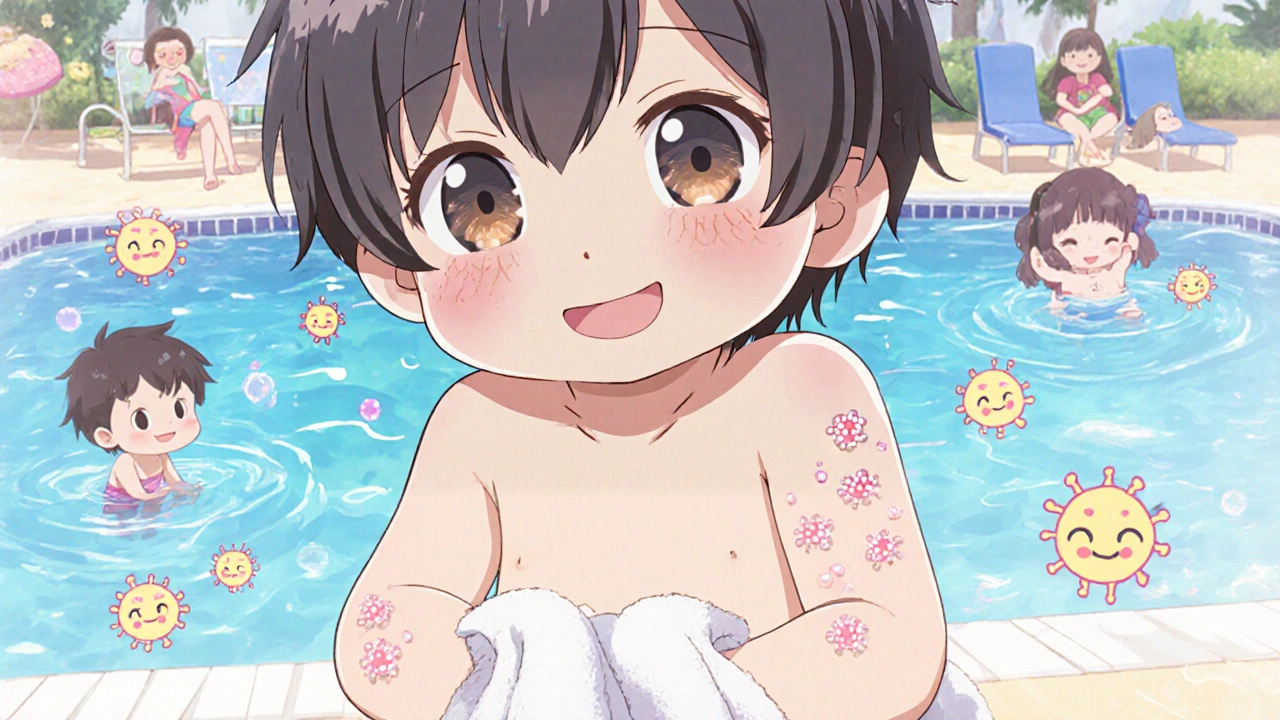
Imagine your child comes home from swimming class with a few tiny, pearly bumps on their arm. They don’t itch much. They don’t look scary. But you’ve never seen anything like this before. A quick Google search brings up the word molluscum contagiosum-and suddenly, you’re drowning in conflicting advice: Leave it alone. Treat it now. Don’t let them swim. It’s not a big deal. What do you actually do?
Molluscum contagiosum is a common viral skin infection caused by the molluscum contagiosum virus (MCV), part of the poxvirus family. It’s not dangerous. It’s not cancer. It doesn’t cause fever or pain. But it’s contagious, it looks strange, and it sticks around longer than most parents expect. In the UK, it’s especially common in kids between ages 1 and 10, but adults get it too-usually through close contact, including sexual activity. The good news? In healthy people, it almost always goes away on its own. The bad news? It can take months, sometimes years. And while it’s harmless, it’s not easy to live with.
What Do Molluscum Bumps Actually Look Like?
These aren’t random rashes or pimples. Molluscum bumps are small, round, and firm, usually 2 to 6 millimeters across-about the size of a pencil eraser. They’re often white, pink, or skin-colored, and they have a tiny dimple or dot right in the middle. That’s called an umbilication, and it’s the key feature doctors use to tell molluscum apart from other skin problems.
You’ll find them anywhere except the palms of the hands or soles of the feet. In kids, they show up on the face, arms, legs, or belly. In adults, especially those who caught it sexually, they cluster around the genitals, inner thighs, or lower abdomen. The bumps can appear alone or in clusters. Sometimes, they’re so numerous they look like a rash. In people with weakened immune systems-like those with untreated HIV-they can grow much larger, up to 3 centimeters, and won’t go away without treatment.
Unlike warts, which are rough and thick, molluscum bumps are smooth and shiny. They’re not painful like herpes blisters. And unlike chickenpox, they don’t burst into fluid-filled sores all over the body. Each bump is its own little viral colony, isolated and contained.
How Do You Catch It?
You don’t need to be sick to catch molluscum. You just need skin-to-skin contact. That’s it. A hug. A handshake. Sharing a towel after swimming. Sitting on a bench at the pool. Even playing with a toy that an infected child touched.
The virus spreads easily in warm, damp places. Swimming pools, locker rooms, and shared bath towels are hotspots. Studies show that kids with eczema are 30% more likely to get molluscum because their skin barrier is already compromised. The virus slips in through tiny cracks in the skin.
Incubation time is tricky-it can take anywhere from 2 to 6 weeks after contact before you see the first bump. That means if your child gets bumps after summer camp, they probably picked it up weeks earlier. And once one bump appears, scratching or rubbing can spread it to other parts of the body. That’s why kids often end up with dozens of bumps-they don’t realize they’re spreading it themselves.
Transmission rates are high. In households where one child has molluscum, up to 70% of siblings or parents will get it too. That’s why it feels like it’s everywhere once it shows up.
Will It Go Away on Its Own?
Yes. And that’s the biggest point most doctors agree on.
In healthy children and adults, molluscum contagiosum is self-limiting. That means the body’s immune system will eventually recognize the virus and clear it. Most cases resolve within 6 to 18 months. Some last up to 4 years, but that’s less common. And crucially-they rarely leave scars.
A long-term study from the University of California San Francisco tracked over 1,200 children with molluscum. Ninety-two percent had complete clearance within 18 months without any treatment. That’s why the American Academy of Dermatology says: Watchful waiting is the best first step.
But here’s the catch: waiting is hard. When bumps are on the face, or when your child gets teased at school, or when you’re worried about spreading it to others, doing nothing feels impossible. That’s where the confusion starts.
What Treatments Actually Work?
There’s no magic cure. No pill. No overnight fix. But some treatments help speed things up-if you’re willing to deal with the side effects.
Here’s what the evidence says:
- Cantharidin (a blistering agent applied by a doctor): Works in about 73% of cases after 12 weeks. It causes a small blister to form, which lifts the virus out. Painful for kids, but effective. Most dermatologists use this for older children.
- Topical potassium hydroxide (KOH): Available in over-the-counter gels like MolluDab. Used daily for 4 to 8 weeks. Studies and user reviews show about 63% of people clear their bumps. Less painful than freezing. Works best on small clusters.
- Cryotherapy (freezing with liquid nitrogen): Common in clinics. Quick, but it hurts. Can cause blisters, redness, and sometimes scarring-especially on the face. Many parents regret choosing this for kids under 5.
- Imiquimod cream: An immune-boosting cream used for genital warts. Sometimes used off-label for molluscum. Takes weeks to work. Can cause severe redness and irritation.
- Laser treatment: Used rarely, mostly for stubborn cases in adults. Expensive. Not covered by the NHS.
And here’s what doesn’t work well-or shouldn’t be used:
- Home remedies like tea tree oil, apple cider vinegar, or duct tape: No strong evidence they help. Can irritate skin.
- Scraping or popping bumps: This spreads the virus and increases infection risk.
- Antibiotics: Molluscum is viral. Antibiotics do nothing.
The Cochrane Review analyzed 27 studies and found no single treatment was clearly better than others. But cantharidin and potassium hydroxide came out on top for balance of effectiveness and tolerability.
When Should You Treat It?
Not every bump needs treatment. But here are times when it makes sense:
- Lesions on the face: Especially in school-aged kids. Studies show 45% of children with visible facial molluscum experience bullying or social anxiety.
- Genital bumps in adults: To prevent spreading to partners. Also, psychological stress is real-many adults report anxiety about dating.
- Lesions that are red, swollen, or oozing: Could mean a secondary bacterial infection. Needs medical attention.
- Immunocompromised individuals: People with HIV, eczema, or on immune-suppressing drugs. Molluscum can become widespread and persistent. Treatment is often necessary.
For most healthy kids? Wait. Monitor. Don’t scratch. Keep skin moisturized. Avoid sharing towels. That’s it.
How to Prevent Spreading
Prevention is simpler than you think.
- Don’t share towels, clothing, or toys. CDC studies show this cuts household spread by 57%.
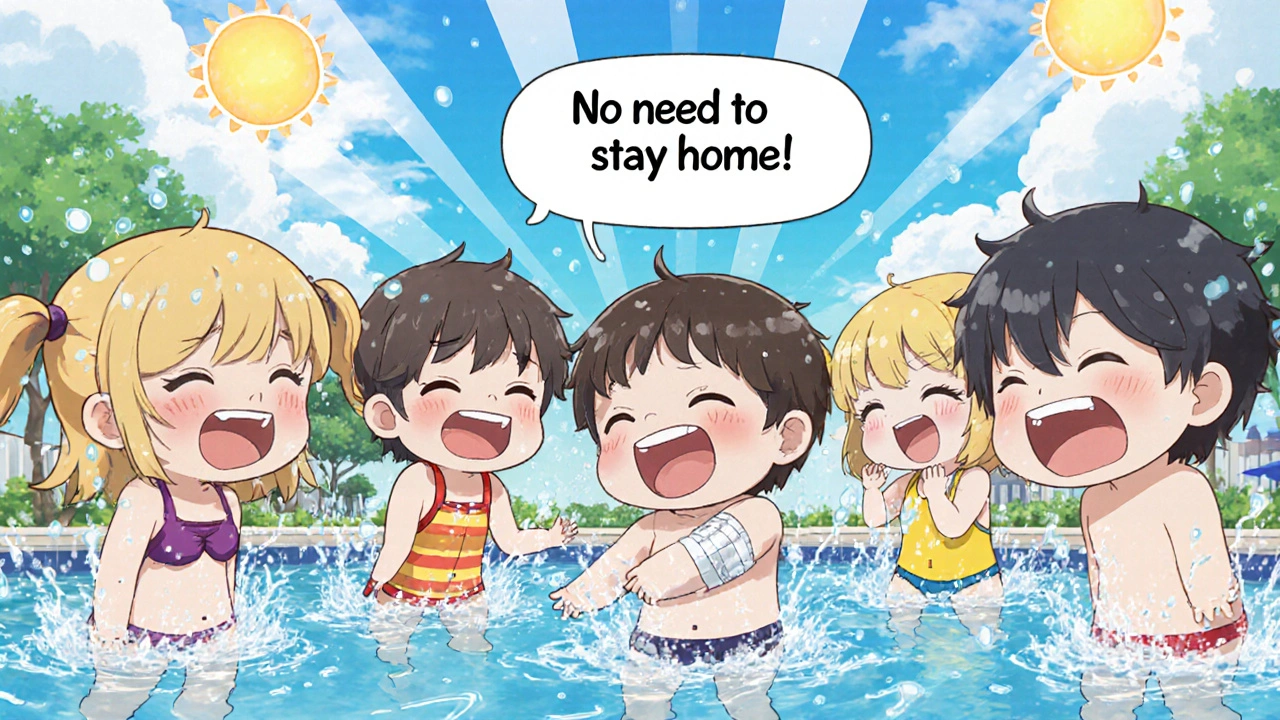
- Cover bumps with waterproof bandages during swimming. Many pools require this. It’s not about stigma-it’s about rules.
- Keep nails short. Scratching spreads the virus to other parts of the body. One study found scratching increases lesion count by 300%.
- Wash hands after touching bumps. Simple, but effective.
- Don’t shave over affected areas. Razor blades can carry the virus to new skin.
And here’s something most people don’t know: Children with molluscum do NOT need to be kept out of school or swimming lessons. The CDC updated its guidelines in January 2023 to say exactly that. Exclusion doesn’t stop the spread-it just adds stress to families.
What About Eczema and Molluscum?
If your child has eczema, molluscum becomes a bigger problem. The two conditions feed each other. Eczema breaks down the skin barrier. Molluscum slips in faster. And once it’s there, the itching from eczema makes scratching worse-which spreads molluscum even more.
A 2022 survey by the National Eczema Association found 68% of children with both conditions had more bumps and worse itching than those with molluscum alone. The solution? Treat the eczema first. Use gentle moisturizers. Avoid harsh soaps. Keep skin hydrated. Once the skin barrier is stronger, molluscum is easier to control.
Some dermatologists recommend combining eczema creams with topical KOH. It’s not standard, but it’s working for many families.
What’s New in Treatment?
Science is moving forward. In early 2023, a new topical immunomodulator showed promising results in a phase 2 clinical trial. It boosted the skin’s immune response and cleared 82% of lesions in 12 weeks-nearly double the placebo rate. It’s not available yet, but it’s likely to be approved within the next two years.
Also, the CDC’s shift away from school exclusion reflects a bigger trend: we’re learning that fear, not the virus, is what hurts people most. Molluscum is not a sign of poor hygiene. It’s not a punishment. It’s just a virus that likes skin.
What Do Real Parents and Adults Say?
Online forums are full of stories.
On Reddit, one adult wrote: “I had bumps on my penis for 14 months. I stopped dating. I was terrified to be naked. When they finally cleared, I cried.” That’s the emotional toll.
On BabyCenter, a mom said: “My 3-year-old had 12 bumps on his arm. We did nothing. They faded in 10 months. No scars. No stress. Best decision we made.”
And then there’s the frustration: 41% of parents who took their kids to dermatologists say they were pushed into cryotherapy or scraping-procedures that left scars and didn’t work any faster than waiting.
People are tired of being scared into treatments that hurt more than they help.
Bottom Line: What Should You Do?
If you’re reading this because you or your child has molluscum, here’s your clear path:
- Confirm it’s molluscum. A GP or dermatologist can diagnose it by sight. No tests needed.
- Don’t panic. It’s not dangerous. It’s not permanent.
- Wait unless there’s a reason to act. Face, genitals, eczema, or infection? Then treat. Otherwise? Monitor.
- Use potassium hydroxide gel if you want something gentle and at-home.
- Prevent spread. No sharing towels. No scratching. Cover bumps in pools.
- Don’t isolate your child. They can go to school. They can swim. They can play.
Molluscum contagiosum is a nuisance, not a crisis. It’s viral, it’s common, and it’s temporary. The best treatment isn’t a cream or a freeze-it’s patience, good hygiene, and knowing when to do nothing at all.
Is molluscum contagiosum contagious?
Yes. It spreads through direct skin contact or sharing items like towels, clothing, or toys. It’s especially easy to pass between siblings or in swimming pools. The virus stays alive on surfaces for hours, so hygiene matters.
Can adults get molluscum contagiosum?
Yes. While it’s most common in children, adults can catch it through close physical contact, including sexual activity. In adults, bumps often appear on the genitals, inner thighs, or lower abdomen. If you’re sexually active and notice new bumps in those areas, see a doctor.
Do molluscum bumps leave scars?
Usually not-if they’re left alone. But aggressive treatments like freezing, scraping, or popping can cause scarring. Scratching also increases the chance of infection and scarring. The best way to avoid scars is to let the body clear the virus naturally.
How long does molluscum last?
In healthy people, most cases clear up in 6 to 18 months. Some last up to 4 years, especially if the immune system is slow to respond. In immunocompromised individuals, lesions can persist for years without treatment. Patience is key.
Should I keep my child home from school if they have molluscum?
No. The CDC and NHS both say children with molluscum should not be excluded from school, swimming, or activities. The virus spreads easily in the community anyway. Keeping kids home doesn’t stop transmission-it just causes unnecessary stress. Covering bumps with waterproof bandages during swimming is enough.
Is there a vaccine for molluscum contagiosum?
No. There is currently no vaccine available. Prevention relies on avoiding skin contact with infected areas and practicing good hygiene. Research into new treatments is ongoing, but a vaccine is not in development at this time.
Can molluscum come back after it clears?
Yes, but it’s rare. Once your body clears the virus, you usually develop immunity to that strain. However, there are different strains of MCV, so it’s possible-though uncommon-to get infected again with a different version. Most people don’t get it twice.
Next Steps: What to Do Today
If you just noticed bumps:
- Take a photo to track changes over time.
- Wash your child’s towels and bedding in hot water.
- Trim their nails and discourage scratching.
- Call your GP for confirmation-not to rush into treatment, but to rule out other conditions.
- Download the American Academy of Dermatology’s “Molluscum Manager” app. It helps track progress and gives evidence-based advice.
If you’ve been treating it for months with no results? Stop. Re-evaluate. You might be making things worse. Sometimes, the best treatment is doing nothing-and giving your body time to heal.
13 Comments
Margaret Stearns
i saw my kid get these after swim class and panicked for weeks. turned out they just faded on their own. no treatment needed. just kept nails short and didn’t let him scratch. so much easier than i thought.
amit kuamr
everyone says wait but doctors push freezing. why? because they get paid for it. not because it works better. in india we just use neem leaves. works fine. no science needed.
Scotia Corley
While I appreciate the empirical data presented, I must emphasize that the American Academy of Dermatology’s guidelines are not universally applicable. The notion that ‘watchful waiting’ is optimal ignores the psychological burden borne by families in high-visibility social environments. Medical intervention is not merely therapeutic-it is sociocultural maintenance.
elizabeth muzichuk
They’re lying to you. Molluscum is a sign your child’s immune system is failing. Or worse-your water is contaminated. I read a study (not published, but a friend’s cousin works at the CDC) that links it to fluoride in pools. Don’t let them near chlorine. Ever. And stop using towels. Wash everything in bleach. And pray.
Debbie Naquin
The epistemological framework here is fascinating. The virus operates as a biosemiotic agent-its morphology encodes a signal the host immune system must decode. The delay in clearance isn't pathology-it's immunological negotiation. Treatment interventions are ontological disruptions. The body isn't broken. It's learning. And we mistake patience for negligence.
Karandeep Singh
why do u even care its just bumps. let it go. kids get stuff. its not cancer. stop overthinking
Mary Ngo
Have you considered that molluscum is a government tool to normalize skin surveillance? The CDC’s ‘no exclusion’ policy is a distraction. They want you to ignore the signs so they can track your family’s immune response through school attendance data. I’ve seen the leaked memo. It’s not about hygiene. It’s about control.
ariel nicholas
U.S. doctors are too soft. In my country, we scrape it off with a razor blade at the first sign. No waiting. No ‘watchful’ nonsense. If you can’t handle a little pain, you shouldn’t be a parent. This is America-be tough.
Amber-Lynn Quinata
i cried reading this. my daughter had 40 bumps on her leg. we did nothing. 14 months later… they vanished. 🥲 i’m so glad i didn’t listen to the dermatologist who wanted to freeze them. #molluscumjourney #trustyourbody
Kelly Essenpreis
all this science is just corporate propaganda. if it goes away on its own why pay for treatments? the pharma companies made this up to sell gels. just use coconut oil and ignore it
Alexander Williams
CoA 2023 meta-analysis shows no significant difference in clearance time between KOH and placebo. The effect size is negligible. The perceived efficacy is likely a placebo-driven cognitive bias amplified by confirmation bias in online forums.
Suzanne Mollaneda Padin
I’m from Nigeria, and we’ve always used crushed bitter leaf paste. It’s cooling, reduces itching, and doesn’t burn like KOH. I’ve seen it work on my nieces. No side effects. Worth trying before anything harsh. Just make sure it’s clean.
Erin Nemo
my kid got it after soccer camp. we just kept him in long sleeves and washed everything. 8 months later-gone. no drama. no stress. the body knows what to do. trust it.