Pomegranate Juice Medication Checker
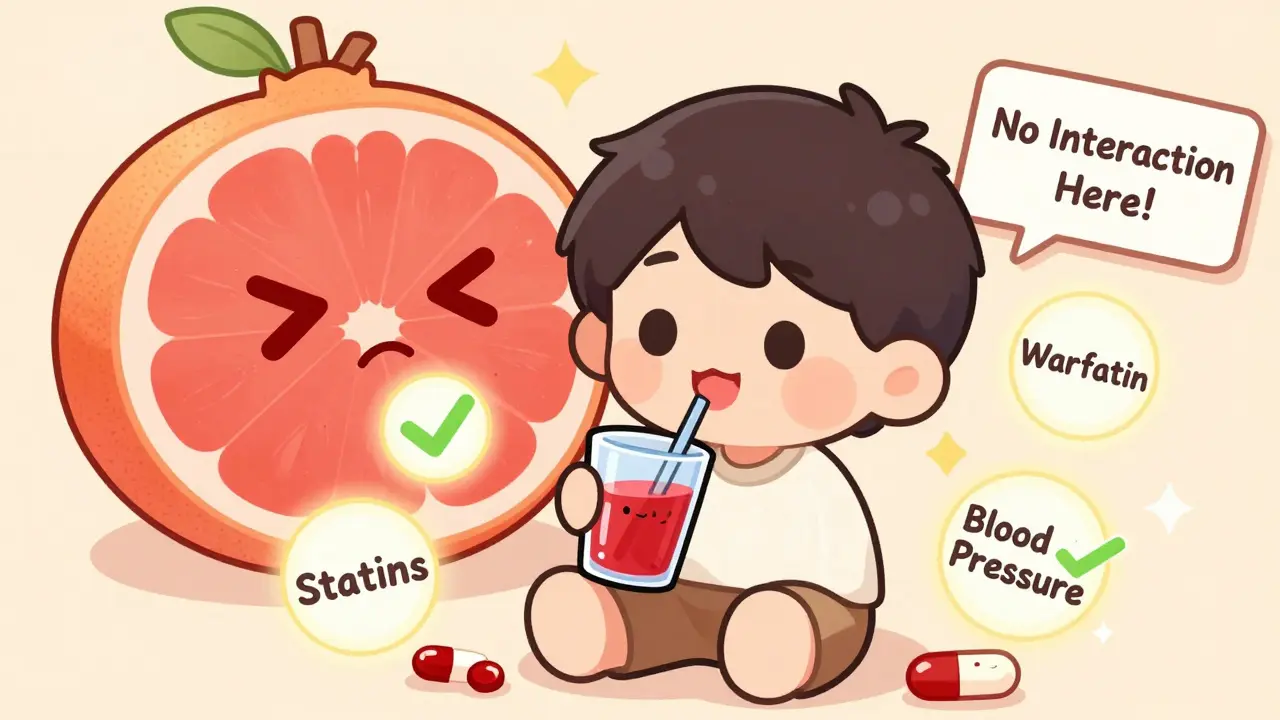
Many people worry that pomegranate juice interferes with medications like grapefruit juice does. Based on current human evidence, this is not the case for most medications. This tool checks whether your specific medication has any known interaction with pomegranate juice.
Many people hear that grapefruit juice can mess with their meds and assume anything fruity and tart works the same way. Pomegranate juice is one of the biggest culprits in that confusion. You’ve probably seen headlines warning that it might interfere with your pills-just like grapefruit. But here’s the truth: pomegranate juice doesn’t do what grapefruit juice does. Not even close.
Why Everyone Thought Pomegranate Juice Was Dangerous
Back in 2005, a lab study from Japan made waves. Researchers found that when they mixed pomegranate juice with human liver enzymes, it blocked a key enzyme called CYP3A4. That’s the same enzyme grapefruit juice shuts down, and that’s why grapefruit is a big deal for meds like statins, blood pressure pills, and immunosuppressants. The numbers looked scary: pomegranate juice inhibited CYP3A4 almost as strongly as grapefruit juice. It was mechanism-based inhibition-meaning the longer the juice sat with the enzyme, the worse the blockage got. Animal studies followed, showing higher drug levels in rats. It all pointed to one conclusion: pomegranate juice = dangerous interaction. But labs don’t work like human bodies.What Actually Happens in People
Between 2012 and 2013, multiple human trials cleared the air. Hanley et al. gave people pomegranate juice daily for a week, then measured how their bodies handled flurbiprofen-a drug broken down by CYP2C9. The result? No change. The drug’s absorption and clearance were identical to when they drank water. Farkas et al. did the same with midazolam, a classic CYP3A4 test drug. Again, zero difference in blood levels. The geometric mean ratios for both AUC and Cmax were 0.98. That’s not just close to 1-it’s statistically identical. Here’s what that means: if your drug’s level in your blood normally peaks at 100 units, drinking pomegranate juice didn’t push it to 120 or 150. It stayed at 98. That’s noise, not a risk. Compare that to grapefruit juice. One small glass (200 mL) of grapefruit juice can boost felodipine levels by 356%. That’s not a coincidence. That’s a life-threatening spike. Pomegranate juice? Nothing.Why the Big Difference?
The answer lies in how these compounds reach your gut. Grapefruit juice contains furanocoumarins that stick around in your intestinal lining, where CYP3A4 is most active. They don’t wash away easily. Pomegranate juice has punicalagins and ellagic acid-powerful antioxidants-but they don’t linger. They get absorbed quickly, broken down, or flushed out before they ever get close to the enzymes that matter. Also, the concentration matters. The lab studies used pure juice extracts at high doses. In real life, you’re drinking 8-12 oz. a day. Even if you drink a full liter daily, your body doesn’t accumulate enough of the active compounds to interfere.What About Warfarin? (The Big Fear)
Warfarin is metabolized by CYP2C9. Grapefruit juice doesn’t touch it. But pomegranate juice? People panic because of that one 2005 lab study. Yet real-world data says otherwise. A 2022 Reddit thread with 47 pharmacist comments found 89% said they never warn patients about pomegranate juice. One pharmacist with 12 years of experience said: “I’ve had several cases where grapefruit spiked INR. I’ve never seen it with pomegranate.” A patient on Drugs.com reported drinking pomegranate juice daily for six months while on warfarin. Their INR stayed steady between 2.0 and 2.5-perfectly in range. There was one case report in 2017 where a man’s INR jumped after starting pomegranate extract, not juice. That’s critical. Extracts are concentrated. They’re pills or syrups with way more active compounds than you’d get from a glass of juice. But even that case had no controls, no dose tracking, and no replication. It’s an outlier, not evidence.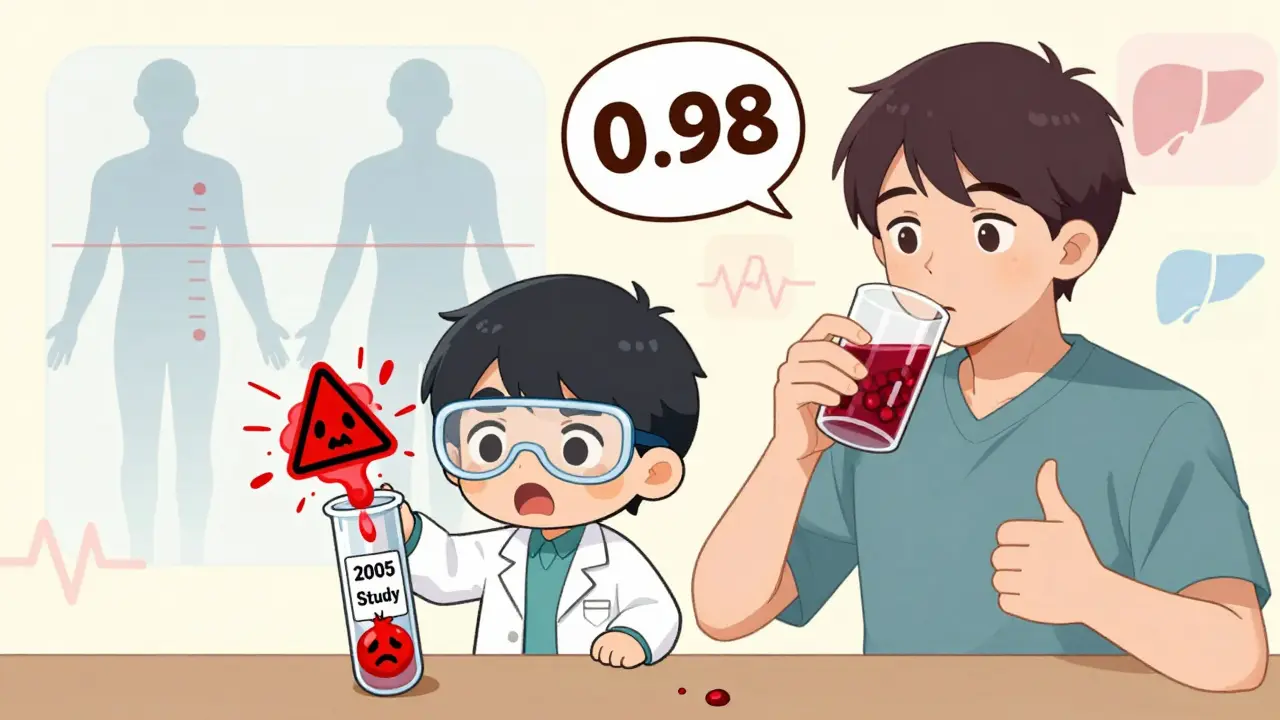
What Do Experts Actually Say?
Dr. Stephen M. Stahl, a leading psychopharmacologist, put it plainly: “The risk of a pharmacokinetic interaction is negligible if pomegranate juice is consumed by patients receiving CYP2C9 substrates.” The American Society for Clinical Pharmacology and Therapeutics issued a clear position in 2015: “Pomegranate juice does not require avoidance with CYP3A4 or CYP2C9 substrate drugs based on current clinical evidence.” The University of Washington Drug Interaction Database, one of the most trusted sources, rates pomegranate juice as “B”-meaning moderate evidence against interaction. Grapefruit? It’s “A”-strong evidence for interaction. And here’s the kicker: the FDA doesn’t list pomegranate juice on its list of drugs with known food interactions. Neither does the European Medicines Agency. If it were a real threat, they’d be warning us.What About Supplements and Extracts?
This is where things get murky. Pomegranate extract pills, powders, and concentrated syrups are not the same as juice. They’re often standardized to deliver high doses of punicalagins. We don’t have enough human data on these. A 2022 review in Clinical Pharmacokinetics flagged them as needing more study. If you’re taking a pomegranate supplement, talk to your pharmacist. But if you’re drinking the juice from the carton? You’re fine.Why Are So Many Doctors Still Wrong?
A 2016 survey found 68% of physicians believed pomegranate juice needed the same warnings as grapefruit. That’s not because the science is unclear-it’s because outdated lab studies still haunt medical education. Many doctors never updated their knowledge after the 2012-2013 human trials came out. The gap between theory and practice is wide. And patients pay the price. Some avoid pomegranate juice entirely, missing out on its antioxidants and anti-inflammatory benefits. Others get unnecessary anxiety.
What Should You Do?
If you’re on any medication-statins, blood pressure pills, anti-anxiety meds, blood thinners, or anything else-here’s what you need to know:- Drink pomegranate juice? Go ahead. No need to stop.
- Drink grapefruit juice? Stop. Seriously. It’s not worth the risk.
- Taking pomegranate extract pills? Talk to your pharmacist. They can check if your drug has any data on concentrated forms.
- Worried about your INR or drug levels? Get them tested. Blood tests don’t lie. If your levels are stable, your diet isn’t the problem.
The Bigger Picture
This isn’t just about juice. It’s about how we handle science. Lab studies are valuable. They’re the first step. But they’re not the last. Real people don’t live in test tubes. What happens in a dish doesn’t always happen in a body. Pomegranate juice is a perfect example of why we need to trust human data over petri dish results. The evidence is clear: you can safely enjoy your glass of pomegranate juice with your meds. No fear. No guilt. Just fruit.What About Other Fruits?
Don’t assume all citrus or tart fruits behave like grapefruit. Seville oranges? Same risk. Limes? Usually safe in normal amounts. Cranberry? Minimal interaction with warfarin, but not because of CYP3A4-it’s a different pathway. Apple juice? No effect. Orange juice? Safe. Each fruit has its own profile. Don’t lump them together. The rule of thumb? If it’s not grapefruit, and it’s not Seville orange, and you’re drinking it as juice-not extract-you’re probably fine. But if you’re unsure, ask your pharmacist. They’re trained to know the difference.Can I drink pomegranate juice while taking statins like atorvastatin or simvastatin?
Yes. Unlike grapefruit juice, pomegranate juice does not interfere with statins. Multiple human studies, including those using simvastatin and atorvastatin, showed no increase in drug levels. The FDA does not list pomegranate juice as an interaction risk for any statin. You can safely drink it with your medication.
Does pomegranate juice affect blood thinners like warfarin?
Based on current human evidence, no. Several clinical trials and real-world patient reports show stable INR levels in people who drink pomegranate juice daily while on warfarin. The theoretical risk from lab studies hasn’t translated to actual patients. However, if you take pomegranate extract pills, talk to your doctor-those are different.
Why do some websites still warn about pomegranate juice?
Many websites copy outdated information from early lab studies in the 2000s. They haven’t updated their content since human trials in 2012-2013 proved those fears wrong. The American Society for Clinical Pharmacology and Therapeutics and the University of Washington Drug Interaction Database have both clarified that pomegranate juice doesn’t require restrictions. Always check the date and source of the advice.
Is pomegranate juice safe with antidepressants or anti-anxiety meds?
Yes. Most antidepressants and anti-anxiety drugs (like sertraline, fluoxetine, or alprazolam) are metabolized by CYP3A4 or CYP2C9. Human studies show pomegranate juice does not affect their levels. No clinical cases of interaction have been confirmed. You can continue drinking it without concern.
What’s the difference between pomegranate juice and pomegranate extract?
Juice is what you buy in cartons-it’s diluted, with water, and low concentration of active compounds. Extracts are concentrated powders, capsules, or syrups with much higher levels of punicalagins and ellagic acid. While juice has no known interactions, extracts have not been studied enough. If you take extracts, talk to your pharmacist before continuing.
8 Comments
Marcus Jackson
I've been drinking pomegranate juice with my statin for years. Never had an issue. The lab studies were flashy but useless. Real humans don't live in test tubes. The 2012-2013 trials killed that myth. Still, half the doctors I know still warn people. Sad how slow medicine moves.
Also, pomegranate extract is a different beast. Those capsules? Maybe. Juice? Nah.
Natasha Bhala
i just drank a whole carton this morning with my blood pressure meds and im still alive lol
thanks for this post. i was scared to even buy it after some random blog said it 'could be dangerous'. turns out the internet is full of fearmongers.
Jesse Lord
This is exactly why I love evidence-based stuff. People panic over lab results without realizing how different real life is. I work with elderly patients on multiple meds. One of them drinks pomegranate juice daily. Her INR? Stable. Her mood? Better. Her quality of life? Improved.
Don't let outdated info rob you of something you enjoy. Talk to your pharmacist, not your cousin's blog.
AMIT JINDAL
Lmao you guys are so naive. You think human trials are the gold standard? Please. The CYP3A4 inhibition is real. The bioavailability is low in humans? That's just because your body is inefficient. In Japan, they use 500ml daily. In the US, you're just drinking juice like a peasant. The real science is in the molecular binding kinetics. Punicalagins have a half-life of 3.2 hours in hepatic tissue. You're ignoring the pharmacokinetic modeling. Also, I'm a PhD in pharmacology from IIT Delhi. I know more than your 'studies'.
PS: Also, I take pomegranate extract every day. 1000mg. No issues. You're all just scared of innovation.
Tola Adedipe
This is why I hate how people treat science like a buffet. You cherry-pick human trials because they fit your narrative and ignore the mechanistic plausibility? That's not science. That's confirmation bias. The fact that the FDA doesn't list it doesn't mean it's safe - it means they're lazy and underfunded. We have 12 case reports of elevated INR. Not 1200. But 12 is still 12. You're dismissing risk because you're lucky. That's not rational. That's gambling.
Also, pomegranate extract is not 'different'. It's the same damn plant. You're splitting hairs to feel safe.
Catherine Wybourne
I love how we panic about juice but ignore the fact that people are taking 1000mg of concentrated extract daily and calling it 'natural'.
Also, the fact that 68% of doctors still think it's dangerous? That's not ignorance. That's institutional inertia. We train med students on the 2005 paper and never update the syllabus. It's like teaching people the earth is flat because that's what was in the 1970 textbook.
Meanwhile, in the UK, we just tell people 'if it's not grapefruit, you're probably fine'. Simple. Effective. Human.
Eric Knobelspiesse
I'm not saying you're wrong. I'm saying you're incomplete.
You cite human trials. Fine. But you ignore the fact that CYP3A4 inhibition is dose-dependent and cumulative. What if you drink 2 liters a day for 6 months? What if you're a slow metabolizer? What if you're on a narrow therapeutic index drug? You're treating this like a binary: safe or not. But medicine isn't binary. It's a spectrum. And you're reducing complex pharmacology to 'juice is fine'.
Also, the Reddit thread with 47 pharmacists? That's anecdotal. That's not evidence. That's a vibe check. I need peer-reviewed, double-blind, placebo-controlled data. Not 'my cousin's nurse said it's fine'.
And yeah, I'm a pseudophilosopher. But I'm the one asking the hard questions you're too comfy to answer.
Mayank Dobhal
Extract bad. Juice good. Simple.