
Rifampin & Contraceptive Risk Simulator
Imagine taking your birth control pill every day at the exact same time, never missing a dose, only to find out you are pregnant. For many women on rifampin, this isn't just bad luck; it is a predictable pharmacological outcome. Rifampin, a powerful antibiotic used primarily for tuberculosis, acts as a potent enzyme inducer in the liver. It speeds up the breakdown of estrogen and progestin so quickly that standard doses of hormonal contraceptives may fail to suppress ovulation. This creates a specific window of risk where "breakthrough ovulation" can occur even with perfect adherence.
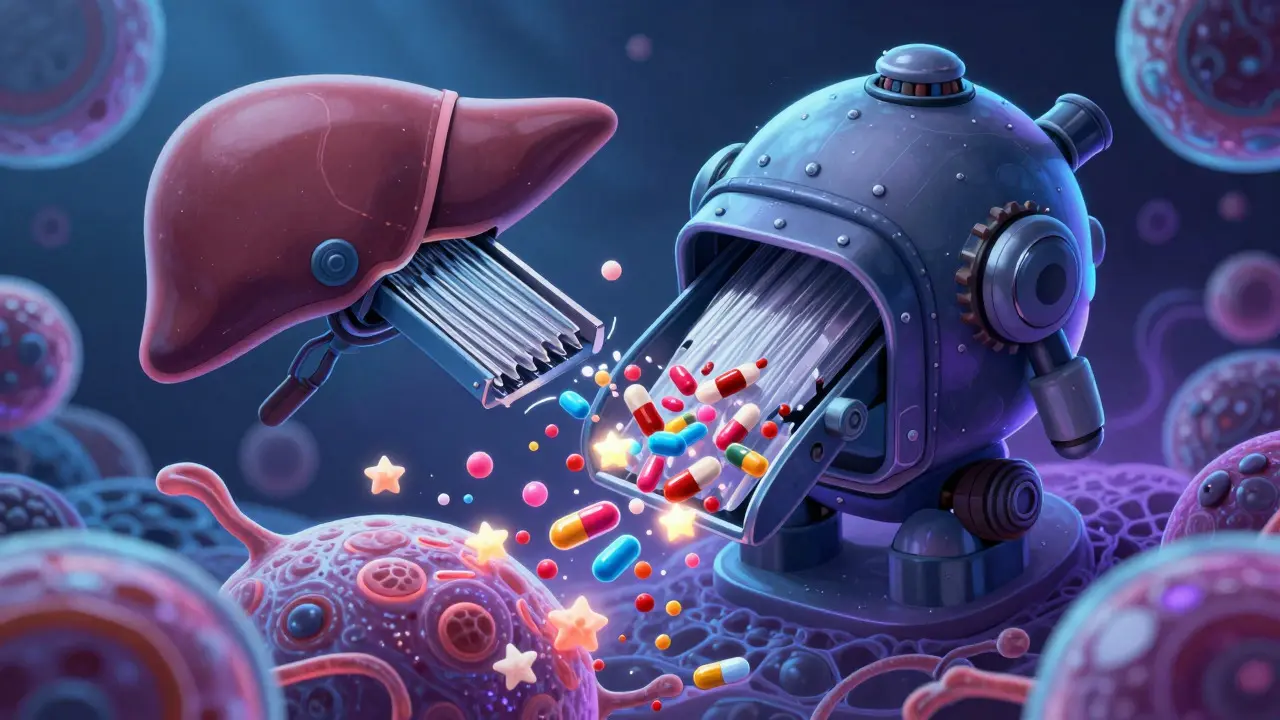
The core issue here is not about forgetting pills or vomiting after taking them. It is about how your body processes the medication. When you take rifampin, your liver produces more cytochrome P450 enzymes. These enzymes act like industrial shredders for hormones. Instead of maintaining steady blood levels to prevent egg release, the contraceptive hormones are metabolized before they can do their job. Understanding this mechanism is critical for anyone prescribed rifampin who relies on pills, patches, rings, or implants for birth control.
How Rifampin Disrupts Hormonal Balance
To understand why this interaction happens, we need to look at the liver's role in drug metabolism. Rifampin is a rifamycin-class antibiotic approved by the FDA in 1971 that induces hepatic cytochrome P450 enzymes. Specifically, it targets the CYP3A4 enzyme, which is responsible for breaking down most ethinyl estradiol and synthetic progestins. When rifampin is present, the clearance rate of these hormones increases dramatically. Research indicates that estrogen metabolism can increase fourfold during concurrent therapy.
This rapid clearance leads to two main problems. First, the total amount of hormone available in your bloodstream (known as Area Under the Curve or AUC) drops significantly. Studies show progestin exposure can decrease by 30% to 83%, while ethinyl estradiol exposure drops by 42% to 66%. Second, the half-life of the drugs shortens. Normally, a pill maintains protective levels for 24 hours. With rifampin, those levels might dip below the threshold needed to inhibit follicle-stimulating hormone (FSH) and luteinizing hormone (LH) spikes, allowing an egg to be released.
It is important to note that this effect persists even after you stop taking the antibiotic. Enzyme induction does not reverse immediately. Your liver continues to produce high levels of these enzymes for several weeks. This is why the risk doesn't end the moment you finish your last rifampin capsule.
Quantifying the Risk of Breakthrough Ovulation
How likely is pregnancy? The baseline failure rate for combined oral contraceptives (COCs) with perfect use is approximately 0.3%. However, when co-administered with rifampin, this risk rises. A systematic review published in 2024 analyzed clinical data and found that rifampin increased the frequency of ovulation in two of four major studies. In five out of five studies, there was a statistically significant reduction in hormone exposure. While precise pregnancy rates are hard to pin down due to ethical constraints on letting women get pregnant in trials, the Centers for Disease Control and Prevention (CDC) classifies this interaction as Category 3. This means the theoretical or proven risks generally outweigh the advantages of using the contraceptive method during concurrent therapy.
Real-world reports reinforce this concern. In the United Kingdom, the Committee on Safety of Medicines documented numerous case reports of contraceptive failure linked to antibiotics between 1970 and 1999. While not all were rifampin-related, infectious disease specialists have noted specific cases where patients on rifampin became pregnant despite strict adherence. One notable case involved a woman on Ortho Tri-Cyclen who conceived during TB treatment, with her physician confirming the rifampin interaction as the probable cause. These anecdotes highlight that "perfect use" does not equal "perfect protection" in the presence of strong enzyme inducers.
Rifampin vs. Other Antibiotics
A common misconception is that all antibiotics interfere with birth control. The truth is more nuanced. Rifampin is unique among common antibiotics because it is a strong enzyme *inducer*. Most other antibiotics, such as amoxicillin, azithromycin, or doxycycline, do not significantly affect hormone metabolism through this pathway. They might reduce gut bacteria that recirculate hormones, but the clinical evidence for this mechanism causing pregnancy is weak and inconsistent.
| Antibiotic Class | Mechanism of Interaction | Evidence Strength | CDC Classification |
|---|---|---|---|
| Rifampin | Strong CYP3A4 Induction | High (Documented ovulation & PK changes) | Category 3 |
| Rifabutin | Moderate CYP3A4 Induction | Moderate (Less severe than Rifampin) | Category 3 (Caution advised) |
| Macrolides (e.g., Azithromycin) | Potential Gut Flora Alteration | Low (No consistent PK changes observed) | Category 1 (Generally Safe) |
| Tetracyclines | Potential Gut Flora Alteration | Low (No consistent PK changes observed) | Category 1 (Generally Safe) |
Rifabutin, another rifamycin derivative sometimes used for TB or HIV-related infections, has a similar but milder effect. It also induces enzymes but to a lesser degree than rifampin. Despite this, clinicians often treat it with similar caution. Non-rifamycin antibiotics, however, rarely require backup contraception unless the patient experiences vomiting or diarrhea, which physically prevents absorption of the pill. The confusion stems from outdated advice given decades ago before pharmacokinetic studies clarified that only enzyme inducers pose a significant systemic threat to hormonal efficacy.
Practical Strategies for Protection
If you are prescribed rifampin, what should you do? You don't necessarily have to switch your entire contraceptive method, but you must add a layer of safety. The gold standard recommendation is to use a non-hormonal backup method, such as condoms, for the duration of the rifampin course and for 28 days after stopping. Why 28 days? Because it takes time for your liver to downregulate the production of CYP3A4 enzymes. During this washout period, your hormone levels remain vulnerable.
For long-term rifampin users, such as those undergoing six-month TB regimens, switching to a non-enzyme-sensitive method might be preferable. Options include:
- Copper IUD: A non-hormonal device that provides highly effective contraception without relying on liver metabolism.
- Progestin-only Implant (Nexplanon): While technically hormonal, some studies suggest implants may maintain efficacy better than pills due to higher local tissue concentrations, though guidance varies. Consult your provider.
- Depot Medroxyprogesterone Acetate (DMPA): The shot is generally considered less affected by enzyme induction than daily pills, but confirmation from a specialist is recommended.
Some clinicians have suggested using higher-dose estrogen pills (containing 50 mcg ethinyl estradiol instead of the standard 20-35 mcg) to overcome the increased clearance. However, this strategy carries its own risks, including a higher chance of blood clots, and lacks robust evidence proving it fully restores contraceptive efficacy. Therefore, it is not a universally accepted solution and should only be attempted under close medical supervision.

Special Considerations and Future Directions
Not everyone reacts to rifampin the same way. Genetic variations in the CYP3A4 gene can influence how fast you metabolize drugs. Women with certain polymorphisms might process rifampin faster or slower, altering the degree of interaction. Currently, pharmacogenetic testing is not routine for this purpose, but research suggests it could help identify high-risk individuals in the future. Until then, a conservative approach is best.
It is also worth noting that this interaction affects more than just pills. Transdermal patches and vaginal rings are also subject to hepatic metabolism and will experience reduced efficacy. If you use one of these methods, the same backup precautions apply. Intramuscular injections like DMPA are generally safer bets, but again, individual variation exists.
As of 2026, pharmaceutical companies have not developed a rifampin formulation that avoids enzyme induction, nor a contraceptive pill resistant to it. The focus remains on patient education and behavioral mitigation. Health systems in regions with high TB prevalence are increasingly training primary care providers to automatically flag this interaction in electronic health records, prompting a conversation about backup methods before the prescription is filled.
Frequently Asked Questions
Do I need to stop my birth control pill when starting rifampin?
You do not necessarily need to stop it, but you must use a backup method like condoms. Stopping abruptly could lead to withdrawal bleeding or spotting, which is uncomfortable but not dangerous. However, if you prefer to avoid the dual method, switching to a copper IUD or discussing alternative options with your doctor is a valid strategy.
How long after stopping rifampin should I use backup contraception?
The standard recommendation is to continue using backup contraception for 28 days after your last dose of rifampin. This allows time for your liver enzymes to return to normal baseline levels, ensuring your hormonal contraceptive becomes fully effective again.
Does this interaction apply to the mini-pill (progestin-only pills)?
Yes. Progestin-only pills rely on thinning the cervical mucus and suppressing ovulation. Since rifampin accelerates the metabolism of progestins, the levels may drop too low to maintain thick mucus or reliably prevent ovulation. Backup protection is required here as well.
Is rifabutin as risky as rifampin regarding birth control?
Rifabutin is generally considered less potent in inducing enzymes than rifampin, but the risk is still significant enough that most guidelines recommend using backup contraception. It is not as clear-cut as rifampin, so erring on the side of caution with condoms is advisable.
Can I take a higher dose of my birth control pill to counteract rifampin?
This is a controversial practice. While theoretically it might raise hormone levels, it also increases the risk of side effects like nausea and blood clots. There is no standardized protocol for this, so you should only attempt it if explicitly instructed by a healthcare provider who monitors your response.
Do other antibiotics like amoxicillin affect birth control?
Current evidence suggests that most common antibiotics, including amoxicillin, azithromycin, and doxycycline, do not significantly reduce the effectiveness of hormonal contraceptives through enzyme induction. You only need backup if you experience vomiting or severe diarrhea, which prevents the pill from being absorbed.