
Imagine trying to read a menu at your favorite restaurant, but the words in the center of the page are blurry or missing. You can see the edges of the table and the people around you clearly, but that central spot is gone. This isn't total blindness; it's Age-Related Macular Degeneration, commonly known as AMD. It is a progressive eye disease that damages the macula, the part of the retina responsible for sharp, central vision. For millions of people over 55, this condition changes how they interact with the world, affecting everything from driving to recognizing loved ones' faces.
The good news? We aren't powerless against it. While there is no cure yet, modern medicine has developed powerful tools to stop the damage, especially when it comes to the more aggressive form of the disease. Understanding what happens inside your eye and how treatments like Anti-VEGF therapy works is the first step toward protecting your sight.
Understanding the Two Faces of AMD
Not all macular degeneration acts the same way. To treat it effectively, you need to know which type you have. There are two main forms: dry AMD and wet AMD.
Dry AMD is the most common, accounting for about 90% of cases. Think of it as slow wear and tear. Over time, tiny yellow protein deposits called drusen accumulate under the macula, causing the light-sensitive tissue to thin out. It’s like the fabric of a shirt slowly wearing thin after years of washing. Most people with dry AMD experience gradual vision loss, though some develop a severe form called geographic atrophy, where patches of the macula die off completely.
Wet AMD is less common-only 10% to 15% of cases-but it causes 90% of severe vision loss. This is the emergency version. In wet AMD, abnormal blood vessels grow beneath the macula. These vessels are fragile and leaky. They spill fluid and blood onto the retina, creating scars that destroy vision rapidly. If you have dry AMD, it can turn into wet AMD. If you have wet AMD, it is always considered late-stage disease.
| Feature | Dry AMD | Wet AMD |
|---|---|---|
| Prevalence | ~90% of cases | ~10-15% of cases |
| Primary Cause | Drusen accumulation & tissue thinning | Abnormal, leaking blood vessels |
| Progression Speed | Slow, gradual | Rapid, sudden changes |
| Severe Vision Loss Risk | Low (unless geographic atrophy) | Very High (90% of severe cases) |
| Treatment Focus | Nutritional supplements, monitoring | Anti-VEGF injections |
Why Your Central Vision Matters
Your eye works like a camera. The retina is the film, and the macula is the small, highly sensitive area in the center of the retina that captures fine detail. When AMD strikes, it targets this specific zone. Peripheral vision-the stuff you see out of the corner of your eye-usually stays intact. That’s why someone with advanced AMD might still be able to walk down a street without bumping into things, but they can’t read the street signs or recognize who is walking beside them.
This loss of central vision impacts daily life profoundly. According to surveys by the Fighting Blindness Foundation, nearly 80% of patients struggle with reading, and over half face challenges with driving. It’s not just about convenience; it’s about independence. Losing the ability to cook safely, manage finances, or drive can lead to isolation and depression. Recognizing these early signs is crucial because early intervention saves sight.
Who Is at Risk?
You can’t change your age, but you can control other factors. Age is the biggest risk factor. The chance of developing AMD jumps from less than 1% in your 40s to 35% if you’re over 75. But genetics and lifestyle play huge roles too.
- Smoking: This is the number one modifiable risk. Smokers are nearly four times more likely to get AMD than non-smokers. Quitting slows progression significantly.
- Family History: If a parent or sibling has AMD, your risk triples to sixfold.
- Race: White populations are affected more frequently than African American or Hispanic groups.
- Heart Health: High blood pressure, high cholesterol, and obesity increase risk. What’s bad for your heart is often bad for your eyes.
Pathologically, AMD involves oxidative stress and inflammation. As we age, waste products build up in the retinal pigment epithelium (RPE), triggering an immune response that inadvertently damages healthy retinal tissue. It’s a complex biological cascade, but understanding it helps explain why antioxidants and anti-inflammatory diets matter.
How Anti-VEGF Therapy Stops the Damage
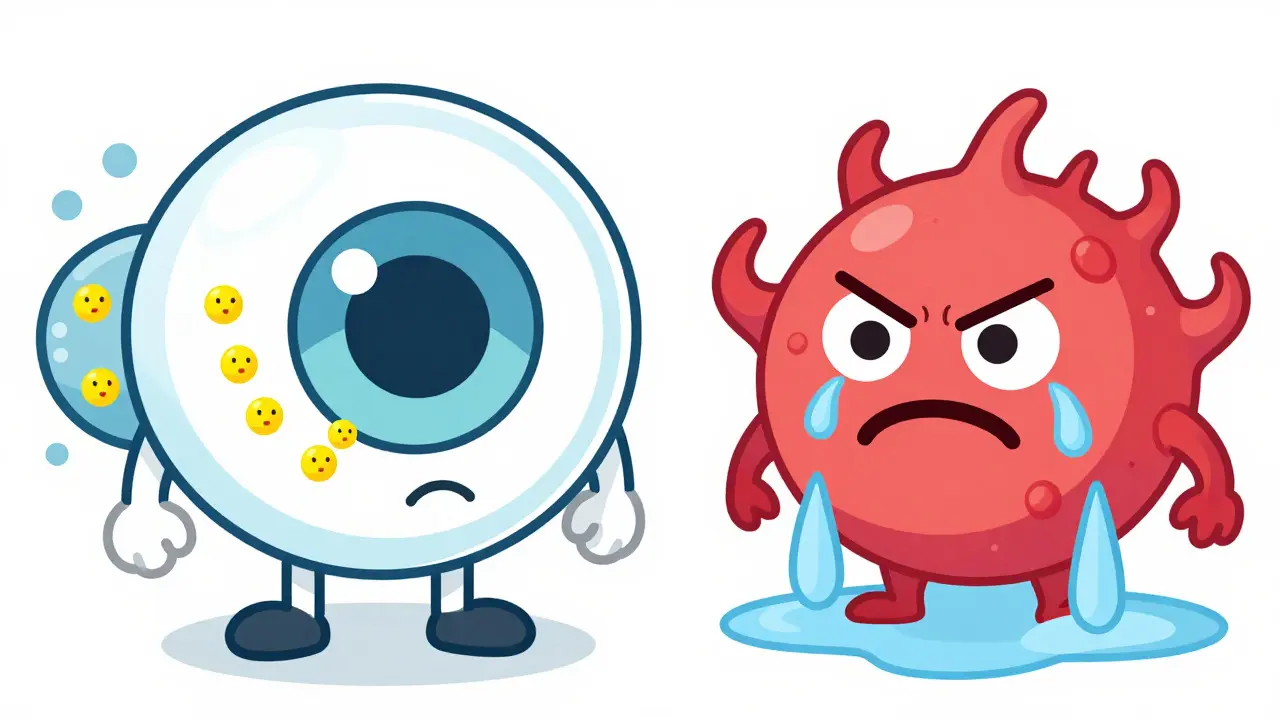
If you’ve been diagnosed with wet AMD, your doctor will likely talk about Anti-VEGF therapy. VEGF stands for Vascular Endothelial Growth Factor, a protein that signals the body to grow new blood vessels. In a healthy body, this is useful for healing wounds. In wet AMD, it’s the villain. Excess VEGF causes those fragile, leaky vessels to sprout under the macula.
Anti-VEGF drugs work by blocking this signal. They bind to the VEGF protein, preventing it from attaching to receptors on cell surfaces. Without that signal, the abnormal vessels stop growing, and existing leaks begin to seal. This doesn’t reverse damage already done, but it stabilizes vision and can even improve it in many cases.
Common medications include ranibizumab (Lucentis), aflibercept (Eylea), and brolucizumab (Beovu). Newer options like faricimab (Vabysmo) target multiple pathways to potentially extend the time between injections. These drugs are injected directly into the eye (intravitreal injection). Yes, it sounds scary, but it’s a quick procedure done in a clinic. Numbing drops are used, so most patients feel only slight pressure.
The Reality of Treatment: Burden vs. Benefit
Here’s the hard truth: Anti-VEGF therapy requires commitment. Initially, you might need monthly injections for three months. After that, doctors use a "treat-and-extend" approach, spacing out visits based on how your eye responds. Some patients go every 8 weeks; others might stretch to 12 or more.
This schedule is a major burden. A 2023 report noted that 82% of patients cite frequent clinic visits as a significant stressor. Transportation, time off work, and anxiety about needles add up. Yet, 68% of patients report stabilization or improvement in vision. One patient shared online, “After 12 injections, my vision stabilized at 20/40 from 20/200-it was worth every uncomfortable moment.”
New technologies aim to reduce this burden. Implantable port delivery systems, like Susvimo, release medication continuously for up to six months, reducing the need for frequent injections. While not suitable for everyone, these innovations represent a shift toward more manageable long-term care.

Monitoring and Prevention Strategies
For dry AMD, prevention focuses on slowing progression. The AREDS2 formula-a specific blend of vitamins C and E, zinc, copper, lutein, and zeaxanthin-has been shown to reduce the risk of progression to advanced AMD by 25% in intermediate cases. It’s not a cure, but it’s a proven shield.
Regular monitoring is non-negotiable. Use an Amsler grid at home. This simple checkerboard pattern helps you detect distortions or blind spots early. Cover one eye at a time and look at the center dot. If lines appear wavy, broken, or missing, call your ophthalmologist immediately. Early detection of wet conversion can save your central vision.
Annual comprehensive eye exams are essential for anyone over 65, or sooner if you have risk factors. Optical coherence tomography (OCT) scans provide detailed cross-sectional images of the retina, allowing doctors to spot fluid buildup before you notice symptoms.
Looking Ahead: Future Treatments
Research is moving fast. Gene therapies targeting the complement pathway-which plays a role in the inflammatory response in AMD-are in clinical trials. Since genetics account for 50-70% of AMD heritability, these treatments could offer longer-lasting protection with fewer interventions. Additionally, stem cell research aims to replace damaged RPE cells, potentially reversing some aspects of geographic atrophy.
While we wait for these breakthroughs, current treatments are highly effective. The key is action. Don’t ignore blurry central vision. Don’t skip appointments. And don’t let fear of injections stop you from preserving the sight you have left.
Is Age-Related Macular Degeneration curable?
Currently, there is no cure for AMD. However, wet AMD can be treated effectively with Anti-VEGF injections to stabilize or improve vision. Dry AMD can be managed with nutritional supplements and lifestyle changes to slow progression.
What does Anti-VEGF stand for?
Anti-VEGF stands for Anti-Vascular Endothelial Growth Factor. It refers to a class of drugs that block the protein responsible for the growth of abnormal, leaky blood vessels in wet AMD.
How often do I need Anti-VEGF injections?
Initially, injections are typically given monthly for three months. Afterward, the frequency depends on your eye’s response, ranging from every 4 to 12 weeks. Newer sustained-release devices may reduce this frequency significantly.
Can smoking cause macular degeneration?
Yes, smoking is the single biggest modifiable risk factor. Smokers are up to four times more likely to develop AMD compared to non-smokers. Quitting can significantly lower this risk.
What is an Amsler grid and why should I use it?
An Amsler grid is a tool with a grid of lines and a central dot. You use it to monitor your central vision at home. Wavy or missing lines can indicate the onset of wet AMD, allowing for early treatment.
Do vitamins help with dry AMD?
Yes, the AREDS2 formula containing specific antioxidants and minerals has been clinically proven to reduce the risk of progression to advanced AMD by 25% in people with intermediate dry AMD.
Will I go completely blind from AMD?
Complete blindness is rare. AMD affects central vision, leaving peripheral vision intact. Most people retain enough side vision to navigate their environment independently, though tasks like reading and driving become difficult.
10 Comments
Gary Hull
its not that bad really. most people just ignore it till its too late. the vitamins are a scam anyway.
Padraic Cepek
This is why our healthcare system is failing. We let these diseases run rampant because we don't take care of our own. Foreigners get better eye care while we suffer with blurry vision and expensive injections. It's disgraceful how we treat our citizens. The government should mandate annual checkups for everyone over 50 to stop this waste of potential labor force. If you can't see, you're useless to the economy.
Mildred Fierce
The statistical breakdown provided in the table is actually quite misleading if you look at the longitudinal studies from 2019-2022. While dry AMD accounts for 90% of cases, the progression rate to geographic atrophy is significantly lower than implied here. Furthermore, the claim that smoking increases risk by four times ignores confounding variables like socioeconomic status which correlates heavily with both smoking rates and access to preventative care. It is reductive to present such complex epidemiological data as simple cause-and-effect relationships without citing specific meta-analyses. One must also consider the genetic predisposition markers that are increasingly being identified through whole-genome sequencing, which often outweigh lifestyle factors in individual risk assessment. The article fails to mention the role of complement factor H polymorphisms which are critical in understanding the inflammatory cascade. Additionally, the cost-benefit analysis of Anti-VEGF therapy varies drastically depending on insurance coverage tiers, making the 'burden' subjective rather than objective. Patients with high-deductible plans often skip doses due to financial toxicity, leading to worse outcomes regardless of the drug's efficacy. The narrative here oversimplifies a multifactorial disease process into a digestible but inaccurate soundbite for laypeople. We need more nuanced discussions about personalized medicine rather than blanket statements about supplements and smoking cessation.
Trey Newkerk
You think you know what blindness is? You sit there typing away while your soul rots. My father lost his sight and he screamed every night. He hated us for keeping him alive. This article talks about 'independence' but independence is a lie we tell ourselves before the dark takes us all. The macula is just a small piece of the puzzle, the real loss is the connection to reality. When you can't read faces, you lose humanity. These injections are torture disguised as hope. I watched my mother cry after every shot. She didn't want to live like that. Why do we fight so hard to stay in a world that doesn't deserve us? The pain is the only truth. Everything else is just noise fading into the void.
Charles PINSON
The average person reading this lacks the intellectual capacity to grasp the nuances of retinal pathology. They will likely misinterpret the AREDS2 recommendations as a panacea rather than a modest risk reduction strategy for a specific subset of patients. It is tedious to explain basic biology to those who cannot distinguish between correlation and causation. The mention of VEGF inhibitors is accurate, yet the delivery mechanism discussion is superficial. True innovation lies in gene editing therapies currently in phase III trials, not these rudimentary protein blockers. Most readers will probably skip straight to the comments section to complain about their own trivial ailments instead of absorbing the actual science presented here. Education is a lost cause when the audience prefers emotional anecdotes over empirical data.
John Anderson
Stop smoking. Its the main reason. Simple as that. Dont make excuses.
Patrick Plummer
Actually!; The statistics cited regarding the prevalence of wet AMD are slightly outdated!; Recent studies suggest a higher conversion rate from dry to wet forms!; Also!; The Amsler grid is not foolproof!; Many patients miss early distortions!; Regular OCT scans are far superior!; Do not rely solely on home monitoring!; It is dangerous advice!; Trust your ophthalmologist!; Not the internet!
Kieran Healy
I had my first injection last month and i was so scared :( but the nurse was really nice and it went quick. now im waiting for the next one. hope it helps me read again :) thanks for sharing this info.
Kevin Burke
The fundamental error in modern medicine is treating symptoms rather than the root cause. We inject drugs into the eye but ignore the systemic inflammation caused by poor diet and spiritual emptiness. The body knows how to heal itself if we stop interfering with synthetic chemicals. VEGF is a natural signal; blocking it is an affront to nature's design. We must return to holistic practices. Eat organic greens, meditate daily, and cleanse the aura. Only then will the eyes clear. Science is blind to the truth of energy flow. The retina reflects the state of the soul. If your soul is dirty, your vision will be too. Wake up before it is too late.
neal vince
It is imperative to note that the pharmacokinetics of aflibercept differ significantly from ranibizumab due to molecular weight and binding affinity. The half-life extension allows for longer dosing intervals, which directly impacts patient compliance. However, the clinical superiority of one agent over another remains statistically insignificant in large-scale head-to-head trials such as VIEW 1 and VIEW 2. Therefore, the choice of agent should be based on individual patient factors including insurance formulary restrictions and provider preference rather than perceived efficacy differences. The concept of 'treat and extend' is evolving into 'treat and delay' protocols in some centers, further reducing the burden of frequent visits. This shift represents a significant advancement in chronic disease management strategies for ocular neovascularization.