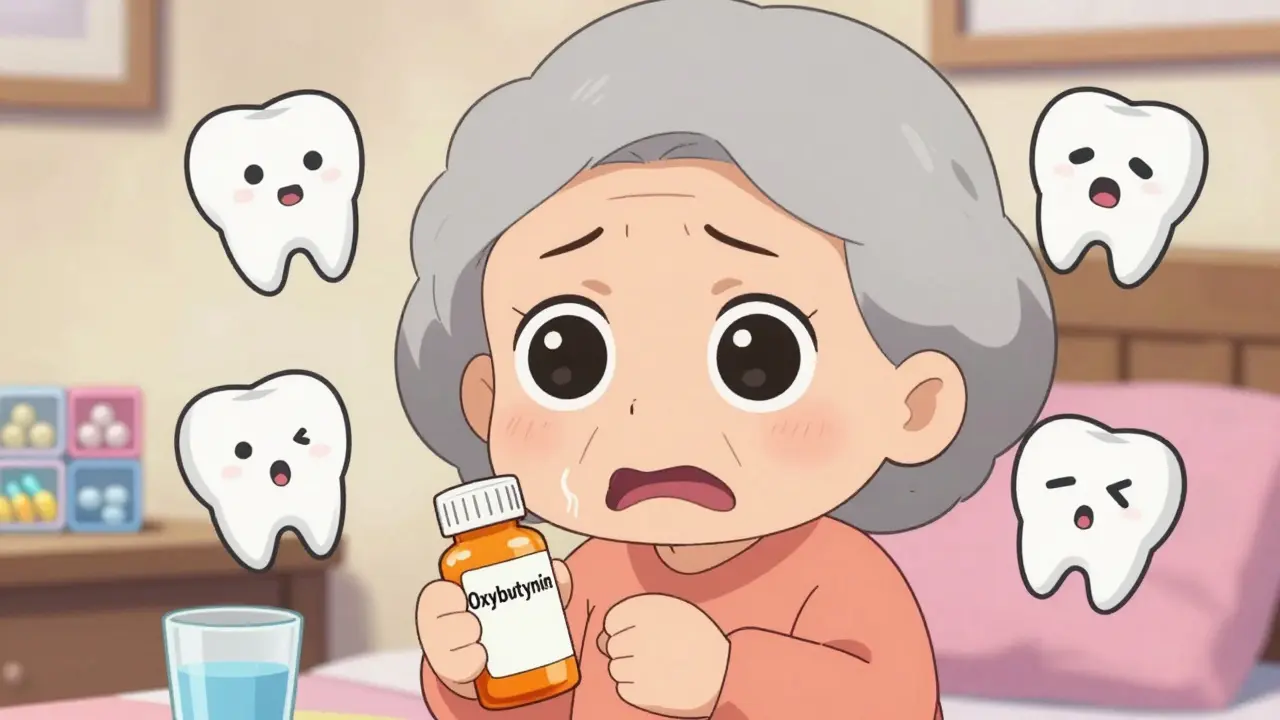
More than 11 million people in the U.S. have dry mouth because of their medications. It’s not just discomfort-it’s a silent threat to your teeth, your ability to eat, and even your sleep. If you’ve ever woken up with a cottony throat, struggled to swallow pills, or noticed more cavities than usual, you’re not imagining it. This isn’t normal aging. It’s a direct side effect of the drugs you’re taking.
Why Your Medications Are Drying You Out
Saliva doesn’t just help you talk and chew. It’s your mouth’s natural defense system. It washes away food, neutralizes acids, and keeps bacteria in check. When your salivary glands slow down or stop working, everything changes. The main culprit? Anticholinergic drugs. These medications block a chemical called acetylcholine, which tells your salivary glands to produce saliva. About 68% of all medications that cause dry mouth work this way. That includes common prescriptions for overactive bladder, depression, allergies, and even Parkinson’s. Take oxybutynin (Detrol), for example. Over 70% of people using the immediate-release version report dry mouth. Diphenhydramine (Benadryl)? About 58% of users get it. Tricyclic antidepressants like amitriptyline? That number jumps to 63%. Even some blood pressure pills and antihistamines can do it. The problem gets worse when you take more than one medication. If you’re on three or more prescriptions, your risk of dry mouth is more than double. And if you’re taking five or more? Around 18% of people end up with almost no saliva at all. That’s not a side effect-it’s a medical issue.Who’s Most at Risk?
Older adults are hit hardest. About 76% of dry mouth cases happen in people over 65. Why? Because they’re more likely to be on multiple medications. Nearly 38% of seniors take five or more daily prescriptions. The CDC says that’s the single biggest risk factor. But it’s not just age. People with chronic conditions-diabetes, arthritis, anxiety, overactive bladder-are often on long-term meds that dry out their mouths. And many don’t realize the connection. They blame their diet, stress, or just “getting older.” But it’s the pills. One patient on Reddit described starting oxybutynin and getting three cavities in six months-even though she brushed twice a day and flossed. She didn’t know dry mouth could cause that fast of decay. Her dentist did. But her doctor never mentioned it.The Hidden Damage
Dry mouth isn’t just annoying. It’s dangerous. Without saliva, your mouth becomes a breeding ground for bacteria. Tooth decay happens faster-up to 300% faster in the first year. Gum disease advances. Sores form. Your tongue cracks. You lose your sense of taste. Eating becomes painful. Swallowing pills feels like choking. Dr. Alan Harris from the Cleveland Clinic says many doctors treat dry mouth like a minor nuisance. But it’s not. Untreated, it leads to emergency dental visits, tooth loss, and infections that can spread. Delta Dental’s research shows people on three or more meds have a 47% higher rate of root decay than those on one or two. And it’s not just teeth. Dry mouth increases the risk of oral thrush, bad breath, and even pneumonia in older adults. Saliva helps protect your lungs by trapping germs before they’re inhaled. No saliva? No barrier.
What Medications Cause the Worst Dry Mouth?
Not all drugs are equal. Some are far worse than others.- Bladder meds: Oxybutynin (70%), tolterodine (62%)
- Antidepressants: Amitriptyline (63%), amoxapine (60%)
- First-gen antihistamines: Diphenhydramine (58%), hydroxyzine (55%)
- Antipsychotics: Haloperidol (54%), chlorpromazine (52%)
How to Manage It-For Real
There’s no magic fix, but there are proven steps. 1. Talk to your doctor. Don’t just live with it. Ask: “Could this drug be causing my dry mouth? Is there an alternative?” In 42% of cases, switching meds helps. You might not even need to stop the drug-just change the brand or dose. 2. Use saliva stimulants. Pilocarpine (Salagen) and cevimeline (Evoxac) are FDA-approved pills that force your glands to work again. In clinical trials, they boosted saliva by 63-72% in just two weeks. They’re not over-the-counter, but they work. 3. Try prescription moisturizers. Biotene Dry Mouth Oral Rinse, GC Dry Mouth Gel, and similar products aren’t just water with flavor. They contain enzymes and proteins that mimic natural saliva. In tests, 81% of users got relief that lasted four hours. The new Biotene Enzyme-Activated system lasts up to seven. 4. Hydrate smartly. Sip water all day. Avoid caffeine, alcohol, and sugary drinks-they make it worse. Sugar-free gum with xylitol helps stimulate saliva. Chewing it 3-4 times a day can make a noticeable difference. 5. See your dentist every 3 months. Standard six-month cleanings aren’t enough. If you’re on meds that dry your mouth, you need more frequent checkups. Your dentist can catch decay early, apply fluoride treatments, and recommend protective sealants.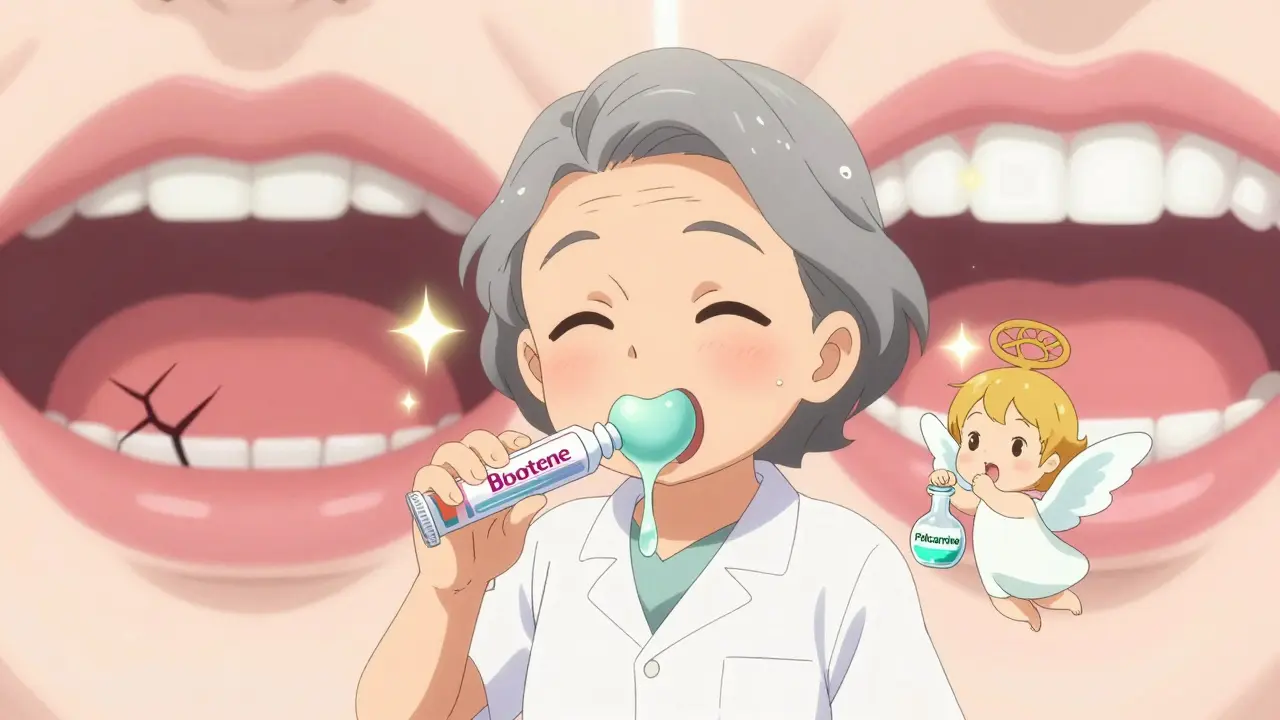
What Doesn’t Work
Don’t waste time on myths. - Drinking water alone won’t fix it. Saliva isn’t just water-it’s a complex fluid with enzymes, minerals, and antibodies. You can’t replace it with a bottle. - Mouthwashes with alcohol dry you out more. Avoid them. - Humidifiers help at night, but they don’t solve the root problem. They’re a bandage, not a cure. - Sugar-free candies with citric acid can erode enamel over time. Stick to xylitol-based products.The Bigger Picture
This isn’t just about you. It’s a systemic problem. Only 28% of primary care doctors routinely check for dry mouth when prescribing meds. Only 52% of dentists feel trained to manage it. And only 43% of dental plans cover the prescription treatments that actually work. But change is coming. In 2023, 47 health systems in the U.S. started linking pharmacists and dentists to coordinate care. Patients in these programs saw 38% fewer dental problems. The NIH just launched a $15.7 million study to find non-anticholinergic alternatives for bladder meds. The FDA approved a new drug (cevimeline) in 2023. The American Dental Association predicts all new medications will need dry mouth risk labels by 2027. You’re not alone. And you don’t have to suffer.Frequently Asked Questions
Can dry mouth from medication be reversed?
Yes, in many cases. If the medication is stopped or switched, saliva production often returns within days to weeks. For those who must keep taking the drug, treatments like pilocarpine or cevimeline can restore up to 70% of normal saliva flow. Even with ongoing medication, using moisturizing products and stimulating saliva can significantly improve comfort and prevent damage.
Is dry mouth a sign of something more serious?
Not always-but it can be. While most cases are caused by medications, dry mouth can also signal Sjögren’s syndrome, diabetes, or nerve damage. If you develop dry mouth suddenly without starting a new drug, or if it’s accompanied by dry eyes, joint pain, or fatigue, see your doctor. But if you’re on meds and have dry mouth, it’s almost certainly medication-related-and still needs treatment.
What’s the best over-the-counter product for dry mouth?
Look for products with xylitol, carboxymethylcellulose, or enzymes that mimic saliva. Biotene, GC Dry Mouth Gel, and Xylimelts (dissolving discs) are clinically tested and recommended by dentists. Avoid anything with alcohol, citric acid, or artificial sweeteners like sucralose. Stick to ones labeled ‘for dry mouth’-not just ‘for fresh breath.’
Can I use sugar-free gum to help?
Yes, but only if it contains xylitol. Chewing stimulates saliva naturally. Xylitol also helps prevent cavities by starving harmful bacteria. Avoid gum with sorbitol or aspartame-these don’t offer the same protection. Chew for 10-15 minutes, 3-4 times a day, especially after meals.
Why doesn’t my doctor talk about this?
Most doctors aren’t trained to think about oral side effects. Dry mouth is often dismissed as a minor complaint, even though it’s the most common oral side effect of prescriptions. A 2023 study found 73% of cases go unmanaged. Don’t wait for them to bring it up. Bring it up yourself. Say: ‘I’ve been having dry mouth since starting [medication]. Could it be related? Are there alternatives?’
10 Comments
Alex Curran
I’ve been on oxybutynin for 3 years and didn’t realize my cavities were from the med until my dentist called me out on it. I thought I was just bad at brushing. Turns out I was producing less than 10% of normal saliva. Started switching to solifenacin last month and my mouth feels human again. No more midnight water runs.
Also, xylitol gum is a game changer. Not the kind with sorbitol-those are useless. Stick to the ones that say xylitol first on the list.
Lynsey Tyson
My grandma’s on 7 meds and her mouth is like sandpaper. She keeps saying it’s just ‘old age’ but she’s been using Biotene gel and it’s made her eat again. She even started enjoying ice cream. I wish doctors would just ask about dry mouth instead of acting like it’s normal.
Also why is no one talking about how bad alcohol-based mouthwashes are? My aunt’s dentist told her to stop using Listerine and now her tongue doesn’t burn anymore.
Edington Renwick
Let me guess-this post was written by a pharmaceutical rep trying to push cevimeline. You know what’s really causing dry mouth? The government forcing old people to take 12 pills a day so Big Pharma can profit. Saliva isn’t magic-it’s your body saying ‘enough.’
And don’t get me started on ‘FDA-approved’ pills. That just means they passed a test paid for by the same company selling it.
Sarah McQuillan
Wow this is so American. In India we just drink more water and chew neem leaves. Why are you all so obsessed with pills and gels? My cousin’s mom took 12 meds for her diabetes and arthritis and never had dry mouth. She just eats yogurt, avoids tea, and sleeps with a wet cloth on her face. Problem solved.
Also why is everyone blaming doctors? Maybe you should stop taking so many unnecessary meds. My aunt stopped her antidepressants and her mouth went back to normal. No magic gel needed.
Aboobakar Muhammedali
I used to take diphenhydramine every night to sleep and my tongue felt like it was covered in dust. I thought it was just dehydration. Then I read this and switched to melatonin. My mouth feels like it’s alive again. I didn’t even know saliva had enzymes. I thought it was just spit.
Also, the part about pneumonia? That scared me. I didn’t realize my dry mouth could be killing me slowly. Thanks for making me pay attention.
And yeah, xylitol gum works. I chew it while watching TV now. My dentist noticed the difference in my last checkup. I’m not lying, it’s real.
Laura Hamill
THIS IS A GOVERNMENT TRAP. They want you to believe your meds are safe so you keep buying them. Saliva is a natural defense system? LOL. That’s what they told us about vaccines too. The FDA approved cevimeline? It’s probably full of fluoride and glyphosate. I don’t trust anything that comes from a ‘health system’ that lets Big Pharma control everything.
My mom had dry mouth for 10 years and she started drinking apple cider vinegar and it fixed everything. No pills. No gel. Just vinegar. They don’t want you to know that.
Also, why are dentists getting paid to push products? I smell a conspiracy. 😡
Alana Koerts
This post is 90% fluff. You listed stats but didn’t cite sources. Where’s the study on 300% faster decay? Who funded the Biotene trial? And why is there no mention of dehydration as a confounder? Most people on these meds are also drinking less water because they’re tired or depressed.
Also, ‘switching meds helps in 42% of cases’-42% of what? 100 people? 10,000? Without context, it’s meaningless. This reads like a sponsored blog post dressed up as medical advice.
Dikshita Mehta
I work in a pharmacy in Mumbai and see this every day. People take antihistamines for colds, antidepressants for anxiety, and bladder meds for years without knowing. We always ask patients: ‘Do you have dry mouth?’ But most say no because they think it’s normal.
Simple fix: always check the side effect list. If it says ‘dry mouth’ or ‘reduced salivation,’ ask your doctor about alternatives. Second-gen antihistamines like cetirizine are way better. And yes, xylitol gum is the cheapest and most effective tool.
Also, don’t ignore the dental visits. Even if you feel fine, decay starts under the gums. My sister lost two teeth because she waited six months between cleanings. Now she goes every 90 days. She’s glad she did.
pascal pantel
Let’s be clear: this is a pharmacoeconomic disaster. Anticholinergic burden is a Class I iatrogenic risk factor in geriatric populations. The CDC data you cited is outdated-2022 NHANES shows 41.7% of seniors on polypharmacy have objectively measured hyposalivation (unstimulated flow <0.1 mL/min).
And you’re recommending pilocarpine? That’s a cholinergic agonist with a 30% dropout rate due to diaphoresis and GI cramping. You’re trading one morbidity for another. Why not consider non-pharmacologic interventions first? Oral myofunctional therapy, tongue exercises, and nasal breathing training have shown 50% improvement in salivary output in RCTs.
Also, Biotene? It’s a placebo with xanthan gum. The enzymes are denatured by saliva pH within minutes. You’re paying $12 for flavored water.
Gloria Parraz
You’re not alone. I’ve been there. My mom was on amitriptyline for 8 years and barely ate because it hurt to swallow. We found out the hard way when she got an abscess. But once we switched her to sertraline and started the Biotene gel, she started laughing again at dinner. That’s the real win.
Don’t let anyone make you feel like this is just ‘part of getting older.’ Your mouth matters. Your comfort matters. And asking your doctor for help? That’s not weakness. That’s strength.
You got this. 💪