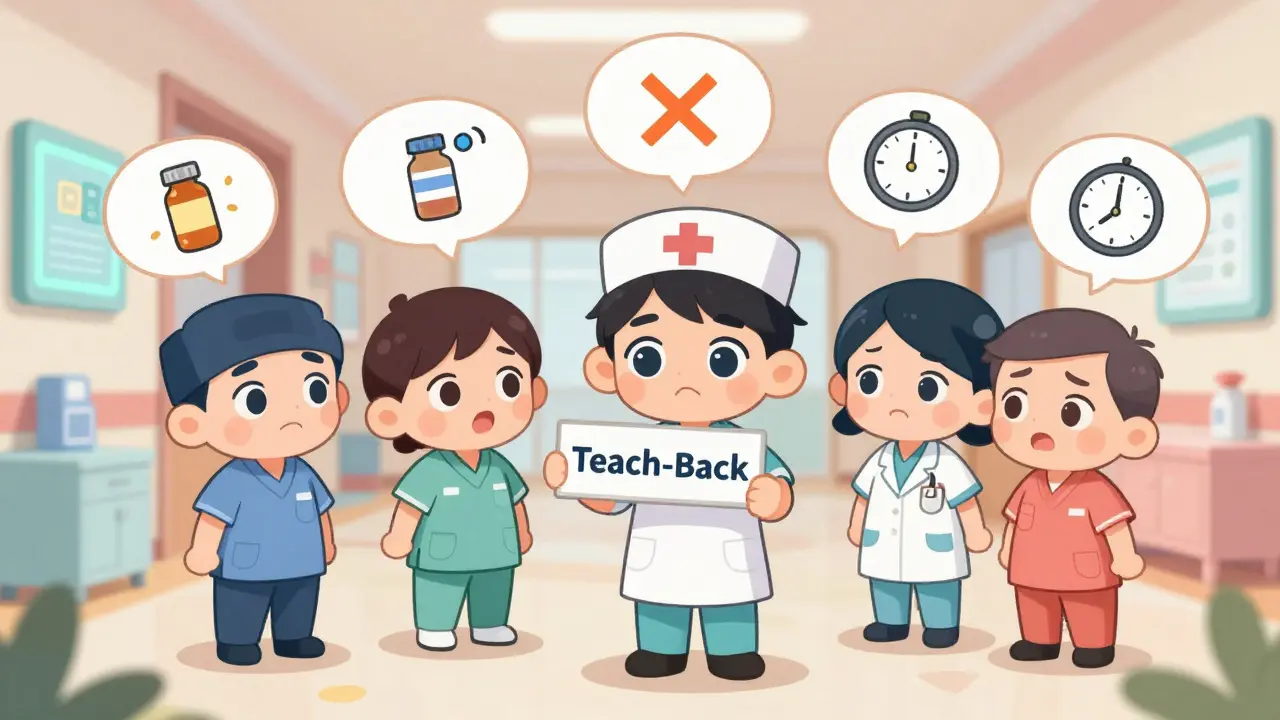
When patients leave the doctor’s office confused, or when nurses and doctors miss critical details because of rushed conversations, it’s not just bad luck-it’s a breakdown in healthcare communication. These aren’t small mistakes. They lead to misdiagnoses, unnecessary hospital visits, and even preventable deaths. And the fix isn’t more staff or better technology. It’s better communication training-built into the system, not tacked on as an afterthought.
Why Communication Training Isn’t Optional Anymore
In 2012, The Joint Commission found that poor communication contributed to 80% of serious medical errors. That’s not a typo. Eighty percent. By 2018, the Agency for Healthcare Research and Quality confirmed that communication failures caused 15-20% of all adverse patient outcomes. These aren’t abstract numbers. They’re real people who didn’t understand their medication instructions, who felt ignored during a panic attack, or whose care team didn’t coordinate properly because no one knew who was responsible for what. Hospitals now tie 30% of their Medicare reimbursement to patient satisfaction scores from HCAHPS surveys. And the biggest factor in those scores? How well staff communicated. If patients don’t feel heard, they rate the care low-even if the treatment was technically perfect. That’s why institutions can’t afford to ignore this anymore. Training isn’t a nice-to-have. It’s a financial and ethical necessity.What These Programs Actually Teach
Not all communication training is the same. Some focus on talking to patients. Others teach teams how to speak the same language. A few even train staff to handle social media misinformation or respond during a public health crisis. Take the Program for Excellence in Patient-Centered Communication (PEP) at the University of Maryland. It doesn’t just tell doctors to “be nice.” It trains them in specific, measurable skills: how to elicit a patient’s full story without interrupting, how to respond with empathy when someone says, “I’m scared,” and how to check for understanding without saying, “Do you understand?”-a phrase patients often nod along to, even when they’re lost. Mayo Clinic’s course uses real video examples of doctors struggling with boundary setting-like when a patient demands antibiotics they don’t need, or a family member dominates the conversation. Nurses learn how to say “no” without burning out. One nurse practitioner reported a 40% drop in burnout after just three months. At Northwestern University, medical students don’t just watch lectures. They practice in simulated rooms with trained actors playing patients. They do this 4-6 times during their rotations. They must hit an 85% proficiency score before moving on. The result? 37% better skill retention six months later than traditional training. And then there’s SHEA’s program for infection control specialists. It’s not about bedside manner. It’s about talking to the media during an outbreak, writing clear public health advisories, and correcting vaccine myths on social media. One participant said her training helped her reach 50,000 people monthly with accurate info-something no press release could do.Who Gets Trained-and Who Doesn’t
The biggest gap? Not everyone gets trained. Most programs target doctors and nurses. But communication failures often happen between departments. A lab tech doesn’t know why a result is urgent. A pharmacist doesn’t know the patient’s allergy history was updated 20 minutes ago. Sixty-five percent of communication failures, according to AHRQ, happen between professionals-not between provider and patient. That’s why newer programs are shifting focus. Johns Hopkins, University of Pennsylvania, and others now offer master’s degrees in health communication that include interprofessional training. These aren’t just for clinicians. They’re for administrators, data analysts, and even billing staff who interact with patients. But here’s the problem: rural hospitals and small clinics rarely have the budget or staff to run these programs. Only 22% of rural facilities have formal communication training. Meanwhile, big hospitals with 300+ beds? 68% have structured curricula. The gap isn’t just about money-it’s about access.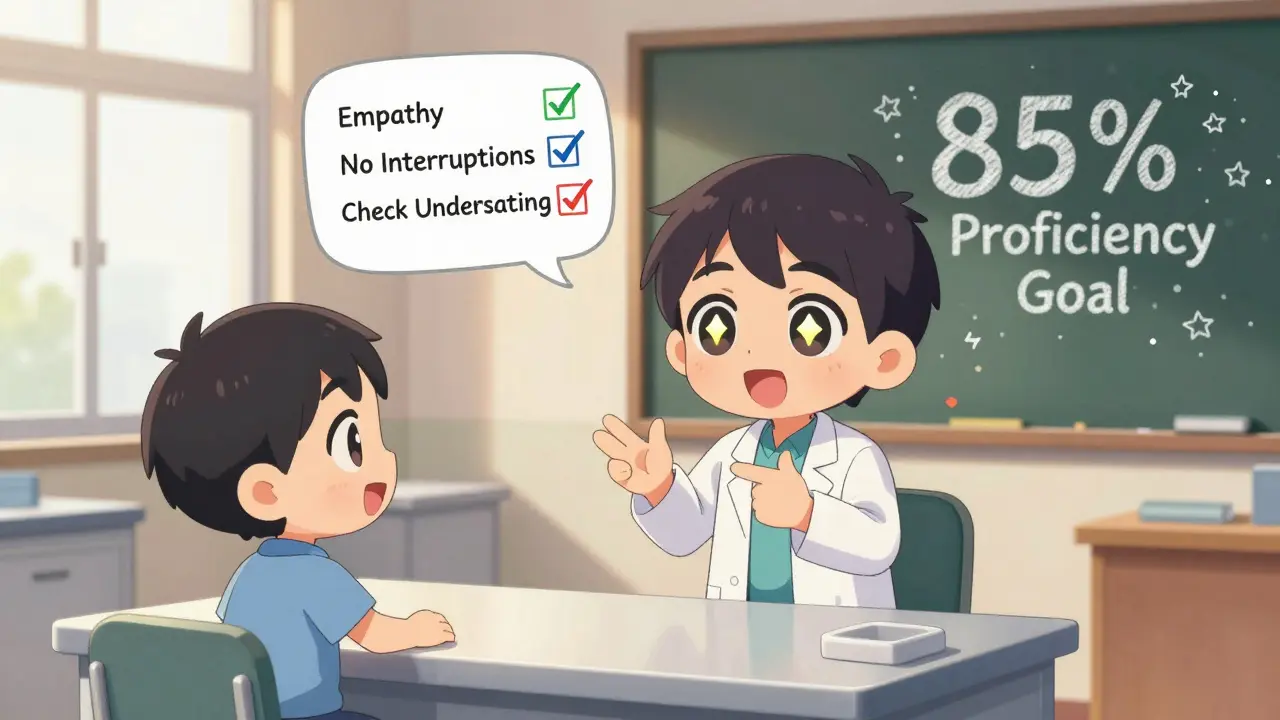
What Works-and What Doesn’t
Not all training sticks. A 2021 JAMA review found only 12% of programs track whether skills are used more than six months later. That’s because most training is a one-time workshop. People leave inspired, then go back to 15-minute appointments where they’re pressured to “move on.” The programs that work follow a clear model: assess the problem, pick 3-5 key skills to fix, train using real scenarios, and embed those skills into daily workflow. At Northwestern, they added prompts in the EHR system that remind doctors to ask, “What’s your biggest concern today?” before starting the exam. That small change made a measurable difference. Another winner? Mastery learning. Instead of watching a video and taking a quiz, learners practice until they get it right. It takes longer. It costs more. But retention is higher. And patients notice. What fails? Generic lectures. “Communication is important” slides. Training that doesn’t tie to real cases from the clinic. And programs that ignore cultural differences. A 2023 AAMC review found 60% of programs didn’t address how language, race, or immigration status affects communication. That’s dangerous. Studies show a 28% satisfaction gap between white patients and minority patients-largely because providers don’t adjust their approach.The Hidden Barriers
Even the best training hits walls. Dr. Robert Wachter at UCSF points out that doctors average just 13.3 seconds before interrupting patients-even after training. Why? Time pressure. Insurance rules. EHR overload. Training can’t fix a system that gives you 7 minutes to see a patient with diabetes, high blood pressure, depression, and a new foot ulcer. Faculty resistance is another problem. Many senior clinicians think communication is “soft skill” stuff. “I’ve been doing this for 30 years,” they say. But Dr. Vineet Arora at Northwestern found that residency programs using mastery learning had 28% fewer patient complaints. When peers lead the training-senior doctors modeling the behavior-resistance drops. And then there’s time. A 2023 AAMC survey found 58% of healthcare workers said they knew the skills but didn’t have time to use them. That’s why successful programs don’t add to the workload-they replace bad habits with better ones. One hospital replaced its 30-minute mandatory compliance lecture with a 5-minute EHR pop-up that reminded staff to use the teach-back method. Compliance jumped from 32% to 81% in six weeks.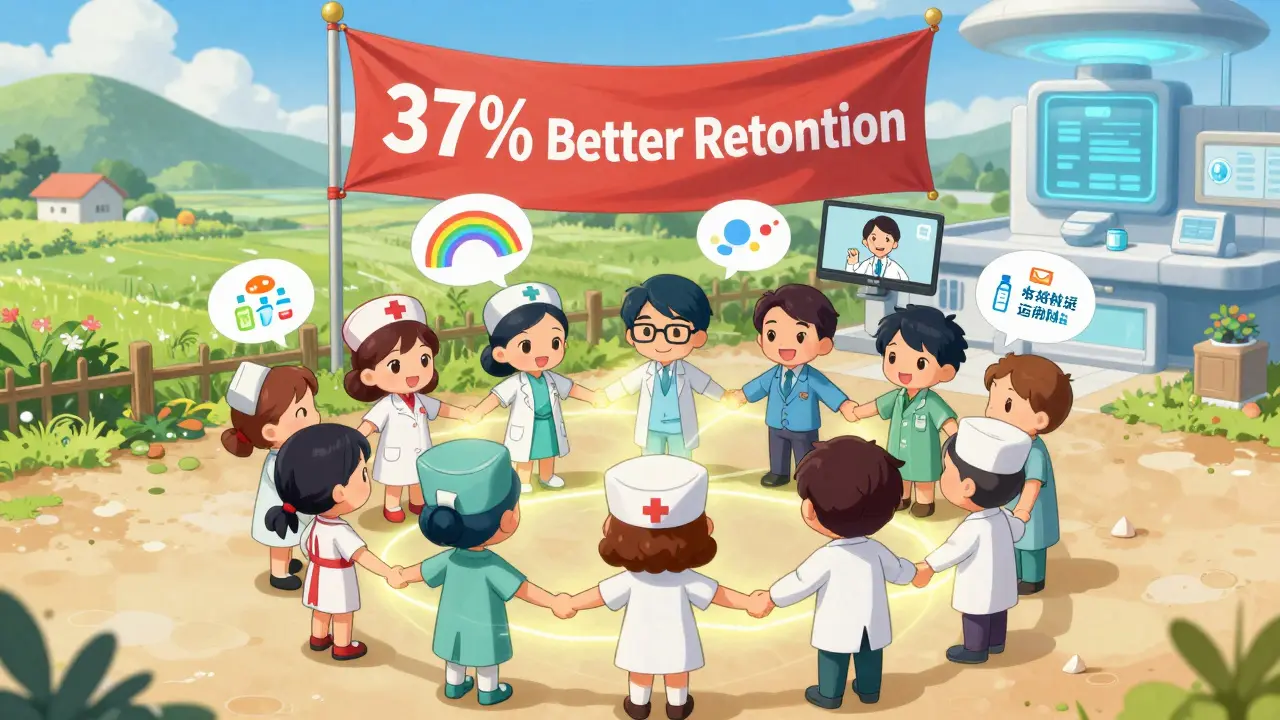
The Future: Tech, Equity, and Sustainability
The field is evolving. In January 2024, UT Austin launched new courses focused on health equity communication-teaching providers how to talk to patients from different cultures without stereotyping. The Academy of Communication in Healthcare is now testing AI tools that give real-time feedback during simulated conversations. Pilot data shows learners master skills 22% faster. Telehealth is changing the game too. 35% of new programs now include virtual communication modules-how to build trust over Zoom, how to spot non-verbal cues on screen, how to confirm understanding when you can’t see the patient’s hands. But sustainability is shaky. Only 42% of hospital programs have dedicated funding. Most rely on grants or one-time donations. Without ongoing investment, these programs fade. The Mayo Clinic and SHEA partnership announced in early 2024 is a sign of where things are headed: academic institutions teaming up with professional societies to create scalable, funded models.What You Can Do-Even Without a Formal Program
If your hospital doesn’t have a communication training program, start small. Use free resources. The Academy of Communication in Healthcare offers 125 evidence-based teaching tools-free to download. Try this: pick one skill. Practice it for a week. Use the teach-back method. Ask patients to repeat back instructions in their own words. Track how many errors drop. Or, start a peer group. Get three colleagues together. Watch a video from Mayo’s course. Discuss one scenario. Share what worked and what didn’t. Change doesn’t need bureaucracy. It needs people who care enough to try.Final Thought: Communication Is the Glue
Technology can automate labs. AI can flag risks. Robots can deliver meds. But only a human can make a scared patient feel safe. Only a team that talks clearly can prevent a medication error. Only a provider who listens can uncover the real reason someone missed their appointment. Healthcare communication isn’t about being charming. It’s about being clear, consistent, and compassionate. And when institutions invest in training-not as a checkbox, but as a core function-they don’t just improve scores. They save lives.What are institutional generic education programs in healthcare communication?
These are structured, evidence-based training programs developed by hospitals, universities, or professional organizations to teach healthcare workers how to communicate more effectively. They cover patient interactions, teamwork, crisis messaging, and cultural sensitivity. Unlike one-off workshops, they’re often part of ongoing professional development and tied to clinical workflows.
Do these programs actually improve patient outcomes?
Yes. Studies show physicians with communication training have 30% fewer malpractice claims. Patient satisfaction scores rise by up to 23% when staff use empathy and teach-back methods. Communication errors, which cause 15-20% of adverse events, drop significantly after teams complete structured training. The link isn’t theoretical-it’s measured in reduced readmissions, fewer errors, and higher trust.
Who should take these courses?
Everyone who interacts with patients or other staff: doctors, nurses, pharmacists, social workers, receptionists, and even billing staff. Some programs target specific roles-like infection control specialists or public health workers-but the best programs train entire teams. Communication failures happen between departments as much as between provider and patient.
Are these programs expensive?
Costs vary. Some are free-like UT Austin’s HCTS courses. Others charge $75-$125 for short modules. Master’s degrees can cost $1,870 per credit. But many hospitals absorb the cost because better communication reduces liability, improves reimbursement, and cuts readmissions. The return on investment is clear: for every dollar spent, hospitals save $3-$5 in avoided errors and penalties.
Why do some healthcare workers resist communication training?
Some think it’s “fluff” or that they’re already good communicators. Others feel overwhelmed by time pressure. A 2021 study found 30-40% of learners feel anxious during simulations. Resistance drops when senior staff model the behavior, when training uses real cases from their own units, and when it’s tied to measurable outcomes-not just compliance.
Can communication training fix systemic problems like short appointment times?
Not alone. Dr. Wachter notes that even trained doctors average only 13 seconds before interrupting patients-because the system forces them to rush. Training helps people communicate better within those limits, but real change requires policy shifts: longer visits, better EHR design, and reduced administrative burden. Training is a tool, not a cure-all.
How do these programs address health disparities?
Leading programs now include cultural humility training-teaching providers to recognize bias, adapt language for low-literacy patients, and avoid assumptions based on race or language. AHRQ’s 2023 report showed a 28% satisfaction gap between white and minority patients. Newer curricula address this directly, using role-play with diverse actors and data-driven feedback to improve equity.
Is online training as effective as in-person?
For foundational knowledge, yes. Online modules from Mayo, SHEA, and UT Austin are highly rated. But for skills like empathy, boundary setting, or reading non-verbal cues, simulation-based training with live actors works better. The best programs blend both: online prep, then in-person or virtual simulations. AI feedback tools are now closing the gap, offering real-time coaching during practice sessions.
How long does it take to see results from communication training?
Skills start improving within weeks, but full integration takes 3-6 months. A Tulane study found communication skills plateau at 70% without reinforcement. The key is ongoing practice, feedback, and embedding prompts into daily tools like EHRs. One hospital saw compliance with teach-back methods jump from 32% to 81% in six weeks after adding a simple EHR reminder.
Where can I find free communication training resources?
The Academy of Communication in Healthcare (achonline.org) offers 125 free, evidence-based teaching tools rated excellent by users. UT Austin’s Health Communication Training Series (HCTS) provides free video courses, including pandemic preparedness and health equity modules. Mayo Clinic also offers free sample videos and guides. These are credible, peer-reviewed, and designed for real-world use.
14 Comments
Lu Jelonek
Been in rural clinics where the only 'training' was a 10-minute handout. No simulations. No feedback. Just hope you remember what you read. It's not that people don't care-it's that the system doesn't give them the tools to care well.
One nurse I worked with started using teach-back without being told. Just asked patients to explain their meds back. Her error rate dropped by half. No grant. No program. Just human ingenuity.
That's what we need: permission to be thoughtful, not another checkbox.
Bret Freeman
Let’s be real. This whole 'communication training' thing is just corporate wellness theater wrapped in JAMA citations. Doctors aren’t robots, but neither are they therapists. You can’t fix a 7-minute visit with empathy drills.
What we need is fewer patients per day. Fewer EHR pop-ups. Fewer insurance forms. Stop treating communication like a soft skill and start treating the system like the broken machine it is.
Training won’t fix time. Time will fix communication.
EMMANUEL EMEKAOGBOR
In Nigeria, we often lack even basic supplies, yet we still find ways to communicate with dignity. A smile, a pause, holding a hand-these cost nothing. Training programs in the West focus so much on scripts and metrics that they forget the heart of care is presence.
Perhaps the real lesson is not how to speak better, but how to listen more. Not with a checklist, but with humility.
When a mother says her child is 'not right,' she doesn’t need a translation tool-she needs to be believed.
Maybe we should train providers to stop talking first.
Ajay Sangani
the thing no one talks about is that most docs are burnt out before they even get to the 'communication' part. you can teach them all the teach-back methods in the world, but if they're running on 4 hours of sleep and 12 back-to-back patients, they're gonna interrupt. it's not a skill issue, it's a survival issue.
also, why do all these programs assume patients are literate? what about the guy who can't read the med label? or the grandma who thinks 'antibiotics' means 'magic pills'?
we need to train for the real world, not the textbook one.
Gray Dedoiko
I’ve seen this work. Not because of fancy programs, but because one nurse started asking, 'What’s the one thing you’re most worried about?' before every exam.
It took her 12 seconds. Patients started opening up. One told her she hadn’t slept in three weeks because she was scared of her blood pressure meds. That led to a diagnosis of anxiety, not hypertension.
Simple. Human. No training required-just a shift in mindset.
Maybe the best 'program' is just giving people space to care.
Paula Villete
Oh good, another 'empathy training' program. Because nothing says 'we care' like forcing doctors to watch videos about 'feeling the patient's pain' while their EHR screams at them to document five more vitals.
Meanwhile, the real issue? Insurance companies pay for procedures, not time. So we train people to smile while they’re being strangled by bureaucracy.
Bravo. Let’s just add a 'compassion badge' to their ID lanyards. Maybe that’ll make the readmissions go down.
Meanwhile, I’ll be over here, still waiting for a 15-minute appointment that doesn’t feel like a hostage negotiation.
Georgia Brach
Let’s examine the data. 80% of errors due to communication? That’s a red flag, yes-but it’s also a convenient scapegoat. Where’s the data on how many of these 'failures' are due to non-compliant patients? Or families who refuse to listen? Or patients who lie about meds?
And why are we blaming providers for systemic failures? The system gives them 7 minutes. Then we train them to be therapists. Then we punish them when they fail.
This isn’t about communication. It’s about shifting blame from administrators to clinicians.
And don’t get me started on 'cultural humility.' We’re turning medicine into a social justice seminar.
Katie Taylor
Enough with the talk. I’ve worked in three hospitals. I’ve seen the same 3 nurses who actually listen. Everyone else is just going through the motions. Training programs are useless if they’re not mandatory, tracked, and tied to performance reviews.
Why are we still letting people graduate without proving they can explain a diagnosis to a 70-year-old who speaks English as a second language?
If you can’t pass a simulated patient interaction, you don’t get your license. That’s not radical. That’s basic.
Stop treating communication like a bonus feature. It’s the operating system.
Ademola Madehin
My cousin went to the ER with chest pain. The doctor said 'it's probably anxiety' and walked out. No follow-up. No explanation. She had a heart attack two days later.
That’s not a 'communication failure.' That’s negligence dressed up as a training gap.
They want us to believe a 2-hour workshop fixes this? Please. The system doesn’t care. It never has. And no amount of 'teach-back' is gonna fix that.
Someone needs to burn it all down.
siddharth tiwari
they say communication training reduces errors but did anyone check if the errors were caused by the training itself? like what if all these 'empathy drills' make doctors overthink every word and miss real signs?
also, who funded these studies? big pharma? hospitals? or maybe the same people who sell the ehr software that makes communication harder?
and why do all the examples come from fancy universities? what about the guy in mississippi with no internet and 12 patients an hour?
i think this is all a distraction. the real problem is profit over people.
suhani mathur
Oh, so now we’re training nurses to say 'no' to patients who demand antibiotics? Brilliant. Let’s just add 'patient management' to the list of skills we expect frontline staff to master-along with being part-time therapist, translator, insurance advocate, and emotional support animal.
Meanwhile, the doctor who wrote the prescription? He’s off to his 5:30 PM golf game.
Let’s not pretend this is about communication. It’s about who gets to say 'no' and who gets to say 'yes' while the system laughs all the way to the bank.
Diana Alime
i read this whole thing and still have no idea what the point was. like, cool, training is good. but how do i get my mom’s meds changed without her getting kicked out of her apartment because the pharmacist didn’t 'communicate' with the social worker?
also, why is every example from a fancy hospital? what about the free clinic where the printer is broken and the only interpreter is the guy who fixes the coffee machine?
also, who wrote this? did they ever actually work a shift? or did they just watch a TED Talk and write a 5000-word essay on it?
Adarsh Dubey
Communication is not a skill to be trained. It is a practice to be cultivated. The more we systematize it, the more we strip it of humanity.
What if, instead of teaching doctors how to ask 'What’s your biggest concern?', we simply gave them 15 minutes to sit and listen? No checklist. No EHR pop-up. Just presence.
Perhaps the answer is not more training, but less rushing.
And maybe, just maybe, the real problem isn’t that providers don’t know how to communicate-but that we’ve made it impossible for them to.
Bartholomew Henry Allen
Training programs are a waste of taxpayer money. We need more doctors not more sensitivity seminars. America is falling behind in healthcare because we’re obsessed with feel good buzzwords instead of real results. Stop making doctors into counselors. Make them work harder. More hours. More patients. More output. That’s what wins.
Communication is for diplomats not doctors. Get back to science.