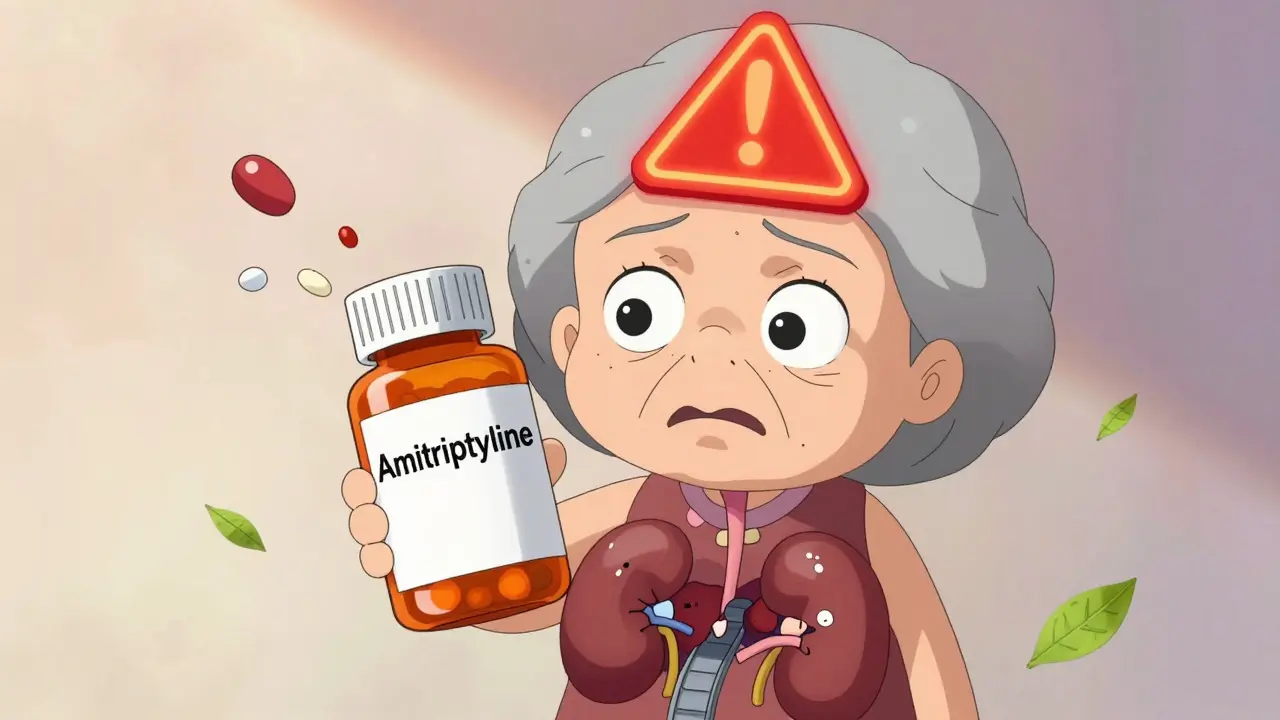
When you're 70, your body doesn't process medications the same way it did at 30. It’s not just about taking less - it’s about how your liver and kidneys have changed, and what that means for every pill you swallow. Many older adults end up in the hospital not because their condition got worse, but because a drug they took at a standard dose became too strong. This isn’t rare. About 10% of hospital admissions in people over 65 are caused by adverse drug reactions. And the root cause? Often, it’s simple: no one adjusted the dose for aging organs.
What Happens to Your Liver as You Age?
Your liver doesn’t just slow down - it shrinks. By the time you reach your 70s, liver mass has dropped by about 30%. Blood flow through the liver is down by 40%. That means drugs don’t get processed as quickly or as efficiently. Think of it like a factory with fewer workers and slower conveyor belts. Even if the machines (enzymes) are still running, the raw materials (drugs) aren’t getting through fast enough. The real problem isn’t always the enzymes themselves. Phase I metabolism - the process that breaks down drugs like propranolol, morphine, and diazepam - slows down significantly. Studies show a 37% to 60% drop in activity in older adults. But here’s the twist: some drugs, especially those that rely on Phase II metabolism (like acetaminophen), don’t slow down as much. That’s why acetaminophen is often safer than other painkillers - but only if you don’t take too much. In fact, acetaminophen is behind half of all acute liver failures in older adults because people assume it’s harmless and keep taking it. Then there’s first-pass metabolism. That’s the process where a drug gets broken down in the liver before it even reaches your bloodstream. When this drops, more of the drug enters your system. For drugs like verapamil or propranolol, that means your blood levels can jump 25% to 50% higher than expected. A normal dose becomes a toxic one. One caregiver in Massachusetts told me her 82-year-old mother started on a standard dose of amitriptyline for depression and ended up in the ER with severe dizziness and confusion. The doctor later realized her liver wasn’t clearing the drug at all.Your Kidneys Don’t Work Like They Used To
Your kidneys filter about 120 to 150 quarts of blood every day. By age 80, that number drops by 30% to 50%. That’s not just a number - it’s life or death for drugs that leave your body through urine. Antibiotics like vancomycin, heart drugs like digoxin, and painkillers like morphine all depend on kidney clearance. If your kidneys slow down, these drugs build up. And because serum creatinine (the standard test doctors use) doesn’t always reflect kidney function in older adults - muscle mass drops with age, so creatinine levels stay normal even when kidneys are failing - many people get the wrong dose. The Cockcroft-Gault equation has been the go-to tool for estimating kidney function, but newer guidelines from the National Kidney Foundation now recommend the CKD-EPI equation without race adjustments. Why? Because it’s more accurate for older people, especially women and those with low muscle mass. Still, many clinics still use the old formula. That’s dangerous. And here’s something few doctors talk about: when your kidneys fail, your liver can suffer too. Studies show that kidney impairment can reduce liver enzyme activity by up to 20%. So even if a drug is cleared mostly by the liver, poor kidney function can still cause it to accumulate. It’s a double hit.Not All Drugs Are Affected the Same Way
This is where things get practical. Not every drug behaves the same in an older body. Drugs fall into two categories: flow-limited and capacity-limited. Flow-limited drugs - like propranolol, lidocaine, and morphine - depend on blood flow to get into the liver. When blood flow drops 40%, their clearance drops by about the same amount. These drugs need big dose reductions. Start at 50% of the normal dose. Monitor closely. Capacity-limited drugs - like diazepam, theophylline, and phenytoin - depend on enzyme activity. Their metabolism slows only 10% to 15%. So you don’t need to slash the dose as much. But here’s the catch: they often have narrow therapeutic windows. Even a small buildup can cause side effects. One study found that older adults on standard doses of diazepam were three times more likely to fall and break a hip. Then there are prodrugs - inactive compounds that the body turns into active medicine. Perindopril, an ACE inhibitor, needs liver enzymes to activate. In older adults, that conversion slows. So the drug doesn’t work as well. You might think it’s not helping, when really, it’s just not being turned on.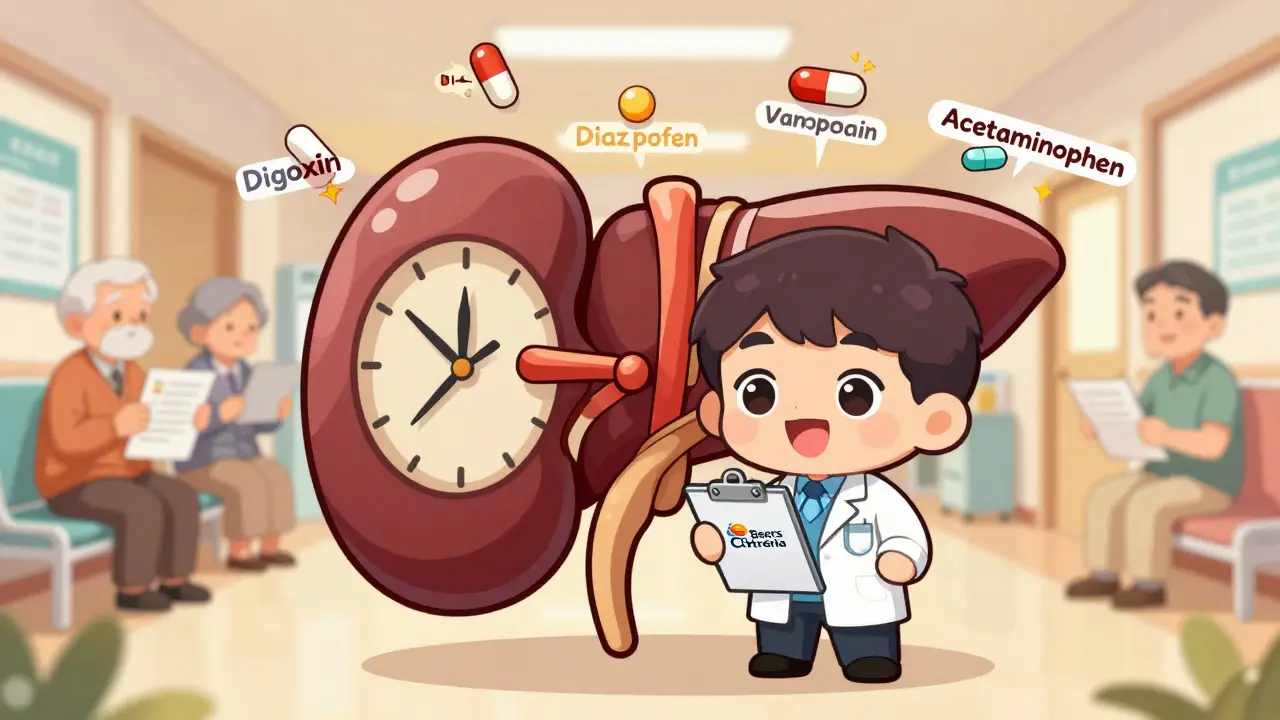
What Doctors Should Be Doing
The Beers Criteria® - updated in 2019 - is the gold standard for safe prescribing in older adults. It says: start low, go slow. For drugs cleared by the liver, reduce the initial dose by 20% to 40%. For those over 75, go even lower. Don’t assume a 70-year-old can handle the same dose as a 40-year-old. Use the START/STOPP guidelines. START helps you find drugs you should be prescribing. STOPP tells you which ones you should stop. One meta-analysis showed using these tools cut adverse drug events by 22%. That’s not small. That’s life-changing. And don’t forget over-the-counter meds. Ibuprofen, naproxen, even cold medicines with antihistamines - they all add up. One 78-year-old woman I read about was taking six prescriptions, three OTC painkillers, and a sleep aid. She was on 10 different drugs. Her kidneys couldn’t keep up. Her liver was overwhelmed. She ended up with confusion, low blood pressure, and a fall that broke her hip. None of it was inevitable.What You Can Do
If you or a loved one is on multiple medications, ask these three questions:- Is this drug still necessary? Sometimes, a drug was prescribed for a problem that’s now gone.
- Has the dose been adjusted for age or kidney/liver function?
- Could this drug interact with anything else I’m taking - even supplements or herbal teas?
The Bigger Picture
The U.S. spends $30 billion a year on hospital visits caused by bad drug reactions in older adults. That’s money, yes - but more than that, it’s lost time, lost independence, lost quality of life. And here’s the scary part: most drug trials still don’t include enough older adults. Only 38% of participants in new drug studies are over 65. So we’re prescribing drugs based on data from people half their age. That’s not science. That’s guesswork. New tools are coming. In 2023, the FDA approved GeroDose v2.1 - software that simulates how a drug will behave in your body based on your age, weight, liver enzymes, and kidney function. It’s not everywhere yet. But it’s a start. The future isn’t about age. It’s about function. A 75-year-old with great kidneys and a healthy liver might need the same dose as a 50-year-old. A 65-year-old with diabetes and high blood pressure might need half. We need to stop guessing. We need to measure.What’s Next
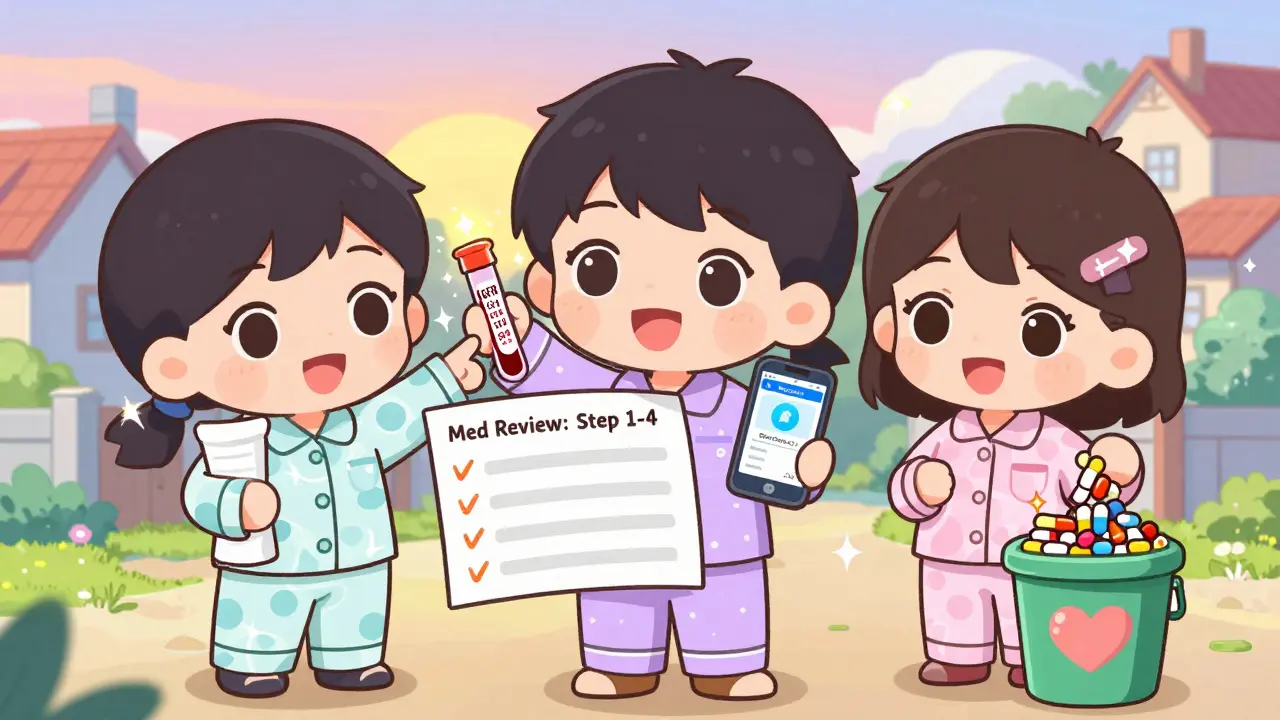
If you’re managing medications for yourself or someone older, the next step is simple:- Get a full list of all medications - prescriptions, OTC, supplements.
- Ask your doctor or pharmacist to check for Beers Criteria violations.
- Request a kidney function test (eGFR using CKD-EPI) and liver enzyme panel.
- Ask if any drugs can be reduced, switched, or stopped.
Why do older adults need lower doses of some medications?
Older adults often need lower doses because their liver and kidneys don’t work as efficiently. Liver mass and blood flow decrease, slowing how fast drugs are broken down. Kidney function drops by 30% to 50% between ages 30 and 80, so drugs cleared by urine build up. Even if a drug was safe at 40, the same dose at 70 can become toxic.
Can blood tests show if my liver or kidneys are affecting my meds?
Yes. A simple blood test can measure creatinine and calculate eGFR (estimated glomerular filtration rate) to check kidney function. Liver enzymes (ALT, AST) and albumin levels can indicate liver health. But these don’t tell the full story - they don’t measure enzyme activity or blood flow. For high-risk drugs like warfarin or digoxin, therapeutic drug monitoring (measuring actual drug levels in blood) is the most accurate way to ensure safety.
Are over-the-counter drugs safe for older adults?
Not always. Acetaminophen is the most common cause of acute liver failure in older adults because people take it daily without realizing the cumulative effect. NSAIDs like ibuprofen can cause kidney damage and raise blood pressure. Antihistamines in cold and sleep aids can cause confusion and falls. Always check with a pharmacist before taking any OTC medicine - even if it’s "natural" or "non-drowsy."
What are the Beers Criteria and STOPP/START guidelines?
The Beers Criteria is a list of medications that are potentially inappropriate for older adults due to high risk of side effects. STOPP (Screening Tool of Older Person’s Potentially Inappropriate Prescriptions) identifies harmful prescriptions. START (Screening Tool to Alert Doctors to Right Treatment) helps find drugs that should be prescribed but often aren’t. Using these tools together reduces adverse drug events by over 20%.
Is it true that some drugs don’t work as well in older adults?
Yes. Prodrugs - like perindopril and codeine - need to be converted by the liver into their active form. As liver function declines, this conversion slows. That means the drug doesn’t work as well, even if the dose hasn’t changed. Some patients think their medication isn’t working, when really, their body just can’t activate it properly.
What should I do if I’m on five or more medications?
Ask for a medication review. Polypharmacy (five or more drugs) increases the risk of adverse reactions by 88%. A pharmacist or geriatrician can help identify duplicates, interactions, and drugs that are no longer needed. Many hospitals offer free medication reviews - call your local clinic or ask your doctor to refer you.
12 Comments
Brandon Boyd
Man, I wish my dad’s doctor had read this five years ago. He was on six meds, all standard doses, and ended up in the ER after a fall. Turns out his kidneys were barely working, and they didn’t even check eGFR. We were lucky he didn’t die. Start low, go slow? Yeah, that’s not a suggestion-it’s a lifeline.
Branden Temew
So we’re telling old people to take less medicine… but the FDA still tests drugs on 25-year-old college kids who’ve never had a headache? Brilliant. Next they’ll prescribe antidepressants based on how many TikTok likes a 19-year-old gets. Science is just corporate bingo now.
Frank SSS
Look, I get it-liver shrinks, kidneys slow down. But let’s be real: most of these folks are on these meds because they’re lazy. Stop eating junk, start walking, and maybe you won’t need 12 pills to feel human. I’ve seen 80-year-olds hike mountains. Meanwhile, my neighbor takes Tylenol for a sneeze. It’s not the system failing-it’s the mindset.
Paul Huppert
This is so helpful. I’ve been asking my grandma to bring her med list to every appointment, but she thinks the pharmacist already knows everything. Turns out, no one does. I’m printing this out for her tomorrow.
Martin Viau
Canada’s been using CKD-EPI for years. Why are you still stuck on Cockcroft-Gault? We fixed this in 2017. You guys still think creatinine = kidney function? Classic American medical inertia. Also, acetaminophen isn’t safe-it’s just less immediately lethal than NSAIDs. Still dangerous. We know this.
Marilyn Ferrera
Stop. Just stop. If you’re on more than three meds, you’re not “managing” your health-you’re playing Russian roulette with your liver. Ask for a med review. Don’t wait for a fall. Don’t wait for ER. Do it now.
Robb Rice
I really appreciate the detail here. I'm not a doctor, but my mom is 76 and on warfarin, and I had no idea about therapeutic drug monitoring. We're scheduling a blood test next week. Thank you for the clarity. Also, I think you meant "phenytoin" not "phenyton"-minor typo, but important for accuracy.
linda permata sari
My tía in Mexico City takes three herbal teas and five pills, and she swears by them all. One of the teas? It’s got hidden ibuprofen. She didn’t know. I cried. This post? It’s not just for Americans. It’s for every culture that thinks "natural" means "safe." We need to talk about this everywhere.
Bennett Ryynanen
STOPP/START is the only thing that’s saved my grandfather’s life. His old doc kept prescribing him Benadryl for sleep. He’d wander at night, fall, forget his own name. We switched to melatonin, cut three meds, added a daily walk. He’s been stable for two years. Don’t let your family be a statistic.
Jenny Salmingo
My mom takes a pill for her blood pressure, one for her joints, one for sleep, and one for her heart. She says she’s fine. But she’s always tired and dizzy. Maybe she just needs fewer pills. I’m going to ask her doctor next week.
Aaron Bales
Prodrugs are the silent killer. My uncle was on perindopril for years, thought it wasn’t working-so he doubled the dose. Turns out his liver couldn’t activate it. He was taking twice what he needed and getting zero benefit. This needs to be taught in med school. Like, yesterday.
Lawver Stanton
Okay, let’s be honest-this whole thing is a scam. The pharmaceutical industry doesn’t want you to know that older bodies process drugs differently because then they’d have to make 200 different versions of every pill. Instead, they just tell you to take less, while charging the same price. And the doctors? They’re too busy chasing bonuses to read the Beers Criteria. This isn’t medicine-it’s profit-driven guesswork with a fancy acronym. GeroDose? Cute. But until they force labs to use it, we’re just rearranging deck chairs on the Titanic.