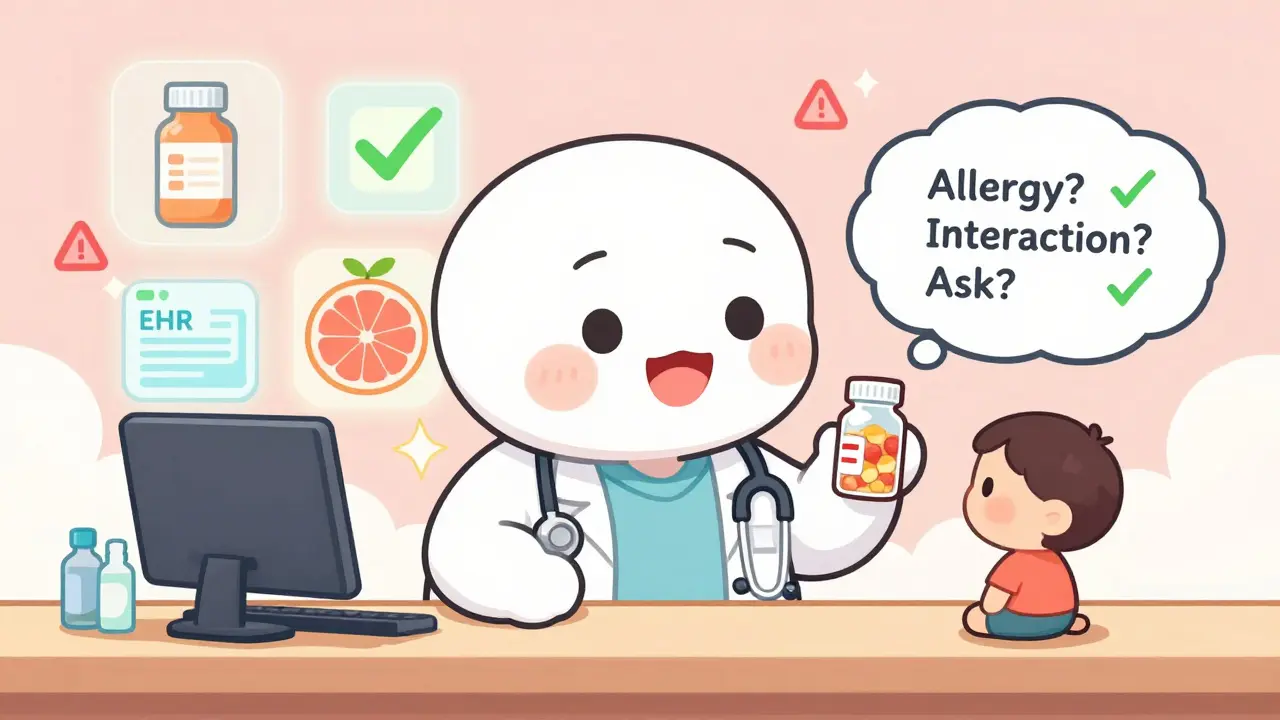
Why Confirming Allergies and Interactions at Pickup Matters
Every time someone walks up to the pharmacy counter to pick up a prescription, there’s a silent checkpoint that could mean the difference between healing and hospitalization. This isn’t just a formality-it’s the last line of defense against a preventable medical error. In the UK and across the US, an estimated 6.7% of hospital admissions are caused by adverse drug events, many of which happen because allergies or dangerous drug combinations weren’t caught before the medicine left the counter.
Pharmacists don’t just hand out pills. They’re trained safety officers who verify that what’s in the bottle won’t hurt the person taking it. And that means checking two things: does this patient have a documented allergy to any ingredient in this drug? and does this new medication clash dangerously with anything else they’re already taking?
It sounds simple. But in practice, it’s messy. Patients forget to update their allergy lists. Systems flag harmless ingredients like food dyes. Doctors miss updating records after a skin test clears a long-standing penicillin label. And with pharmacies handling hundreds of prescriptions a day, the pressure to move fast can make the right checks feel like a burden.
The Four-Step Verification Process
According to the American Society of Health-System Pharmacists (ASHP), every pharmacist should complete a verified checklist in under 90 seconds at pickup. Here’s how it breaks down:
- Confirm the allergy record is current. If the patient’s allergy list hasn’t been reviewed in over 12 months, it’s outdated. Many patients still carry labels like “penicillin allergy” from childhood, even after testing proved they’re not allergic. Pharmacists must check the EHR for the last update date.
- Run the interaction check. The pharmacy system pulls up Lexicomp or Micromedex data to scan for known drug-drug, drug-food, or drug-condition interactions. For example, mixing warfarin with certain antibiotics can spike bleeding risk. A statin combined with grapefruit juice can cause muscle damage.
- Check for inactive ingredient triggers. Some patients react to dyes, lactose, or aspartame-not the active drug. Systems often flag these, but too many false alerts lead to alert fatigue. Smart pharmacies now use custom picklists that ignore low-risk fillers unless the patient has a known sensitivity.
- Ask the patient. No system is perfect. A quick, direct question-“Has anything changed since your last visit? Any new rashes, swelling, or stomach issues after taking meds?”-can catch what the screen misses. Many patients don’t realize their reaction to a cough syrup was an allergy, not just a side effect.
How Systems Get It Wrong (And How to Fix It)
Electronic Health Records (EHRs) are supposed to make this safer. But they often create more noise than clarity. Here’s why:
- NDC-based screening checks every ingredient down to the filler. It catches 99.8% of real allergies-but generates false alerts for things like cornstarch or titanium dioxide. One pharmacy in Bristol reported 14 alerts per prescription, 11 of which were irrelevant.
- Drug name screening looks at the active ingredient only. It’s smarter, catching 3.2 times more clinically relevant warnings, but it’s slower. Pharmacists spend 28% more time reviewing each alert.
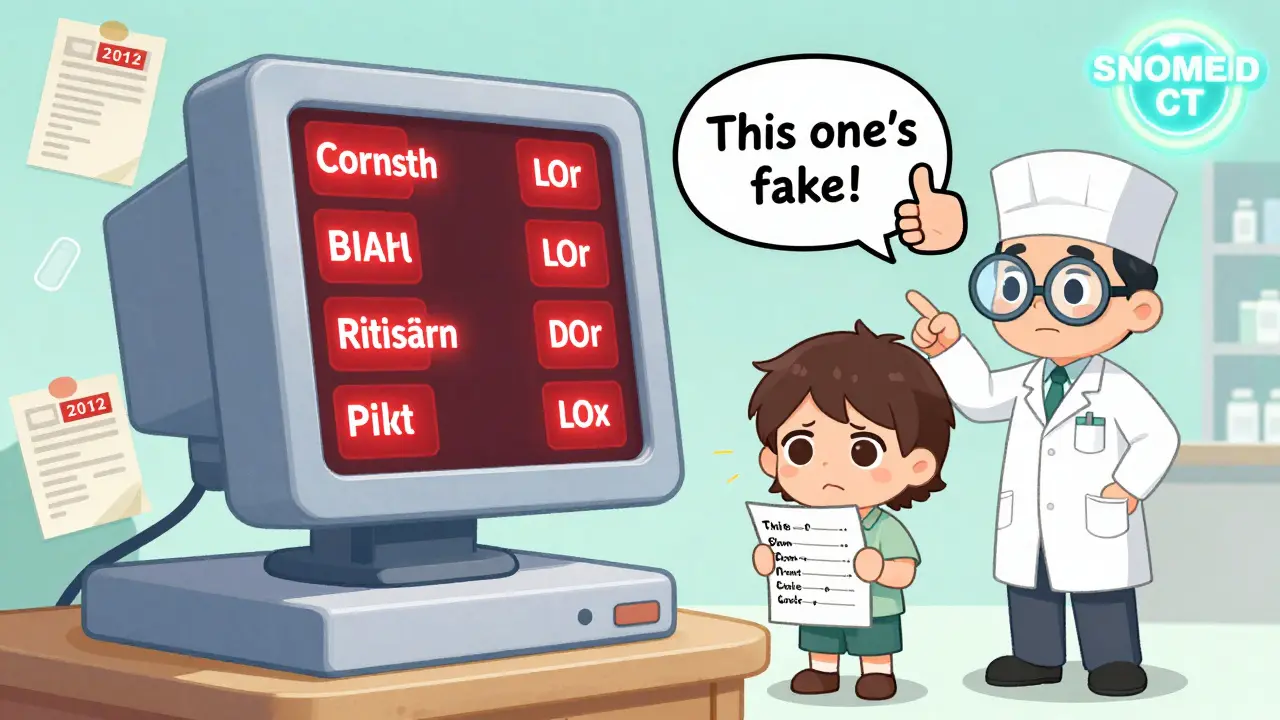
- Outdated records are the biggest problem. A 2023 University of Michigan study found over a third of patient allergy records were older than five years. Someone who had a rash from amoxicillin at age 7 might still be flagged as allergic at 45, even after a negative skin test.
Top-performing pharmacies fix this by:
- Using SNOMED CT terminology for allergies (e.g., “IgE-mediated penicillin allergy” instead of just “penicillin allergy”) to reduce false triggers.
- Implementing “allergy timeouts” for complex cases-pausing dispensing to review history with the patient or call the prescriber.
- Training staff to override alerts only with documented reasons, like “skin test negative” or “no reaction in 10 years.” These override notes now automatically sync with EHRs for future providers.
What Patients Can Do to Help
You don’t have to rely on the pharmacist to catch everything. You can make this process faster and safer:
- Keep your own list. Write down every medication you take, including supplements, and every reaction you’ve had-even if you think it’s minor. Bring it to every appointment.
- Ask if your allergy label is still valid. If you’ve been told you’re allergic to penicillin, ask your doctor if you’ve ever been tested. Studies show 90% of people who think they’re allergic aren’t.
- Speak up at pickup. If you’ve had a new reaction since your last visit, say so. Even if you think it’s unrelated. A rash after taking ibuprofen? That’s worth mentioning.
- Don’t assume the system knows. If you’ve switched pharmacies, your allergy history might not have transferred. Confirm it’s there.
Real Stories from the Counter
Pharmacists see the gaps every day.
One patient in Bristol came in for a new antibiotic for a sinus infection. The system flagged a “penicillin allergy” from 2012. The pharmacist asked if she’d ever had a reaction. She said no-just that her mom said she was allergic. A quick call to her GP confirmed she’d never been tested. The pharmacist dispensed amoxicillin. She got better in two days.
Another patient was on warfarin and picked up a new OTC painkiller. The system flagged an interaction. The pharmacist noticed the patient had been taking it for months without issue. Turns out, the patient was taking a different brand of ibuprofen that didn’t interact. The system flagged all ibuprofen brands. The pharmacist adjusted the warning to match the specific product.
These aren’t rare cases. They’re routine. And they only happen when someone takes a second to ask.
The Future: Smarter Systems, Fewer Alerts
Change is coming. In 2024, Epic rolled out “allergy severity stratification”-if you have 10 allergies, the system stops flagging low-risk ones. Google Health’s pilot program used AI to scan clinical notes for hidden allergies, catching 31.7% more cases than standard systems.
The FDA is also stepping in. By December 2025, all drug labels must use standardized formats that clearly separate active ingredients from allergens. That means fewer false alerts from dyes or fillers.
But the biggest shift won’t be technological. It’ll be cultural. More pharmacies are training staff to treat verification not as a checkbox, but as a conversation. The goal isn’t to block every alert. It’s to make sure the right ones get heard.
What Happens When You Skip the Check?
Skipping verification sounds harmless. But the consequences aren’t theoretical.
In 2023, a patient in Leeds was given cefdinir for an ear infection. The system showed a “cephalosporin allergy” from 2010. The pharmacist didn’t question it. The patient had a severe reaction and ended up in the ER. Later, it was found: the allergy was a mislabeled rash from a childhood virus. The drug was safe.
That’s not just a mistake. It’s a system failure. And it’s preventable.
Every time a pharmacist confirms an allergy or interaction at pickup, they’re not just following protocol. They’re stopping a potential disaster.
What if I don’t remember my allergies?
If you’re unsure, tell the pharmacist. They can check your medical records, ask about past reactions, or even call your GP. Many people think they’re allergic to penicillin because they had a rash as a child, but studies show over 90% of those labels are wrong. It’s better to be safe and get it checked.
Can I trust the pharmacy’s computer system?
The system is a tool, not a final answer. It catches most serious interactions, but it also flags harmless ones-like dyes or fillers. That’s why pharmacists always ask you questions. If the system says there’s a problem, ask why. If it says everything’s fine, still mention any new symptoms you’ve had.
Why do I get flagged for allergies I don’t have?
Old records, misdiagnoses, or vague notes like “allergic to penicillin” without details cause this. Many people were labeled allergic after a non-allergic rash. Skin testing can clear this up. Ask your doctor about testing if you’ve been told you’re allergic to a common antibiotic.
Do over-the-counter meds and supplements count?
Yes. Even aspirin, St. John’s wort, or fish oil can interact with prescription drugs. Always tell your pharmacist what you’re taking, even if you think it’s “just a vitamin.” They need the full picture.
What if the pharmacist doesn’t ask me anything?
Don’t assume they’ve checked. Politely say, “Can you double-check my allergies and what I’m already taking?” Most pharmacists appreciate the reminder. It’s part of their job-and your safety.
15 Comments
Brittany Marioni
I can't believe how many people just assume the system knows everything. I had a friend who was labeled penicillin-allergic since age 6-turned out she'd never even had a real reaction. She got her prescription, took it, and lived. We need to stop treating allergy lists like ancient scrolls.
And please, pharmacists-ask the question. Even if it's just, 'Anything new?' It takes five seconds. That's all it takes to prevent a hospital trip.
Monica Slypig
This whole thing is a joke. We pay billions for EHRs and they still flag cornstarch as an allergen? In America we have the best healthcare system in the world but somehow we cant get a computer to stop yelling about dyes. Someone in IT needs to get fired. This is why I dont trust any government tech.
Becky M.
i just wanted to say thank you to the pharmacists who actually take the time to talk. i had a bad experience once where they just handed me the bottle and walked away. last time i went, the pharmacist asked me if i'd had any new rashes. i mentioned that weird itch after taking ibuprofen and she looked it up-turns out it was a rare reaction to the filler in that brand. she switched me. i felt seen.
small things matter. dont be shy to speak up.
jay patel
Let me tell you something about Indian pharmacies-they don’t even have EHRs in most places. I’ve seen pharmacists write down allergies on sticky notes. And yet, somehow, they catch more real reactions than U.S. pharmacies with AI alerts. Why? Because they talk to the patient. They look them in the eye. They don’t just click through pop-ups.
Technology is great, but if it replaces human judgment, we’re already losing. Maybe we need less automation and more presence. Maybe the real solution is not a better algorithm, but a better conversation.
Ansley Mayson
The whole system is broken. People don’t update their lists. Systems over-alert. Pharmacists are overworked. Patients don’t care. Everyone’s just going through the motions. This article reads like a PR pamphlet for pharmacy associations. The real issue? Nobody’s accountable. And no one’s going to fix it.
phara don
so i just tried this-i asked my pharmacist if my penicillin label was still valid. she said ‘oh wow, you’re the first person to ask that.’ then she called my doctor. turns out i was cleared in 2018 but it never synced. now i can take amoxicillin again.
it’s not rocket science. just ask. 😊
Hannah Gliane
OMG. I’m so tired of people acting like pharmacists are saints. They’re just overworked cashiers with white coats. The system is a mess because nobody wants to pay them enough to actually do their job. And now we’re supposed to trust them to catch every interaction? Please. If you’re on warfarin, you better Google it yourself. 😒
Murarikar Satishwar
I work in a pharmacy in Delhi, and we have no EHR. But we have something better: memory. We remember patients. We know who takes fish oil, who avoids lactose, who gets rashes from dyes. We write it in a notebook. We call doctors. We talk.
Technology can help, but it cannot replace the human connection. When a patient says, 'I feel funny after this pill,' we listen. That’s not a feature-it’s the foundation.
Ellie Norris
Just had a pharmacist in Manchester ask me if I’d had any new meds since my last visit. I said no-then remembered I’d started turmeric capsules. She paused, checked, and said, 'That’s going to thin your blood a bit with your warfarin.' I almost walked out without saying anything. Glad I didn’t. Thank you, UK pharmacists-you’re doing the work.
Marc Durocher
I used to think pharmacists were just glorified cashiers. Then I watched one spend 12 minutes explaining to a guy why his 'allergy' to ibuprofen was actually just a reaction to the dye in the generic brand. The guy cried. He’d been avoiding painkillers for 15 years because of a misdiagnosis.
That’s not a job. That’s a superpower. And we treat them like they’re replaceable. We’re all worse off for it.
larry keenan
The empirical data presented in the article is compelling, particularly the 3.2x increase in clinically relevant alerts when utilizing active ingredient-based screening versus NDC-based approaches. However, the operational burden on pharmacy personnel remains a significant constraint. The time-to-dispense metric must be balanced against clinical safety thresholds. Further research is warranted to determine optimal threshold parameters for override documentation within EHR-integrated workflows.
Nick Flake
Every time I walk into a pharmacy, I feel like I’m handing my body to a machine that’s been programmed by someone who’s never been sick. We treat medicine like a software update. But your body isn’t a phone. It’s a living, breathing, terrified thing that remembers every rash, every nausea, every silent panic.
That pharmacist asking you, 'Has anything changed?'? That’s not a formality. That’s a lifeline. And if you don’t answer? You’re not just skipping a step. You’re ignoring the fact that someone, somewhere, cares enough to ask.
Akhona Myeki
In South Africa, we don’t even have electronic records in most clinics. Yet, our pharmacists know every patient’s history by heart. They remember if you took something last month and got dizzy. They don’t need AI. They need respect. And we give them neither. The West thinks it’s advanced because it has computers. We know better. We know people matter.
Chinmoy Kumar
I used to think allergies were just a thing you got from your parents. Then I got my first migraine after taking a blue pill. I didn’t think it was an allergy-just a side effect. Turned out it was a dye. Now I always ask. I tell my friends to ask. I tell my mom to ask. Maybe one day, no one will have to suffer because someone assumed they knew what was in their file. Maybe that’s the real change.
Brett MacDonald
so like... if the system says you're allergic to penicillin but you've taken it 3 times and been fine... does that mean the system is wrong? or are you just lucky? idk man. maybe we're all just playing russian roulette with our meds. i mean, what even is an allergy anymore? 🤔