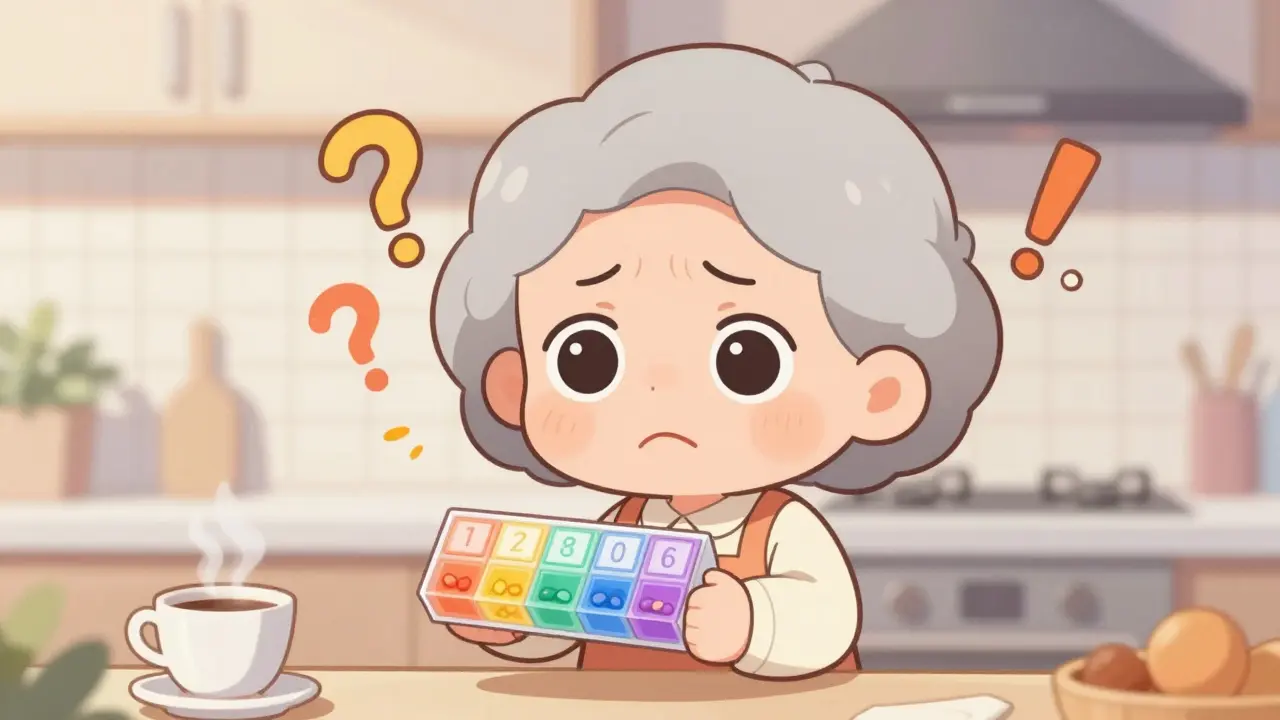
Imagine reaching for your morning coffee and popping the pills from your weekly organizer. It’s a routine that millions rely on to stay healthy. But here is the scary truth: using a pill organizera compartmentalized container designed to help individuals manage multiple medications by time of day and day of week incorrectly can actually increase your risk of an accidental overdose by 23%, according to a 2022 study in the *Journal of the American Geriatrics Society*. You might think these boxes are foolproof safety nets, but without strict protocols, they become traps for error.
The goal isn't just to remember your meds; it's to take the right ones, at the right time, in the right dose. When done right, organizers cut missed doses by 32% and accidental double-dosing by 18%. But when done wrong-by mixing up 'as needed' drugs or ignoring expiration dates-they contribute to thousands of preventable hospital visits every year. This guide breaks down exactly how to use these tools safely, based on expert protocols from institutions like Memorial Sloan Kettering Cancer Center and the CDC.
Why Pill Organizers Can Be Dangerous If Misused
We often assume that putting pills in a box makes them safer. In reality, the act of transferring medication from its original, labeled bottle into an unlabeled compartment introduces a new layer of risk. The Centers for Disease Control and Prevention (CDC) reports that medication errors contribute to over 7,000 deaths annually in the US alone. While organizers are meant to reduce this number, data shows that 28% of all medication errors occur when patients refill their boxes using outdated bottle labels instead of current prescriptions.
The biggest danger lies in confusion. Reddit communities tracking medication adherence reported 142 overdose incidents linked specifically to organizer misuse in one year. The top culprit? Placing "as needed" (PRN) pain medication into daily compartments. Patients would take their scheduled dose, then later take another pill for pain, not realizing they had already consumed the drug earlier in the day. This specific mistake accounted for 58 of those cases. Another major issue is failing to update the organizer after a doctor changes a dosage, leading to 49 cases of overdose or underdose.
To avoid these pitfalls, you need to understand what belongs in the box and what stays out. Not all medications are created equal, and treating them all the same is a recipe for disaster.
What Should Never Go Into a Pill Box
Before you fill a single compartment, you must audit your medication list. Certain types of drugs are physically incompatible with standard plastic organizers. Storing them improperly can degrade the medicine or cause physical hazards.
- Liquid Medications: These leak, evaporate, or react with the plastic. Always keep liquids in their original bottles.
- Refrigerated Drugs: Insulin and certain eye drops require cold storage. A pill box on your kitchen counter will ruin them.
- Chewable or Dissolvable Pills: These often contain sugars or moisture-sensitive ingredients that clump together or disintegrate in a closed box.
- Soft Gel Capsules: These can stick to each other or melt if exposed to heat, making it impossible to tell if you took one or two.
- "As Needed" (PRN) Medications: This is the most critical rule. Never put PRN drugs in a scheduled slot. Keep them in their original bottles so you can track usage manually.
According to WebMD and Memorial Sloan Kettering, about 92% of solid oral medications (standard tablets and hard capsules) are safe for organizers. However, even among these, you must check for interactions. Some medications shouldn't be stored together due to chemical volatility, though this is rare for standard oral solids. When in doubt, leave it in the bottle.
The 5-Step Safety Protocol for Filling Your Organizer
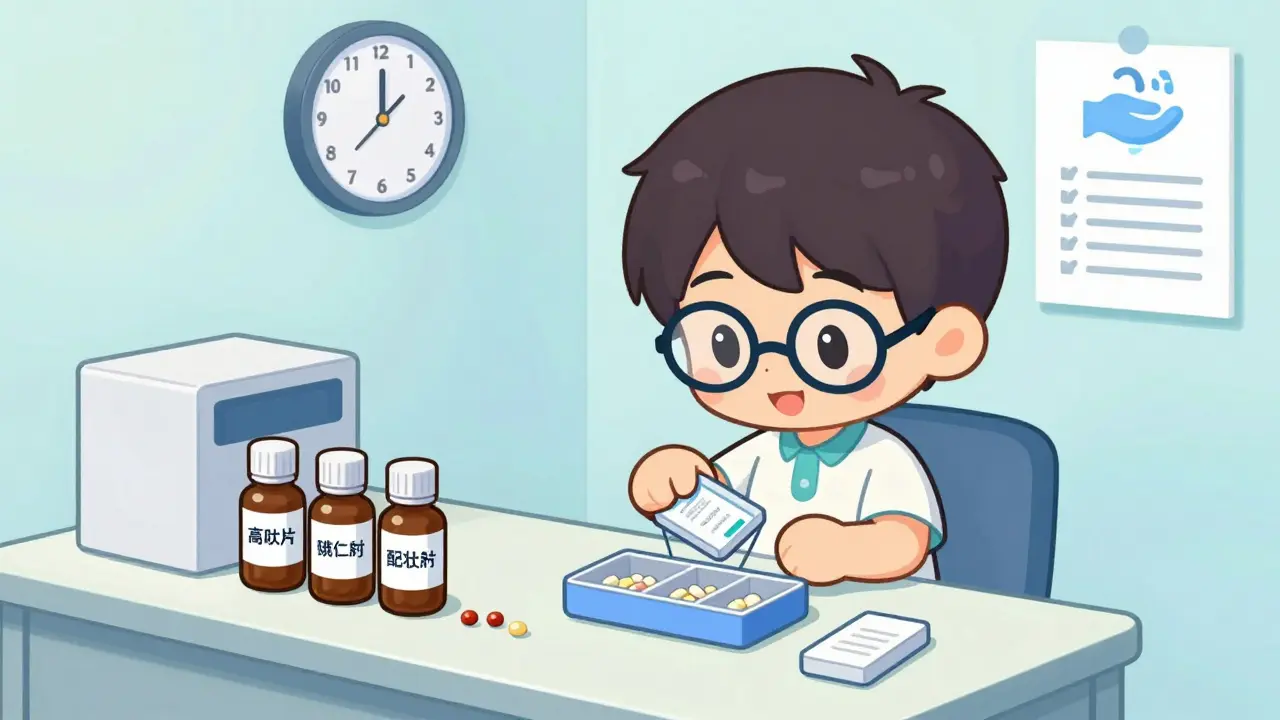
Filling your pill box is not a chore to rush through while watching TV. It is a clinical procedure that requires focus. The NHCHC Health Management Toolkit mandates a five-step verification process to ensure zero errors. Follow this ritual every time you refill.
- Verify Your List: Gather your current prescription list. Cross-reference it with the bottles on your shelf. Discard any expired medications immediately. Do not rely on memory.
- Prepare Your Station: Wash your hands with soap for 20 seconds. Clear a well-lit table. Lay out only the medications you are filling today. Keep the original labeled bottles within arm's reach.
- Organize by Time: Arrange the bottles in the order they should be taken (e.g., Morning, Afternoon, Evening). This visual queue helps prevent skipping steps.
- Fill One Medication at a Time: This is the golden rule. Pick up one bottle. Read the label aloud. Pour the correct dose into the corresponding days across the entire week. Put that bottle away before picking up the next one. Dr. Jane Smith, Chief Pharmacist at Memorial Sloan Kettering, notes that this method reduces double-dosing errors by 63%.
- Final Verification: Once filled, visually inspect each compartment. Does the Monday Morning slot have the right pills? Count them. Compare against your written log. Set a phone alarm for 15 minutes before your first dose to remind yourself to verify again before taking them.
This process takes about 15 minutes for a standard regimen. If you have more than five medications, add five minutes for each additional drug. Rushing is the enemy of safety.
Storage Matters: Where to Keep Your Pill Box
You’ve filled the box correctly, but where you put it next matters just as much. Humidity and heat are silent destroyers of medication integrity. Hero Health cites a 2022 study showing that medication degrades 47% faster in high-humidity environments.
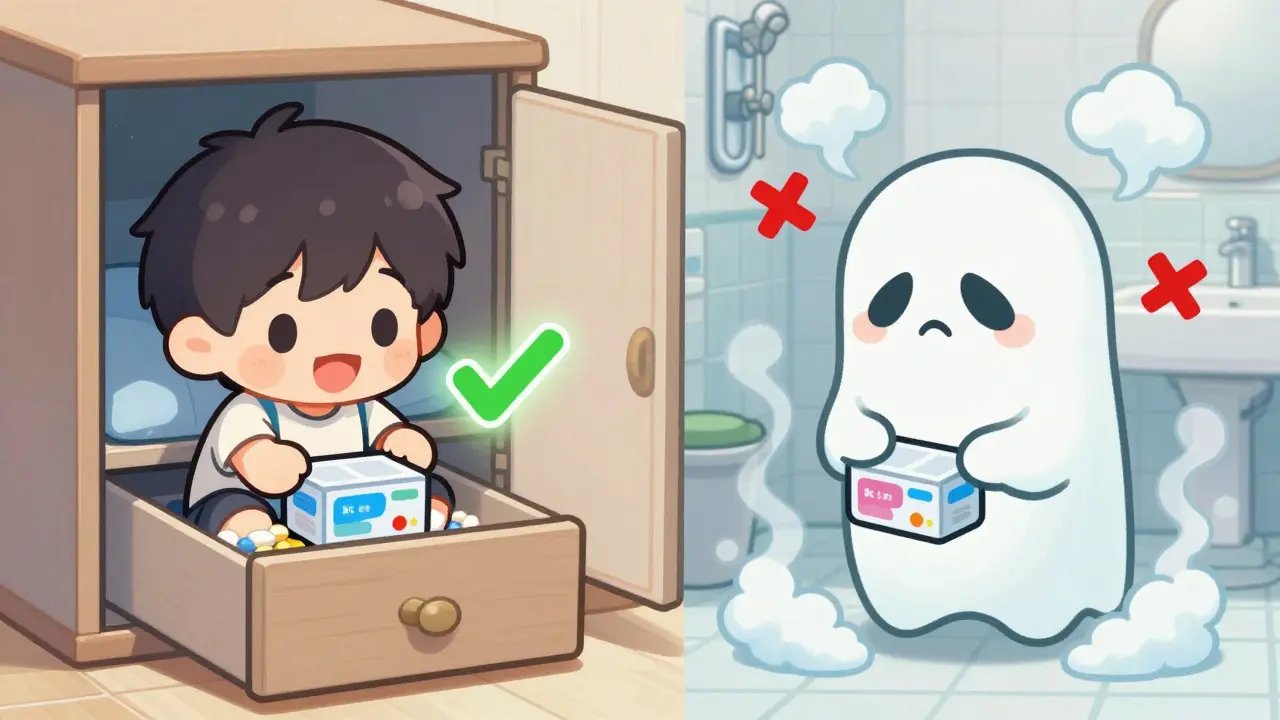
Here is the hard rule: Never store your pill organizer in the bathroom. Steam from showers creates fluctuating humidity levels that can break down active ingredients in pills. Instead, choose a cool, dry place below 86°F (30°C) with less than 60% humidity. A bedroom drawer or a kitchen cabinet away from the stove and sink is ideal.
If you live with children, you must prioritize child-resistant features. Look for organizers that meet ASTM F3130-15 standards. Standard weekly boxes are often easy for curious toddlers to open, leading to accidental ingestions. For households with young kids, consider electronic organizers with locking lids or keep the box in a locked cabinet.
| Type | Cost Range (USD) | Safety Features | Best For |
|---|---|---|---|
| Basic Weekly | $2.99 - $8.99 | Simple compartments, low cost | Single daily medication |
| Multi-Dose Daily | $4.99 - $14.99 | Separate slots for AM/PM, color-coded | Multiple medications per day |
| Electronic/Smart | $24.99 - $99.99 | Alarms, locks, usage tracking | Elderly users, complex regimens |
Common Mistakes That Lead to Overdosing
Even careful people make errors. Understanding the most common failure points can help you spot them before they happen. Based on user surveys and clinical data, these are the red flags to watch for.
Mixing Similar-Looking Pills: If you take two different white, round tablets, do not put them in the same compartment. Use separate organizers or a splitter with color-coding. Confusion between look-alike pills caused 89 cases of error in WebMD community forums.
Ignoring Expiration Dates: Pills lose potency over time. An expired pill might not work, leading you to take an extra dose thinking it failed. Or worse, degraded chemicals could cause adverse reactions. Check expiration dates during your monthly fill session.
Skipping the "Original Bottle" Rule: Never throw away the original bottles until the organizer is empty. Keeping the bottles nearby allows for instant verification if you’re unsure what’s in a compartment. 68% of medication errors occurred when users didn’t maintain original bottles alongside their organizers, according to Hero Health.
Assuming Empty Means Taken: Just because a compartment is empty doesn’t mean you took the pill. You might have spilled it. Always count your pills before pouring them out. If the count is off, do not guess. Consult your pharmacist.
When to Seek Professional Help
If your medication regimen includes more than four drugs, or if you have chronic conditions requiring strict timing, self-filling might be too risky. Medicare now covers smart pill organizers for beneficiaries with four or more chronic conditions. Additionally, 68% of U.S. pharmacies offer free organizer filling services with pharmacist verification. This service reduces error rates by 52% compared to self-filling.
Ask your pharmacist to fill your box for you. They will cross-check interactions, verify dosages, and ensure no PRN meds are included. It’s an extra step, but it buys you peace of mind and significantly lowers your risk of overdose.
Can I put liquid medicine in a pill organizer?
No, you should never put liquid medications in a standard pill organizer. Liquids can leak, evaporate, or react with the plastic material of the box, potentially damaging other pills or creating a mess that hides missing doses. Always keep liquid medicines in their original, sealed bottles.
Is it safe to store my pill box in the bathroom?
No, storing a pill organizer in the bathroom is unsafe. The steam from showers creates high humidity and temperature fluctuations that can degrade the effectiveness of your medications. Studies show medication degrades 47% faster in humid environments. Store your box in a cool, dry place like a bedroom drawer.
Should I put "as needed" (PRN) pain meds in my weekly organizer?
Absolutely not. Placing PRN medications in scheduled compartments is a leading cause of accidental overdoses. You might take your scheduled dose and then take another pill for pain later, not realizing you've already consumed the drug. Keep PRN meds in their original bottles to track usage accurately.
How often should I refill my pill organizer?
It is best to refill your organizer once a week, on the same day and time (e.g., every Sunday morning). This routine helps prevent gaps in coverage. Ensure you set aside at least 15 minutes for the process to allow for proper verification and counting of medications.
What should I do if I’m not sure what pill is in a compartment?
If you are unsure about the contents of a compartment, do not take it. Keep your original medication bottles nearby during filling for reference. If you cannot identify the pill, contact your pharmacist or doctor immediately. Taking an unknown medication can lead to serious health risks.
8 Comments
Peter Sverla
Interesting read. I never thought about the humidity factor in the bathroom.
Amrithaa Thayaparan
you people are so stupid for even needing a guide on this basic human function of not killing yourself with chemicals
it is literally moral failure to not have the discipline to keep your poison in its original container
i see you all struggling with your little plastic boxes and it makes me sick because you lack the fundamental respect for life that requires simple organization
why do we need step by step instructions for something that should be instinctual
the fact that you are reading this means you are already part of the problem society
stop blaming the box and start blaming your own chaotic minds
i refuse to engage with your ignorance further but know that i judge you harshly for every missed dose
Paul Diamond
The philosophical underpinning of this article suggests a broader societal decay where external tools are relied upon to compensate for internal cognitive dissonance regarding health management.
We must consider whether the pill organizer is merely a tool or a symbol of our fragmented existence in a world that demands constant vigilance against our own biological imperatives.
To separate the medication from its source is to sever the connection between intent and action, creating a void where error can flourish.
This is not merely a matter of safety but of existential alignment with one's physical form.
One must ask if the convenience of the organizer outweighs the spiritual cost of such detachment from the raw reality of one's pharmacological dependencies.
It is a tragedy of modernity that we require such elaborate rituals to perform the most basic acts of self-preservation.
The danger lies not in the box but in the mind that believes the box replaces the need for mindfulness.
We are adrift in a sea of convenience, forgetting that true safety comes from within, not from plastic compartments.
Let us reflect on this deeply before we pop our next pill.
Sydney Jarrett
You are all missing the critical operational metrics here which clearly indicate a systemic failure in user compliance protocols.
The data presented shows a 23% increase in overdose risk which is statistically significant and cannot be ignored by anyone who values their physiological integrity.
I have analyzed similar case studies in clinical settings and the correlation between PRN medication misplacement and acute toxicity events is undeniable.
Your casual approach to this information demonstrates a profound lack of analytical rigor that is frankly alarming.
Let me break down the thermodynamic instability of soft gel capsules in ambient temperature variations for those of you who are struggling to grasp the concept.
The degradation rate accelerates exponentially when exposed to humidity levels above 60% which is why the bathroom storage recommendation is not just advice but a mandatory constraint.
I suggest you implement a rigorous audit trail for your medication administration records to mitigate these risks effectively.
Without proper documentation and verification steps you are essentially gambling with your life expectancy.
It is pathetic how many of you ignore the ASTM F3130-15 standards for child-resistant packaging which is a basic legal requirement in many jurisdictions.
If you cannot manage this level of complexity perhaps you should consult a professional rather than relying on internet articles.
The variance in error rates between self-filling and pharmacist-verified filling is 52% which is a massive delta that proves my point about the necessity of expert intervention.
Stop being lazy and start following the protocol or accept the consequences of your negligence.
I am tired of seeing people fail at the most basic aspects of health management due to sheer incompetence.
This needs to end now.
Lorena Suarez
this is really helpful info thanks for sharing
i always put my pills in the bathroom cabinet because its close to the sink
guess ill move them to my bedroom drawer instead
glad i read this before messing up again
Isis Fleming
It is imperative to note that the guidelines provided herein are based on extensive clinical research and should be adhered to with utmost diligence.
The distinction between scheduled and as-needed medications is of paramount importance in preventing adverse drug events.
I would like to emphasize the significance of maintaining original labeling for all pharmaceutical agents to ensure accurate identification and dosage verification.
Furthermore, the environmental conditions under which medications are stored play a crucial role in preserving their efficacy and stability.
I encourage all individuals to consult with their healthcare providers or pharmacists to develop a personalized medication management plan that suits their specific needs.
Professional assistance can provide an additional layer of safety and peace of mind for those managing complex regimens.
Please remember that regular review of expiration dates and disposal of outdated medications is essential for maintaining a safe home environment.
Thank you for your attention to these important safety measures.
Ben Murphy
The moral failing here is evident in the widespread disregard for established safety protocols which reflects a deeper societal apathy towards personal responsibility.
One must question the ethical implications of delegating such critical tasks to unverified methods when professional services are readily available.
The statistical evidence presented underscores the urgent need for a cultural shift towards greater accountability in medication management.
It is disheartening to observe the prevalence of errors that could be easily prevented through simple adherence to best practices.
We must hold ourselves to a higher standard and reject the notion that convenience supersedes safety in matters of health.
The burden of proof lies with the individual to demonstrate competence in handling potentially dangerous substances.
Until we achieve this level of conscientiousness we will continue to see preventable tragedies occur daily.
I urge everyone to take this matter seriously and reflect on their own behaviors regarding medication storage and administration.
Fred Stone
hey good tips here
i usually just dump everything in the box and hope for the best
guess i need to be more careful with the prn meds
thanks for the heads up