For people stuck in a cycle of 15 or more headache days a month, where migraines blur into one long, debilitating stretch, finding relief can feel impossible. Traditional pills often fail-or come with side effects so bad they make life harder. That’s where Botox comes in. Not for smoothing wrinkles, but for stopping migraines before they start. It’s not magic. It’s science. And for the right people, it changes everything.
What Exactly Is Botox Doing to Stop Migraines?
Botox, or onabotulinumtoxinA, is a purified protein made from the same bacteria that causes botulism. But in tiny, controlled doses, it doesn’t poison-it pauses. Specifically, it blocks the release of chemicals like CGRP (calcitonin gene-related peptide), which spike during migraine attacks and trigger pain, inflammation, and sensitivity to light and sound.
It doesn’t just relax muscles like it does in cosmetic use. In migraine, it targets nerve endings in the head and neck, especially along the trigeminal nerve pathway-the main highway for migraine pain. By cutting off the signal at the source, it reduces both the frequency and intensity of attacks. Studies show it also lowers inflammation and dampens the brain’s overactive pain response over time, which helps prevent migraines from becoming chronic.
This isn’t a quick fix. You won’t feel better after one shot. It takes time for the nerves to calm down. Most people start seeing results after the second or third round of injections, spaced 12 weeks apart.
Who Actually Benefits From Botox for Migraines?
Botox isn’t for everyone with headaches. It’s approved only for chronic migraine-defined as having 15 or more headache days a month, with at least eight of them meeting migraine criteria (throbbing pain, nausea, light sensitivity). If you have fewer than 15 days, it likely won’t help.
The best candidates are those who’ve tried at least three other preventive treatments-like beta-blockers, antidepressants, or anti-seizure drugs-and either couldn’t tolerate the side effects or didn’t get enough relief. Many of these patients also deal with medication-overuse headache, where daily painkillers make migraines worse over time.
Real-world data shows that about 63% of chronic migraine patients who get Botox cut their headache days by half or more after a year. For some, it’s even better: going from 25 headache days a month down to 8 or 10. The people who see the biggest drop in total days are those with the most severe baseline-20+ headache days a month. But even those with 15-19 days still get meaningful relief.
It’s also helpful for those with comorbid conditions like cervical dystonia or chronic tension-type headaches. If you’ve struggled with oral meds because of brain fog, weight gain, or tingling hands, Botox offers a non-systemic alternative. It doesn’t go through your liver or kidneys. It works locally, right where the pain starts.
How Is It Given? What Should You Expect?
The procedure is quick-about 15 minutes-and done in a doctor’s office. You don’t need anesthesia. The injections follow a strict protocol called PREEMPT, which uses 31 to 39 tiny shots across seven specific areas: forehead, temples, back of the head, neck, and shoulders. The total dose is usually 155 to 195 units.
You might feel a pinch with each shot. Some people describe it as a quick sting, like a mosquito bite. Afterward, there’s usually mild soreness or bruising, but most people drive themselves home and return to normal activities the same day.
Side effects are generally mild. The most common are neck pain (about 10% of people), headache (7%), and occasional drooping eyelid (3%). Muscle weakness in the neck or shoulders can happen but usually fades within a few weeks. Serious side effects are rare-less than 1 in 1,000.
It’s not a one-time fix. You need to come back every 12 weeks, year after year. Most patients don’t hit peak results until their third or fourth round. That’s why patience matters. If you quit after one or two treatments, you’re not giving it a fair shot.
How Does It Compare to Other Treatments?
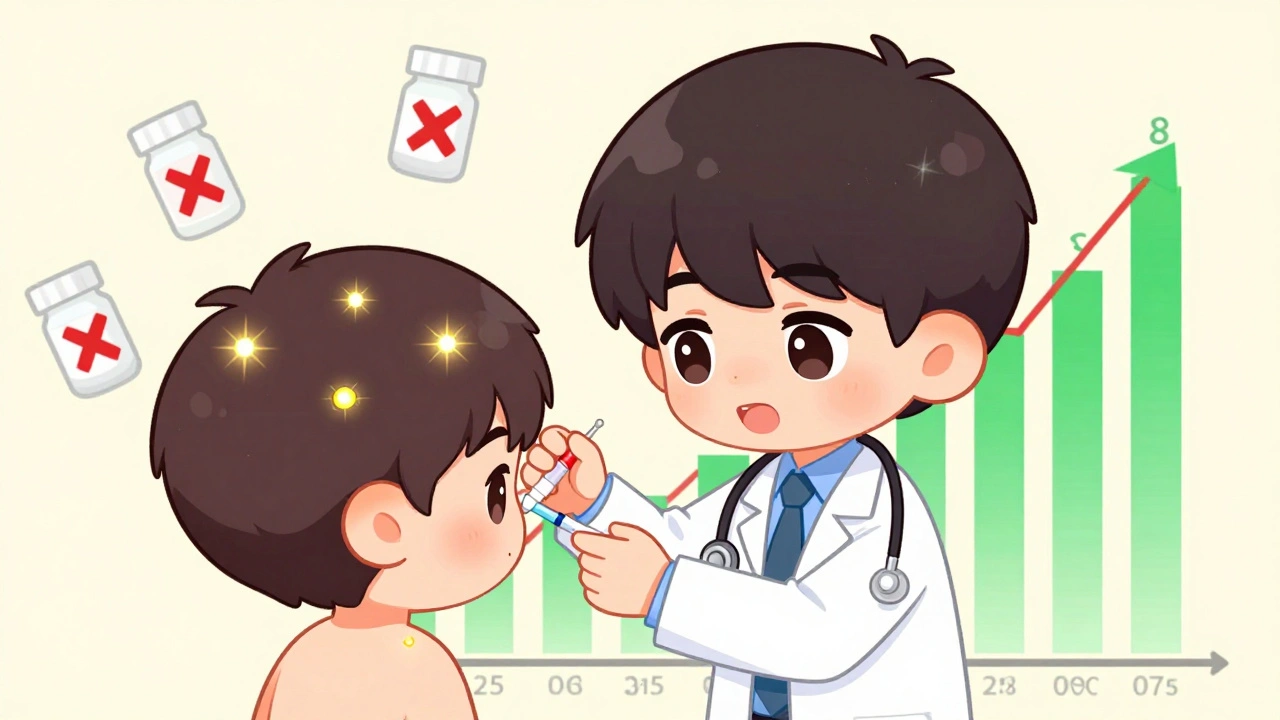
When stacked up against other preventives, Botox holds its own. A 2021 study found that 47% of Botox patients had at least a 50% reduction in headache days-better than propranolol (35%) and topiramate (38%), and close to the newer CGRP antibody drugs like erenumab (52%).
The big advantage? Tolerability. Topiramate causes brain fog, memory issues, and tingling in 35% of users-so many quit. Botox’s side effects are mostly local and temporary. You’re not taking a daily pill that affects your whole body.
But it’s not perfect. It costs $1,500 to $1,800 per session. That’s $6,000 to $7,200 a year before insurance. Most insurers cover it if you’ve tried at least three other preventives and have documented your headache diary for three months. Still, many people fight for approval. Prior authorizations, denials, and appeals are common.
It also doesn’t stop a migraine once it starts. You still need acute meds like triptans or gepants for breakthrough attacks. Botox is purely preventive. Think of it like a fence to keep rain out-not an umbrella to hold over your head when it’s already pouring.
What Do Real Patients Say?
On patient forums, Botox gets mixed but mostly positive reviews. One Reddit user, u/MigraineWarrior2022, wrote: “After three rounds, I went from 25 migraine days a month to 8-10. My worst ones are now moderate instead of severe.” That’s the kind of story that keeps people going.
Another common theme: reduced reliance on painkillers. About 72% of satisfied users say they’re taking fewer acute meds, which lowers their risk of medication-overuse headache. Improved quality of life comes up often too-65% report being able to work, socialize, or care for kids again.
But it’s not all smooth sailing. Around 43% of dissatisfied patients cite insurance battles. Others mention inconsistent results between cycles or temporary weakness that made lifting groceries or driving hard. A few report no change at all. That’s why it’s not a cure-it’s a tool. And like any tool, it works best in the right hands.

Who Should Avoid It?
If you have episodic migraine (fewer than 15 headache days a month), skip it. Clinical trials show no benefit. Same if you’re pregnant or breastfeeding-there’s not enough safety data.
People with neuromuscular disorders like myasthenia gravis or Lambert-Eaton syndrome should avoid Botox. It can worsen muscle weakness.
And if your headaches aren’t truly migraines-if they’re cluster headaches, sinus headaches, or tension-type without migraine features-Botox won’t help. A proper diagnosis from a headache specialist is essential. Not every neurologist is trained in migraine. Look for someone who focuses on headaches or is certified by the American Headache Society.
The Future of Botox for Migraines
Botox isn’t standing still. In June 2023, the FDA approved it for adolescents aged 12-17 with chronic migraine, based on a trial showing a 7.8-day drop in headache days. That’s huge for teens stuck out of school or unable to socialize.
Researchers are now testing combinations. Giving Botox alongside a CGRP antibody drug boosts response rates to nearly 70%. That’s better than either alone. It suggests these treatments work on different parts of the migraine pathway-and together, they’re stronger.
There’s also work on longer-lasting versions. One new formulation in trials could last 16 to 20 weeks instead of 12. That means fewer visits, lower costs, and better adherence.
Experts are even exploring personalized injection patterns based on where a patient’s pain starts. Instead of a one-size-fits-all approach, future treatments might target only the areas where nerves are most active in each individual.
For now, Botox remains a cornerstone. With a 78% retention rate after two years, most patients who benefit stick with it. It’s not glamorous. It’s not a miracle. But for people drowning in daily pain, it’s a lifeline.
Is Botox for migraines covered by insurance?
Yes, most major insurers cover onabotulinumtoxinA for chronic migraine, but only if you’ve tried at least three other preventive medications without success. You’ll also need to show a headache diary tracking your symptoms for at least three months. Prior authorization is usually required, and denials are common-so be ready to appeal.
How long does it take for Botox to work for migraines?
Most people start noticing fewer headaches after the second treatment cycle, around 6 months in. Maximum benefit typically comes after the third or fourth round. It’s not instant. Think of it as retraining your nervous system over time, not flipping a switch.
Can Botox cure migraines?
No, Botox doesn’t cure migraines. It reduces their frequency and severity, but you’ll need ongoing treatments every 12 weeks to maintain results. Stopping the injections usually means migraines return to their previous level. It’s a long-term management tool, not a cure.
Are there any long-term risks of using Botox for migraines?
Over 12 years of post-marketing data show no serious safety concerns. The most common side effects-neck pain, headache, eyelid drooping-are mild and temporary. There’s no evidence of cumulative toxicity or damage to nerves or muscles with long-term use. It’s considered very safe for chronic use when administered correctly.
Can I still take my migraine painkillers while getting Botox?
Yes. Botox is preventive, not acute. You’ll still need medications like triptans, NSAIDs, or gepants for breakthrough attacks. In fact, many patients find they need fewer acute meds over time because their migraines become less frequent and less severe.
Who should administer Botox for migraines?
A board-certified neurologist or headache specialist trained in the PREEMPT protocol. Not all providers who do cosmetic Botox know the correct injection sites or dosing for migraines. Ask if they’ve completed the American Headache Society’s training. Experience matters-up to 30% of results depend on proper technique.
9 Comments
Arun kumar
botox for migraines? sounds wild but i tried it after 3 years of daily pain and holy crap it changed my life. no more passing out at work, no more missing my kid’s soccer games. took 3 rounds but now i’m at 8 days a month instead of 25. worth every penny and every pinch.
Zed theMartian
Oh please. You’re telling me injecting a deadly neurotoxin into your skull is ‘science’? Next you’ll say chemotherapy is just a fancy spa treatment. This is just Big Pharma’s way of monetizing fear and desperation. And don’t get me started on the $7k/year price tag-unless you’re a CEO with a private jet, good luck getting this covered.
Ella van Rij
So you’re telling me the same stuff that keeps celebs looking frozen also helps me not scream into my pillow every night? 😅 I’m 32 and have had migraines since 17. Tried everything-topiramate gave me brain fog so thick I forgot my own birthday. Botox? First round: nada. Second: kinda? Third? I cried in the parking lot because I actually slept through the night. Not magic. Just… human.
ATUL BHARDWAJ
in india we call this kala jadu but it works. my sister tried it after 10 years of pain. now she teaches yoga. life is short. try before you judge.
Steve World Shopping
Neurogenic inflammation modulation via targeted botulinum toxin-mediated inhibition of CGRP release at trigeminal nociceptive terminals-this is precision neuromodulation at its finest. The pharmacokinetic profile is superior to systemic agents due to localized action and negligible hepatic metabolism. Also, insurance denials are a systemic failure of value-based care.
Rebecca M.
Wow. So now we’re injecting poison into our faces to avoid feeling pain? What’s next? Selling oxygen as a subscription? 🙄 At least back in the day we just drank whiskey and called it a day. Now it’s $1,800 per session and a 12-week waiting period to feel… slightly less like dying.
Lynn Steiner
I’ve been on Botox for 4 years. 15 days down to 6. I can hug my daughter without crying. I can sit through a movie. I can breathe. And yes, I’ve fought insurance for 11 months. Yes, I’ve cried in the doctor’s office. Yes, I still get headaches. But I’m alive. And I’m not sorry.
Alicia Marks
You got this. Keep going. The first few rounds are the hardest, but you’re not alone. So many of us are right there with you. 💪❤️
Jack Dao
Oh, so now it’s ‘a lifeline’? Cute. Let me guess-you’re the one who spent 3 years on 12 different meds, got zero results, then found Botox and now think you’re a medical genius? Newsflash: it’s not a cure. It’s a band-aid on a bullet wound. And you still need to take triptans. You’re not healed. You’re just… less miserable. Congrats?