When you walk into a pharmacy in the U.S. and see a $6 copay for your generic blood pressure pill, it’s easy to think you’re getting a deal. But here’s the twist: you’re not paying the full price. That $6 is what’s left after insurance, Medicare, and rebate deals have already cut the sticker price by 90 percent or more. Meanwhile, in countries like France or Japan, the same pill might cost $10 at the counter-with no rebates, no hidden negotiations, and no middlemen. So who’s really getting the better deal?
U.S. Generic Drugs Are Cheaper-But Only If You Look at the Right Price
The U.S. doesn’t have the cheapest drugs overall. In fact, Americans pay nearly three times more than people in other rich countries for all prescription drugs combined. But that number is misleading. It’s pulled up by brand-name drugs, which cost a fortune here. For generics, the story flips. According to a 2022 RAND Corporation study, U.S. prices for unbranded generic drugs are 33 percent lower than in 33 other OECD countries. That means if you’re taking a generic version of metformin, lisinopril, or atorvastatin, you’re likely paying less than someone in Germany, Canada, or the UK. Why? It’s not magic. It’s volume and competition. Nearly 90 percent of all prescriptions filled in the U.S. are for generics. That’s more than double the rate in most other countries. With so many people buying the same cheap drug, manufacturers fight for shelf space. When two or three companies start making the same pill, prices drop fast. When five or six jump in, the price often falls to just 15-20 percent of the original brand-name cost. The FDA found that after three generic competitors enter the market, prices can drop by 70-80 percent within a year.The Hidden World of List Prices vs. Net Prices
Here’s where things get messy. When you hear that U.S. drug prices are 2.78 times higher than other countries, that’s the list price-the sticker price before any discounts. But that’s not what most Americans pay. What actually gets paid-the net price-is often lower than in other countries. A 2024 University of Chicago study found that after rebates and negotiations, the U.S. pays 18 percent less than Canada, Germany, the UK, France, and Japan for public-sector prescriptions. How? Through complex deals. Pharmacies, insurers, Medicare Part D, and pharmacy benefit managers (PBMs) all negotiate behind the scenes. The drugmaker sets a high list price, then gives massive rebates to get their product on insurance formularies. That’s why a $500 brand-name drug might cost you $20 out-of-pocket. The real cost? The insurer paid $300 after a $200 rebate. The patient never sees the full price. But in countries like Japan or France, prices are set by the government upfront. No rebates. No hidden deals. You pay what’s on the label.Medicare’s Negotiated Prices Still Beat Global Benchmarks
In 2023, Medicare started negotiating prices for the first time. The first 10 drugs selected included big-name medications like Jardiance and Stelara. The results? Medicare’s negotiated prices are still much higher than what other countries pay. For Jardiance, Medicare pays $204 per prescription. In Australia, the same drug costs $41. In Japan, it’s $32. For Stelara, Medicare pays $4,490. In Germany, it’s $2,822. In 9 out of 10 cases, every other country on the list pays less. This doesn’t mean Medicare’s deals are bad. They’re historic. Before this, Medicare was legally barred from negotiating. Now, it’s catching up. But the gap shows how far behind the U.S. has been. Other countries have been setting fair prices for decades. The U.S. is just starting to play catch-up.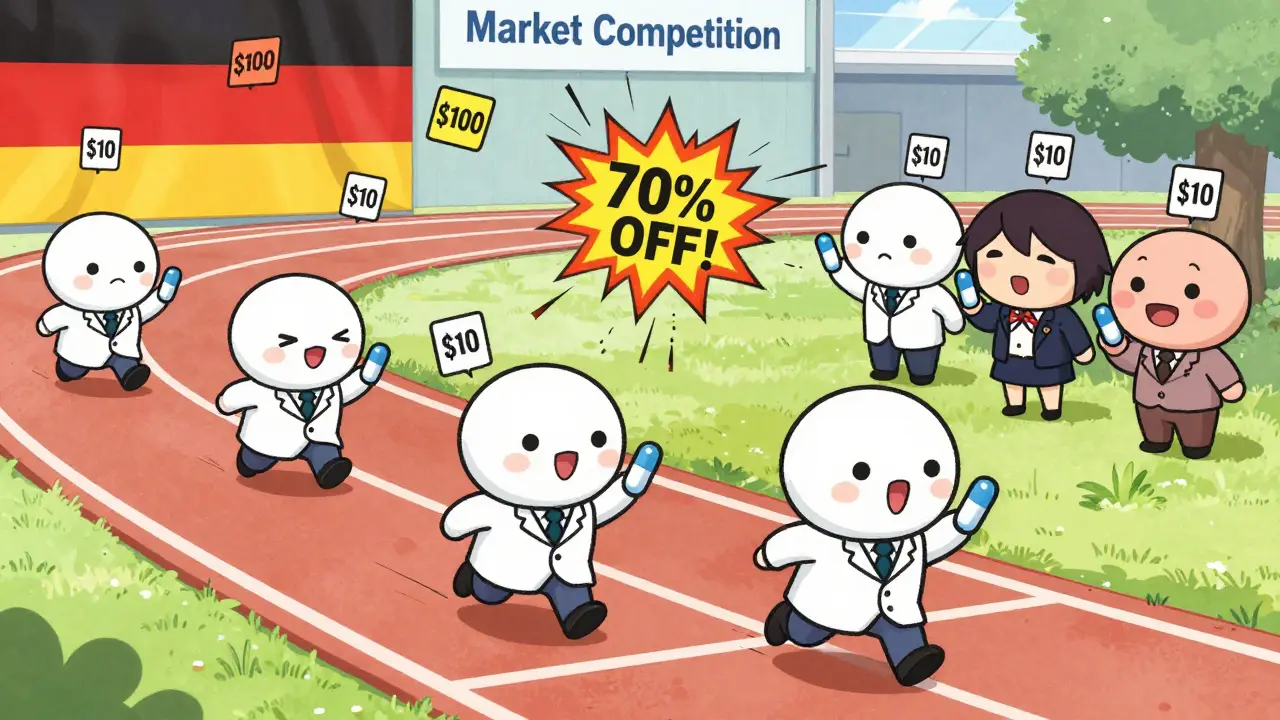
Why Are Brand-Name Drugs So Expensive Here?
The real problem isn’t generics. It’s brands. U.S. prices for originator drugs-those first-to-market, patent-protected medications-are 422 percent higher than in other countries. That’s more than four times the cost. Why? Because the U.S. doesn’t regulate drug prices. Companies can set whatever they want. In Canada, the government caps prices. In the UK, the NHS negotiates bulk deals. In Germany, prices are reviewed and adjusted annually. In the U.S.? No cap. No limit. No review. That’s why a single dose of a new cancer drug can cost $15,000 here, while it’s $3,000 in France. It’s why insulin, a century-old drug, still costs over $100 per vial in the U.S.-even though it’s been off-patent for years and generics are available. The system rewards companies that hold onto patents, extend them with minor tweaks, and delay generics with legal tricks. The result? A tiny fraction of prescriptions (about 10 percent) account for nearly 70 percent of total drug spending.How Generic Competition Actually Works
Let’s say a brand-name drug has a list price of $100. The first generic enters. Price drops to $60. The second generic comes in. Price falls to $30. The third? $15. The fourth? $10. That’s not theory-it’s data. The FDA tracked this exact pattern across hundreds of drugs. When three or more generic manufacturers are making the same pill, prices stabilize at 15-20 percent of the original. But here’s the catch: if only one company makes the generic, prices can spike. That’s what happened with doxycycline in 2013. When only two companies made it, prices jumped 1,000 percent. When a third company entered, prices crashed back down. This is why the FDA fast-tracks generic approvals. In 2023 alone, they approved 773 new generic drugs. The agency estimates those approvals will save the U.S. healthcare system $13.5 billion in the next five years. More competition = lower prices. Simple math.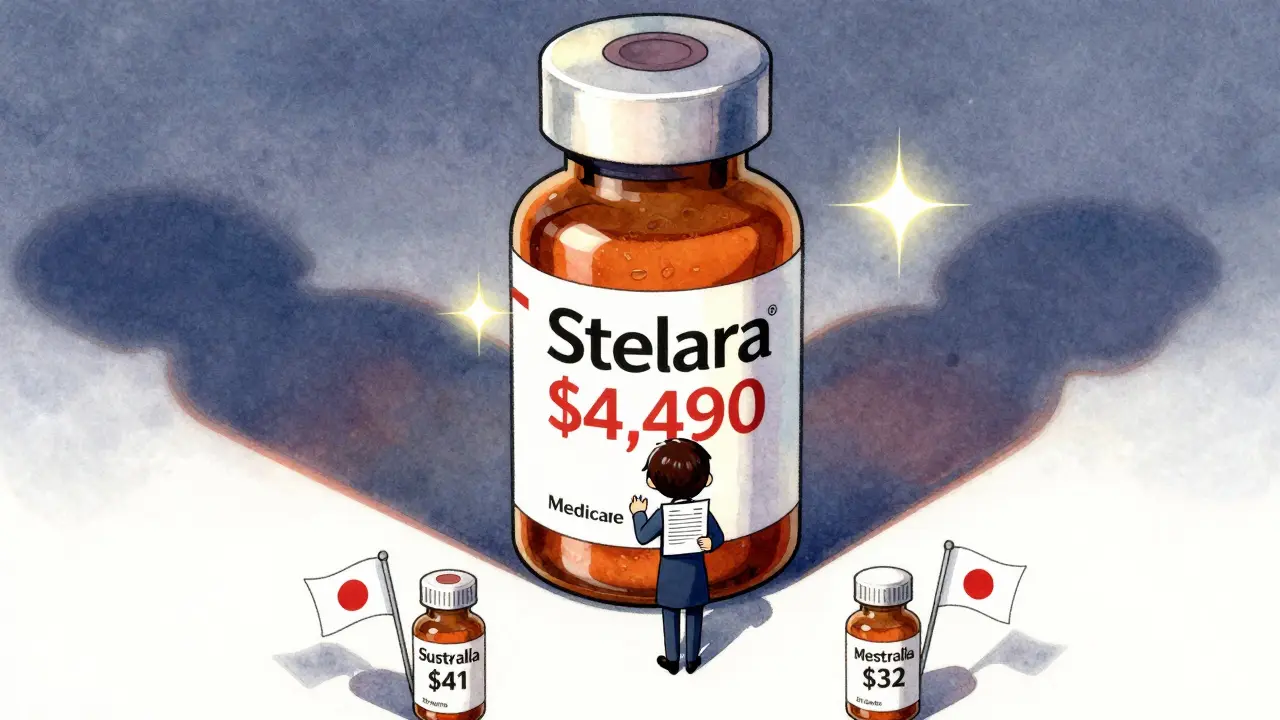
15 Comments
Damario Brown
bro the list price vs net price thing is wild-like why do we even have list prices??? it’s just a scam to make pharma look bad while they pocket the rebates. the whole system is rigged. someone needs to burn it down. 🔥
Avneet Singh
Interestingly, the U.S. generic pricing paradigm operates under a unique market-driven oligopoly structure, wherein the absence of centralized price regulation permits competitive saturation to drive down marginal costs-unlike the centralized pharmacoeconomic evaluations observed in OECD jurisdictions. This is not ‘cheaper’-it’s structurally distorted.
Robin Williams
generics are the only thing keeping me alive and i’m not even kidding. $6 for my blood pressure med? yeah i’ll take that deal. my dog gets more expensive meds than me. 🐶💊
Nelly Oruko
It’s fascinating how the perception of affordability is so deeply tied to out-of-pocket costs, rather than systemic expenditure. The true burden is externalized through premiums and taxes-a classic case of obscured accountability.
Anny Kaettano
So many people don’t realize that the $6 they pay isn’t the cost-it’s the tip of the iceberg. The real price is paid by everyone else in the system. We need transparency, not just for patients, but for taxpayers too.
jefferson fernandes
Wait-so you’re telling me that I’m paying less than people in Germany for my lisinopril?!!?!? That’s insane. I thought I was getting ripped off. I’m gonna start bragging about my $6 prescriptions like they’re a trophy. 🏆 I mean, seriously-how is this even legal? And why isn’t everyone screaming about this???
Angel Tiestos lopez
the system’s a mess but hey, at least my generics are cheap 😅 we’re all just trying to survive capitalism with a pill in our pocket. i’m just glad i don’t have to choose between rent and my heart med. 🙏
Angel Molano
Stop pretending generics are a win. They’re a band-aid on a gunshot wound. The real crime is brand-name pricing. End the patents. Let competition win. Period.
Scottie Baker
my cousin’s in Canada and she pays $12 for the same pill i get for $6. she thinks i’m lying. i showed her the receipt. she cried. not because she’s happy-because she’s angry. this system is cruel.
John Pope
Think about it-this isn’t about drugs, it’s about power. The pharmaceutical industry doesn’t sell medicine, it sells the illusion of scarcity. The list price is a psychological anchor. The rebate is the real transaction. And we? We’re just the audience applauding while the magician pockets the cash. It’s theater. Capitalism as performance art.
Vinaypriy Wane
India produces 20% of the world’s generics-and we don’t charge $500 for insulin. Why? Because we don’t treat health as a commodity. We treat it as a right. The U.S. needs to stop pretending it’s a free market when it’s a captive one.
Adam Vella
It is a fallacy to conflate lower out-of-pocket expenditures with systemic efficiency. The net price advantage observed in the United States is contingent upon a complex, opaque, and highly inefficient intermediary ecosystem comprising PBMs, insurers, and formulary gatekeepers-none of which are accountable to the consumer. The result is not affordability-it is obfuscation.
Kimberly Mitchell
If you’re proud of paying $6 for a pill while the system bleeds billions, you’re part of the problem. You’re not a hero-you’re a victim who’s been taught to celebrate crumbs.
Pankaj Singh
you think this is bad? wait till you see what happens when a single manufacturer controls the generic supply. doxycycline spiked 1000% in 2013. this isn’t capitalism-it’s a cartel with a FDA stamp.
sam abas
so u.s. generics are cheaper?? sure. but did u read the part where brand names cost 4x more? and that’s what’s driving up premiums? so yeah, i’m saving $6 on my pill but my insurance went up $300. so thanks? i’m still broke. and now i’m mad. and i’m not even on a brand name. i’m just a bystander. the whole thing is rigged. like… why are we even talking about this like it’s a win? it’s not. it’s just less loss.