
Imagine waking up with your lips swollen, your tongue feeling thick, or your throat tightening - and you’ve been taking the same blood pressure pill for years. No rash. No itching. Just swelling. That’s not an allergy. It’s ACE inhibitor angioedema, a silent, dangerous reaction hiding in plain sight among millions of people taking common heart medications.
What Exactly Is ACE Inhibitor Angioedema?
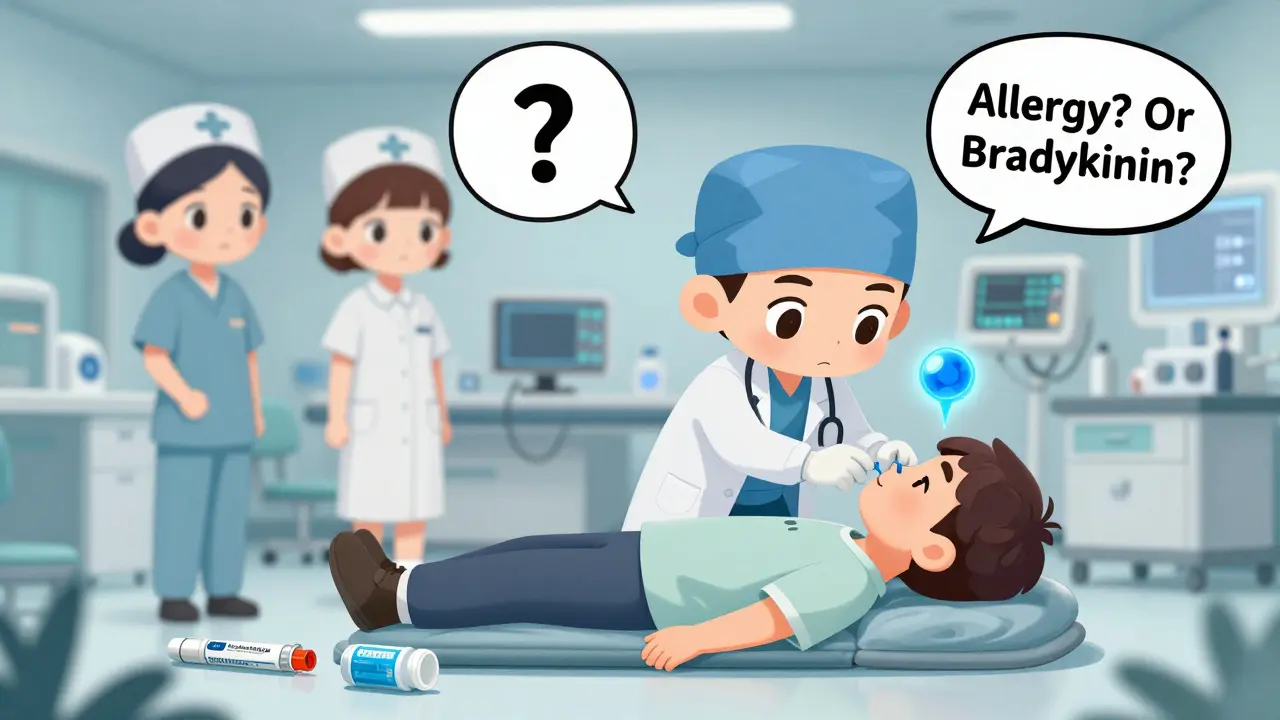
ACE inhibitors - drugs like lisinopril, enalapril, and ramipril - are among the most prescribed medications in the world. They help lower blood pressure, protect kidneys in diabetics, and ease heart failure. But for about 1 in every 200 people taking them, these drugs trigger a dangerous type of swelling called angioedema. Unlike allergic reactions, this isn’t caused by histamine. It’s caused by bradykinin, a chemical that makes blood vessels leak fluid into surrounding tissues. This swelling doesn’t come with hives. No itchy skin. No redness. Just sudden, painless puffiness - usually in the lips, tongue, face, or throat. And because it doesn’t look like a typical allergy, it’s often misdiagnosed. Emergency rooms see it all the time. In fact, about 30% of all angioedema cases in U.S. ERs are due to ACE inhibitors.Why Does This Happen?
Your body normally breaks down bradykinin using an enzyme called angiotensin-converting enzyme (ACE). ACE inhibitors block that enzyme to lower blood pressure - but they also stop bradykinin from being cleared. When bradykinin builds up, it causes fluid to leak out of tiny blood vessels, leading to swelling. It’s like turning off a drain while the faucet is still running. Some people are more at risk. African Americans have a 2 to 4 times higher chance of developing this reaction. Women are affected more often than men. And it doesn’t always happen right away. Half of cases show up within the first week. But one in five patients develop swelling after ten years of taking the drug without issue. That’s why even long-term users can’t assume they’re safe.How Is It Different From an Allergy?
This is the most critical point. If you have hives, itching, or wheezing after a bee sting or peanut exposure, that’s an allergic reaction. You treat it with epinephrine, antihistamines, and steroids. Those drugs do nothing for ACE inhibitor angioedema. Giving someone with bradykinin swelling an EpiPen or Benadryl is like putting a bandage on a broken pipe. It doesn’t fix the leak. In fact, it delays the right treatment. Studies show that patients often visit the ER two or three times before getting the correct diagnosis - each time getting the wrong meds. That’s dangerous. Every hour without proper care increases the risk of airway blockage.Who’s Most at Risk?
It’s not random. Certain groups face much higher risk:- African descent: 2-4 times more likely than other groups
- Women: Twice as common as in men
- People on DPP-4 inhibitors (like sitagliptin for diabetes): 4-5 times higher risk when combined with ACE inhibitors
- Long-term users: Even after 5, 7, or 10 years
What Should You Do If You Notice Swelling?
If your lips, tongue, or throat suddenly swell - even if it’s mild - stop taking your ACE inhibitor immediately and get to an emergency room. Don’t wait. Don’t assume it’s a cold or a bug. Don’t take more antihistamines hoping it’ll help. That’s not just useless - it’s risky. In the ER, doctors will check your airway. If swelling is progressing, they may need to secure your breathing with a tube. That’s scary, but it’s life-saving. Once the danger passes, the only proven fix is stopping the drug. No exceptions.What Happens After You Stop the Drug?
You might think stopping the pill means the swelling stops right away. Not always. For some, swelling fades in 24 to 48 hours. For others, especially those of African descent, mild swelling can linger for weeks or even months. One patient on Reddit described having tiny swelling episodes for four months after stopping lisinopril - even though he’d taken it for seven years without problems. That doesn’t mean you’re still reacting to the drug. It means your body is still clearing the excess bradykinin. But here’s the catch: if you take an ACE inhibitor again - even once - you’re far more likely to have a worse, faster, and more dangerous episode next time.What Are the Alternatives?
You still need to control your blood pressure. The safest switch is usually an ARB - like losartan, valsartan, or irbesartan. These drugs work similarly to ACE inhibitors but don’t block bradykinin breakdown. Their risk of angioedema is about 10 times lower. But here’s the caveat: 10 to 15% of people who had angioedema on an ACE inhibitor will also react to ARBs. So if you’ve had one episode, your doctor needs to monitor you closely when switching. Don’t assume ARBs are 100% safe - just much safer.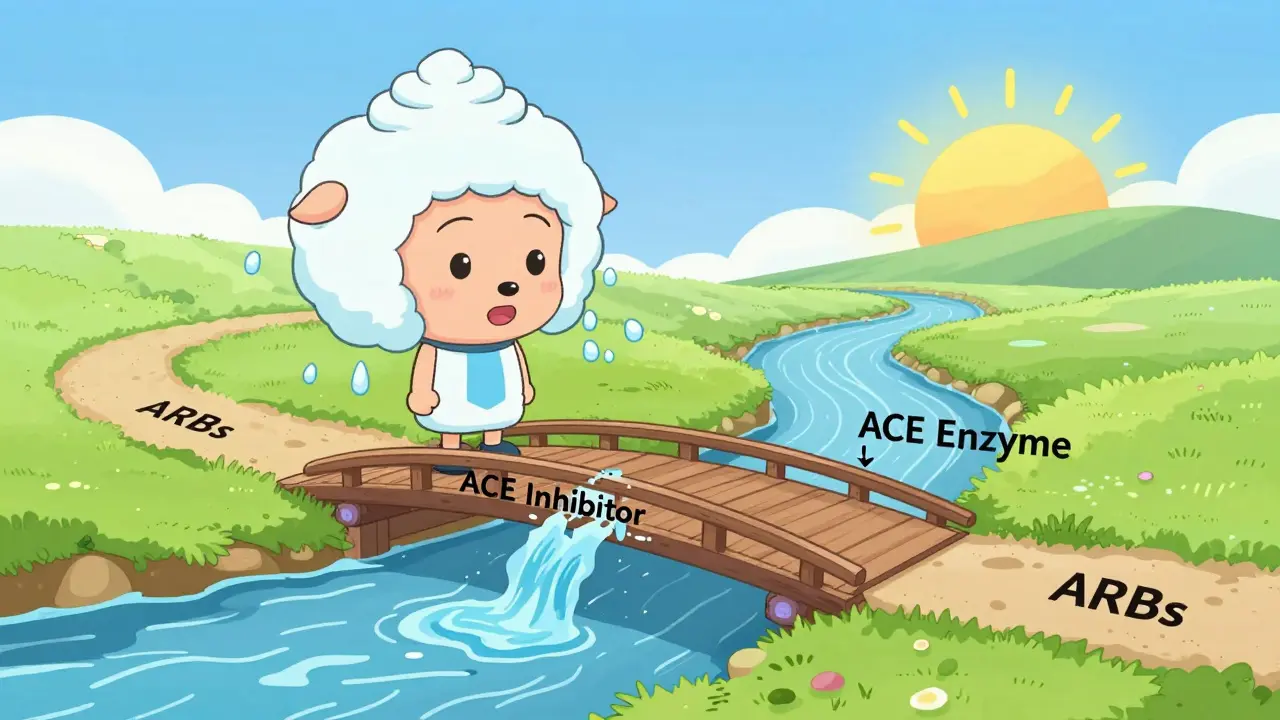
What About Treatment in the ER?
Standard allergy meds? Useless. Epinephrine? Won’t help. Steroids? No effect. The real treatments are specialized - and expensive. Icatibant (brand name FIRAZYR) blocks bradykinin receptors. It works in 2 to 4 hours. But in the U.S., one dose costs around $9,000. Ecallantide and C1-inhibitor concentrate are other options, but they’re not widely available. Fresh frozen plasma has been used off-label because it contains ACE enzyme - but evidence is limited to case reports. Most ERs don’t stock these drugs. That’s why stopping the ACE inhibitor and protecting the airway remain the only universally reliable actions.How Do You Prevent This From Happening Again?
Once you’ve had ACE inhibitor angioedema, you must avoid all drugs in this class forever. That means no lisinopril, no enalapril, no ramipril - ever again. Even a single pill can trigger a deadly reaction. Your medical records must clearly say: “ACE inhibitor-induced angioedema - permanent contraindication.” Not “allergy.” Not “reaction.” The exact wording matters. Pharmacists and doctors need to see it in black and white. Many patients don’t get this warning. One study found only 42% of people who had this reaction were properly counseled. That’s unacceptable. If you’ve had swelling, ask your doctor to add it to your chart. Get a medical alert bracelet. Wear it. Tell your family. Keep a note in your phone.Why Is This Still Underdiagnosed?
Despite being one of the most common drug-induced angioedema causes, only 55% of ER doctors correctly identify it on first visit. Why? Because it doesn’t look like an allergy. Because it happens after years of use. Because no one taught them the difference. The FDA added black box warnings to ACE inhibitors in 2010. But warnings don’t change practice. Education does. Clinicians need to ask: “Is this swelling itchy? Is there a rash? Did the patient just start the drug?” If the answer is no, think bradykinin - not histamine.What’s Next for This Condition?
Research is moving fast. Scientists are looking at genetic tests to predict who’s at risk before they even start an ACE inhibitor. The European Medicines Agency already recommends extra caution for patients of African descent. In five years, doctors may screen for the XPNPEP2 gene before prescribing these drugs - especially in high-risk groups. Newer, cheaper bradykinin blockers are in clinical trials. If they work, they could become standard emergency tools. But until then, the solution remains simple: recognize the swelling, stop the drug, and never take it again.Millions take ACE inhibitors safely. But for those who react, this isn’t a side effect - it’s a medical emergency. The difference between life and death often comes down to one question: Is this an allergy… or is it bradykinin?
Can ACE inhibitor angioedema happen after years of taking the drug?
Yes. While half of cases occur within the first week, 20% happen after more than a year of use. Documented cases show swelling appearing after 10 or more years without prior issues. This unpredictability is why even long-term users must watch for swelling.
Do antihistamines or epinephrine help with ACE inhibitor angioedema?
No. These treatments work for allergic reactions caused by histamine, but ACE inhibitor angioedema is driven by bradykinin. Giving epinephrine or Benadryl won’t reduce swelling and delays proper care. Studies confirm these drugs have no benefit in this condition.
Is it safe to switch to an ARB after having ACE inhibitor angioedema?
ARBs are the preferred alternative, with a 10-fold lower risk of angioedema. But about 10-15% of people who had a reaction to ACE inhibitors will also react to ARBs. Switching requires close monitoring by a doctor - never self-switch.
Why are African Americans at higher risk for this reaction?
Research shows African descent individuals have a 2-4 times higher risk. This is likely due to genetic differences in bradykinin metabolism, particularly lower activity of the aminopeptidase P enzyme. Studies have linked specific gene variants (like XPNPEP2) to this increased susceptibility.
What should I do if I notice lip or tongue swelling while on an ACE inhibitor?
Stop taking the medication immediately and go to the nearest emergency room. Do not wait to see if it gets better. Do not take antihistamines or use an EpiPen hoping it will help. Airway swelling can worsen rapidly. The only proven intervention is stopping the drug and ensuring your breathing is protected.
Will I have swelling for the rest of my life after stopping the drug?
No. Most swelling resolves within 1-2 days after stopping the ACE inhibitor. However, mild episodes can persist for weeks or months in some people - especially those of African descent. This doesn’t mean you’re still reacting; it means your body is slowly clearing the excess bradykinin. Once it’s gone, you won’t have future episodes - unless you take an ACE inhibitor again.
Can I ever take an ACE inhibitor again if I had a mild episode?
Never. Even a mild episode means your body has reacted dangerously. Re-exposure can trigger a much more severe, life-threatening swelling - sometimes within minutes. ACE inhibitor-induced angioedema is a permanent contraindication. No exceptions.
Should I get a medical alert bracelet?
Yes - especially if you’ve had a severe episode or airway involvement. Emergency responders and new doctors may not know your history. A bracelet saying “ACE Inhibitor Angioedema - Permanent Contraindication” can prevent a fatal mistake.
11 Comments
Todd Nickel
Interesting breakdown. I’ve been on lisinopril for eight years and never thought twice about it-until I read this. The bradykinin mechanism makes so much sense now. I always assumed swelling was an allergic reaction, but the absence of itching and hives always bugged me. Turns out, my body was quietly leaking fluid and I had no clue. I’m going to ask my cardiologist about switching to an ARB next visit. Also, the gene variant XPNPEP2? That’s wild. We’re not just talking about drug reactions anymore-we’re talking about genetic vulnerability. Feels like medicine is finally catching up to personalized risk.
Austin Mac-Anabraba
Let’s be real-this isn’t a medical mystery, it’s a systemic failure. Pharma companies knew bradykinin was involved since the 90s. They didn’t care because ACE inhibitors are cheap, profitable, and prescribed to everyone with a pulse. The FDA’s black box warning? A PR move. ER doctors still misdiagnose this because they weren’t trained to think beyond histamine. And now we’re expected to be grateful for a 10x safer alternative? ARBs aren’t magic-they’re just less toxic. The real fix? Stop prescribing these drugs like candy and start screening high-risk populations before writing the script. But hey, capitalism wins again.
Layla Anna
I had this happen to me last year after 5 years on ramipril… just woke up with my lips looking like I’d been kissed by a balloon 😅 no itching, no rash, just… puffy. I thought I had a cold or allergies. Took Benadryl for 3 days. Nothing. Finally went to ER and they were like ‘ohhhhh that’s not an allergy’-and I was like ‘wait, what?!’ I’m so glad I stopped it. Now I wear a bracelet and tell everyone I meet who’s on blood pressure meds. You never know who needs to hear this. 💙
Heather Josey
This is one of the most important public health awareness pieces I’ve read in years. The fact that 30% of angioedema cases in ERs are drug-induced and still misdiagnosed is alarming. The distinction between histamine and bradykinin pathways isn’t just academic-it’s life-or-death. I work in primary care and have already updated our patient handouts to include this exact language. We now explicitly warn long-term users, especially those of African descent, to seek immediate care for any facial swelling-even if it’s mild. Education saves lives. Thank you for writing this with such clarity and urgency.
Olukayode Oguntulu
So let me get this straight: a biochemical cascade, rooted in evolutionary enzymatic inefficiencies among certain populations, is being weaponized by Big Pharma’s profit-driven prescribing patterns? The irony is poetic. We have a gene-XPNPEP2-that evolved to handle bradykinin in African genomes, but modern pharmacology ignores it because it’s not profitable to screen. We’re not treating patients; we’re running a statistical optimization algorithm on human bodies. And now we’re surprised when the model fails? The real tragedy isn’t the swelling-it’s the fact that we still treat biology like a spreadsheet.
jaspreet sandhu
Everyone’s overcomplicating this. You take a drug. Your face swells. You stop the drug. Done. No need for genetic tests or fancy meds. If you’re dumb enough to take something for 10 years and then get swollen lips, maybe you shouldn’t be on meds at all. My uncle took lisinopril for 12 years, got swelling, stopped it, switched to water and yoga. Blood pressure fine. No hospital. No bracelet. No drama. Simple solution: don’t be lazy. Stop taking pills you don’t understand.
Alex Warden
So let me get this straight-some people’s bodies react to a common heart drug because of their race? That’s not science, that’s woke medicine. Why not just ban the drug for everyone? If it’s dangerous for some, it’s dangerous for all. And why are we talking about African descent like it’s some special category? We’re all Americans here. This is just another way to divide people under the guise of ‘awareness.’ If you’re allergic, you’re allergic. Stop making it about skin color. Just test everyone the same way.
LIZETH DE PACHECO
Thank you for sharing this. I’m a nurse and I’ve seen this happen twice in the ER-both times, the patient was sent home with antihistamines. One ended up intubated. Please, if you’re reading this and you’ve ever had swelling on this med-tell your family, your friends, your coworkers. This isn’t something you can Google your way out of. It’s silent, it’s fast, and it’s deadly. You’re not being dramatic if you go to the ER. You’re being smart. And if you’re a provider-listen to your patients. Swelling without itching? Think bradykinin. Not allergy.
sharad vyas
bro i took lisinopril for 6 years and never had an issue… then one day my lip swelled up like a sausage and i thought i was having a stroke 😵💫 i went to the er and they were like ‘oh lol you’re one of THOSE people’… now i got a medical bracelet and i tell everyone i know. if you’re on this med and your face feels weird-JUST STOP. no cap. your life is worth more than your pharmacy’s refill reminder.
Sally Denham-Vaughan
My mom had this happen after 14 years on enalapril. She thought it was a bug. Took her 3 ER visits to get the right diagnosis. She’s now on losartan and feels great. But the scariest part? She didn’t know she was at higher risk because she’s Black. No one ever told her. I’m so glad this post exists. Please, if you’re a doctor, nurse, pharmacist, or just someone who cares-share this. We need to stop pretending this is rare. It’s not. It’s just hidden.
Todd Nickel
Replying to Dusty Weeks: I’m glad you’re okay. But your story is exactly why this needs to be common knowledge. You didn’t know you were at risk, and you didn’t know what to do. That’s not your fault. It’s the system’s failure. I’ve been reading up on the XPNPEP2 gene since I read your comment. Turns out, there’s a simple blood test now that can flag high-risk patients before they even start the drug. It’s not widely offered yet, but it should be. We’re not just talking about ‘stop the pill’-we’re talking about preventing the reaction before it ever happens. That’s the future we need.