Kidney Function & Medication Safety Checker
Enter your estimated Glomerular Filtration Rate (eGFR) to assess risk.
Ready to Analyze
Enter an eGFR value to see your kidney health stage and specific medication warnings.
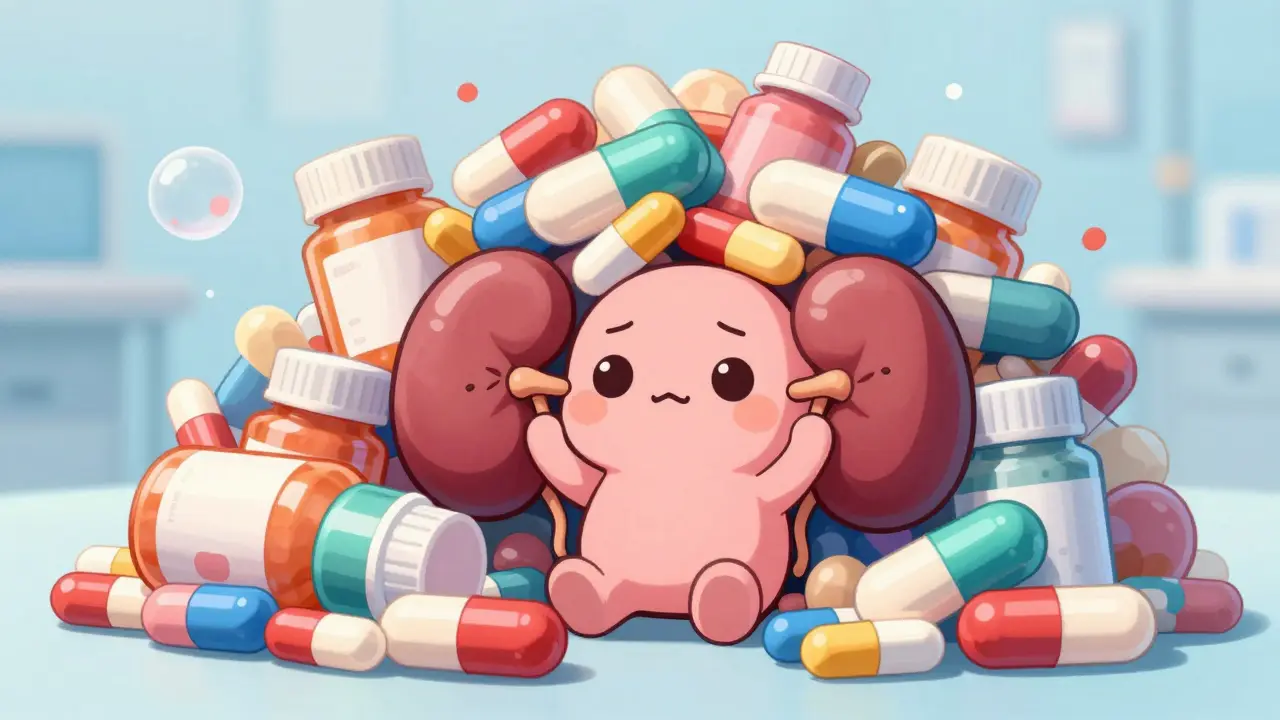
Your kidneys are the body’s filtration system. They clean your blood, balance fluids, and remove waste products, including the medications you take. But when kidney function declines, this cleanup crew slows down. The result? Medications can build up in your bloodstream to dangerous levels, leading to medication accumulation that causes severe toxicity.
This isn’t a rare side effect-it’s a widespread crisis. According to the National Kidney Foundation, roughly 37 million American adults live with chronic kidney disease (CKD). Many of these patients take 10 to 12 prescription drugs daily for conditions like diabetes and high blood pressure. When impaired kidneys meet complex polypharmacy, the risk of hospitalization skyrockets. In fact, drug-induced kidney injury accounts for up to 26% of acute kidney injury cases in hospitals, with mortality rates hitting 50% in severe instances.
How Kidneys Process Medications
To understand why drugs become toxic, you need to know how they leave your body. Most medications exit through two main routes: the liver breaks them down, or the kidneys filter them out into urine. About 30% of all common medications are cleared directly by the kidneys. Others are metabolized by the liver but produce waste products that the kidneys must still excrete.
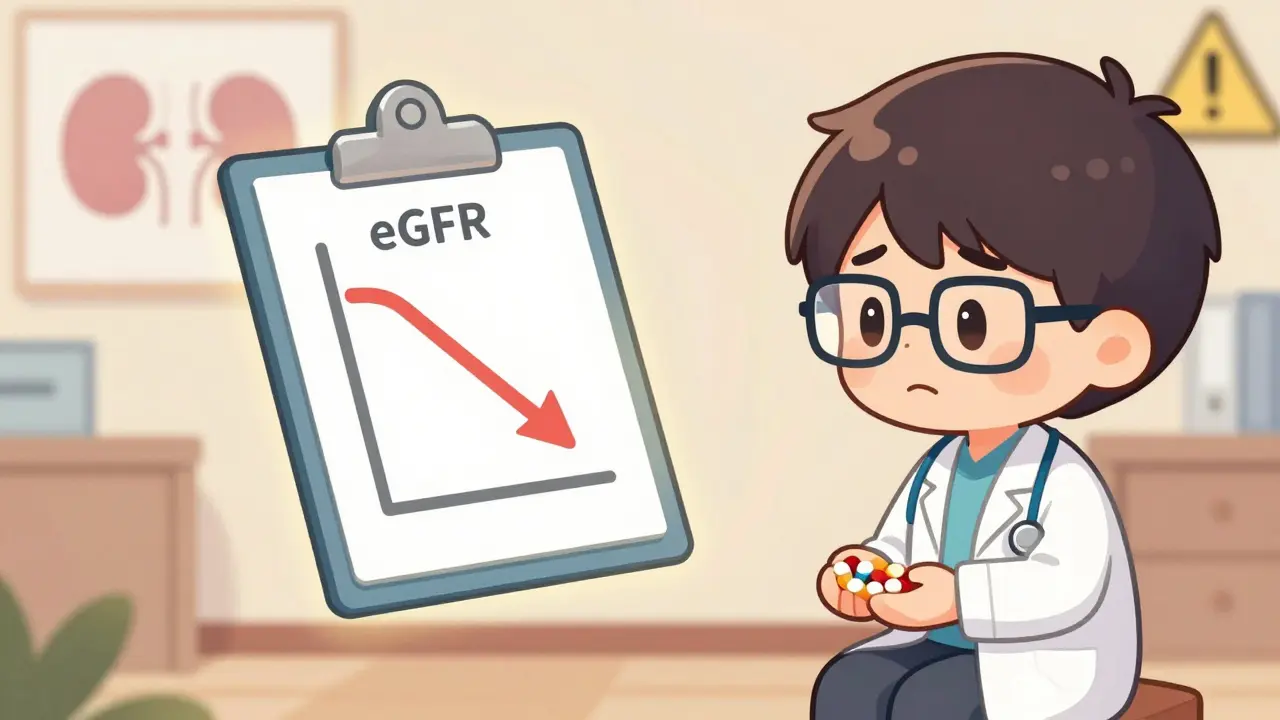
The key metric here is the estimated glomerular filtration rate, or eGFR. This number tells doctors how well your kidneys are filtering blood. A healthy adult has an eGFR above 90 mL/min/1.73m². As kidney disease progresses:
- Stage 1-2: eGFR ≥ 60. Kidney function is normal or mildly reduced. Most standard doses are safe.
- Stage 3: eGFR 30-59. Moderate decline. Dose adjustments become necessary for 40% of commonly prescribed drugs.
- Stage 4-5: eGFR < 30. Severe decline. Many drugs must be avoided entirely or drastically reduced.
When eGFR drops below 60, the safety margin shrinks. Drugs that stay in your system longer than intended begin to accumulate. This accumulation doesn’t just reduce effectiveness; it turns therapeutic agents into poisons.
The Silent Threats: Common Drugs That Cause Toxicity
Not all medications are equal when it comes to kidney safety. Some classes pose significantly higher risks due to their clearance mechanisms and narrow therapeutic windows.
| Medication Class | Primary Risk in CKD | Critical Threshold (eGFR) | Safer Alternative |
|---|---|---|---|
| NSAIDs (Ibuprofen, Naproxen) | Reduces renal blood flow, causing acute injury | Avoid if eGFR < 60 | Acetaminophen (Paracetamol) |
| Metformin | Lactic acidosis risk due to accumulation | Discontinue if eGFR < 30 | DPP-4 inhibitors (e.g., Linagliptin) |
| Sulfonylureas (Glyburide) | Prolonged hypoglycemia from active metabolites | Avoid in Stage 4-5 CKD | Glipizide (non-renal clearance) |
| DOACs (Apixaban, Rivaroxaban) | Bleeding risk increases with accumulation | Dose adjust if eGFR < 30 | Warfarin (monitored closely) |
| Trimethoprim | Severe hyperkalemia (high potassium) | Use caution with ACE inhibitors | Nitrofurantoin (if eGFR > 30) |
Non-steroidal anti-inflammatory drugs (NSAIDs) like ibuprofen and naproxen are particularly treacherous. They don’t just accumulate; they actively harm kidney function by blocking prostaglandins, which keep blood vessels in the kidneys open. In patients with eGFR below 60, NSAID use triples the risk of acute kidney injury. If you have stage 4 or 5 CKD, these drugs should be off-limits entirely.
For diabetes management, metformin is a staple. However, as kidney function declines, metformin can’t be cleared efficiently. This leads to lactic acidosis, a life-threatening buildup of lactic acid in the blood. Guidelines recommend reducing the dose when eGFR falls below 45 and stopping it completely when eGFR drops below 30. Interestingly, a Cochrane review found no cases of lactic acidosis when these contraindications were strictly followed, highlighting the importance of adherence to dosing rules.
Drug Interactions: The Multiplier Effect
It’s not just about single drugs. Combinations can create perfect storms. Consider the mix of trimethoprim (often found in co-trimoxazole for infections) and ACE inhibitors (common for blood pressure). Trimethoprim reduces potassium excretion, while ACE inhibitors also raise potassium levels. Together, they can spike serum potassium by 1.2 to 1.8 mmol/L within 48 hours. This seven-fold increase in hyperkalemia risk can lead to fatal heart rhythms if not monitored.
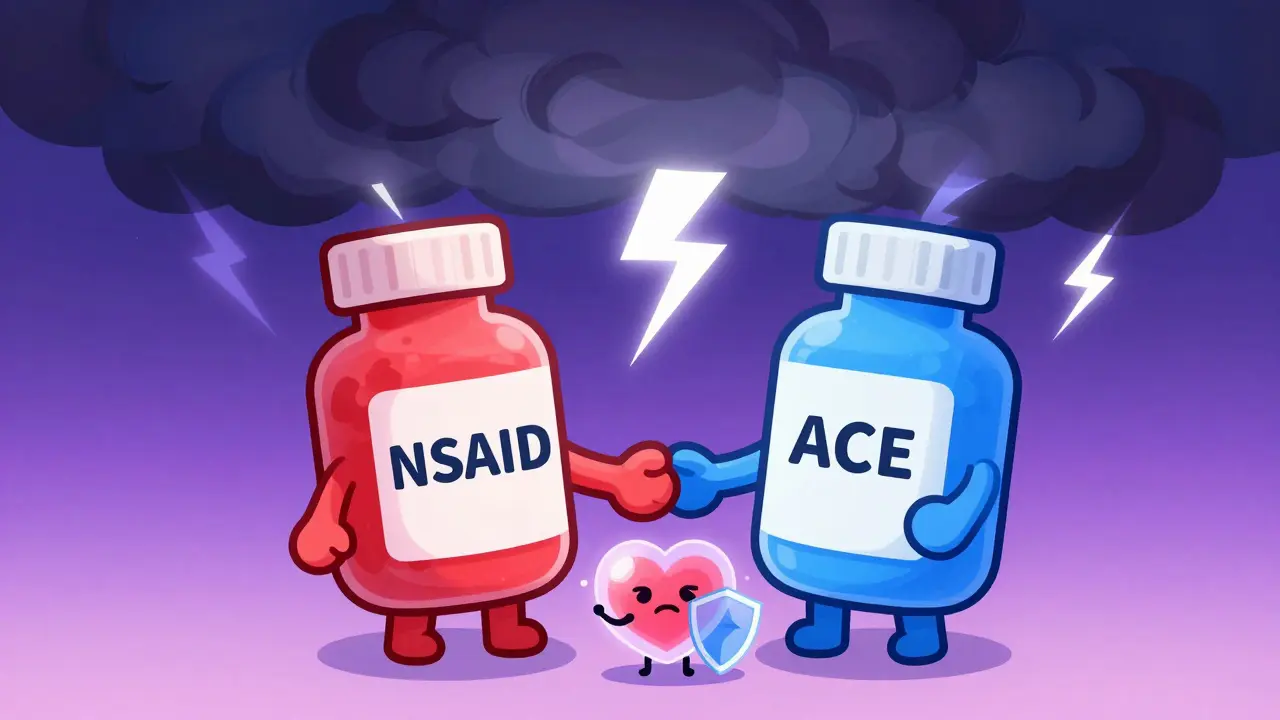
Similarly, combining NSAIDs with ACE inhibitors or ARBs increases the risk of acute kidney injury five-fold. The NSAID restricts blood flow, and the ACE inhibitor prevents the kidney from compensating, effectively starving the organ of oxygen and nutrients.
Calculating Safe Doses: Beyond Creatinine
Many primary care providers still rely on serum creatinine alone to judge kidney health. This is a critical error. Serum creatinine levels can appear normal in older adults or those with low muscle mass, even when kidney function is severely impaired. Always calculate eGFR using the CKD-EPI equation or Cockcroft-Gault formula.
Once you have the eGFR, dosing adjustments follow specific protocols. For example, vancomycin, an antibiotic used for serious infections, requires significant changes. Standard dosing might be 15 mg/kg every 12 hours. But if eGFR is below 30, the interval extends to every 48-72 hours. Trough levels must also be monitored more tightly, aiming for 15-20 mcg/mL rather than the standard 10-15 mcg/mL.
The University of Florida’s Renal Dosage Handbook provides adjustment protocols for over 500 medications. Using such resources is essential for clinicians managing CKD patients. Ignoring these guidelines leads to preventable errors. Studies show that 42% of prescribing errors in renal impairment involve failing to adjust doses for drugs with greater than 50% renal clearance.
Real-World Consequences and Patient Experiences
The statistics tell one story, but patient experiences reveal the human cost. On community forums, stories of mismanagement are common. One Reddit user shared how a standard dose of ibuprofen for back pain caused their creatinine to jump from 1.8 to 3.2 mg/dL within 48 hours, resulting in a five-day hospitalization. This aligns with survey data from the American Association of Kidney Patients, which found that 78% of CKD patients received at least one medication without appropriate dose adjustment, and 43% experienced adverse events requiring medical intervention.
Hypoglycemia is another frequent issue. Sulfonylureas like glyburide have active metabolites that accumulate in CKD. This can cause low blood sugar lasting more than 72 hours, putting elderly patients at risk of falls and confusion. Switching to glipizide, which is metabolized by the liver and does not rely on renal clearance, often resolves this problem safely.
Prevention and Future Directions
Preventing medication toxicity starts with awareness. Patients should maintain an updated medication list and share it with every healthcare provider. Ask specifically: "Does this drug require adjustment for my kidney function?"
Technology is catching up. The FDA approved KidneyIntelX in 2023, a machine learning platform that predicts individualized toxicity risks with 89% accuracy. Additionally, new guidelines from KDIGO emphasize reviewing all medications when eGFR falls below 60. Pharmacogenomic testing is also emerging, offering personalized dosing strategies that could reduce adverse events by 63% in early trials.
For now, vigilance is your best defense. Regular monitoring of eGFR, electrolytes, and drug levels can catch problems before they become crises. Remember, in kidney disease, less is often more. Adjusting doses isn’t just about efficacy; it’s about survival.
What is the most dangerous medication for people with kidney disease?
Non-steroidal anti-inflammatory drugs (NSAIDs) like ibuprofen and naproxen are among the most dangerous because they reduce blood flow to the kidneys, potentially causing acute kidney injury. Other high-risk drugs include certain antibiotics, contrast dyes, and unadjusted doses of diabetes medications like metformin.
At what eGFR level do I need to adjust my medications?
Dose adjustments typically become necessary when eGFR falls below 60 mL/min/1.73m² (Stage 3 CKD). At this point, 40% of commonly prescribed drugs may require modification. More drastic reductions or discontinuations are needed when eGFR drops below 30 (Stage 4-5).
Can kidney disease make painkillers toxic?
Yes. NSAIDs can cause direct kidney damage and accumulate if not cleared properly. Even acetaminophen, while safer for kidneys, can stress the liver if taken in high doses, which is risky since many CKD patients have comorbidities. Always consult a doctor before taking any painkiller.
Why is serum creatinine not enough to check kidney function?
Serum creatinine can appear normal in older adults or those with low muscle mass, masking severe kidney dysfunction. eGFR calculations account for age, sex, and race, providing a more accurate picture of filtration capacity and guiding safer medication dosing.
What are the signs of medication toxicity in CKD patients?
Signs include sudden confusion, dizziness, severe nausea, unusual bleeding, muscle weakness (from high potassium), or extreme fatigue. If you experience these after starting a new medication or changing doses, seek medical attention immediately.
12 Comments
Sonam Norbu
Stop blaming the kidneys and start blaming the lazy doctors who refuse to read the label. This is a failure of our medical system, not biology. We need stricter regulations on prescribing habits immediately.
Amy Bogdahn
You people are so obsessed with saving yourselves that you forget to care about anyone else's pain. It’s pathetic how everyone just waits for their organs to fail before they bother to ask questions. Typical self-absorbed behavior.
KESHAV KUMAR
Oh look, another article telling us our bodies are broken machines. Shocking. I’m sure the pharmaceutical companies are weeping with joy at this 'crisis' narrative. Keep taking your little pills, sheeple.
Alex Johnston
The mainstream medical establishment wants you to believe it's just 'kidney function' but it's actually the fluoride in the water combined with the EMF radiation from your phone that clogs the filtration pathways. They don't want you to know that natural chelation works better than these toxic drugs. :/
Jake Kitzmiller
I work in pharmacy and I see this every single day. The scariest part isn't the big drugs like vancomycin, it's the over-the-counter stuff. People take ibuprofen for headaches without realizing they are slowly strangling their own blood flow to the kidneys. If you have high blood pressure, please switch to Tylenol. It really is that simple and that important.
Sam Dudgeon
i mean why do you even need meds if you eat clean? its all about lifestyle choices really. stop eating processed garbage and your kidneys will be fine. dont blame the medicine for your bad diet lol
Jake Kitzmiller
That is incredibly dismissive and medically inaccurate. Chronic Kidney Disease often has genetic components or results from long-term hypertension and diabetes which require management regardless of diet. Telling someone with Stage 4 CKD to just 'eat clean' ignores the physiological reality that their filtration rate is physically compromised. It is cruel and unhelpful.
Hafiz Omeiza
It is imperative that individuals understand the distinction between serum creatinine and eGFR. The reliance on raw creatinine levels is a historical artifact that persists due to physician inertia rather than clinical necessity. One must consult the Cockcroft-Gault formula to ascertain true renal clearance capacity. Ignoring these metrics is tantamount to negligence.
Annemarie Kautz
ugh this is so scary :( i took some advil last week for my back and now im worried i ruined my life lol jk but seriously does one pill really do that much damage??
Jake Kitzmiller
If you have healthy kidneys, one dose of Advil is generally fine. The risk comes from chronic use or taking it when you already have reduced function or dehydration. Don't panic, but definitely check your blood pressure and stay hydrated. If you feel weird, call your doc.
Koushiki Behera
This is a profound reminder of the interconnectedness of our physical vessel and the chemical substances we introduce into it 🌿. We must approach our health with mindfulness and respect for the delicate balance of nature within us. When we ignore the signs, we disrupt the harmony of our being. Let us choose wisdom over convenience 💚✨.
Dale Simpson
U guys gotta stay positive! You can totally manage this stuff if you just keep track of your meds and talk to your doctor. Its not the end of the world! Just be smart about it and youll be golden! Keep fighting the good fight!