Statin Tolerance Calculator
This tool helps determine the best approach for managing statin side effects. Based on clinical evidence, 75% of patients experience reduced symptoms when switching to rosuvastatin or pravastatin from simvastatin/lovastatin.
Your Recommended Approach
Important: Studies show up to 90% of perceived statin side effects are due to the nocebo effect. Your doctor should verify if symptoms persist after a 2-week trial without statins.
Statin medications have saved millions of lives by lowering bad cholesterol and preventing heart attacks and strokes. But for many people, the side effects-especially muscle pain-make them want to quit. If you’re one of them, you’re not alone. Around 1 in 10 people on statins report muscle aches, and many stop taking them altogether. The good news? You don’t have to give up. With the right approach, most people can stay on statins safely and keep their heart protected.
Why Muscle Pain Happens (And Why It’s Not Always the Statin)
The most common complaint with statins is muscle pain, or myalgia. It can feel like soreness, weakness, or cramps, often in the legs or arms. But here’s the twist: studies show that up to 90% of people who think they’re reacting to statins actually have similar symptoms when taking a sugar pill. This isn’t magic-it’s called the nocebo effect. When you expect something to hurt, your brain can make you feel it, even if the drug isn’t the cause. A major 2023 trial called SAMSON tracked over 6,000 people who believed they couldn’t tolerate statins. They took statins, placebos, and nothing in random order, without knowing which was which. The result? Symptoms showed up just as often on the placebo. That doesn’t mean the pain isn’t real-it means something else might be triggering it. Aging, low vitamin D, thyroid problems, or even overexertion can mimic statin side effects.First Step: Don’t Quit. Pause and Check
If you’re having muscle pain, don’t stop your statin on your own. Instead, talk to your doctor about a short break-usually two weeks. This isn’t just to feel better. It’s to see if the pain actually goes away. If it does, that’s a clue the statin might be involved. If it doesn’t, your doctor can look for other causes: thyroid function, vitamin D levels, or even arthritis. After the break, you don’t have to jump right back to your old dose. Start low. Try half the dose, or take it every other day. Some people find that taking rosuvastatin or atorvastatin just three times a week keeps their cholesterol in check without the pain. These statins last longer in your body, so you don’t need to take them daily.Switching Statins: It’s Not Random
Not all statins are the same. Simvastatin and lovastatin are more likely to cause muscle pain, especially at higher doses. That’s because they’re broken down by a liver enzyme (CYP3A4) that can be slowed down by other medications or even grapefruit juice. If you’re on one of these and having trouble, switching to a different statin can help. Rosuvastatin and pravastatin are metabolized differently. They don’t rely as much on CYP3A4, so they’re less likely to interact with other drugs or cause muscle issues. In real-world studies, about 75% of people who switch from simvastatin to rosuvastatin see their muscle pain disappear. A common starting point is 5 mg of rosuvastatin every other day. If that’s tolerated, the dose can be slowly increased, or the frequency can be raised to every day. One patient in Bristol, 72, switched from 40 mg simvastatin daily to 10 mg atorvastatin every Monday, Wednesday, and Friday. His cholesterol stayed at 75 mg/dL, and his muscle pain vanished. He didn’t need a new drug-he just needed a smarter schedule.
When Dose Adjustment Isn’t Enough
Sometimes, even the lowest dose or a switch doesn’t fix things. That’s when doctors consider non-statin options. The first alternative is ezetimibe. It lowers LDL cholesterol by about 20%, works differently than statins, and has very few side effects. It’s often paired with a low-dose statin for better results. For people with very high risk-like those who’ve had a heart attack-PCSK9 inhibitors (alirocumab or evolocumab) are an option. These injectable drugs can drop LDL by 50-70%. But they cost around $5,800 a year, and insurance often requires proof you’ve tried and failed statins first. They’re powerful, but not a first-line fix. Bile acid sequestrants like cholestyramine can also help, but they cause bloating and gas in up to 40% of users. That’s why they’re usually a last resort.What About Supplements?
You’ve probably heard about CoQ10. It’s a supplement some people take to ease statin muscle pain. The theory is that statins lower CoQ10 levels in muscles, and replacing it helps. A 2021 survey of 412 people found 58% felt better after taking 200 mg daily. But here’s the catch: no large, well-designed study has proven it works. The Mayo Clinic says there’s no solid evidence. That doesn’t mean it won’t help you-but don’t expect miracles. If you want to try it, talk to your doctor first. Some supplements can interact with other meds.What You Can Do Right Now
If you’re struggling with statin side effects, here’s what to do next:- Don’t stop your statin without talking to your doctor.
- Ask for a two-week break to see if symptoms improve.
- Get checked for thyroid issues and vitamin D levels-both are common culprits.
- Ask if switching to rosuvastatin or pravastatin is an option.
- If you’re on simvastatin or lovastatin, consider switching to a different statin with a different metabolism.
- Try intermittent dosing: every other day or three times a week.
- If muscle pain returns after restarting, don’t give up. Try lowering the dose again.
Why This Matters More Than You Think
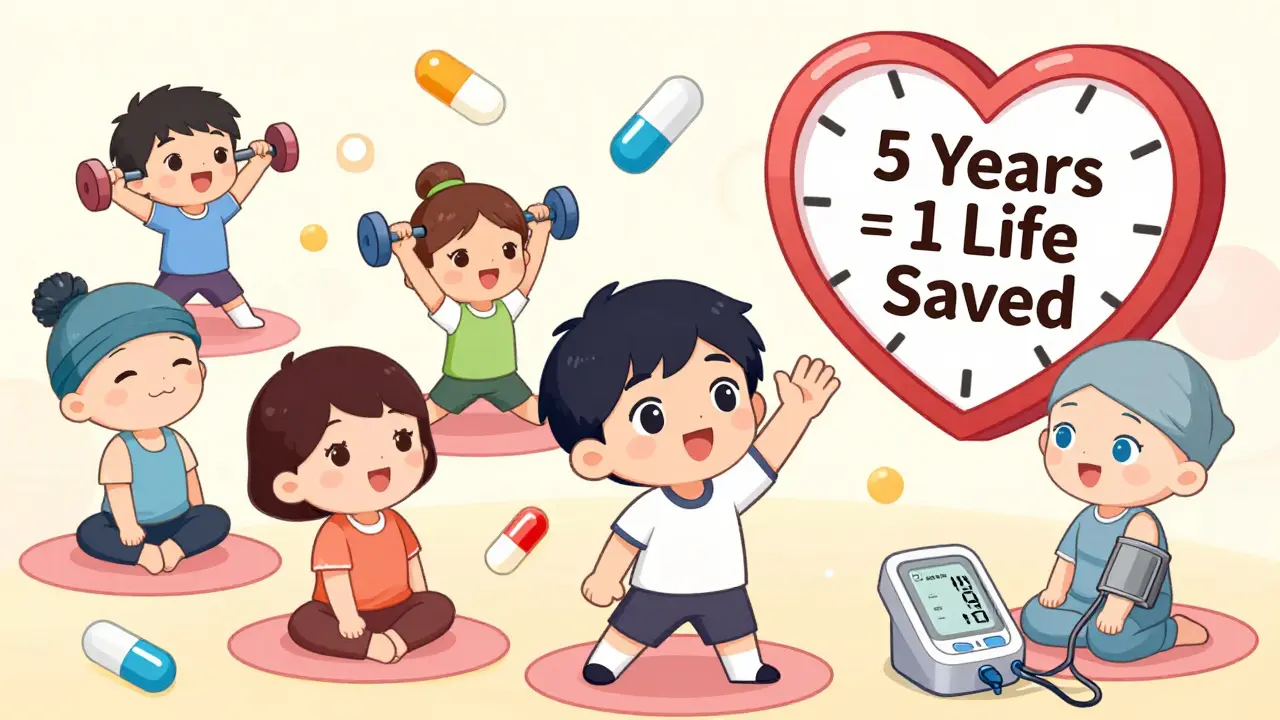
Stopping statins because of side effects is one of the biggest mistakes people make. For every 25 high-risk people who stay on statins for five years, one major heart event is prevented. The risk of serious muscle damage (rhabdomyolysis) is less than 1 in 1,000. That’s far lower than the risk of having a stroke or heart attack if your cholesterol stays high. Health systems like Kaiser Permanente have cut statin discontinuation rates in half by using structured protocols: systematic dose changes, switching, and patient education. You don’t need to be a statistic. You can be one of the people who finds a way to stay on therapy and stay healthy.What’s Next for Statin Therapy
New tools are emerging. Genetic testing for the SLCO1B1 gene can identify people at higher risk for muscle problems with simvastatin. But it’s not widely used yet-it’s expensive and not covered by most insurers. Digital apps that track symptoms and cholesterol levels are helping patients stick with treatment. One study found users of these apps were 23% more likely to keep taking their meds after a year. The American College of Cardiology is updating its guidelines in early 2024 to make statin rechallenge-the process of trying statins again after stopping-a standard first step, not a last resort. That means doctors will be trained to help you stay on therapy, not just replace it.Final Thought: You Have Options
Statin side effects are frustrating, but they’re rarely a dead end. Most people who think they can’t take statins can-with the right adjustments. Dose changes, switching statins, and checking for other causes work for the vast majority. You don’t need to choose between heart health and feeling well. You can have both.Can I take statins every other day instead of daily?
Yes, for certain statins like atorvastatin and rosuvastatin, intermittent dosing (every other day or three times a week) can be just as effective for lowering LDL cholesterol while reducing side effects. These statins have long half-lives, meaning they stay active in your body for up to 19-30 hours. Starting with a lower dose every other day and slowly increasing frequency based on tolerance is a common, evidence-backed strategy.
Which statin has the least side effects?
Rosuvastatin and pravastatin generally have the best tolerability profiles. They’re less likely to cause muscle pain because they’re not broken down by the CYP3A4 liver enzyme, which is involved in many drug interactions. Simvastatin and lovastatin are more likely to cause side effects, especially at higher doses. Switching from one of these to rosuvastatin or pravastatin resolves symptoms in about 75% of cases.
Does CoQ10 help with statin muscle pain?
Some people report feeling better after taking CoQ10 supplements, and surveys suggest around 58% of users notice improvement. But clinical trials haven’t proven it works consistently. The Mayo Clinic and major guidelines don’t recommend it as a standard treatment. It’s safe for most people, but don’t rely on it alone-focus on dose adjustments or switching statins first.
How long should I stop statins before trying again?
Most experts recommend a minimum two-week break to see if muscle symptoms resolve. If symptoms disappear during this time, it suggests the statin was the trigger. After the break, restart with a lower dose or less frequent schedule. If symptoms return quickly, your doctor may suggest switching to a different statin instead of rechallenging.
What if I still can’t tolerate any statin?
If you truly can’t take any statin, ezetimibe is the first-line alternative-it lowers LDL by 20-25% with minimal side effects. For higher-risk patients, PCSK9 inhibitors (injectables) can reduce LDL by 50-70%, but they’re expensive and require insurance approval. Lifestyle changes-diet, exercise, and weight control-are also essential. Never stop treatment entirely; uncontrolled cholesterol increases your risk of heart attack and stroke.
12 Comments
Evan Smith
So let me get this straight-you’re telling me my aching legs are just my brain playing tricks on me? Like, I paid $200 for a gym membership and now my body’s mad at me for trying to be healthy? Classic.
Joanna Brancewicz
Myalgia is often misattributed. The nocebo effect is robust in statin non-adherence cohorts. Confirmatory biomarkers-CK, TSH, 25(OH)D-are essential before discontinuation.
Lois Li
I switched from simvastatin to pravastatin after my knees started acting up and honestly? Life changed. I didn’t even realize how much pain I was living with until it was gone. Took me six months to get my doctor to listen, but it was worth it.
Ken Porter
Why are we letting Big Pharma dictate how we take medicine? Just take the damn pill or don’t. Stop overthinking it.
swati Thounaojam
CoQ10 helped me a lot. I dont know if its science or placebo but i feel better.
Luke Crump
What if the real problem isn’t the statin… but the entire capitalist healthcare system that makes us believe we need a pill for every ache? We’ve been trained to fear our own bodies. The statin is just the symptom.
Manish Kumar
You know, I’ve been thinking about this for a while. The body doesn’t just randomly start hurting because of a pill. There’s a whole ecosystem at play-stress, sleep, gut health, even the air we breathe in cities. Statins might be the scapegoat, but the real issue is how disconnected we are from our natural rhythms. I started walking daily, cut out processed sugar, and my muscle pain faded. Not because I changed meds, but because I stopped treating my body like a machine that needs fixing instead of nurturing.
Aubrey Mallory
Stop calling it a "nocebo effect" like it’s not real pain. People are suffering. If your doctor dismisses your symptoms as "in your head," find a new doctor. End of story.
Dave Old-Wolf
I tried the every-other-day thing with rosuvastatin. Worked like a charm. My cholesterol stayed down, and I stopped feeling like I’d been run over by a truck every morning. Just wish my doctor had suggested it sooner.
Prakash Sharma
Why do Americans always need a pill? In India, we use turmeric, garlic, and exercise. No fancy drugs. Just real food and movement. This whole statin thing is overkill.
Donny Airlangga
My mom was on simvastatin for years, had constant leg cramps. Switched to 10mg rosuvastatin twice a week-zero pain, LDL down to 80. She’s 74 and still hikes on weekends. It’s not about giving up. It’s about adjusting.
Molly Silvernale
Statins… the modern-day crucifixion of the willing-chained to a chemical cross, whispering prayers to the altar of LDL… while the body screams in muscle-fiber tongues only the brave dare translate. Is it the drug? Or is it the silence we’ve been taught to keep? I took CoQ10… and for a moment, I remembered what it felt like to move without apology.