Dealing with unwanted facial or body hair can feel like a losing battle if you have Polycystic Ovary Syndrome (PCOS). You are not alone; roughly 70% to 80% of women with PCOS experience Hirsutism is excessive terminal hair growth in androgen-dependent areas such as the face, chest, and back. While shaving offers temporary relief, it does not address the root cause: excess androgens. This guide breaks down how antiandrogens work, who should consider them, and what realistic results look like when combined with other treatments.
Key Takeaways
- Antiandrogens are secondary treatments for PCOS-related hirsutism, typically used after oral contraceptives fail or are contraindicated.
- Spironolactone and finasteride are the most common oral options, requiring strict contraception due to teratogenic risks.
- Visible improvement usually takes 6 to 12 months of consistent use, with maximum benefits seen at 18 to 24 months.
- Combination therapy (oral meds + topical eflornithine + laser) often yields better results than any single method alone.
- Cost and side effects are significant factors; generic spironolactone is affordable, while topical creams and lasers can be expensive.
Understanding the Mechanism: How Antiandrogens Work
To understand why these medications help, you need to grasp the biology behind PCOS hair growth. In PCOS, ovaries produce higher levels of androgens (like testosterone). These hormones bind to receptors in hair follicles, stimulating thicker, darker hair growth. Antiandrogens are pharmacological agents that mitigate hyperandrogenism by blocking androgen receptors or inhibiting androgen synthesis.
There are two main ways these drugs operate. First, they block the receptor so the hormone cannot attach. Second, they inhibit an enzyme called 5-alpha-reductase, which converts testosterone into dihydrotestosterone (DHT), a more potent form of the hormone. By reducing DHT production or blocking its action, the signal to grow coarse hair is weakened. It is crucial to note that these drugs do not remove existing hair; they slow new growth and may eventually thin existing hairs over time.
First-Line vs. Second-Line Treatments
You might wonder why doctors don't start you on antiandrogens immediately. According to the 2023 International Evidence-based Guideline for PCOS, combined oral contraceptive pills (COCPs) remain the first-line therapy. Why? Because COCPs address multiple symptoms of PCOS simultaneously, including irregular periods and acne, while also lowering androgen levels.
However, about 25% of patients do not respond adequately to COCPs within six months, or they cannot tolerate them due to side effects like nausea or blood clot risks. This is where antiandrogens step in. A 2023 meta-analysis from Monash University confirmed that antiandrogens are effective but serve best as secondary options. If you have been on birth control for six months with no change in your Ferriman-Gallwey score (a clinical measure of hairiness), your doctor might suggest adding an antiandrogen.
Common Antiandrogen Medications and Dosages
Not all antiandrogens are created equal. Here is a breakdown of the primary options available today:
| Medication | Mechanism | Typical Dose | Key Side Effects | Contraception Requirement |
|---|---|---|---|---|
| Spironolactone | Blocks androgen receptors & inhibits 5-alpha-reductase | 50-200 mg/day | Dizziness, menstrual irregularities, hyperkalemia | Two forms required |
| Finasteride | Inhibits 5-alpha-reductase type II | 2.5-5 mg/day | Fatigue, decreased libido, potential sexual side effects | Two forms required (Category X) |
| Eflornithine Cream | Inhibits ornithine decarboxylase (topical) | Apply twice daily | Local skin irritation | Recommended |
Spironolactone is a potassium-sparing diuretic that acts as a competitive inhibitor of the androgen receptor. It is widely used because it is inexpensive and has a long safety track record. Doctors usually start at a low dose (25-50 mg) and titrate up over several months to minimize dizziness. Finasteride, originally developed for male pattern baldness, is less commonly used in women but can be effective for those who do not respond to spironolactone. Both require reliable contraception because they pose risks to a developing fetus.
Setting Realistic Expectations: The Timeline
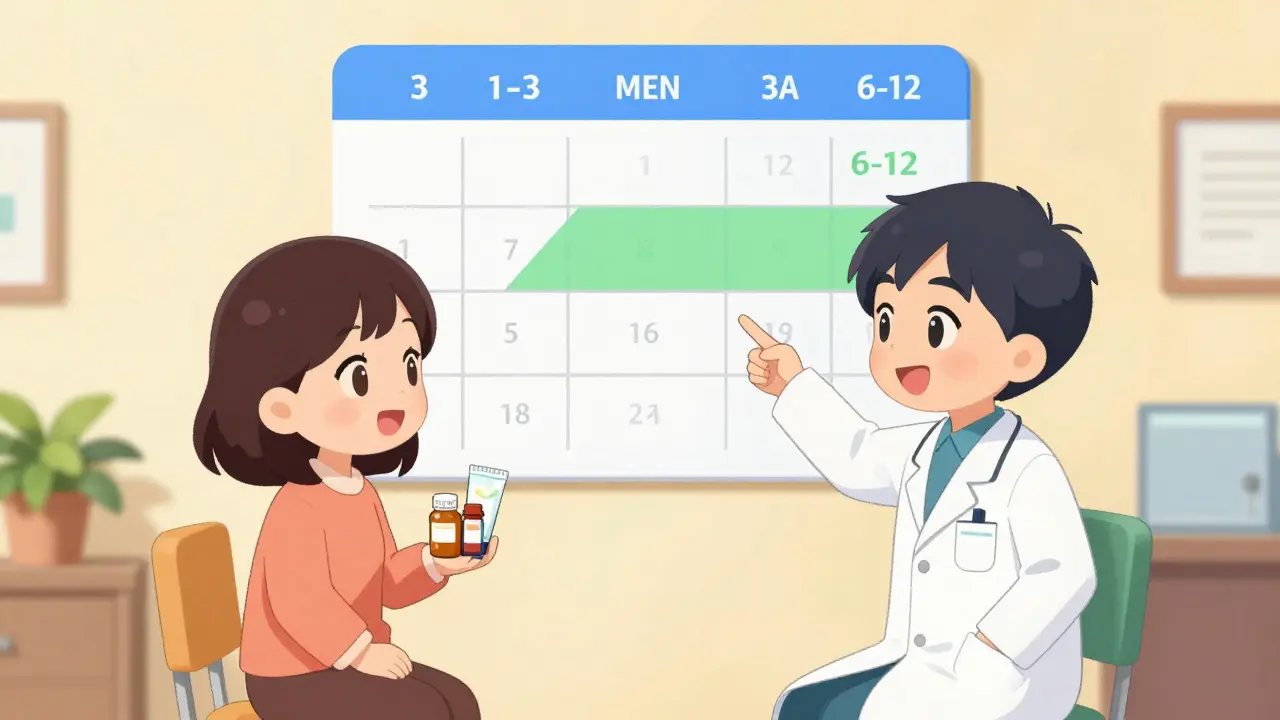
The biggest frustration for many patients is the speed of results. Unlike laser hair removal, which shows changes in weeks, antiandrogens work slowly. Hair growth cycles take time, and you must wait for existing hairs to fall out before new, thinner hairs emerge.
- Months 1-3: Minimal visible change. Focus on consistency.
- Months 4-6: Early signs of reduced hair density may appear. Some patients notice less regrowth after shaving.
- Months 6-12: Significant improvement in hair coarseness and density. This is when most patients see meaningful results.
- Months 18-24: Maximum benefit is typically reached here.
If you stop taking the medication, hair growth patterns will gradually return to their previous state within 6 to 12 months. Therefore, this is often a long-term management strategy rather than a one-time cure.
Combining Therapies for Better Outcomes
Relying solely on oral medication may not be enough for severe cases. Research suggests that combination therapy yields superior results. For instance, using eflornithine hydrochloride cream (Vaniqa) alongside oral antiandrogens can enhance hair reduction. Eflornithine works locally on the skin to slow hair growth without systemic side effects.
Laser hair removal is another powerful adjunct. A study noted that combining eflornithine with laser treatment resulted in 35% greater hair reduction than laser alone. For many women, the ideal approach involves a "triple threat": oral antiandrogens to lower hormonal drive, topical cream to slow local growth, and periodic laser sessions to destroy remaining follicles. This multi-modal approach addresses the problem from different angles, increasing the likelihood of success.
Side Effects and Safety Considerations
No medication is without risk. Spironolactone, for example, affects potassium levels. Patients with kidney issues or those taking ACE inhibitors need careful monitoring for hyperkalemia (high potassium). Regular blood tests are standard practice when starting this drug. Finasteride carries a black box warning regarding persistent sexual side effects, though this is rare in women. The most common complaint across patient communities is the slow onset of action, which can lead to discontinuation before benefits are realized.
Strict contraception is non-negotiable. The FDA classifies finasteride as Pregnancy Category X, meaning it should not be used during pregnancy. Spironolactone is Category B, but guidelines still recommend dual contraception methods to be safe. Missing pills or relying on a single method increases the risk of unintended pregnancy while on these drugs.
Cost and Accessibility
Financial barriers often dictate treatment choices. Generic spironolactone is affordable, with average U.S. retail prices around $45 for a month's supply. However, brand-name alternatives or specialized dermatology visits can add up. Eflornithine cream is significantly more expensive, often exceeding $200 per month without insurance coverage. Laser hair removal is costly upfront, but some clinics offer package deals. When discussing treatment with your provider, ask about generic options and insurance pre-authorizations to keep costs manageable.
When to See a Specialist
If you have moderate-to-severe hirsutism, working with an endocrinologist or a reproductive endocrinologist is advisable. They can evaluate your specific androgen profile and rule out other causes like congenital adrenal hyperplasia or tumors. Primary care providers can manage mild cases, but complex scenarios benefit from specialist input. Keep a log of your hair growth changes and side effects to share during appointments; this data helps tailor your treatment plan effectively.
Frequently Asked Questions
Do antiandrogens permanently remove hair?
No, antiandrogens do not permanently remove hair. They reduce the thickness and rate of growth. Once you stop the medication, hair growth patterns typically revert to baseline within a year. For permanent reduction, laser or electrolysis is required.
Can I take spironolactone if I am not on birth control?
Generally, no. Because spironolactone can affect fetal development, doctors require patients to use two forms of contraception while taking it. If you are not using hormonal birth control, you must ensure reliable non-hormonal methods are in place.
How long until I see results from antiandrogens?
Most patients notice initial changes after 6 months, with significant improvement between 6 and 12 months. Maximum benefits are usually seen at 18 to 24 months. Patience is key, as stopping early often leads to disappointment.
Is eflornithine cream safer than oral antiandrogens?
Yes, eflornithine is topical and has minimal systemic absorption, making it safer for those concerned about side effects. However, it only works where applied and is less effective for large areas like the back compared to oral medications.
What is the Ferriman-Gallwey score?
It is a clinical scale used to measure the severity of hirsutism. Doctors assess hair growth in nine body areas, assigning a score from 0 to 4 for each. Higher total scores indicate more severe hair growth, helping track treatment progress objectively.