Menopause Treatment Risk Assessment
Personalized Hormone Therapy Assessment
This tool helps you understand your individual risk and benefit profile for hormone therapy based on your unique situation.
Your Personalized Assessment
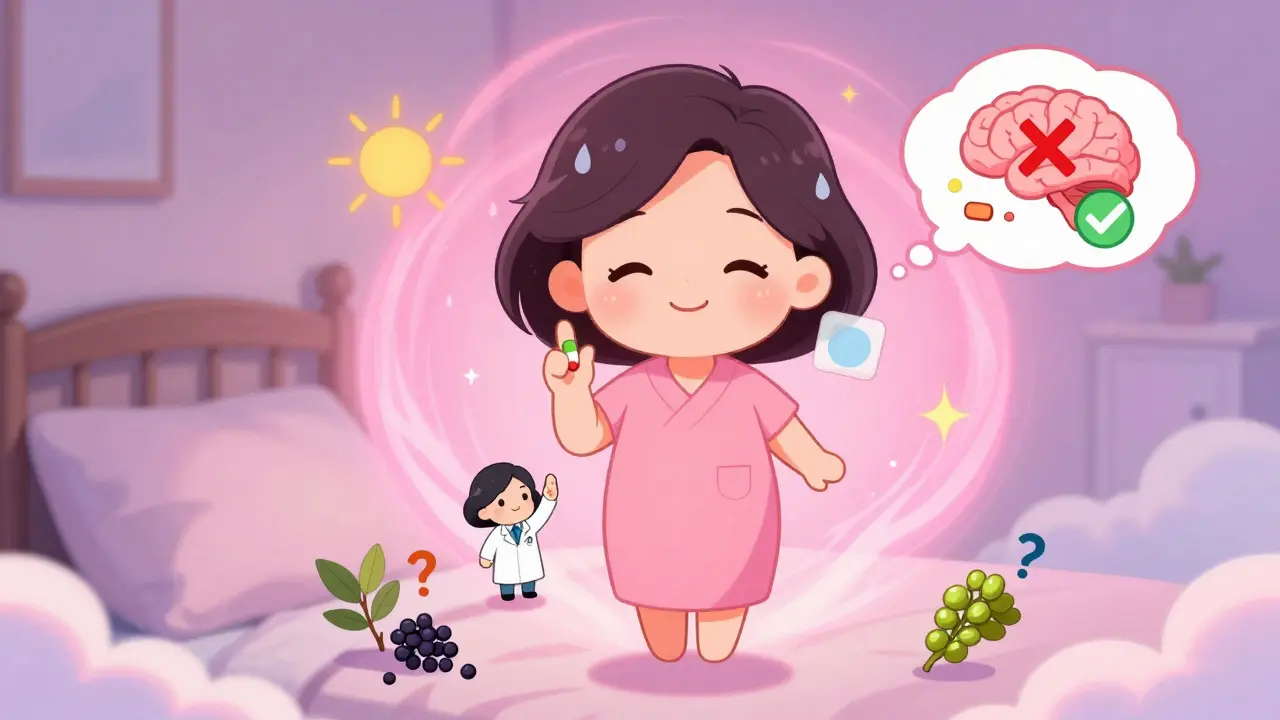
When menopause hits, your body doesn’t just stop producing estrogen-it throws a curveball at your whole system. Hot flashes, night sweats, dry skin, mood swings, and trouble sleeping aren’t just inconvenient; they can make daily life feel like a chore. That’s why many women turn to hormone therapy. But here’s the thing: hormone replacement therapy isn’t a one-size-fits-all fix. The side effects change depending on your age, health history, and even how you take the medicine. And if you’re not clear on what’s normal versus what’s dangerous, you could end up making a choice that does more harm than good.
What Hormone Therapy Actually Does
Hormone replacement therapy (HRT) replaces the estrogen (and sometimes progesterone) your body stops making after menopause. It’s not meant to slow aging. It’s meant to relieve symptoms that mess with your sleep, mood, and sex life. Estrogen-only therapy is usually for women who’ve had a hysterectomy. If you still have a uterus, you’ll need a combo of estrogen and progestin to protect against uterine cancer. That’s not optional-it’s medical fact.
There are different ways to get these hormones. Pills are common, but patches, gels, sprays, and vaginal rings are rising fast. Why? Because how you take the medicine changes your risk. Oral estrogen goes through your liver first, which can spike your chances of blood clots. Patches and gels go straight into your bloodstream. That’s why, according to a 2022 BJOG study, switching from pills to patches cuts gastrointestinal side effects by 60%.
The Real Risks You Can’t Ignore
The big fear around HRT? Cancer, heart attacks, strokes. And yes, those risks are real-but only for some women. The Women’s Health Initiative study found that after five years of combined estrogen-progestin therapy, the absolute risk of breast cancer went from 30 to 38 cases per 10,000 women. That sounds scary, but it’s a 26% increase from a very low baseline. For stroke, it went from 21 to 29 cases per 10,000. Again, a real jump, but still rare.
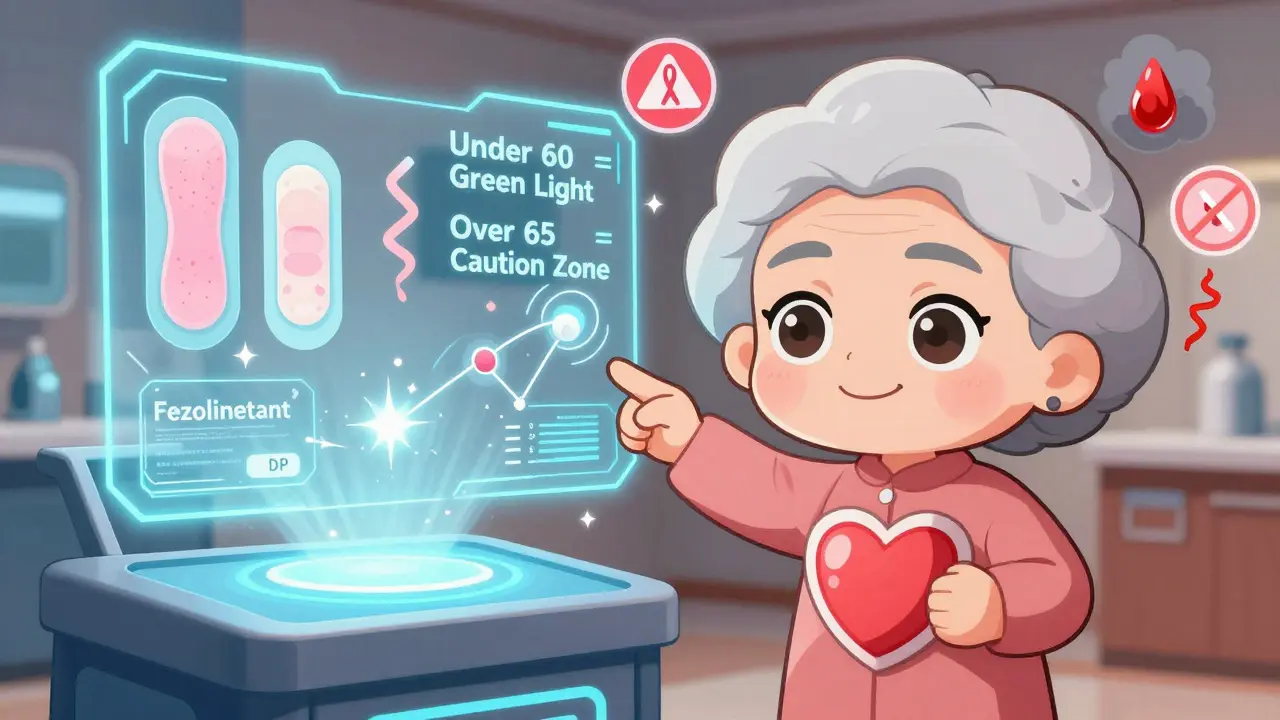
Here’s what you need to know: Timing matters more than anything. If you start HRT before age 60 or within 10 years of your last period, the benefits often outweigh the risks. But if you wait until you’re 65 or later, your risk of heart problems jumps 24%. The same goes for dementia. Women over 65 on HRT have more than double the risk of memory loss, according to the Women’s Health Initiative Memory Study.
And don’t forget blood clots. Oral estrogen can raise your risk of pulmonary embolism by 113%. That’s why doctors now push transdermal options-patches and gels-especially if you have a history of clotting, high blood pressure, or are overweight.
Side Effects You Might Experience (And When to Worry)
Not every woman gets side effects. But if you do, they usually show up in the first few months. Here’s what’s common:
- Vaginal bleeding: Happens in 30-50% of women in the first 3-6 months. If it keeps going past six months, or starts after you’ve been stable for a while, call your doctor.
- Breast tenderness: Around 20-40% of users feel this. It usually fades after a few weeks.
- Headaches: Affects 10-25%. If they’re new or worse than usual, your dose might be too high.
- Bloating or fluid retention: Happens in 15-25%. If your ankles swell or you gain weight fast, talk to your provider about switching to a patch.
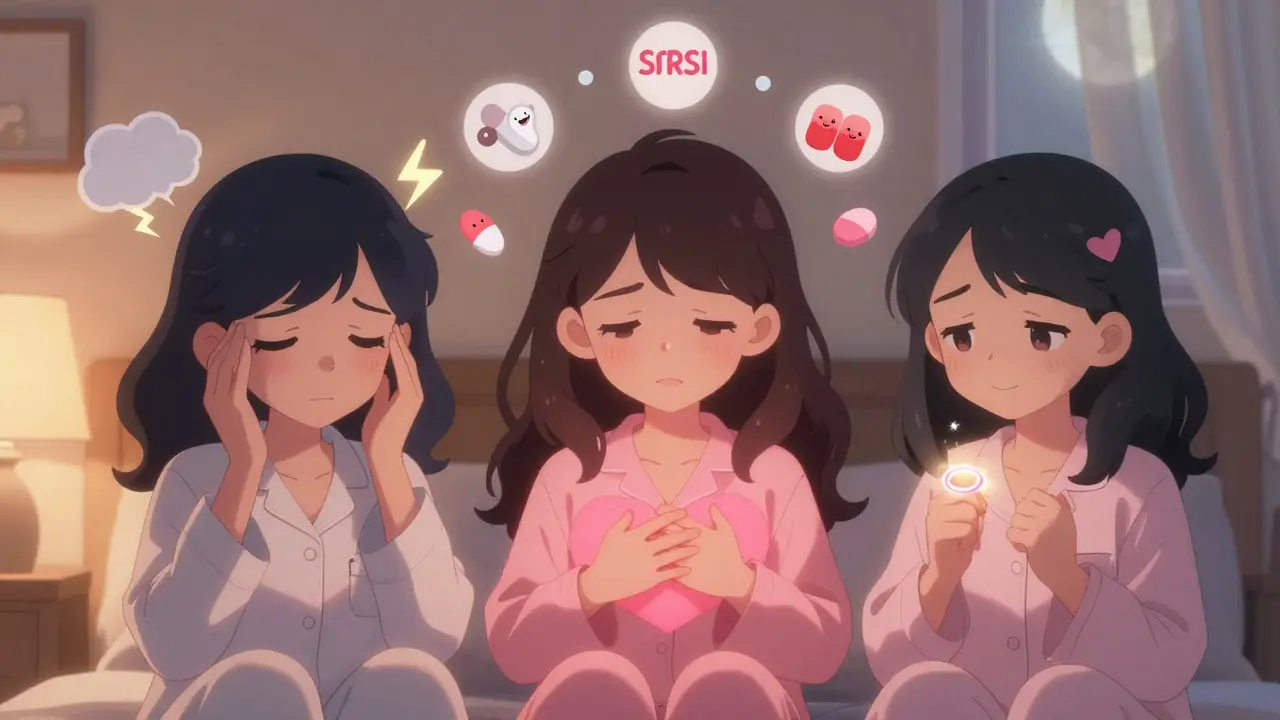
- Mood changes: Some women feel more anxious or depressed. Others feel better. It varies. If your mood tanks, don’t just tough it out-ask about lowering your dose or trying SSRIs instead.
The FDA and NHS both say: Give it at least three months. Most side effects fade. But if you’re having severe symptoms-chest pain, sudden vision loss, trouble breathing, or heavy bleeding-you need medical help now. These aren’t normal side effects. They’re red flags.
What If HRT Doesn’t Work-or Feels Too Risky?
You don’t have to stick with hormones. There are real alternatives that work for many women.
- SSRIs: Medications like escitalopram or paroxetine (not for depression, just for hot flashes) reduce hot flashes by 50-60% in 60% of users. That’s as good as estrogen for some.
- Vaginal moisturizers: Over-the-counter products like Replens or Hyaluronic acid gels help with dryness and pain during sex. A 2022 survey found 45% of menopausal women use these regularly.
- DHEA vaginal inserts: Approved by the FDA as Intrarosa, this tiny insert improves sexual pain in 70% of users with almost no systemic absorption. No risk to your breasts or blood vessels.
- Gabapentin and clonidine: These aren’t hormones. Gabapentin cuts hot flashes by 45%. Clonidine by 46%. Both are used off-label but backed by solid data.
And what about herbal stuff? Black cohosh? Soy? Red clover? The truth: most haven’t been properly tested. Twelve randomized trials with over 1,800 women showed mixed results. Some feel better. Others don’t. And we don’t know if long-term use is safe. The FDA and ACOG both warn against relying on supplements.
How to Adjust Your Treatment
If side effects stick around, don’t quit. Change.
A 2021 study in the Menopause journal found that 68% of women got relief just by tweaking their dose. Maybe you’re on too much estrogen. Or maybe you need a different type of progestin. Your doctor might suggest:
- Lowering your estrogen dose (many women do fine on 0.3 mg or less)
- Switching from pills to patches (cuts liver strain and GI side effects)
- Trying a continuous-combined regimen instead of cyclic (reduces bleeding)
- Using vaginal estrogen only (for dryness, no systemic exposure)
And if you miss a pill? Don’t double up. The FDA says: Take it as soon as you remember. If it’s almost time for the next one, skip it. Double doses can trigger spotting or nausea.
What’s New in 2026?
The field is moving fast. A new drug called fezolinetant-a selective neurokinin 3 receptor antagonist-just got FDA approval in late 2024. It blocks the brain signal that triggers hot flashes. In trials, it cut moderate-to-severe hot flashes by over 50%. No hormones. No breast cancer risk. Just a daily pill.
And low-dose, localized treatments are becoming the gold standard. Vaginal estrogen rings that last 90 days. Transdermal gels with 50% less estrogen than old pills. Even new SERMs (selective estrogen receptor modulators) that target bones and brain tissue without touching breast or uterine cells.
The message from experts like Dr. JoAnn Manson and the North American Menopause Society is clear: It’s not about whether you take hormones. It’s about when, how, and why.
Final Thoughts: Personalization Is Everything
Menopause isn’t a disease. It’s a transition. And your treatment should match your life-not a brochure.
If you’re 52, healthy, and your hot flashes are wrecking your sleep? Hormones might be your best bet. If you’re 67, have high blood pressure, and a family history of breast cancer? There are safer, effective options.
Don’t let fear stop you. Don’t let inertia keep you on something that doesn’t feel right. Talk to your doctor. Ask about your personal risk. Ask about alternatives. Ask what’s new. Your body changed. Your treatment should too.
Is hormone therapy safe for women over 60?
For women over 60, or those who start hormone therapy more than 10 years after menopause, the risks generally outweigh the benefits. Studies show a 24% higher chance of heart events and a doubled risk of dementia. If you’re over 60 and still have severe symptoms, talk to your doctor about non-hormonal options like SSRIs, gabapentin, or vaginal estrogen-these offer relief with far less risk.
Can I take HRT if I’ve had breast cancer?
No. Hormone replacement therapy is not recommended for women with a history of breast cancer. Estrogen can stimulate certain types of breast tumors. Even low-dose or local estrogen (like vaginal creams) may carry risk. Instead, focus on non-hormonal treatments like SSRIs, vaginal moisturizers, or the FDA-approved drug fezolinetant for hot flashes.
Why do some women get bleeding on HRT?
Vaginal bleeding is common in the first 3-6 months of starting HRT, especially with combination therapy. It happens because the lining of the uterus is adjusting to the hormones. If bleeding continues past six months, becomes heavy, or starts after you’ve been stable for months, it could signal an issue like polyps, infection, or even endometrial changes. Always get it checked.
Are patches safer than pills?
Yes, for most women. Patches and gels deliver estrogen through the skin, bypassing the liver. This lowers the risk of blood clots, stroke, and liver strain. A 2022 study found transdermal estrogen cuts venous thromboembolism risk by 30-40% compared to oral pills. If you have a history of clots, obesity, or high blood pressure, patches are usually the better choice.
How long should I stay on HRT?
There’s no set time limit. Most women use it for 2-5 years to manage symptoms. But if your symptoms are severe and you’re under 60, many doctors will continue it longer-especially if you’re on the lowest effective dose. The key is regular check-ins: every 6-12 months, review your risks, symptoms, and whether you still need it. Don’t stay on longer than necessary.
14 Comments
Weston Potgieter
HRT is just Big Pharma's way of keeping women hooked on pills. Patches? Gels? Same crap, different packaging. I've seen women go from hot flashes to blood clots in six months. And don't get me started on SSRIs being pushed as 'alternatives'-they're just antidepressants repackaged. You think your doctor really cares? Nah. They get a kickback every time they write a script.
Pranay Roy
They're hiding the truth. Estrogen is a carcinogen. Period. The WHI study? Funded by pharmaceutical giants. The real data? Buried. I know a woman who got breast cancer after 18 months on HRT. They told her it was 'low risk.' Low risk? My cousin died. They're gaslighting us with stats. Patches? Still estrogen. Still poison.
Joe Prism
Menopause isn't a defect to be fixed. It's a biological pivot. The real question isn't whether to take hormones-it's whether society has stopped listening to women's bodies. We treat aging like a medical failure. Maybe the cure isn't more drugs. Maybe it's more dignity.
Bridget Verwey
Oh honey, if you're still on pills at 62 and think you're 'safe,' I've got a bridge to sell you. Patches. Vaginal estrogen. SSRIs. All of it. But please, for the love of god, stop pretending you're 'just taking a little something' like it's a vitamin. You're tweaking your endocrine system. That's not a lifestyle choice. It's a surgical intervention.
Andrew Poulin
Stop overcomplicating this. If you have hot flashes and sleep loss, take the lowest dose of transdermal estrogen. If you have a uterus, add progesterone. If you're over 60, skip it. Simple. No philosophy. No fearmongering. Just science. And if your doctor doesn't say this, find a new one.
Jeff Mirisola
I'm 58 and started HRT at 54. My mood, energy, and sleep improved so much I went back to hiking. I know people freak out about cancer risk-but the stats are tiny. I'd rather live five more years feeling like myself than 20 years dragging through fog. Not every woman needs hormones. But for some? It's life-changing.
Amina Aminkhuslen
Vaginal estrogen? That's just a loophole. They'll say 'local' means 'safe'-but estrogen gets absorbed. It's not magic. And black cohosh? Please. That stuff's been around since the 1800s and still no one knows how it works. If you're going to play with hormones, play with real science. Not herbal wishful thinking.
amber carrillo
I appreciate the clarity in this post. It's rare to see such balanced information presented without alarmism. The key takeaway: individualization. What works for one body may harm another. That’s why shared decision-making with a provider matters more than any blog or Reddit thread.
Tim Hnatko
I've been on a patch for 3 years. Only side effect? My skin gets a little itchy. I used to wake up drenched. Now I sleep. I didn't need to be a hero. I just needed relief. No drama. No guilt. Just a patch and better nights.
Aaron Pace
Fezolinetant is a GAME CHANGER 🚀 no hormones no breast cancer risk 😍 I started it last month and my hot flashes are GONE 💨 I'm telling all my friends 🤯 #menopausewin
Joey Pearson
You don’t have to suffer. There are options. Try the patch. Try gabapentin. Try the vaginal gel. Don’t wait until you’re miserable. Your body’s asking for help. Listen to it.
Vikas Verma
The pharmacokinetic profile of transdermal estrogen demonstrates superior bioavailability with reduced first-pass hepatic metabolism. Consequently, the incidence of venous thromboembolic events is significantly attenuated compared to oral formulations. Clinical guidelines now endorse this route as the preferred modality for high-risk cohorts.
Sean Callahan
i read this whole thing and im still confused like why do i have to take this if my sister just drank soy milk and said she was fine??? i mean like i dont even know what a progestin is?? can i just take a pill that says 'for menopause' at the store??
Ferdinand Aton
You say patches are safer? Then why do 70% of women on patches still get breast cancer? It's the estrogen. Not the delivery method. The whole HRT narrative is a distraction. What if we just stopped treating menopause like a disease? Maybe the real problem is that we're scared of aging.