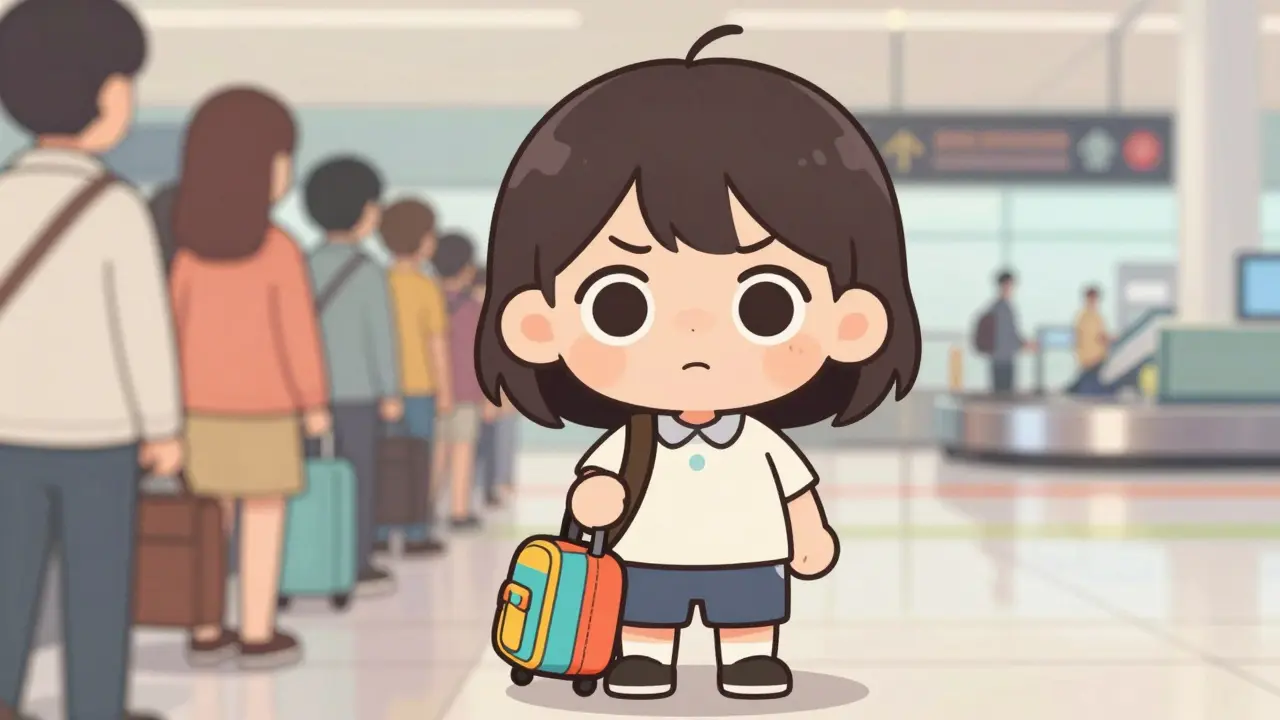
Imagine standing in the security line, your heart racing not because of the crowd, but because you realize your life-saving medication is buried at the bottom of a checked bag that’s currently sitting on a conveyor belt somewhere behind you. Or worse, you’re told to toss out your essential liquid medicine because it exceeds the standard limit. These aren’t just hypothetical nightmares; they are common stressors for millions of travelers. With approximately 15% of U.S. adults taking medications that require special handling during transit, getting this right isn’t just about convenience-it’s about survival and health continuity.
Packing medications for air travel involves navigating a complex web of security regulations, temperature controls, and international laws. The goal is simple: keep your medicine safe, accessible, and compliant so you can focus on your journey rather than your pharmacy kit. This guide breaks down the exact steps, rules, and pro-tips you need to fly safely with your prescriptions.
The Golden Rule: Carry-On Only
The single most important rule in traveling with medicine is never, ever pack essential medications in checked luggage. It sounds obvious, but it is the most frequent mistake travelers make. Checked bags are subjected to extreme conditions. According to Dr. David Cutler, a family medicine physician at Providence Saint John's Health Center, cargo holds can reach temperatures as low as -40°C (-40°F). For protein-based medications like insulin, this freezing cold causes irreversible crystallization, rendering the drug useless.
Beyond temperature, there is the risk of loss or delay. If your bag doesn’t make it to the gate, you are stranded without your treatment. Furthermore, if security needs to inspect your bag, they may open it and reseal it, potentially compromising the integrity of your packaging. Keeping your meds in your carry-on ensures you have physical control over them from the moment you leave home until you land.
Navigating TSA Liquid Rules and Security Screening
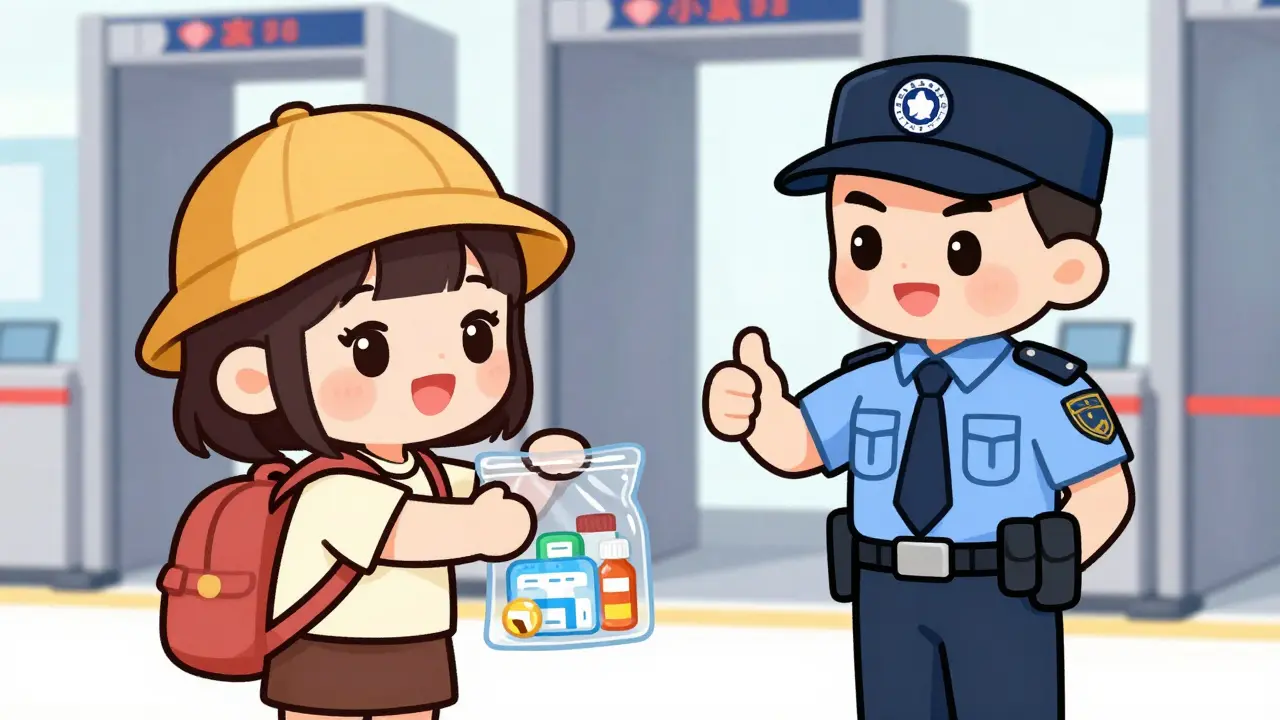
If you take pills, liquids, or injectables, the Transportation Security Administration (TSA) has specific exemptions for you. The standard "3-1-1" rule for liquids (containers no larger than 3.4 ounces or 100 mL) does not apply to medically necessary liquids. You can bring gels, creams, and liquid medications in quantities greater than 3.4 ounces.
However, there are conditions:
- Declaration is mandatory: You must declare these items to TSA officers at the checkpoint before screening begins. Do not hide them in your bag.
- No upper limit: There is no official maximum volume set by the TSA for medically necessary liquids, though the Federal Aviation Administration (FAA) notes that carrying more than 2,000 mL (67.6 ounces) may require special approval. For most travelers, this won't be an issue.
- Separate screening: Be prepared to remove these bottles from your bag. Officers may need to test them for explosives or other threats. This usually involves a small sample being swabbed or X-rayed separately.
Dr. Marcia Wyman, RPh, PharmD, BCPS at Cleveland Clinic, emphasizes that keeping prescription medications in their original containers is pharmacologically essential. Repackaging pills into generic organizers can introduce moisture and light exposure, which can degrade medication potency by up to 30% within 72 hours. Original pharmacy labels also serve as immediate proof of ownership and medical necessity, speeding up the screening process significantly.
Temperature Control for Sensitive Medications
For those relying on biologic medications, insulin, or certain antibiotics, temperature is everything. Many of these drugs require storage between 2-8°C (36-46°F). Exposing them to heat above 25°C (77°F) can cause them to lose approximately 5% of their potency per hour, according to the International Society of Travel Medicine.
To maintain this "cold chain" during travel:
- Use TSA-compliant coolers: Insulated bags designed for medical use are ideal. They should be able to hold ice packs securely.
- Frozen ice packs are allowed: Gel packs or ice packs are permitted in carry-ons if they are frozen solid at the time of screening. If they show signs of melting or slushiness, they may be subject to additional screening or rejected. Pre-freeze your packs for 24 hours before travel to ensure they last 12-18 hours.
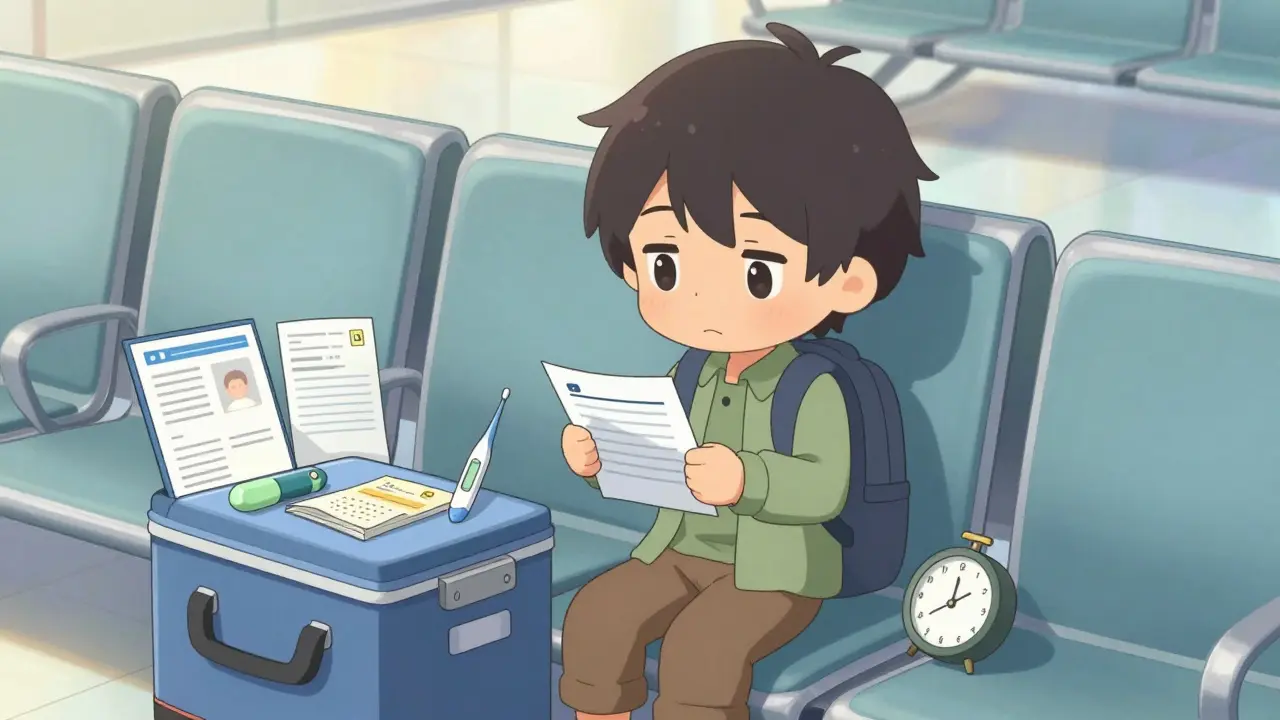
- Monitor the temperature: Consider using a digital thermometer with a probe that stays inside the cooler while the display remains outside. This lets you check the internal temp without opening the bag and letting warm air in.
United Airlines and other major carriers have begun installing in-flight refrigeration units on long-haul flights, but you cannot rely on this availability. Always bring your own cooling solution.
Documentation: Your Paper Shield
While TSA agents are trained to handle medical necessities, having proper documentation removes ambiguity and reduces anxiety. A 2023 survey by the National Business Travelers Association found that 63% of medication-related screening delays involved travelers who lacked proper identification of their meds.
You should prepare three key documents:
- Original Prescription Labels: As mentioned, keep meds in their original bottles. The label must show your name, the doctor's name, the pharmacy, and the dosage.
- A Physician’s Letter: Get a letter on official letterhead from your doctor. It should state your medical condition, the names of the medications, the dosages, and confirm that the medication is medically necessary for your trip. For children, include details about child-resistant packaging requirements to prevent accidental exposure.
- International Translation: If you are traveling abroad, especially to countries with strict drug laws, get your documentation translated. Services like the ATA Document Translation Network recommend starting this process 14 days before travel.
User experiences highlight the importance of this. One traveler reported that their Humira was initially flagged at LAX because they had transferred doses to a pill organizer. Had they kept the original packaging and brought a doctor’s note, the interaction would have been seamless.
Injectables, Sharps, and Needles
If you use syringes, needles, or auto-injectors (like EpiPens or insulin pens), you are allowed to bring them through security. However, safety protocols are strict.
All sharps must be accompanied by the medication they are intended for. You cannot carry loose needles without a corresponding medical device or supply. Additionally, you must have a puncture-proof sharps container for disposal. The CDC guidelines updated in February 2022 mandate that used needles be disposed of safely to prevent injury to cleaning crews or other passengers. Never throw used needles directly into the airplane trash bin unless instructed by crew members who have access to specialized disposal units.
When going through security, inform the officer that you have sharps. They will likely ask to see them visually. Keep them in a clear, accessible part of your bag to avoid digging around, which can raise suspicions.
International Regulations and Restricted Substances
Different countries have vastly different laws regarding what you can bring across their borders. What is legal in the UK or US might be a controlled substance elsewhere. For example, medications containing pseudoephedrine (common in cold medicines) require prior authorization in 43 countries, including Japan, South Korea, and the UAE. Japan limits supplies to a 72-hour quantity.
Before booking your flight, check the destination country’s embassy website or consult the U.S. Department of State’s Travel Advisory system. The European Medicines Agency generally permits 90-day supplies with documentation, whereas many Asian countries adhere to a stricter 30-day standard. Ignorance of these laws is not a defense; travelers have been detained for carrying common painkillers or ADHD medications that contain controlled stimulants.
Timing and Preparation Checklist
Preparation prevents panic. Here is a timeline to follow:
- 7 Days Before: Confirm your medication supply. Contact your pharmacy to ensure you have enough for the entire trip plus 3 extra days in case of delays.
- 3 Days Before: Pack your medications. Test your cooler and ice packs. Freeze gel packs now so they are solid for travel day.
- 1 Day Before: Gather all documentation (prescriptions, doctor’s letters, translations). Place them in an easily accessible folder.
- Travel Day: Arrive at the airport 2 hours early for domestic flights and 3 hours for international ones when carrying medications. This buffer allows for additional screening time without risking your flight.
Also, consider time zone changes. If you are crossing five or more time zones, the American Academy of Sleep Medicine recommends gradually shifting your medication schedule by 15-30 minutes daily for 3-5 days before travel to minimize jet lag effects on your routine.
Technology and Future Trends
The landscape of medical travel is evolving. The TSA partnered with MyMediTravel in June 2023 to introduce a digital medication passport verified through blockchain technology. As of March 2024, over 127,000 travelers have used this system, achieving a 99.2% security clearance rate. While not yet universal, adopting digital verification tools can add a layer of credibility to your medical documentation.
Additionally, airlines are responding to demand. United Airlines implemented in-flight medication refrigeration units on all 787 Dreamliners starting January 2024. The FAA is also considering new rules that would require airlines to provide temperature-controlled storage for medically necessary medications by 2026. Stay informed about these developments, as they may change how you pack in the near future.
Can I bring liquid medication over 3.4 ounces on a plane?
Yes. Medically necessary liquids are exempt from the standard 3.4-ounce limit. You must declare them to TSA officers at the checkpoint, and they may be subject to additional screening. There is no official upper limit for medically necessary quantities, though extremely large volumes may require prior coordination.
Do I need a doctor's note to fly with medication?
While not always legally required by the TSA for domestic flights, a doctor's letter is highly recommended. It speeds up screening, clarifies medical necessity, and is often mandatory for international travel or when carrying controlled substances. It should be on official letterhead and detail your condition and medications.
Can I pack my medication in checked luggage?
No. You should never pack essential medications in checked bags. Checked luggage is exposed to extreme temperatures that can destroy medication efficacy, and bags can be lost or delayed. Always keep your meds in your carry-on where you can monitor them.
How do I keep insulin cold on a plane?
Use a TSA-compliant insulated cooler bag with frozen gel packs. The ice packs must be completely frozen solid at security screening. Some airlines offer in-flight refrigeration, but you cannot rely on this. Monitor the temperature with a digital thermometer to ensure it stays between 2-8°C (36-46°F).
Are syringes and needles allowed in carry-on bags?
Yes, syringes, needles, and auto-injectors are allowed in carry-on bags if they are accompanied by the medication they are intended for. You must also carry a puncture-proof sharps container for safe disposal of used needles. Declare these items to TSA officers at the checkpoint.
11 Comments
Naresh Chandra
I really appreciate this detailed breakdown! It is so easy to panic at security, but knowing the rules helps a lot. I always forget to declare my liquids until it is too late. Thank you for sharing this information!
Cyburg Adeoye
This is an incredibly valuable resource for anyone managing chronic conditions while traveling! The emphasis on keeping medications in carry-on luggage is absolutely critical. We must ensure that our health continuity is prioritized above all else during transit. Let us spread this knowledge to help others navigate these complex regulations with confidence and ease!
Joseph Teichman
just keep em in your bag. dont check them. simple as that.
Grace Gayle McMullen
i totally forgot about the ice pack rule! i used to just throw them in a cooler without freezing them solid first. no wonder they gave me such a hard time last time. thanks for the tip on pre-freezing for 24 hours. gonna try that next trip.
Nivetha Narayanan
omg yes!! i had the worst experience at lax because i didnt have my doctor's note ready. super stressful! everyone needs to read this before they fly. its so important to be prepared so you dont get stuck in line forever. lets stay safe out there friends!
Frank Arlyss
Why do you trust TSA anyway? They lose bags all the time. I keep my meds in my pocket just in case. Better safe than sorry.
Tim Reynolds
The blockchain passport is a tracking mechanism. Do not use it. They want your data. Keep paper records only. Stay vigilant.
Groman Neta
This article is overly simplistic and ignores the nuanced realities of international pharmaceutical law. Most travelers fail to understand that possession alone can lead to detention regardless of documentation quality.
Ryan Jones
its all a scam to make you buy more stuff. the coolers are overpriced garbage. just wrap it in a towel like my grandpa did. nobody checks anyway unless they want to hassle you.
Lisa Russo
you dont need a doctor note for domestic flights. stop making people paranoid. its just pills. if you are worried then maybe you shouldnt travel.
Gareth Tyler
interesting points. i usually just pack light so i dont worry much. but good to know about the temp limits for insulin.