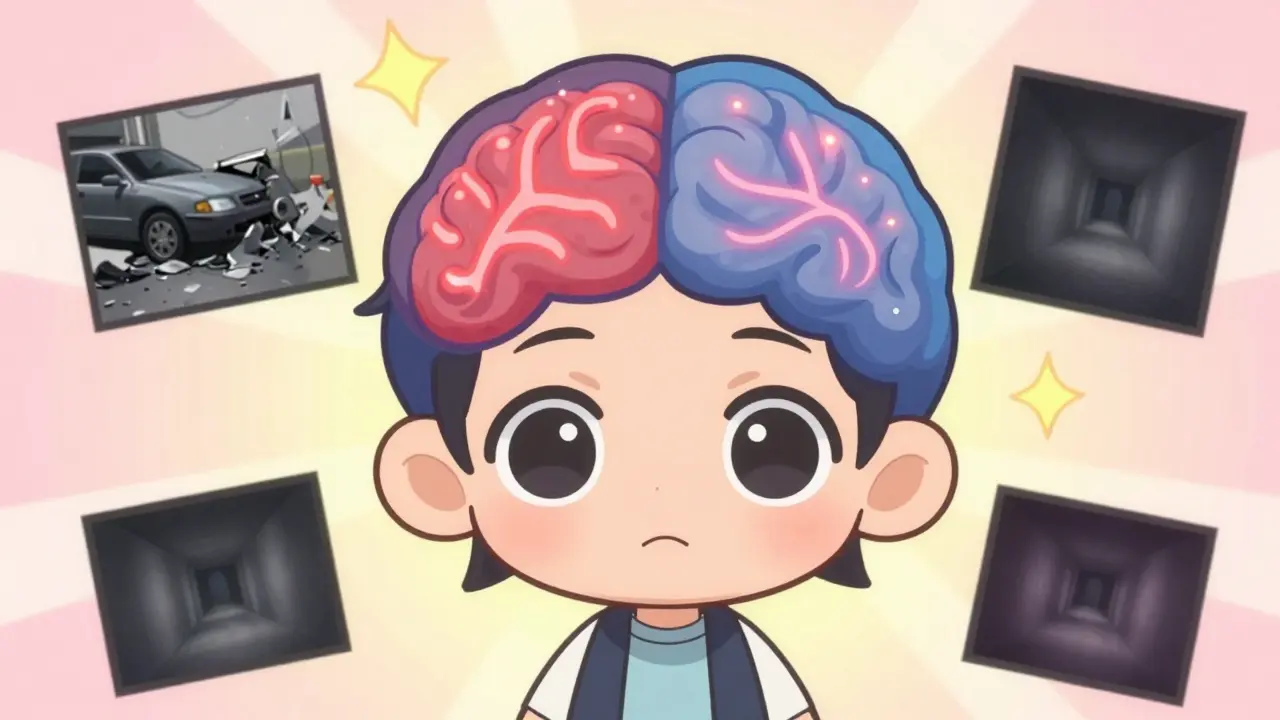
When someone survives a car crash, combat, assault, or any deeply frightening event, their brain doesn’t always reset. For about 1 in 3 people who go through trauma, the mind gets stuck. Flashbacks return without warning. Sleep becomes impossible. They avoid places, people, even thoughts that remind them of what happened. This isn’t weakness. It’s Post-Traumatic Stress Disorder - a real, measurable condition rooted in how the brain processes danger.
What PTSD Actually Does to Your Brain
PTSD isn’t just "feeling stressed." It’s a neurological shift. The amygdala - your brain’s alarm system - stays stuck on high alert. The prefrontal cortex, which normally calms that alarm, gets quieter. And the hippocampus, responsible for putting memories in context, starts to misfire. That’s why a car backfiring feels like gunfire. Why a hug triggers panic instead of comfort.
The DSM-5-TR (2022) defines PTSD by four clear clusters: intrusive memories (flashbacks, nightmares), avoiding reminders of the trauma, negative changes in thinking and mood (guilt, numbness, detachment), and heightened arousal (irritability, sleep trouble, being jumpy). These symptoms must last more than a month and interfere with daily life - work, relationships, even eating.
It’s not rare. In the U.S., about 3.6% of adults have PTSD in any given year. Among veterans, first responders, and survivors of violence, the numbers climb higher. And while it’s often linked to war, most cases come from sexual assault, domestic abuse, or serious accidents.
Two Paths to Healing: Therapy and Medication
There are two main ways to treat PTSD: talking therapies that help your brain reprocess the trauma, and medications that ease the symptoms so you can engage in that therapy. Neither works for everyone. But together, they can change lives.
First-line treatments are trauma-focused psychotherapies - especially Cognitive Processing Therapy (CPT) and Prolonged Exposure (PE). These aren’t just "talking it out." They’re structured, evidence-based programs. In CPT, you learn to challenge distorted beliefs like "It was my fault" or "The world is completely dangerous." In PE, you gradually face memories and situations you’ve been avoiding - not to relive the pain, but to show your brain that you’re safe now.
Studies show CPT and PE lead to full remission in 60-70% of patients after 8-12 weekly sessions. That’s higher than medication alone. And the effects last. Unlike pills, therapy rewires your brain’s response to trauma.
The Medication Reality: Only Two FDA-Approved Options
Despite how common PTSD is, the U.S. Food and Drug Administration has only approved two medications specifically for it: sertraline (Zoloft) and paroxetine (Paxil). Both are SSRIs - selective serotonin reuptake inhibitors. They were approved in 1998 and 2001, respectively. That’s over two decades ago.
How well do they work? About half of people on sertraline see a 50% or greater drop in symptoms. Paroxetine does slightly better - around 60% response rate. But here’s the catch: only 20-30% of people achieve complete remission. Most still struggle with some symptoms.
And side effects? They’re real. Nausea, insomnia, weight gain, and - very commonly - sexual dysfunction. On Reddit’s r/ptsd community, 42% of users who tried SSRIs stopped because of reduced libido or inability to reach orgasm. Emotional blunting is another complaint: feeling "numb," like the meds took away the pain but also the joy.

What About Other Medications?
Doctors often prescribe other drugs off-label because SSRIs don’t work for everyone.
Venlafaxine (Effexor XR), an SNRI, is one of the most common. It’s not FDA-approved for PTSD, but multiple studies show it works as well as sertraline. Mirtazapine and amitriptyline show modest benefits, especially for sleep and nightmares. But the evidence is weaker.
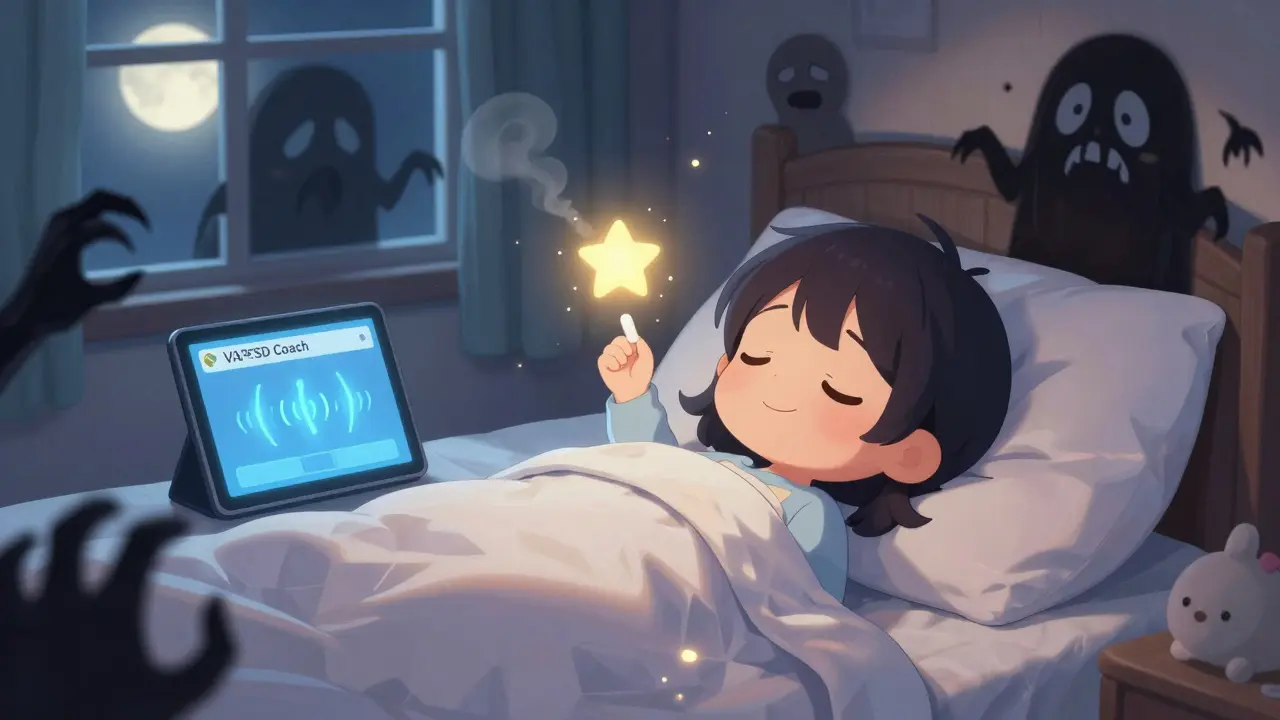
Then there’s prazosin. This is a blood pressure drug - but it’s become a quiet hero for trauma survivors. It specifically targets nightmares. Veterans in VA studies report a 50% drop in nightmare frequency within four weeks. One user wrote: "I slept through the night for the first time in 12 years." It’s cheap, non-addictive, and used nightly at low doses (1-15 mg).
Antipsychotics like risperidone and quetiapine are sometimes added for severe agitation or hallucinations. But their effect is small, and side effects (weight gain, drowsiness, metabolic changes) make them risky for long-term use. The VA’s own guidelines say evidence is inconsistent.
Therapy vs. Medication: The Numbers Don’t Lie
Let’s compare them side by side:
| Factor | Trauma-Focused Therapy (CPT/PE) | SSRIs (Sertraline/Paroxetine) |
|---|---|---|
| Time to See Results | 8-12 weeks | 4-6 weeks |
| Remission Rate | 60-70% | 50-60% |
| Side Effects | Mild (temporary emotional discomfort) | Common (nausea, sexual dysfunction, emotional blunting) |
| Long-Term Effect | Usually lasts after treatment ends | Relapse rate: 55% within 12 months of stopping |
| Cost (U.S.) | $100-$200 per session | $4-$10 per month (generic) |
Therapy takes longer to start working. But it teaches you skills that stick. Medication helps you get to a place where therapy is possible - but if you stop, symptoms often return.
Combining Them: The Best of Both Worlds?
A 2021 JAMA Psychiatry study found something powerful: combining sertraline with Prolonged Exposure led to a 72% response rate. That’s higher than either treatment alone. For people with severe hyperarousal - constant panic, rage, insomnia - medication can lower the noise enough to make therapy work.
That’s why experts like Dr. Murray Stein from UC San Diego push for combined treatment from the start. But others, like former VA director Dr. Matthew Friedman, warn: "Medications treat symptoms but don’t process trauma." If you’re on pills and avoid therapy, you’re masking the problem, not healing it.
The UK’s NICE guidelines are strict: only use medication if trauma-focused therapy is refused, impossible, or has failed. The U.S. VA follows a stepped-care model - therapy first, meds only if needed. Private practices? They start meds in 65% of cases. That’s a big difference in philosophy.
Who Should Consider Medication?
Medication isn’t the enemy. It’s a tool. Here’s when it makes sense:
- You’re too overwhelmed to even start therapy - the nightmares, panic, and hypervigilance are paralyzing.
- You have severe sleep disruption, and prazosin gives you your first good night’s sleep in years.
- You’ve tried therapy and made progress, but still have lingering symptoms.
- You’re in a crisis - suicidal thoughts, self-harm, or inability to function.
But if you’re stable enough to attend weekly sessions? Start with therapy. Medication can support it - but not replace it.
The Future: What’s Coming Next
PTSD treatment is changing fast. In 2023, the FDA accepted a new application for brexpiprazole - an antipsychotic meant to be added to SSRIs. Early trials showed a 35% symptom reduction when combined, compared to 22% with placebo.
But the biggest breakthrough? MDMA-assisted therapy. After decades of research, phase III trials showed 67% of participants no longer met PTSD criteria 18 weeks after just three sessions with MDMA and therapy. The FDA granted it Breakthrough Therapy status in 2017. It’s likely to be approved by 2025.
And it’s not just drugs. Digital tools like the VA’s PTSD Coach app help people track symptoms, practice breathing exercises, and access coping strategies between sessions. One 2023 study found people who used the app alongside therapy were 27% more likely to stick with treatment.
Researchers are even looking at genetics. A 2023 study identified 95 genetic variants linked to how well someone responds to SSRIs. In the future, a simple blood test might tell you whether sertraline is likely to help - or if you should skip it entirely.
What to Do If You or Someone You Love Has PTSD
Start with a professional. Not a friend. Not Google. A psychiatrist or trauma-informed therapist. Ask: "Do you use trauma-focused therapies like CPT or PE?" If they say no, keep looking.
If medication is suggested, ask: "Why this one? What are the side effects? What happens if I stop?" Don’t accept "It’s just an antidepressant" as an answer. PTSD isn’t depression. The treatment should reflect that.
And if you’re on medication and feel numb, or your sex drive vanished, or you’re gaining weight - don’t suffer in silence. Tell your doctor. There are alternatives. Prazosin for nightmares. Therapy adjustments. Or even waiting to start meds until after a few therapy sessions.
Healing isn’t linear. Some days you’ll feel like you’re backsliding. That’s normal. The goal isn’t to erase the past. It’s to stop letting it control your present.
Can PTSD be cured without medication?
Yes. Many people recover fully with trauma-focused therapy alone - especially Cognitive Processing Therapy and Prolonged Exposure. About 60-70% of patients achieve remission after 8-12 sessions. Medication isn’t required, but it can help if symptoms are too severe to start therapy.
Why are only two medications FDA-approved for PTSD?
The FDA requires strong, consistent evidence from large clinical trials. Only sertraline and paroxetine have shown clear, reproducible benefits across multiple studies. Many other drugs work for some people, but the data isn’t strong enough for official approval. That doesn’t mean they’re useless - just that they’re used off-label.
How long should someone stay on PTSD medication?
Most guidelines recommend continuing medication for at least 12 months after symptoms improve. Stopping too soon leads to relapse in over half of cases. Some people stay on it longer, especially if they’ve had multiple traumas or other mental health conditions. Never stop abruptly - taper slowly under medical supervision.
Do SSRIs make PTSD worse?
They don’t make PTSD worse, but they can make it feel different. Some people report emotional blunting - feeling detached or flat. Others feel worse at first due to side effects like nausea or insomnia. These usually fade in 2-4 weeks. If symptoms worsen significantly or suicidal thoughts appear, contact your doctor immediately - especially if you’re under 25, where FDA black box warnings apply.
Is therapy more expensive than medication?
In the short term, yes. A therapy session costs $100-$200. Generic SSRIs cost $4-$10 a month. But therapy’s effects last. Medication often needs to be taken indefinitely, and relapse rates are high after stopping. Over time, therapy can be more cost-effective - especially when you factor in lost work, hospital visits, or relationship breakdowns caused by untreated PTSD.
If you’re reading this because you’re struggling, know this: you’re not broken. Your brain did what it had to do to survive. Healing isn’t about forgetting. It’s about reclaiming your life - one step, one session, one night of sleep at a time.
14 Comments
Aysha Siera
They're hiding the truth. SSRIs are just a cover-up for corporate control. The real cure? Frequency dampeners in water supplies. They don't want you to heal. They want you dependent. Wake up.
Wendy Claughton
I just... I needed to hear this. 😔 I’ve been on sertraline for 18 months, and yes, I feel like a ghost sometimes-but last night, I slept without nightmares. Maybe healing isn’t loud. Maybe it’s quiet. And that’s okay.
Stacey Marsengill
Oh please. You’re all so naive. Therapy? Please. The real issue is that trauma survivors are being gaslit into believing they can ‘fix’ themselves with ‘structured programs.’ The system doesn’t want you whole-it wants you functional enough to keep working. Sad.
Robert Davis
I’ve been reading up on this for years. You know what’s funny? The VA’s own data shows that 73% of veterans who quit SSRIs relapse within 6 months. But they still push therapy first. Why? Because they don’t have the budget for long-term meds. It’s not about healing. It’s about cost-cutting.
Eric Gebeke
People who say therapy works are just deluding themselves. If it were that easy, why do so many of us end up on disability? Why do so many of us lose our families? You don’t ‘process trauma’-you just learn to hide it better. And SSRIs? They’re the only thing keeping me from disappearing.
Jake Moore
If you’re too overwhelmed to start therapy, meds are a bridge-not a destination. I was catatonic for 8 months. Prazosin gave me 4 hours of sleep. That was enough to walk into my first CPT session. One step at a time. You don’t have to do it all at once.
Joni O
i just wanna say… thank you for writing this. i’ve been scared to talk about my meds bc everyone says "just do therapy" but i couldn’t even leave my room. prazosin let me breathe again. it’s not magic. but it’s hope. 💛
Ryan Otto
The entire PTSD industrial complex is a pathological extension of late-stage capitalism. The FDA’s approval of only two SSRIs is not an oversight-it is a calculated suppression of alternative modalities that threaten pharmaceutical hegemony. The data is manipulated. The trials are funded by the same corporations that profit from dependency.
Max Sinclair
I’ve been in therapy for 2 years. Started on paroxetine. Stopped after 6 months-side effects were brutal. But CPT? Changed everything. I still have flashbacks sometimes. But now I know they’re just memories. Not warnings. Thanks for sharing this.
Praseetha Pn
You think this is about healing? No. This is about control. The government doesn’t want PTSD patients to remember what happened. That’s why they push meds that make you numb. And why they silence anyone who talks about MDMA. They’re scared of what you’ll say when you’re awake again.
Andrew Qu
For anyone struggling with sleep: prazosin is a game-changer. Low dose. Cheap. Doesn’t make you feel like a zombie. I started at 1mg, went to 5mg over 3 weeks. Nightmares dropped by 80% in 30 days. No magic. Just science. Try it if your doctor won’t listen.
Danny Gray
Funny how everyone acts like therapy is this noble, sacred path. Meanwhile, SSRIs are the real trauma processing tool-they quiet the amygdala so your brain can rewire. You can’t reprocess trauma when you’re screaming into a void. Medication isn’t surrender. It’s strategy.
Tyler Myers
MDMA therapy? Yeah right. Next they’ll legalize LSD in VA hospitals. They’re just trying to make PTSD look like a cult. You think people are going to pay $10,000 for 3 sessions with a therapist holding their hand? That’s not medicine. That’s performance art.
Zoe Brooks
I didn’t believe in therapy until I tried PE. I cried for 3 hours after my first session. But then I slept. And then I cried again. And then I laughed. It’s not linear. It’s messy. But it’s mine.