
When your kidneys aren’t working well, what you eat becomes just as important as any medication. A renal diet isn’t about losing weight or eating ‘clean’-it’s a medical tool to keep dangerous minerals from building up in your blood. For people with chronic kidney disease (CKD), too much sodium, potassium, or phosphorus can lead to heart problems, bone damage, fluid overload, and even sudden cardiac arrest. The good news? With the right food choices, you can slow kidney damage, avoid hospital visits, and feel better day to day.
Why Sodium Matters More Than You Think
Sodium isn’t just about salty snacks. It’s hidden in bread, canned soups, deli meats, frozen meals, and even breakfast cereals. For someone with CKD, too much sodium makes your body hold onto water. That means swelling in your legs, shortness of breath, and high blood pressure-all of which strain your heart and kidneys even more.The current recommendation from KDIGO (Kidney Disease: Improving Global Outcomes) is to keep sodium under 2,300 milligrams a day. That’s about one teaspoon of salt. But here’s the catch: 75% of sodium in the average American diet comes from processed and packaged foods. A single serving of canned tomato soup can hit 1,200 mg. One slice of deli turkey? Around 500 mg. You don’t need to eliminate salt entirely, but you do need to read labels and choose wisely.
Switching to fresh or frozen (unsalted) vegetables, cooking at home, and using herbs like basil, oregano, or garlic powder instead of salt can cut sodium by hundreds of milligrams per meal. The CDC found that reducing sodium by just 1,000 mg daily lowers systolic blood pressure by 5-6 mmHg in CKD patients. That’s the same drop you’d see with some blood pressure meds.
Potassium: The Silent Risk
Potassium helps your muscles and heart work properly. But when your kidneys can’t filter it out, it builds up. Levels above 5.5 mEq/L can cause irregular heartbeat-or worse, a heart attack. That’s why many nephrologists call it a silent killer.For most people with stage 3-5 CKD, the goal is to keep potassium under 3,000 mg daily. But that number changes based on your blood tests. Some weeks you might be able to eat a small banana; other weeks, you’ll need to skip it entirely.
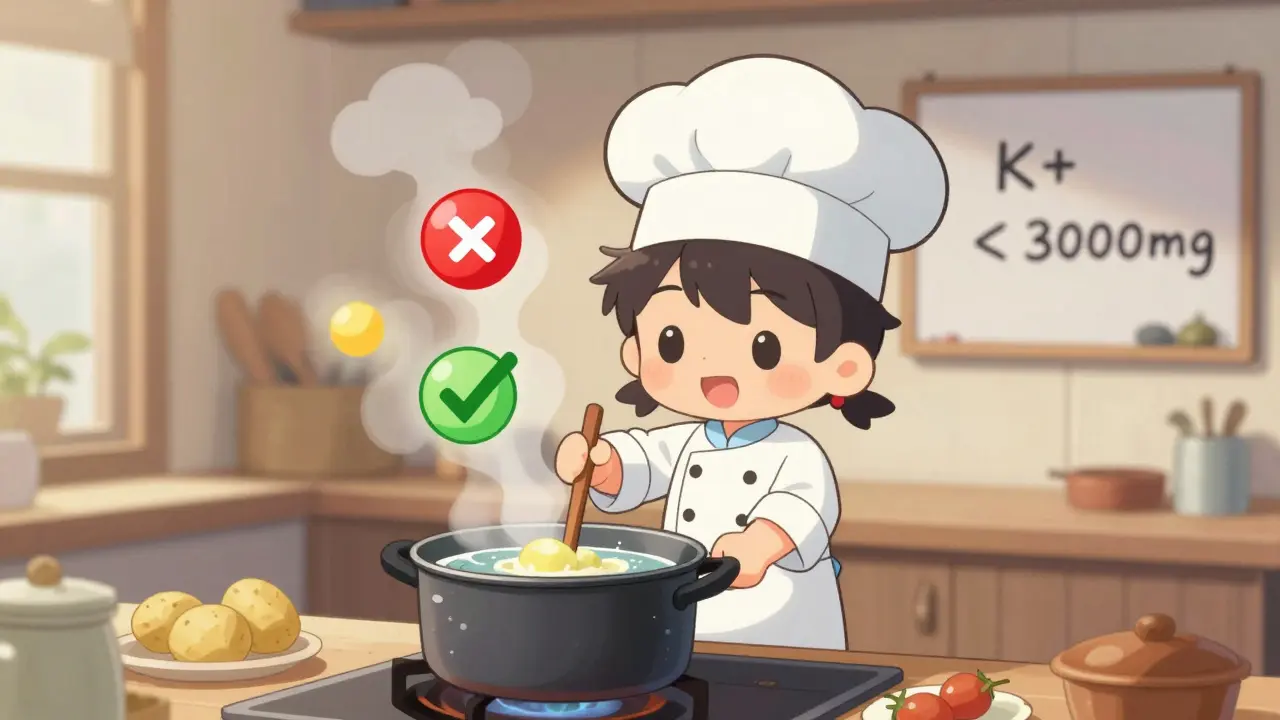
High-potassium foods to limit: bananas (422 mg each), oranges (237 mg each), potatoes (926 mg per medium), spinach (839 mg per cooked cup), and tomatoes (400 mg per cup). Low-potassium alternatives? Apples (150 mg per medium), berries (65 mg per ½ cup blueberries), cabbage (12 mg per ½ cup cooked), and green beans (180 mg per cup).
There’s a trick many renal dietitians teach: leaching vegetables. If you love potatoes or carrots but need to cut potassium, peel them, slice thin, soak in warm water for 2-4 hours, then boil in a large pot of fresh water. This can cut potassium by half. It’s not perfect, but it gives you more flexibility.
Also, remember this: potassium from animal foods (meat, dairy) is absorbed at 80-90%, while plant-based potassium is only 50-70% absorbed. That means a small portion of chicken might affect your levels more than a large salad. Your dietitian will help you balance this.
Phosphorus: The Hidden Enemy in Processed Foods
Phosphorus is a mineral your body needs for strong bones and energy. But when kidneys fail, phosphorus piles up. That triggers your body to pull calcium from your bones, weakening them. It also causes dangerous calcification in your blood vessels and heart.The KDOQI guidelines recommend keeping phosphorus under 800-1,000 mg per day for non-dialysis CKD patients. Sounds simple, right? Except there’s a twist.
There are two types of phosphorus: natural (in whole foods) and added (in processed foods). Natural phosphorus is only 40-70% absorbed. But added phosphorus-like in colas, processed cheese, deli meats, and baked goods-is 90-100% absorbed. That means a 12-ounce cola has 450 mg of phosphorus, and your body uses nearly all of it. One slice of processed cheese? 250 mg. A cup of milk? 125 mg.
That’s why dietitians tell you to avoid colas and packaged snacks, even if they’re labeled “low sodium.” Look for ingredients with “phos” in them: phosphoric acid, sodium phosphate, calcium phosphate. These are red flags.
Good swaps? White bread (60 mg phosphorus per slice) instead of whole grain (150 mg). Rice milk instead of dairy milk. Fresh chicken or fish (3 oz portions, 2-3 times a week) instead of processed meats. Salmon and cod are great choices-low in sodium, moderate in phosphorus, and packed with heart-healthy omega-3s.
Protein: The Balancing Act
You might hear that CKD patients need to eat less protein. That used to be the rule. But research has changed. Too little protein leads to muscle loss, weakness, and higher risk of infection-especially in older adults.Current guidelines from KDOQI suggest 0.55-0.8 grams of protein per kilogram of body weight per day. That’s not a low-protein diet. It’s a high-quality protein diet. Focus on eggs, lean meats, fish, and dairy (in controlled amounts). Avoid plant proteins like beans and lentils if your phosphorus is high-they’re high in both protein and phosphorus.
A 2022 study in the Journal of Renal Nutrition found that CKD patients eating less than 0.6 g/kg/day had a 34% higher risk of malnutrition. So don’t cut protein too far. Work with your dietitian to find your sweet spot.
Real-Life Food Swaps That Work
Changing your diet doesn’t mean eating bland, boring food. It means making smart substitutions. Here are real examples that patients use daily:- Instead of orange juice: apple juice (15 mg potassium per ½ cup)
- Instead of potato chips: air-popped popcorn (no salt)
- Instead of canned beans: rinsed canned chickpeas (drain and rinse well to cut phosphorus and sodium)
- Instead of regular cheese: small portions of ricotta or cottage cheese (lower phosphorus than cheddar or Swiss)
- Instead of soy sauce: lemon juice or vinegar for flavor
Many patients report that after 3-6 months, their taste buds adjust. Spices like cumin, paprika, and turmeric become more flavorful. You start noticing how salty processed food really is-and you don’t miss it.
Fluids, Labels, and Daily Habits
If you’re producing less than 1 liter of urine a day, you’ll likely need to limit fluids too. That means water, coffee, tea, soup, ice cream, and even gelatin count. Most people aim for 32 oz (about 1 liter) per day.Always check food labels. Look for sodium, potassium, and phosphorus content. If it’s not listed, use apps like Kidney Kitchen or MyFitnessPal with the renal filter. These tools are updated with the latest nutrient data and can help you track your intake in real time.
Also, don’t assume “natural” means safe. Dried fruit, nuts, and dark chocolate are packed with potassium and phosphorus. A handful of almonds has more phosphorus than a glass of milk.
What’s New in Renal Nutrition
The field is evolving. In 2023, the FDA approved the first medical food for CKD called Keto-1, which provides essential amino acids without adding phosphorus or potassium. Researchers are also testing prebiotic fibers like inulin, which may reduce phosphorus absorption by 15-20%.AI-powered apps are being piloted at places like Mayo Clinic. These tools sync with your lab results and adjust your daily food goals automatically. If your potassium spikes, the app tells you to skip bananas for a week. If your phosphorus is stable, it lets you add back a small portion of dairy.
And Medicare now covers 3-6 sessions per year with a renal dietitian for stage 4 CKD patients. That’s because studies show proper nutrition can delay dialysis by 6-12 months-and save $12,000 per patient annually.
It’s Not Perfect, But It Works
Some experts argue that strict phosphorus limits may not be necessary for everyone. The European Renal Association says 1,200 mg/day is safe for most non-dialysis patients. Others warn that overly restrictive diets can lead to poor nutrition and loss of appetite.The latest thinking? Focus on food quality over extreme restriction. Avoid processed foods with phosphorus additives. Eat more whole, unprocessed foods. Control portions. And work with your care team to adjust based on your blood work-not a one-size-fits-all chart.
People who stick with the renal diet report better energy, fewer hospital visits, and less swelling. They sleep better. They feel more in control. It’s not easy. But for many, it’s the difference between managing a condition-and letting it manage you.
Can I still eat fruits and vegetables on a renal diet?
Yes, but you need to choose carefully. Low-potassium options like apples, berries, cabbage, and green beans are safe in controlled portions. High-potassium fruits like bananas, oranges, and melons should be limited or avoided. Leaching vegetables (soaking and boiling) can reduce potassium by up to 50%. Always check your blood levels with your doctor to adjust your intake.
Is salt the only source of sodium I need to worry about?
No. Most sodium comes from processed foods-bread, canned soups, deli meats, frozen meals, and even some medications. Table salt is only about 25% of your daily intake. Always read nutrition labels and look for “sodium” content. Choose “no salt added” or “low sodium” versions. Cooking at home with herbs and spices is the best way to control sodium.
Why are phosphorus additives worse than natural phosphorus?
Your body absorbs almost all the phosphorus from additives (90-100%), while it only absorbs 40-70% from natural sources like meat or dairy. Additives like phosphoric acid in colas or sodium phosphate in processed cheese are added to enhance flavor, texture, or shelf life-but they flood your system with phosphorus your kidneys can’t remove. That’s why avoiding processed foods is more important than cutting dairy.
Do I need to stop eating protein if I have kidney disease?
No. You still need protein to maintain muscle and immune function. The goal is to eat the right amount-0.55 to 0.8 grams per kilogram of body weight-and choose high-quality sources like eggs, fish, and lean meats. Too little protein increases your risk of malnutrition, especially if you’re older. Work with a dietitian to find your ideal amount based on your weight and kidney function.
Can a renal diet delay the need for dialysis?
Yes. Studies show that following a properly managed renal diet can delay the start of dialysis by 6 to 12 months in stage 4 CKD patients. This isn’t just about feeling better-it saves lives and reduces healthcare costs by $12,000 per patient per year. The key is consistency: controlling sodium, potassium, and phosphorus before they cause serious complications.
Are there apps or tools that help track renal diet nutrients?
Yes. Apps like Kidney Kitchen and MyFitnessPal (with renal filters) let you log meals and track sodium, potassium, and phosphorus. Some newer apps now sync with your lab results and adjust your daily limits automatically. The Kidney Kitchen app has been downloaded over 250,000 times and is used by renal dietitians to guide patients. Always pair app use with regular blood tests and professional advice.
Next Steps: What to Do Today
If you’re managing CKD, here’s what to do right now:- Check your latest blood work for sodium, potassium, and phosphorus levels.
- Review your pantry. Throw out processed foods with “phos” in the ingredients.
- Replace one high-potassium food with a low-potassium swap this week (e.g., apples instead of bananas).
- Call your doctor and ask if you qualify for covered renal nutrition counseling through Medicare.
- Download a renal-friendly food tracking app and log your meals for 3 days.
Small changes add up. You don’t need to be perfect. You just need to be consistent. Your kidneys can’t heal-but they can slow down. And that’s everything.
11 Comments
Carolyn Rose Meszaros
I started this diet 4 months ago and honestly? My legs don’t swell anymore 🙌 Also, I swapped orange juice for apple juice and now I actually like the taste of plain water. Who knew??
Greg Robertson
Thanks for this. I’ve been avoiding processed stuff since my last blood test showed my phosphorus was through the roof. The leaching trick for potatoes? Game changer. I’ve been doing it every Sunday night now. Makes me feel like a kitchen wizard.
Nadia Watson
It is imperative to underscore the significance of adhering to dietary guidelines as delineated by reputable nephrological organizations. The absorption differentials between organic and inorganic phosphorus are not trivial, and the clinical implications are profound. One must exercise diligence in label reading, as the presence of phosphates often escapes casual observation.
Shane McGriff
Biggest mistake I made? Thinking I had to cut protein completely. I lost 15 lbs of muscle in 6 months. My nephrologist set me straight - it’s not about less protein, it’s about quality. Eggs, fish, lean chicken. I eat 0.7g per kg now. I’ve got energy again. Don’t let fear rob you of strength.
Jacob Cathro
So we’re just supposed to believe everything the FDA and KDIGO say? LOL. Who even are these people? I bet Big Pharma is behind this whole ‘avoid phosphates’ thing so they can sell you more expensive meds. My cousin’s uncle’s neighbor did a keto diet and his kidneys ‘healed’ - no one talks about that.
Thomas Varner
Leaching vegetables works… but only if you do it right. I used to soak them for 30 minutes, then boil them in a tiny pot. Total waste. Now? I slice ’em thin, soak 4 hours in 4 quarts of water, then boil in 2 gallons of fresh water. Cut potassium by 58%. I track it with MyFitnessPal. It’s a ritual now. Calming, honestly.
Art Gar
It is a fallacy to assume that dietary modification alone can meaningfully alter the trajectory of chronic kidney disease. The pathophysiology is systemic, and the notion that sodium restriction confers substantial clinical benefit is statistically overstated in observational studies. One must consider confounding variables, selection bias, and the placebo effect of behavioral compliance.
Edith Brederode
Just wanted to say I’m so proud of everyone here who’s doing this. It’s hard. I cry sometimes when I look at my favorite foods and think ‘I can’t have that.’ But I’m doing it for my grandkids. And yes, I still eat a tiny piece of dark chocolate every Sunday. Life’s too short to be 100% perfect.
clifford hoang
What if the whole ‘renal diet’ is a scam? What if the real issue is glyphosate in our food? Or 5G messing with our cellular ion channels? I’ve been drinking distilled water and eating only raw kale and Himalayan salt since 2021. My creatinine dropped 0.4. Coincidence? I think not. 🤔💀
Arlene Mathison
You guys are killing it. I used to hate cooking, now I’m making my own low-sodium tomato sauce with basil and garlic. My husband says I’ve become a food nerd. I say: I’m a survivor. And I’m not done yet. Keep going. You’re not alone.
Emily Leigh
Okay but… why is everyone acting like this is new info? I’ve been on this diet since 2017. And yes, the apps are helpful, but I still have to manually calculate everything because MyFitnessPal gets the potassium in canned beans wrong. Again. 😑