Every year, over 90% of prescriptions filled in the U.S. are for generic drugs. Yet, if you ask patients why they refuse them, you’ll hear the same thing: "But it’s not the same." Even when the active ingredient is identical, even when the science says it’s equivalent, even when the price is 85% lower - people still worry. And doctors? They’re caught in the middle.
What Exactly Is a Generic Drug?
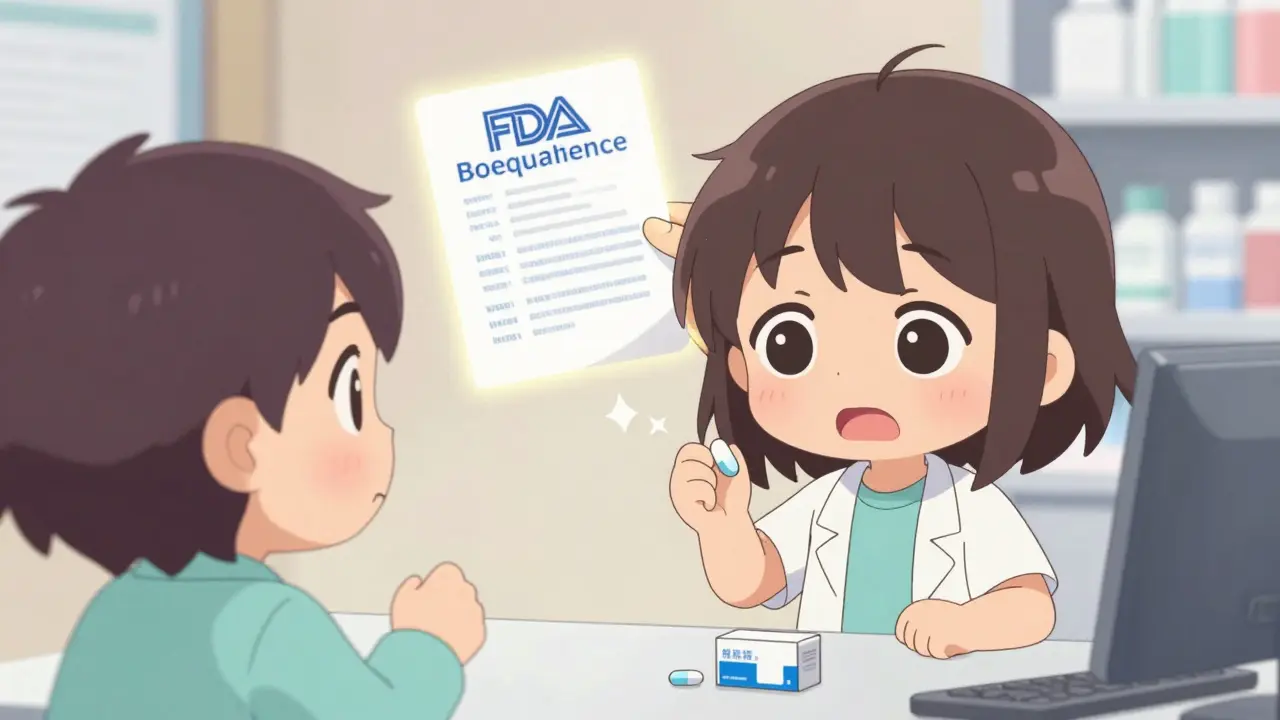
A generic drug isn’t a copycat. It’s not a knockoff. It’s the exact same medicine, legally required to deliver the same amount of active ingredient into your bloodstream at the same rate as the brand-name version. The FDA calls this bioequivalence. To get approved, a generic must show that its absorption in the body falls within 80% to 125% of the brand-name drug’s levels - a tight window proven through blood tests in hundreds of volunteers. That’s not guesswork. That’s science.
Manufacturers must follow the same strict rules as brand-name companies. The same inspections. The same quality controls. The FDA checks over 1,000 U.S. and 500 foreign generic drug factories every year. The pills might look different - different color, shape, or markings - but the medicine inside? Identical.
Why Doctors Push Generics
Doctors don’t recommend generics because they’re cheap. They recommend them because they work - and because patients take them more often.
Studies show that when patients switch from brand-name drugs to generics, adherence improves by about 6%. That might sound small, but in chronic conditions like high blood pressure or diabetes, that 6% means fewer hospital visits, fewer complications, and fewer deaths. The American College of Physicians put it bluntly in 2016: "Clinicians should prescribe generic medications, if possible, rather than more expensive brand-name medications." They didn’t say "if affordable." They said "if possible." Because the evidence is clear: generics save lives by keeping people on their meds.
And it’s not just about cost. A 2016 study of 151 physicians found no link between a doctor’s belief in cost savings and whether they prescribed generics. In other words, doctors aren’t prescribing generics just to save money - they’re prescribing them because they’ve seen the results.
The Gap Between Science and Perception
So why do patients still resist?
It starts with appearance. A patient who’s been taking a blue pill for years gets a white one. They don’t know it’s the same drug. They think something changed. Maybe it’s weaker. Maybe it’s fake. That fear isn’t irrational - it’s human. The FDA calls this the "Look Alike, Sound Alike" problem, and it’s real. In one survey, nearly 40% of patients said they’d refuse a generic if it looked different from what they were used to.
Then there’s the myth that generics are "made overseas." Most brand-name drugs are made overseas too. The FDA inspects foreign plants just as rigorously. The difference? Generics are often made in the same factories as brand-name drugs - just under a different label.
And let’s not forget the marketing. Brand-name drugs spend billions on TV ads, direct-to-consumer campaigns, and doctor visits. Generics? They don’t advertise. So when patients see a slick commercial for a name-brand drug, they assume it’s better. It’s not. It’s just louder.
When Generics Aren’t the Answer
There are exceptions. The FDA keeps a list of 15 drugs with a narrow therapeutic index - meaning tiny changes in blood levels can cause serious problems. These include warfarin, levothyroxine, and some anti-seizure drugs. For these, doctors may stick with brand-name versions - not because generics are unsafe, but because the margin for error is razor-thin.
Even here, studies show most patients do fine on generics. But doctors err on the side of caution. And when they do switch, they monitor closely.
Another gray area? Inhalers. A 2015 FDA study found patients with asthma or COPD were unsure if generic dry-powder inhalers delivered the same dose. The issue wasn’t the medicine - it was the device. Different designs, different mouthpieces, different puffing techniques. The FDA now requires generic inhalers to match the brand in both drug and delivery - but confusion still lingers.
What Doctors Wish Patients Knew
"I’ve had patients insist on brand-name lisinopril costing $350 a month when the generic is $4 at Walmart," says one internist. "They’ll say, ‘But my doctor prescribed the brand.’ I tell them: ‘I prescribed the medicine. The generic is the same medicine.’ They still don’t believe me."
That’s the real problem. Patients trust their doctor - but they don’t trust the system. They think switching to a generic means they’re being cut off from "better" care. The truth? The system is designed to protect them.
Pharmacists are trained to explain substitutions. In 49 states, they can switch a brand to a generic without calling the doctor - as long as the prescription allows it. But they’re not always given time to explain. A patient walks in, gets a different pill, and leaves confused. No conversation. No reassurance.
That’s why the FDA and medical groups now push for better communication. When a pharmacist says, "This is the same drug, just cheaper," and shows the patient the FDA’s bioequivalence data, adherence improves. When a doctor says, "I’ve prescribed this exact generic to hundreds of patients - no one had a problem," trust builds.
What’s Changing - And What’s Not
Generics now make up 90% of prescriptions, but only 72% of new prescriptions are written as generics. That gap tells us something: doctors aren’t starting patients on generics as often as they should.
But things are shifting. Medical schools are finally catching up. In 2015, only 29% of internal medicine residency programs taught generic prescribing. By 2026, that number is 68%. New doctors are learning the science - not the myths.
And the numbers speak for themselves. Medicare beneficiaries using generics report 12.7% higher adherence than those on brand-name drugs. Hospitalization risk for chronic conditions drops by 2.2% when generics are used. The Congressional Budget Office estimates that if every new prescription were written generically, Medicare Part D would save $17.3 billion a year.
That’s not just money. That’s lives.
What You Can Do
If you’re on a brand-name drug and your prescription gets switched:
- Ask your pharmacist: "Is this the same medicine?"
- Ask your doctor: "Can we try the generic?"
- Check the label - the active ingredient must match exactly.
- Don’t panic if it looks different. It’s not a different drug.
- Track how you feel. If something changes - like dizziness or nausea - tell your doctor. But don’t assume it’s the generic’s fault.
Generics aren’t perfect. But they’re not broken. They’re the most studied, tested, and monitored drugs in the pharmacy.
And if your doctor recommends one? They’re not trying to save money. They’re trying to help you stay healthy - without breaking the bank.
Are generic drugs really as effective as brand-name drugs?
Yes. The FDA requires generics to have the same active ingredient, strength, dosage form, and route of administration as the brand-name drug. They must also prove bioequivalence - meaning they deliver the same amount of medicine into your bloodstream at the same rate. Over 90% of prescriptions in the U.S. are filled with generics, and studies show they work just as well for the vast majority of conditions.
Why do some patients feel different when switching to a generic?
The medicine is the same, but the pill’s appearance, size, or inactive ingredients (like dyes or fillers) may differ. Some patients report side effects after switching, but these are usually due to sensitivity to a new filler - not the active drug. In rare cases, like with narrow therapeutic index drugs (e.g., warfarin), small differences matter more. That’s why doctors monitor closely. For most people, though, no change in how they feel is normal - and expected.
Can pharmacists switch my brand-name drug to a generic without my doctor’s permission?
In 49 states, yes - if the prescription doesn’t say "Dispense as Written" or "Brand Necessary." Pharmacists are trained to substitute generics unless the doctor specifically forbids it. They’re required to inform you if a substitution is made. If you’re uncomfortable, ask for the brand. But know that the generic is just as safe and effective.
Why don’t doctors prescribe generics all the time?
They do - for most drugs. But some doctors avoid generics for complex medications like inhalers or injectables where delivery matters as much as the drug itself. Others may hesitate if a patient has had a bad reaction in the past, even if it was unrelated to the drug. Education is improving, and more doctors now prescribe generics as a first choice - especially for chronic conditions where adherence is key.
Is it true that generics are made in lower-quality factories?
No. The FDA inspects all manufacturing facilities - brand and generic - the same way. In fact, many brand-name drugs are made in the same factories as generics. The difference is the label. The FDA conducts over 1,000 inspections of generic drug plants each year. If a factory fails, it’s shut down - regardless of whether it makes brand or generic drugs.
10 Comments
Chris Beckman
So let me get this straight - the FDA says generics are identical, but people still freak out because the pill is a different color? Come on. I’ve been taking generic metformin for 8 years. Same results. Same side effects. Same $12 a month instead of $300. If you’re gonna believe a blue pill is better than a white one, maybe you should check your brain’s firmware.
Richard Elric5111
It is not merely a question of pharmacological equivalence, nor is it a matter of fiscal prudence - though both are undeniably salient. Rather, the resistance to generic pharmaceuticals constitutes a profound epistemological rupture between scientific episteme and phenomenological experience. The patient does not reject the molecule; they reject the ontological instability of the pharmaceutical signifier. The pill, in its altered chromaticity and nomenclature, becomes a Lacanian object petit a - a symbol of systemic betrayal, of commodification masquerading as care.
Thus, the physician’s dilemma is not one of evidence, but of hermeneutics: how does one translate bioequivalence into existential trust?
Betsy Silverman
I used to be skeptical too - until I switched my mom’s blood pressure med to generic. She didn’t even notice. Then I asked her if she could tell the difference, and she said, ‘Honey, I just take the little pill. I don’t care what it looks like.’ That stuck with me. Sometimes, the real problem isn’t the medicine - it’s how much we overthink everything.
Ivan Viktor
Generics are cheaper because they’re made by the same people who make the brand names - just without the marketing budget. So really, we’re paying for commercials and not medicine. Classic capitalism. I’ll take my $4 pill and my $300 TV ad any day.
Zacharia Reda
Okay, but let’s be real - if you’re still on brand-name lisinopril and you’re not in a clinical trial or have a history of adverse reactions, you’re basically paying for a placebo with a better logo. Your doctor isn’t trying to nickel-and-dime you. They’re trying to keep you alive without you going broke. That’s not a cost-cutting move. That’s a life-preserving one.
Jeff Card
I had a friend who swore the generic version of her thyroid med made her feel ‘off.’ She switched back to brand, felt fine, and assumed the generic was the issue. Turns out, she’d just started a new job, was sleeping less, and drinking more coffee. The pill didn’t change - her life did. Sometimes the body’s signals aren’t about the drug. They’re about everything else going on.
That’s why I always say: if something feels different after switching, talk to your doctor. Don’t assume it’s the generic. But also don’t assume it’s all in your head. It’s probably just… life.
Matt Alexander
Generic = same active ingredient. Same dose. Same effect. Just no fancy name or ad on TV. It’s like buying store-brand cereal instead of Cheerios. Same oats, same sugar, cheaper. If your body can’t tell the difference between two identical medicines, why are you paying extra?
Gretchen Rivas
My pharmacist showed me the FDA bioequivalence chart once. I didn’t understand half of it. But she said, ‘This pill does the same job as the expensive one, and we’ve given it to thousands.’ That was enough for me. Sometimes you don’t need the science - just someone you trust saying, ‘It’s fine.’
Stephen Vassilev
Have you considered that the FDA’s inspections are influenced by corporate lobbying? The agency has been caught approving plants with repeated violations - and many of these are generic manufacturers! Furthermore, the ‘same factory’ claim is misleading - while some facilities produce both, the quality control protocols are not identical. The FDA’s own data shows a 25% higher defect rate in generic manufacturing lines. And don’t get me started on the foreign labs - China, India - where inspectors are paid less than minimum wage and documentation is often falsified. This isn’t science - it’s a systemic cover-up!
Also: why are there no independent third-party audits? Why isn’t there public access to the raw bioequivalence data? This smells like a conspiracy - and I’m not paranoid. I’m informed.
Mike Dubes
Look, I used to think generics were sketchy too - until my knee pain meds switched and I didn’t even notice. I thought I’d feel weird, but nope. Just saved $200 a month. I even told my cousin, who was freaking out over her generic antidepressant. She switched, felt the same, and now says she’s ‘glad she didn’t waste money.’ So yeah - it’s the same stuff. The fear? That’s the part we made up.
Doctors aren’t trying to screw you. They’re trying to help. And honestly? If your pill looks different but you’re still feeling okay? That’s a win.