
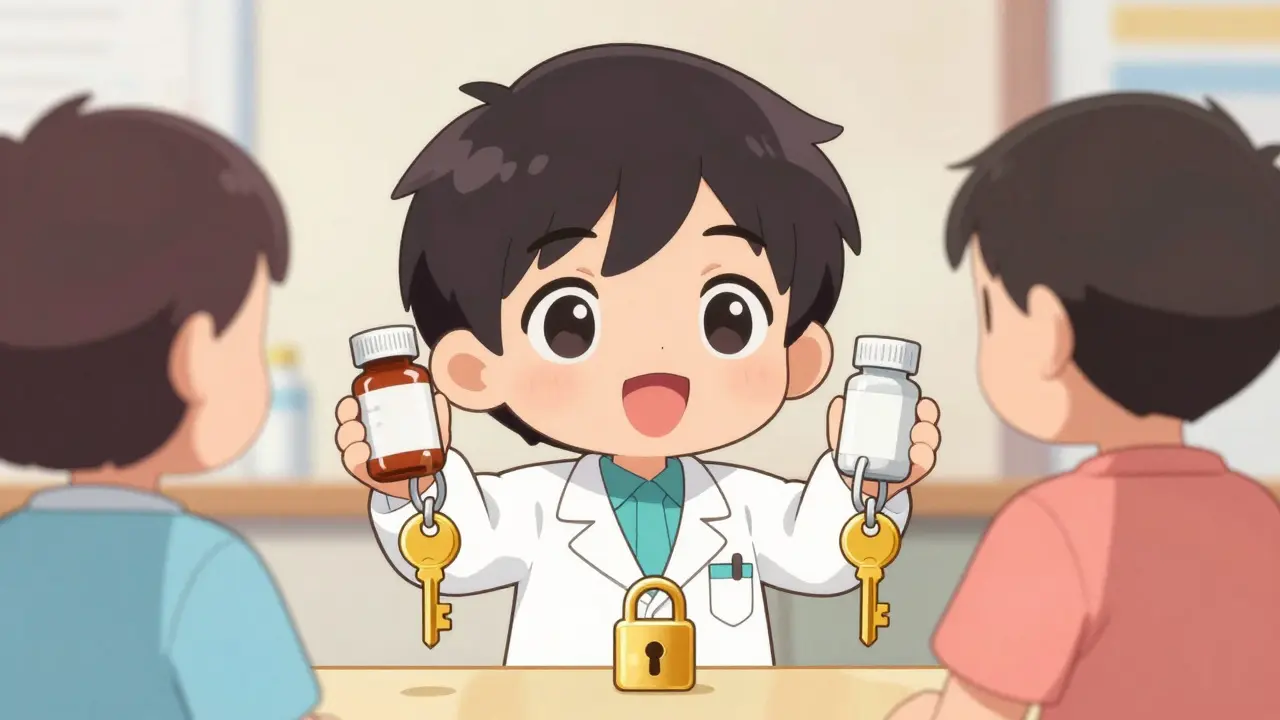
For most people, the idea of a "generic" drug feels like a compromise in quality. But in a clinical sense, that's a myth. When a drug is substituted, it must meet strict FDA bioequivalence standards. This means the generic version must have the same active ingredients, strength, dosage form, and route of administration as the original. If the brand-name drug is a key that opens a lock, the generic is an exact copy of that key. It works the same way, achieves the same result, and is vetted by the same regulatory body.
Why the Shift Toward Generics?
The numbers behind pharmacy spending are staggering. According to data from the Journal of the American Medical Association (JAMA), branded pharmaceutical prices in the U.S. leaped by 159% in list price over a ten-year period. While the price of a gallon of milk or a loaf of bread might go up by a few cents, brand-name drugs often see inflation rates that defy all logic.
In the workers' compensation sector, pharmacy costs make up about 20% of total medical expenses. To fight this, the industry has leaned heavily on the framework established by the Hatch-Waxman Act of 1984. This law allowed generic manufacturers to enter the market once patents expired, creating a competitive environment that drives prices down. The result? While brand-name drug prices surged, the cost of the most common generics actually dropped by 35% over a five-year span. By switching to generics, a system can potentially save 80% on a single prescription.
| Feature | Brand-Name Drugs | Generic Substitutions |
|---|---|---|
| Average Cost | High (Baseline 100%) | Low (Approx. 20% of brand price) |
| Price Trend | Significant Inflation (e.g., 65.5% over 5 years) | General Decline (e.g., 35% decrease) |
| Active Ingredients | Original Formula | Identical to Brand |
| Regulatory Standard | FDA Approval | FDA Bioequivalence |
| Market Access | Patent Protected (usually 20 years) | Available after patent expiry |
How Substitution Works in the Field
It isn't as simple as a pharmacist just swapping a bottle. The process is governed by Pharmacy Benefit Managers (PBMs) like OptumRx or Express Scripts. These entities create "formularies"-basically a curated list of preferred drugs. If a doctor prescribes a brand-name drug that has a generic equivalent on the formulary, the PBM will typically mandate the substitution unless the doctor can prove "medical necessity."
Take Tennessee, for example. Their 2023 Medical Fee Schedule is explicit: an injured employee should only receive generic drugs unless the treating physician documents a specific clinical reason why the brand name is required. "Patient preference" doesn't count. This forces a shift toward evidence-based medicine, where the choice of drug is based on efficacy rather than marketing.
One common example is the use of diclofenac. Many providers used to rely on brand-name Voltaren Gel, but the shift to the generic version significantly boosted generic utilization rates without altering patient outcomes. However, this isn't a perfect system. There are "narrow therapeutic index" drugs where a tiny difference in absorption can matter. In these rare cases-less than 2% of prescriptions-substitution can be risky, which is why clinical oversight remains vital.
Overcoming the "Quality Gap" Perception
One of the biggest hurdles in occupational health isn't the law or the science-it's the psychology. A surprising number of injured workers believe that generics are "watered down" or inferior. In one survey, 68% of workers expressed skepticism about generics before trying them. However, once they actually started the treatment, 82% reported that the therapeutic effects were identical to the brand names they were used to.
Nurse practitioners often find themselves in the role of educators. They have to explain that while the "inactive ingredients" (like the dyes or binders in the pill) might differ, the chemical that actually heals the body is the same. When providers take the time to explain the FDA's role in ensuring bioequivalence, patient compliance increases and administrative friction decreases.

The Legal Landscape and State Variations
Generic substitution isn't a federal mandate; it's a patchwork of state laws. Currently, 44 states and the District of Columbia have laws that permit or require generic substitution. Some states are much more aggressive than others. Colorado, for instance, recently implemented a regulation requiring 95% generic utilization for drugs on its state formulary.
In contrast, states without formal formularies see much lower adoption rates-averaging around 83%. This gap shows that when the government sets a clear rule, providers follow it. This regulatory pressure is essential because, without it, some generic manufacturers have been accused of anti-competitive behavior, essentially colluding to keep generic prices higher than they should be. Strong state mandates help break these bottlenecks by forcing a higher volume of generic use.
The Future: Biosimilars and Personalized Medicine
As we look toward 2026 and beyond, the focus is shifting from simple pills to complex biologics. These are large molecules grown in living cells, and they don't have "generics" in the traditional sense. Instead, they have biosimilars. Texas led the way in 2022 by implementing substitution protocols for these high-cost specialty drugs.
We are also seeing the rise of pharmacogenomics. Instead of a one-size-fits-all generic approach, doctors may soon use genetic testing to see if a specific patient will actually respond to a generic version of a drug. This would eliminate the "trial and error" phase of treatment, getting workers back to their jobs faster and reducing the overall cost of the claim.
Are generic drugs actually the same as brand-name drugs?
Yes, in terms of medical efficacy. The FDA requires generic drugs to be bioequivalent to the brand-name version, meaning they have the same active ingredient, strength, and performance in the human body. Only inactive ingredients, like fillers or colors, may differ.
Can my doctor still prescribe a brand-name drug if I prefer it?
A doctor can prescribe a brand-name drug, but in most workers' compensation systems, they must document a specific "medical necessity." Simply preferring a brand name is usually not enough to get the insurance company to cover the higher cost.
What is a PBM and how does it affect my medication?
A Pharmacy Benefit Manager (PBM) is a third-party administrator that manages prescription drug programs for insurers. They create the formularies that determine which drugs are covered and often mandate generic substitution to save costs.
What is the "Orange Book"?
The Orange Book is the official FDA publication that lists approved drug products with therapeutic equivalence evaluations. It is the primary tool used by providers and pharmacists to determine if a generic is a safe substitute for a brand-name drug.
Do all states have the same laws regarding generic substitution?
No. Laws vary significantly. Some states have strict mandates requiring high percentages of generic use (like Colorado), while others have more permissive guidelines or use broader evidentiary standards.
15 Comments
Joshua Nicholson
man these drug prices are just wild honestly
william wang
It is really interesting how the PBMs handle the formularies. I have seen cases where a simple switch to a generic not only saved money but actually improved patient adherence because the lower cost meant the worker didn't hesitate to refill their prescription. It is a win-win for everyone involved in the care chain.
Agatha Deo
Oh sure, let's just trust the "FDA bioequivalence" standards blindly while the pharmaceutical giants laugh all the way to the bank. It is absolutely adorable that people think these PBMs are actually trying to save us money and not just squeezing every last cent out of the system through some opaque middleman game. I'm sure the "inactive ingredients" are totally harmless and not just another way to keep us dependent on the system.
Tama Weinman
Funny how the post mentions "anti-competitive behavior" as a footnote. The whole industry is designed to keep you in the dark. They tell you generics are the same, but have you ever looked into who actually owns the patents and the companies producing the generics? It's all a closed loop designed to maintain a specific profit margin while pretending to be helpful to the working class.
Anna BB
It's just so fascinating how we perceive value... I feel like the psychology part of this is the most human element here!!! Why do we trust a brand name more just because of a logo??? It makes me wonder if we do this in other parts of our lives too, just clinging to the familiar even when the alternative is logically identical... 🌟
Cheryl C
USA ALL THE WAY baby!! 🇺🇸 we got the best meds in the world even if the prices are crazy lol!! just take the generic and get back to work!! 💊💪
Adele Shaw
My cousin was forced onto a generic and swore it didn't work the same, and now the insurance company just ignores his pain. This whole system is a nightmare that just strips away the dignity of the worker while the suits in the corporate office get richer. It's disgusting how they treat us like numbers on a spreadsheet instead of human beings who are actually suffering from injuries!
Nikki Grote
From a clinical perspective, the shift toward biosimilars is where the real complexity lies. Unlike small-molecule generics, biosimilars require a more nuanced approach to interchangeable status due to the inherent variability in biological products. The implementation of these protocols in Texas represents a significant move toward optimizing the therapeutic index while mitigating the fiscal burden of high-cost specialty biologics.
Dana Chichirita Nicoleta
I am absolutely thrilled to see such a comprehensive breakdown of how we can streamline medical costs without sacrificing the quality of care for our fellow citizens! It is simply marvelous that the science of bioequivalence allows us to move past these outdated misconceptions about "watered down" medications, and I truly believe that as education spreads, we will see a magnificent increase in patient trust and overall health outcomes across the entire nation!
Ben Ferguson
You know, it's just so incredibly heart-wrenching when you think about the sheer magnitude of the struggle that an injured worker goes through, and then you add this layer of pharmaceutical bureaucracy on top of it, which feels almost like a Shakespearean tragedy in its absurdity! I remember talking to someone who was just utterly devastated because they didn't understand why their pill changed color, and it's just such a testament to the cultural divide between the medical establishment and the everyday person who just wants to feel better and get their life back on track in a world that feels increasingly cold and clinical!
Richard Moore
Exactly. The logic is sound, but the execution is often messy 🙄. Just follow the FDA guidelines and stop overcomplicating it 👊.
Kim Hyunsoo
The part about pharmacogenomics sounds like something out of a sci-fi movie 🧪✨. Imagine a world where your DNA is the blueprint for your pharmacy bill! It's kind of spooky but also super cool 😵💫.
Rob Schlautman
i honestly dont see why anyone cares about the orange book because its just another layer of red tape that makes the process take forever and nobody actually reads it anyway and then the doctors just prescribe whatever they want because they get a kickback or something and we all just pay for it in the end while the system rots from the inside out and it's just pathetic really
Anmol Garg
It's a reminder that while the numbers and laws are important, the real goal is the human healing process. If we can lower the cost, we can hopefully allocate those resources to better rehabilitation and mental health support, which are often neglected in the rush to just "get a worker back to the job." We need to look at the whole person, not just the cost of their pills.
Theresa Griffin MEP
The fiscal efficiency of generic substitution is paramount. These regulations must be strictly enforced to maintain system viability.