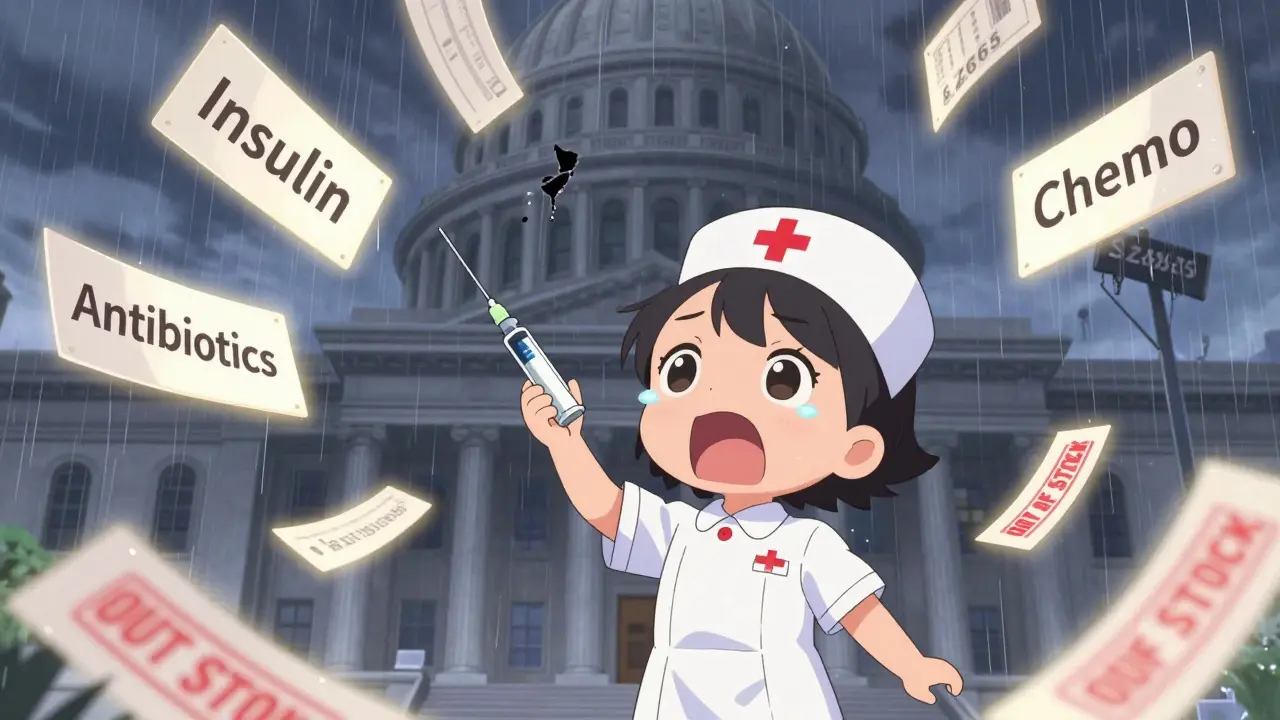
Drug shortages aren’t just inconvenient-they’re life-threatening. In 2025, the FDA recorded 287 active drug shortages, with nearly half of them being critical medications used in emergency rooms, ICUs, and cancer treatments. Hospitals are rationing insulin, chemotherapy drugs, and antibiotics. Doctors are scrambling to find alternatives that don’t work as well-or don’t work at all. And while patients suffer, Congress has introduced two major bills to fix this: the Drug Shortage Prevention Act of 2025 (S.2665) and the a bill requiring pharmaceutical manufacturers to notify the FDA when demand for critical drugs rises and the Health Care Provider Shortage Minimization Act of 2025 (H.R.1160) and a bill aimed at reducing gaps in frontline medical staff.
What S.2665 Actually Does
S.2665 doesn’t create new programs or fund new hiring. It’s simpler than that: it forces drugmakers to speak up before a shortage hits. Right now, manufacturers aren’t required to tell the FDA when they see a spike in orders, a supply chain hiccup, or a factory shutdown. By the time the FDA finds out, hospitals are already out of stock. S.2665 changes that. If passed, drug companies would have to report increased demand for critical drugs within 30 days. The bill doesn’t define ‘critical drugs’ yet, and it doesn’t say what penalties apply if they don’t report. That’s a problem. But the idea is clear: early warning saves lives.
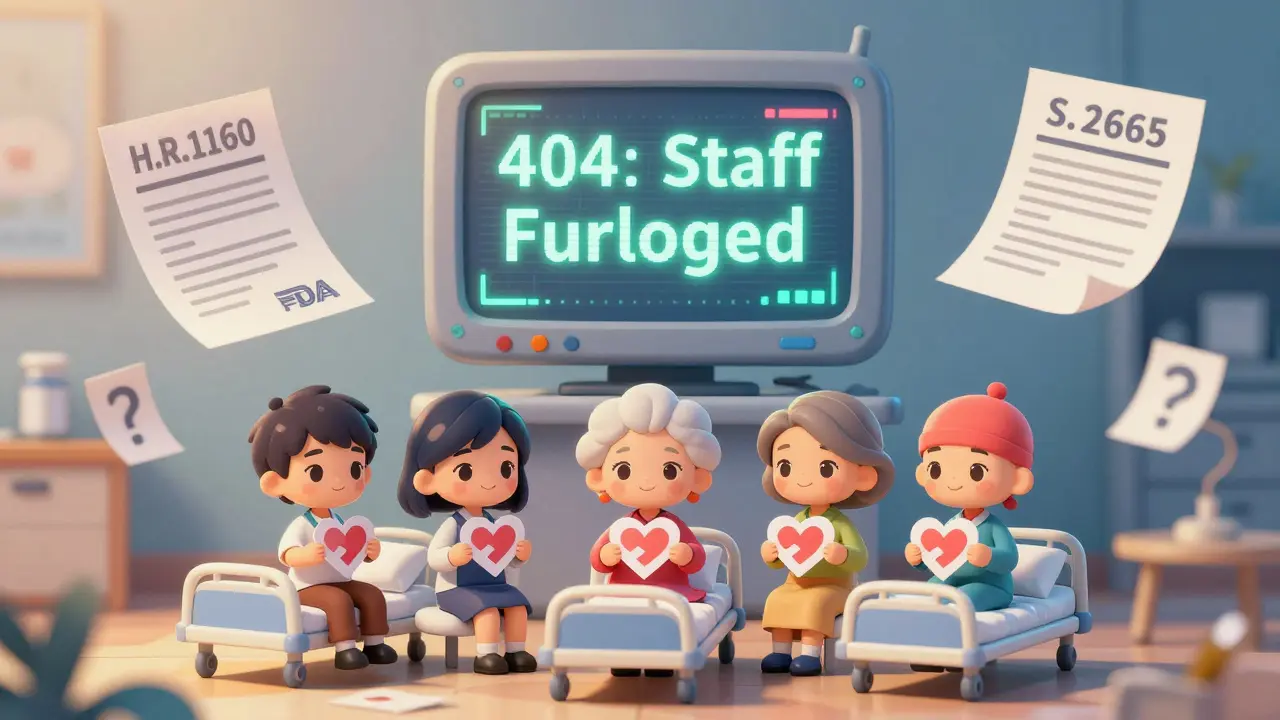
The bill was introduced in August 2025 by Senator Amy Klobuchar and sent to the Senate Health, Education, Labor, and Pensions Committee. It’s still there. No hearings. No votes. No public debate. And here’s the kicker: the FDA’s own Drug Shortage Portal-the system that tracks these shortages-isn’t even working properly right now. Because of the government shutdown, the staff who update it have been furloughed. So even if manufacturers report on time, there’s no one to read it.
What H.R.1160 Might Do (If We Knew More)
H.R.1160 is even more mysterious. The House introduced it with the same urgency as S.2665, but the public record is nearly empty. No summary. No sponsor list. No committee assignment. LegiScan, a major legislative tracking site, only lists the title. That’s unusual. Most bills get detailed summaries within days of introduction. This one doesn’t. Experts believe it’s meant to tackle the other side of the crisis: too few doctors, nurses, and pharmacists. The U.S. has 122 million people living in areas officially labeled as Health Professional Shortage Areas. By 2034, the American Association of Medical Colleges predicts we’ll be short over 124,000 physicians. H.R.1160 could be about loan forgiveness, expanding telehealth training, or fast-tracking visas for foreign-trained clinicians. But without the text, no one knows.
What we do know is that 87% of physicians say they’ve had to change treatment plans because of drug shortages. And 98% of hospitals reported at least one critical shortage in the third quarter of 2025. The American Hospital Association says it’s getting worse. So why isn’t H.R.1160 getting attention? Partly because Congress is stuck. The longest government shutdown in U.S. history began in October 2025 and lasted through November. Over 800,000 federal workers were sent home-including FDA inspectors, CDC staff, and Medicare auditors. Legislative work stopped. No bills moved. No hearings happened. Even the ones meant to fix shortages.
Why These Bills Are Stuck
The shutdown wasn’t about drugs. It was about funding fights. Republicans pushed a continuing resolution to extend government funding through January 30, 2026, but it included zero money for drug monitoring or provider recruitment. Democrats tried to attach shortage relief to the bill. It was rejected. Meanwhile, Congress was debating whether senators could sue over phone records. That’s the priority. Not insulin. Not chemo. Not antibiotics.
The numbers don’t lie. The federal deficit hit $1.74 trillion in the last fiscal year. The Congressional Budget Office says implementing S.2665 would cost $45 million a year-less than 0.003% of the deficit. That’s not expensive. It’s affordable. But in a political environment where $1.1 billion is cut from public media funding, $45 million for drug safety is seen as a luxury. The Association for Accessible Medicines says 63% of shortages come from manufacturing delays. S.2665 targets that. But without funding to upgrade systems or hire staff, the law would be a paper promise.
Who’s Affected-and Who’s Silent
Patients are paying the price. One mother in Ohio told her local news station her 7-year-old couldn’t get his seizure medication for six weeks. A cancer center in Texas switched 40 patients to a less effective drug because the original was out of stock. Rural clinics are canceling appointments because they can’t get basic antibiotics.
And yet, awareness is shockingly low. Only 12% of physicians even knew H.R.1160 existed. Reddit threads like r/healthpolicy have hundreds of posts from nurses and pharmacists saying, ‘Congress is ignoring us.’ The American Medical Association’s September 2025 survey found that 73% of doctors felt powerless to fix the problem. They’re not angry at manufacturers. They’re angry at Congress for doing nothing while people die.
What Happens Next
If the shutdown ends before January 30, 2026, S.2665 and H.R.1160 might get revived. But if it drags on, both bills die when the 119th Congress ends in January 2027. That’s not a typo. They’ll expire. No extension. No carryover. All progress erased. The next Congress will start from scratch.
There’s no guarantee the next round will be better. The same lawmakers will be in charge. The same funding fights will return. The same hospitals will be out of stock. Unless something changes, the cycle will repeat. The problem isn’t that we don’t have solutions. It’s that we don’t have the will to act.
For now, the best thing patients and providers can do is demand transparency. Call your representative. Ask: ‘Where is S.2665?’ ‘What’s in H.R.1160?’ ‘Why is Congress letting this happen?’ The system isn’t broken because of manufacturers or supply chains. It’s broken because no one’s holding lawmakers accountable.