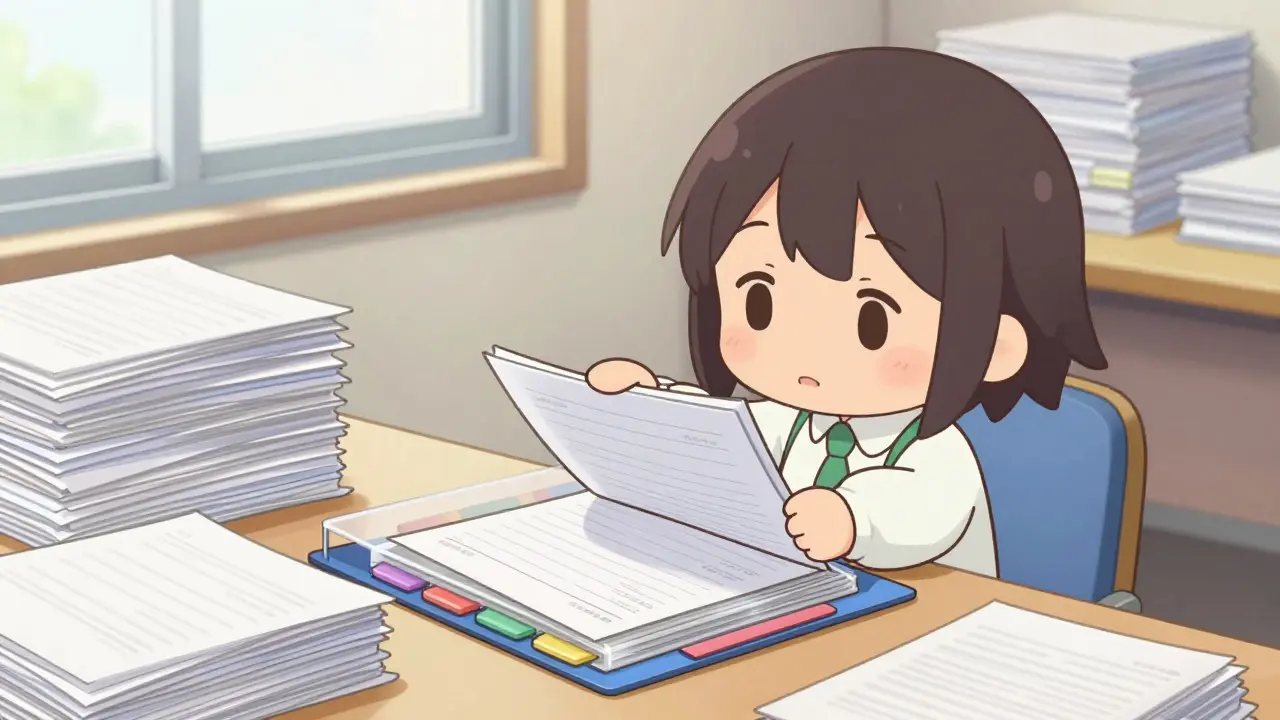
Imagine walking into an emergency room, unable to speak for yourself, with no one around to list what you take every day. It is a frightening scenario, but it happens more often than you might think. Keeping track of your prescription labels is a simple habit that can save lives by ensuring medical teams know your history instantly. Many people toss the bottle into the recycling bin once the pills are gone, but that label holds critical data. It tells doctors exactly what dose you were on, who prescribed it, and when it expires. In 2026, with polypharmacy rates climbing, maintaining an accurate personal archive is no longer just a good idea; it is a safety necessity.
Why You Need to Keep Medication Records
There is a practical reason to keep every piece of paper that comes with your medicine. Medication errors are a leading cause of harm in healthcare. Reports indicate that these errors account for thousands of deaths annually in the United States alone. When you hand a doctor a folder with your past medication leaflets are detailed documents providing instructions and warnings for specific drugs, you reduce the risk of dangerous interactions. This is especially vital if you see multiple specialists. One doctor might not know what another prescribed. By keeping your own records, you become the primary manager of your health data.
Consider the cost of mistakes. One user shared a story where discarding old bottles led to unnecessary testing that cost over $1,000 because they could not prove their dosage history. Beyond money, there is the physical risk. Accurate records help during hospital admissions, reducing adverse drug events by more than half in some studies. If you take five or more medications, which 45% of adults over 65 do, the complexity of managing them increases exponentially. A simple binder or digital file acts as your personal safety net.
Setting Up a Physical Storage System
For many, a physical binder is the most reliable method. It works without electricity and is easy to grab in a hurry. You will need a dedicated binder with clear plastic sleeves. Acid-free archival-quality materials are recommended to prevent yellowing. Standard paper degrades quickly, especially in humid environments. The goal is to keep the information readable for years.
Organise your files alphabetically by medication name. This makes finding specific drugs fast. You can use colour-coded tabs for different categories, such as antibiotics, cardiovascular drugs, or pain relief. According to pharmacy best practices, you need about 1-2 inches of vertical space for every 100 prescriptions. If you take many medications, a large binder or a dedicated filing cabinet drawer is better than a small desk folder.
Environment matters just as much as the container. Paper is sensitive to heat and moisture. Store your binder in a cool, dry place. Ideal conditions are between 20 and 25 degrees Celsius with humidity below 60%. Avoid keeping it in a bathroom or near a window where sunlight can fade the ink. The FDA specifies that labels must be printed in bold fonts for readability, but fading can still happen over time. Check your storage spot once a year to ensure the documents remain crisp.
Digital Archiving Options
Digital solutions offer searchability and backup capabilities. If you prefer this route, you need a secure method. HIPAA-compliant health apps like MyMedSchedule offer end-to-end encryption for storing prescription images. These apps often include features to track expiration dates automatically. You can scan the label and the leaflet using your smartphone. Ensure the image is clear enough to read the dosage and prescriber details.
However, technology comes with barriers. A survey found that only 42% of adults over 65 feel comfortable using medication tracking apps. If you are not tech-savvy, the learning curve might be steep. It can take a week to get comfortable with a new system. Also, consider downtime. Cloud services experienced an average of over two hours of downtime in 2023. If you cannot access your records during an outage, you might be stuck without information. A hybrid approach often works best: keep physical copies of current meds and scan older ones for long-term storage.
Comparing Storage Methods
| Feature | Physical Binder | Digital App |
|---|---|---|
| Accessibility | Immediate, no power needed | Requires device and internet |
| Durability | 37% degrade in 5 years if conditions are poor | Dependent on cloud uptime |
| Search Speed | Manual (3-5 minutes) | Instant text search |
| Privacy Risk | Low (physical theft only) | Higher (data breaches possible) |
| Setup Time | 15-20 minutes initial | 5-7 days for comfort |
Looking at the comparison, physical storage wins on reliability during power outages. Digital storage wins on search speed and space efficiency. For most people, a combination ensures you have a backup if one system fails. If you lose your phone, the binder is there. If the binder gets wet, the cloud copy saves the day.
Privacy and Security Considerations
Storing health data requires caution. Prescription information is valuable on the black market, sometimes worth 40 times more than credit card details. When using digital apps, check their privacy policy. Ensure they comply with regulations like GDPR in the UK or HIPAA in the US. Violation fines can be substantial, so reputable apps invest in security. Look for end-to-end encryption.
For physical records, lock them away. Do not leave your binder on the coffee table where guests can see it. Shred old records before throwing them away. Do not recycle the original bottles with labels intact. Cut the label off the bottle before recycling the plastic. This prevents identity theft if the bottle is found in a public bin. Privacy advocates warn that digital storage creates new attack surfaces, so balance convenience with security.
How Long Should You Keep Records?
There is no single law that says exactly how long to keep personal prescription records, but general guidance suggests keeping them for at least 7 to 10 years. Electronic Health Record systems typically archive records after this period. For chronic conditions, keeping them indefinitely is wise. If you have a history of allergies or severe reactions, that information never expires. State-specific requirements, like California's SB 1243, mandate 10-year retention for liability purposes, which sets a good benchmark for personal safety.
Older documentation takes up space. Storing 10 years of records for an average patient requires about 1.2 linear feet of filing space. If space is tight, scan the older documents and shred the paper. Keep the digital file in a secure, backed-up location. This frees up physical space while maintaining the history.
Preparing for Emergencies
When an emergency strikes, time is critical. Have a 'go-bag' version of your records. This could be a single sheet summarizing your current medications, stored in your wallet or phone. Include the medication name, dosage, and prescribing doctor. Update this summary every time you get a new prescription. In the UK, you can also keep a Medicines List provided by your GP. Keep a copy of this in your storage binder.
Recent developments show a move towards standardisation. By 2026, initiatives aim to integrate patient-maintained records with hospital systems. Until then, you are responsible for your own data. The Office of the National Coordinator for Health IT launched a project to link these records, but it is not universal yet. Do not wait for the system to catch up. Organise your own files today.
Common Challenges and Solutions
Space constraints are a major issue for physical systems. 41% of users report running out of room. Use a vertical filing system to maximise space. If you are a digital user, technology barriers are common. 63% of users over 65 cite this as a problem. Ask a family member to help set up the app initially. Once configured, maintenance is simple. Just take a photo when you pick up a new bottle.
Another challenge is keeping up with the routine. It takes 2-3 minutes per prescription to organise. Set a reminder on your phone to file the label immediately after opening the bottle. If you wait until the bottle is empty, you might forget. Consistency is key to a useful record.
Do I need to keep every single leaflet?
Yes, leaflets contain critical safety information like side effects and interactions. They are often 8-12 pages long and provide details not on the label. Keep them with the corresponding label.
Is it safe to scan labels to my phone?
It is safe if you use a secure app with encryption. Avoid storing images in unsecured cloud folders like standard photo albums. Use dedicated health apps designed for privacy.
What if I lose my storage binder?
If you have a digital backup, you can print new copies. If not, contact your pharmacy. They often have records of your prescriptions for several years and can reprint labels.
How often should I update my records?
Update them immediately when you get a new prescription or change a dosage. Do not wait until the end of the month. Immediate filing prevents errors.
Can I throw away the plastic bottles?
You can recycle the bottles, but remove the label first. Cut the label off to protect your privacy before putting the plastic in the recycling bin.
Managing your health data is an active process. It requires a bit of effort, but the payoff is peace of mind. You know exactly what you are taking, and so does your medical team. Whether you choose a binder or a cloud app, the goal is the same: accuracy and safety. Start small. Pick up your current medications and file them today. That simple step could be the most important one you take for your long-term health.
12 Comments
Jordan Marx
From a clinical risk management standpoint, maintaining comprehensive medication documentation is absolutely critical for patient safety protocols. The pharmacokinetic profiles and therapeutic windows of most prescription medications require precise tracking. When we look at polypharmacy scenarios, the interaction potential increases exponentially with each additional agent. I've seen cases where medication reconciliation failures led to serious adverse drug events. Having that physical or digital archive creates a complete medication history that emergency providers can access immediately. The pharmacovigilance data supports keeping records for extended periods. This is especially relevant for chronic conditions requiring long-term management strategies.
kendra 0712
OMG this is SO important!! I started doing this last year and it literally saved me during an ER visit!!! The doctors were able to see everything I take right away!!!
Sophie Hallam
That's really great that it worked out for you. It's nice to have that peace of mind when you need it most.
Rohan Kumar
Another way for Big Pharma and insurance companies to track your every move 🤨👁️ They want all your data centralized somewhere they can access it. Just saying... 🙄
Sabrina Herciu
Actually the HIPAA regulations are quite strict about data protection!! The encryption standards required for health apps are very comprehensive!! Most reputable platforms have multiple layers of security!!
Monique Ball
I completely agree with the article's main points about medication safety and record keeping!! Having organized records can literally be life-saving in emergency situations!!! I started my own system last year and it's been amazing!!! First, I bought a good quality binder with archival sleeves to protect the labels from moisture and fading!!! Then I organized everything alphabetically by medication name which makes finding specific drugs super fast!!! I also color-coded different categories like cardiovascular, antibiotics, and pain management for quick reference!!! For digital backup, I use a HIPAA-compliant app that encrypts everything end-to-end!!! I scan each label immediately when I pick it up from the pharmacy so I never forget!!! The app sends me expiration reminders which is super helpful for managing refills!!! I keep a summary sheet in my wallet with current meds and dosages for quick access!!! I've also made sure to shred old records before throwing them away for privacy!!! The whole system takes maybe 5 minutes per month to maintain which is totally worth it!!! I recommend everyone does this because medication errors are so common in healthcare!!! Your health data is your responsibility and you should take charge of it!!! A good system gives you confidence that your medical history is accurate and accessible!!! Plus if you see multiple specialists, they all need to know what everyone else prescribed!!! I've seen too many friends get confused about their medications and it's scary!!! Start small and build the habit gradually and you'll be glad you did!!! It's one of those things that seems minor but can make a huge difference when you need it most!!! 🌟💊📋
gina macabuhay
Oh please, everyone thinks they're special enough to need this level of organization. Most people just take their pills and don't worry about it. This is exactly the kind of overthinking that creates unnecessary anxiety about healthcare.
Monique Louise Hill
Actually medication safety IS everyone's responsibility and people who don't take care of their records are being irresponsible 😤📝 Healthcare professionals spend hours trying to figure out what patients take when they show up with no documentation!!
Aaron Olney
THATS SO TRUE!!! I had a nightmare at the hospital last year because they had no idea what i was taking!!! It was absolutly terrifying!!! The whole experience was a mess and i almost died because of it!!!
Paul Vanderheiden
that's rough man glad you're ok though. having those records really does help in those situations. good idea to start organizing them now
Philip Wynkoop
Yep. Simple and effective. :)
Richard Kubíček
There's something profound about taking ownership of your health information. In a world where everything is automated and outsourced, maintaining your own records represents a return to personal agency. It's not just about safety protocols or clinical guidelines. It's about the fundamental human need to understand and control what goes into your body. The act of organizing becomes a meditation on mortality and self-care. Each label represents a moment of vulnerability and trust in the medical system. By preserving them, you create a narrative of your health journey. This documentation becomes part of your life story, a tangible record of battles fought and won. The philosophical implications run deeper than most people consider. We live in an age of information overload yet we struggle to maintain our most basic health data. Perhaps that's the real lesson here. Control what you can control. Your health records are within your power to organize and maintain.