Statins Memory Risk Calculator
When you start taking a statin, you’re doing it for a clear reason: to lower your cholesterol and protect your heart. But somewhere along the way, you might hear whispers-online, from a friend, even in the doctor’s office-that statins could be messing with your memory. Is it real? Or just a myth? The truth is more complicated than either side claims.
Statins and Memory: The Real Connection
Yes, some people report memory issues after starting statins. They describe forgetting names, losing track of conversations, or feeling like their brain is wrapped in cotton. These aren’t just anecdotes. In 2012, the U.S. Food and Drug Administration (FDA) officially added memory loss and confusion to statin labels after reviewing thousands of reports. But here’s the catch: these symptoms are rare, usually temporary, and often go away when you stop the medication.
What’s happening? Statins work by blocking an enzyme called HMG-CoA reductase, which your liver uses to make cholesterol. But cholesterol isn’t just a villain in your arteries-it’s also a building block for brain cells and nerve connections. When you lower cholesterol too much, especially in the brain, some people notice changes. This doesn’t mean statins cause dementia. In fact, large studies show the opposite.
A 2022 analysis from the Alzheimer’s Society looked at over 1.2 million people and found that statin users had a 21% lower risk of developing dementia over time. The effect was even stronger for vascular dementia, which is tied to blood vessel health. That’s important because statins improve blood flow, reduce inflammation, and prevent plaque buildup-not just in the heart, but in the brain too.
Lipophilic vs. Hydrophilic: Which Statin Matters More?
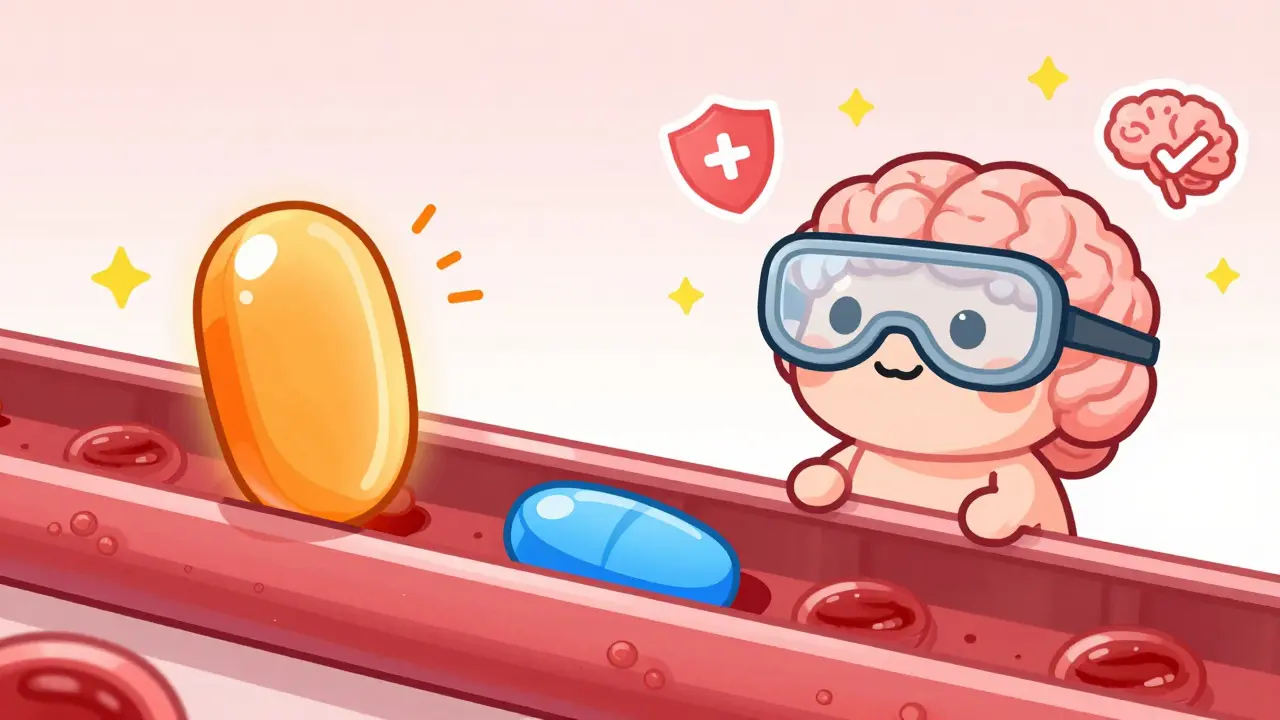
Not all statins are the same. Some cross the blood-brain barrier more easily than others. This is where the difference between lipophilic and hydrophilic statins matters.
Lipophilic statins-like atorvastatin (Lipitor), simvastatin (Zocor), and lovastatin (Mevacor)-are fat-soluble. That means they can sneak into the brain. Hydrophilic ones-like pravastatin (Pravachol) and rosuvastatin (Crestor)-are water-soluble. They mostly stay in the bloodstream and don’t enter the brain as easily.
A 2023 study in the Journal of the American College of Cardiology tracked 48,732 patients and found that those on lipophilic statins were 1.42 times more likely to report memory complaints than those on hydrophilic ones. But here’s the twist: when researchers tested actual memory and thinking skills using standardized tests, there was no real difference. The reports were mostly subjective-people *felt* like their memory was slipping, even if tests didn’t show it.
That’s a clue. It suggests something called the nocebo effect: if you expect side effects, you’re more likely to notice them. A 2020 study in the Journal of General Internal Medicine found that 28% of statin users said they had memory problems-but only 8% actually failed cognitive tests. The rest? Their brains were fine. Their worry made them think they weren’t.
When Do Symptoms Start-and Do They Go Away?
If you’re going to have a memory-related side effect, it usually shows up fast. Data from the FDA’s MedWatch system shows that about half of people who report cognitive issues notice them within 60 days of starting a statin. Reddit users echo this: in a 2023 analysis of over 1,200 posts, 68% said symptoms started within three months.
The good news? Most of the time, it’s reversible. In the same Reddit group, 74% of users who stopped their statin saw improvement within four weeks. A 2003 study from UC San Diego found that 56% of patients who stopped statins had their memory symptoms improve. And when doctors re-challenged them-had them take the statin again-4 out of 25 patients had the same problem return.
That pattern-onset shortly after starting, improvement after stopping, return after restarting-is the classic sign of a drug-related side effect. It’s not common, but it’s real enough for doctors to take seriously.
Why Do Some People Get It-and Others Don’t?
There’s no clear genetic test for who’s at risk. But we do know some patterns.
- Older adults (over 65) seem more likely to report memory issues, possibly because their brains are more sensitive to small changes in cholesterol or blood flow.
- People with existing mild cognitive decline may notice changes more easily.
- Those taking higher doses-especially of lipophilic statins-are more likely to report symptoms.
- Women may be more sensitive to these effects, though data is still limited.
One surprising clue came from a 2023 study in Nature Communications. Researchers found that about 37% of the short-term memory changes linked to statins might be caused not by brain penetration, but by two side effects: a slight drop in LDL (good) and a small rise in blood sugar. Both can affect how brain cells use energy. So even if the statin doesn’t enter the brain, it might still change how it functions.
What Should You Do If You Think Statins Are Affecting Your Memory?
Don’t stop cold turkey. Don’t panic. Do this instead:
- Track your symptoms. Write down when they started, what they feel like, and if they get worse with certain activities. Did you forget your keys? Lose your train of thought? Feel foggy after meals?
- Talk to your doctor. Don’t assume it’s the statin. Other things-sleep apnea, thyroid issues, vitamin B12 deficiency, even depression-can mimic memory problems. Your doctor should rule those out first.
- Try a switch. If you’re on simvastatin or atorvastatin, ask about switching to pravastatin or rosuvastatin. Many people find relief without losing cholesterol control.
- Take a short break. The American Academy of Neurology recommends a 4- to 6-week “statin holiday.” If your memory improves during that time, then comes back when you restart, it’s likely related.
- Reassess your risk. If you’re on a statin for primary prevention (no heart disease, just high cholesterol), the benefit is smaller. Talk to your doctor if the memory issues are affecting your daily life. But if you’ve had a heart attack or stroke, the protection statins offer is life-saving.
The Bigger Picture: Benefits vs. Risks
Let’s be clear: statins prevent heart attacks and strokes. They save lives. In the U.S., nearly 39 million people take them. For someone with a history of heart disease, the chance of avoiding a fatal event far outweighs the tiny risk of temporary memory fuzziness.
And here’s something most people don’t realize: the Alzheimer’s Association reports that 78% of U.S. doctors continue statins in patients with mild memory problems-unless the symptoms are severe and clearly tied to starting the drug. That’s because the long-term data is overwhelming. The Rotterdam Study followed over 12,000 people for 15 years and found statin users had a 27% lower rate of dementia.
So if you’re worried about memory loss, you’re not alone. But you’re also not alone in benefiting from statins. The goal isn’t to avoid them-it’s to use them wisely.
What’s Next?
Research is still evolving. The STATIN-COG trial, funded by the NIH and tracking 3,200 people over five years, should give us clearer answers by 2026. Until then, the best advice is simple: if you notice changes, speak up. Don’t ignore them. Don’t assume they’re normal aging. And don’t quit without talking to your doctor.
Your heart needs you on this medication. Your brain might just need a different kind of statin-or a short pause-to feel like itself again.
8 Comments
Natali Shevchenko
It's wild how much we project onto our own brains these days. I mean, we're living in an age where forgetting where you put your keys is a full-blown existential crisis, and statins get blamed because they're convenient. The brain doesn't operate like a car engine-you can't just swap out a part and expect everything to run smoother. Cholesterol isn't the enemy. It's the mortar between the bricks. And yeah, maybe some people feel foggy, but that doesn't mean the statin is the culprit. Could be sleep. Could be stress. Could be the fact that we're all staring at screens until 2 a.m. and calling it self-care.
What's more concerning is how fast we jump to stopping medication based on anecdotal fear. I've seen people quit blood pressure meds because they 'felt weird'-only to end up in the ER six months later. Statins are one of the most studied drugs in history. The data is overwhelming. If you're worried, talk to your doctor. Don't just Google it and decide you're immune to heart disease because you eat kale.
Johny Prayogi
Yessss this is so real 🙌 I switched from Lipitor to Crestor last year and my brain went from cotton candy to a MacBook Pro on turbo mode. No more forgetting where I parked. No more staring at the fridge like it’s a puzzle. And guess what? My LDL dropped even lower. If you’re on a lipophilic statin and feeling foggy? Just swap. It’s not a big deal. Your doctor will help. You don’t need to suffer through brain fog for a number on a lab report.
Bryan Woody
Oh here we go again. Another post telling people statins are fine because 'the data says so.' Yeah, the data says smoking was fine too, until people started dying. You know what the data doesn’t measure? The daily humiliation of forgetting your kid’s name at the school pickup. The panic when you walk into a room and can’t remember why. That’s not 'nocebo.' That’s your life. And if your doctor says 'it’s all in your head' one more time, I hope they choke on their Starbucks oat milk latte. Not everyone has the luxury of being a healthy 50-year-old with no family history. Some of us are 72 and trying to hold onto our last shred of dignity. Don’t talk to me about 'long-term studies' when I can’t remember what I had for breakfast.
Paul Cuccurullo
Thank you for writing this with such clarity. It’s easy to get swept up in fear, especially when the internet is full of horror stories. But the truth is, we’re not just talking about cholesterol-we’re talking about longevity. Statins have kept my grandfather out of the hospital for 12 years. He’s 84. He still gardens. He still argues with me about politics. He doesn’t remember every detail of his childhood, sure-but he remembers who I am. And that’s worth more than any anecdote about memory lapses. If you’re on a statin and worried, don’t stop. Talk to your doctor. Try a different one. Give it time. But don’t let fear override science. Your heart doesn’t care about your fears. It just wants to keep beating.
Casey Tenney
Stop taking statins if you’re worried. Your brain matters more than your LDL. End of story.
Sandy Wells
I read this whole thing and honestly I’m just tired. People panic over everything now. You take a pill, you forget your wife’s birthday, suddenly it’s a conspiracy. Have you tried sleeping? Or maybe not eating 12 donuts a day? Statins are fine. If you’re having side effects, maybe you shouldn’t be on them. But don’t turn this into a national crisis because you’re bad at remembering where you put your phone.
Jackie Tucker
How quaint. A 2022 meta-analysis. How 2022 of you. Did you also check the weather forecast before believing it? The real issue isn’t statins-it’s the medical industrial complex’s obsession with quantifying human experience into a single number. You reduce a person’s cognitive vitality to an LDL value and then wonder why people feel alienated from their own bodies. The brain isn’t a cholesterol meter. It’s a symphony. And if you’re playing Beethoven while your cells are on a low-fat diet… well, maybe the music changes. But hey, at least your arteries are clean. You’re welcome, civilization.
Chris Dwyer
Hey everyone-just wanted to say this: if you’re scared, you’re not alone. I was on simvastatin for 8 months and started forgetting my own birthday. Not a joke. I had to write it on my hand. I talked to my doc, switched to pravastatin, and within 3 weeks, I was back to normal. No drama. No panic. Just a simple swap. And my numbers? Better than before. Don’t let fear keep you from talking to your doctor. You’re not weak for noticing something’s off. You’re smart. And you deserve to feel like yourself again. Seriously-message me if you want help finding a doc who gets it. We’re in this together.