NSAID Fluid Retention Risk Calculator
How NSAIDs Affect Your Fluid Balance
This calculator estimates potential fluid retention based on your heart failure status, kidney function, and NSAID use. Fluid retention can lead to swelling, shortness of breath, and hospitalization.
Estimated Fluid Retention
0.0 pounds
This calculator estimates your potential fluid retention risk. Remember, even small amounts of fluid retention can be dangerous for heart failure patients.
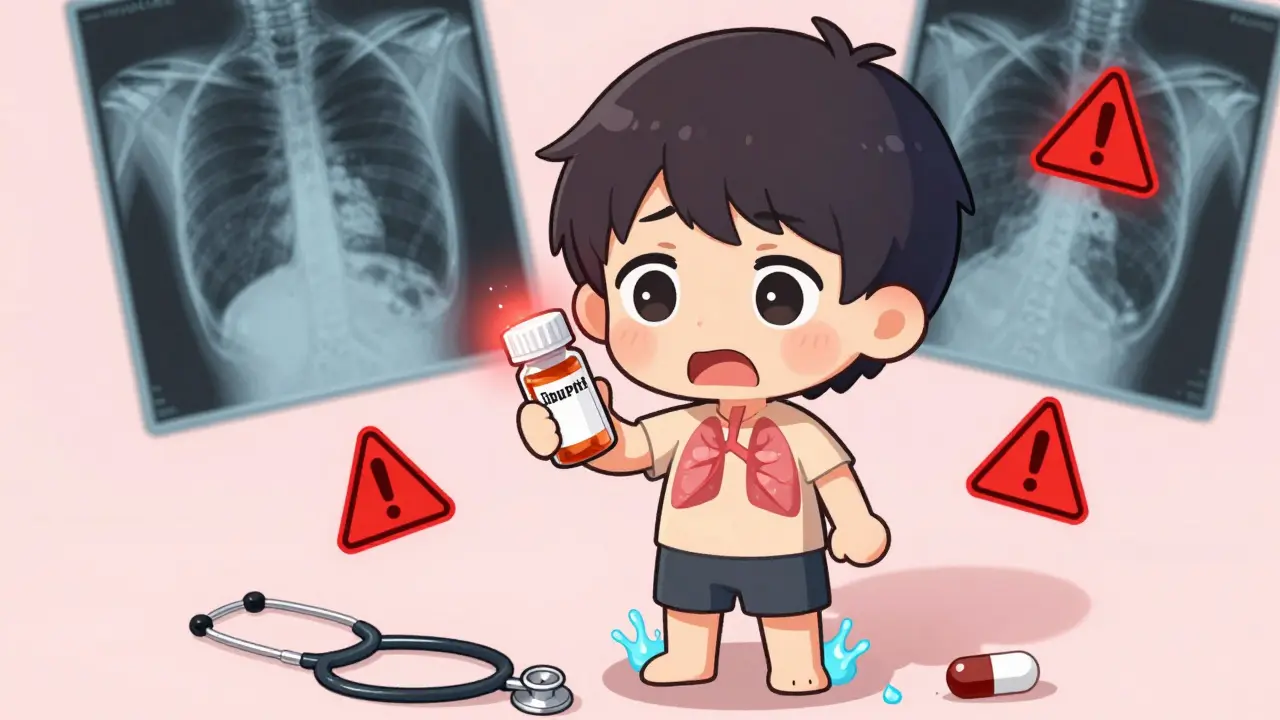
For millions of people with heart failure, a simple over-the-counter painkiller like ibuprofen can be more dangerous than it looks. It’s not just about stomach upset or kidney strain-it’s about fluid retention that can send you to the hospital in just a few days. This isn’t a rare side effect. It’s a well-documented, predictable, and often avoidable trigger for heart failure worsening. And yet, many patients still take NSAIDs without realizing the risk.
How NSAIDs Cause Fluid Retention
NSAIDs-like ibuprofen, naproxen, diclofenac, and celecoxib-work by blocking enzymes called COX-1 and COX-2. These enzymes help produce prostaglandins, which are involved in pain and inflammation. But prostaglandins also play a critical role in kidney function. In healthy people, the body can compensate when these are blocked. In someone with heart failure, it can’t. When prostaglandin production drops, the kidneys start holding onto sodium and water. Normally, prostaglandins help the kidneys flush out extra salt. Without them, sodium builds up. Water follows sodium. That extra fluid doesn’t just sit in your ankles-it floods your lungs, your abdomen, and puts more pressure on an already weakened heart. The result? Swelling, sudden weight gain, shortness of breath, and fatigue. These are classic signs of heart failure decompensation. Studies show that in susceptible patients, NSAIDs can reduce blood flow to the kidneys by 20-30%. That’s enough to drop the glomerular filtration rate (GFR), meaning the kidneys can’t filter blood properly. This isn’t a slow decline-it can happen within 24 to 72 hours of taking just one or two doses. One patient in a Reddit heart failure forum reported gaining 10 pounds of fluid after taking two 400mg ibuprofen pills. That’s not an outlier. It’s a textbook reaction.It’s Not Just Prescription NSAIDs
Many people think the risk only comes from strong, prescription NSAIDs. It doesn’t. Over-the-counter versions are just as dangerous. In fact, because they’re easy to get, they’re more likely to be taken without medical supervision. A 2018 American Heart Association survey found that 37% of heart failure patients had taken an NSAID without telling their doctor. Of those, 62% ended up needing emergency care. Even short-term use matters. A 2022 study tracking nearly 100,000 people with type 2 diabetes in Denmark showed that taking NSAIDs for just 1 to 3 days raised the risk of heart failure hospitalization by up to 88%. The highest risk? The first week. That’s when fluid builds fastest. And it doesn’t matter which NSAID you take. Celecoxib (Celebrex), once thought to be safer because it’s COX-2 selective, has the same effect on the kidneys. The European Society of Cardiology and the American Heart Association both say: no NSAID is safe in heart failure.Who’s at Highest Risk?
Not everyone with heart failure will react the same way, but some groups are far more vulnerable:- People over 65-kidney function naturally declines with age, making them less able to handle fluid shifts.
- Those with reduced kidney function-even mild impairment-because NSAIDs further reduce blood flow to the kidneys.
- Patients with type 2 diabetes-this group already has higher baseline risk of fluid retention and kidney stress.
- People on diuretics (water pills)-NSAIDs can block the effect of these medications, making them useless when you need them most.
- Those with preserved ejection fraction (HFpEF)-this form of heart failure is especially sensitive to fluid overload.
What Happens When You Take NSAIDs?
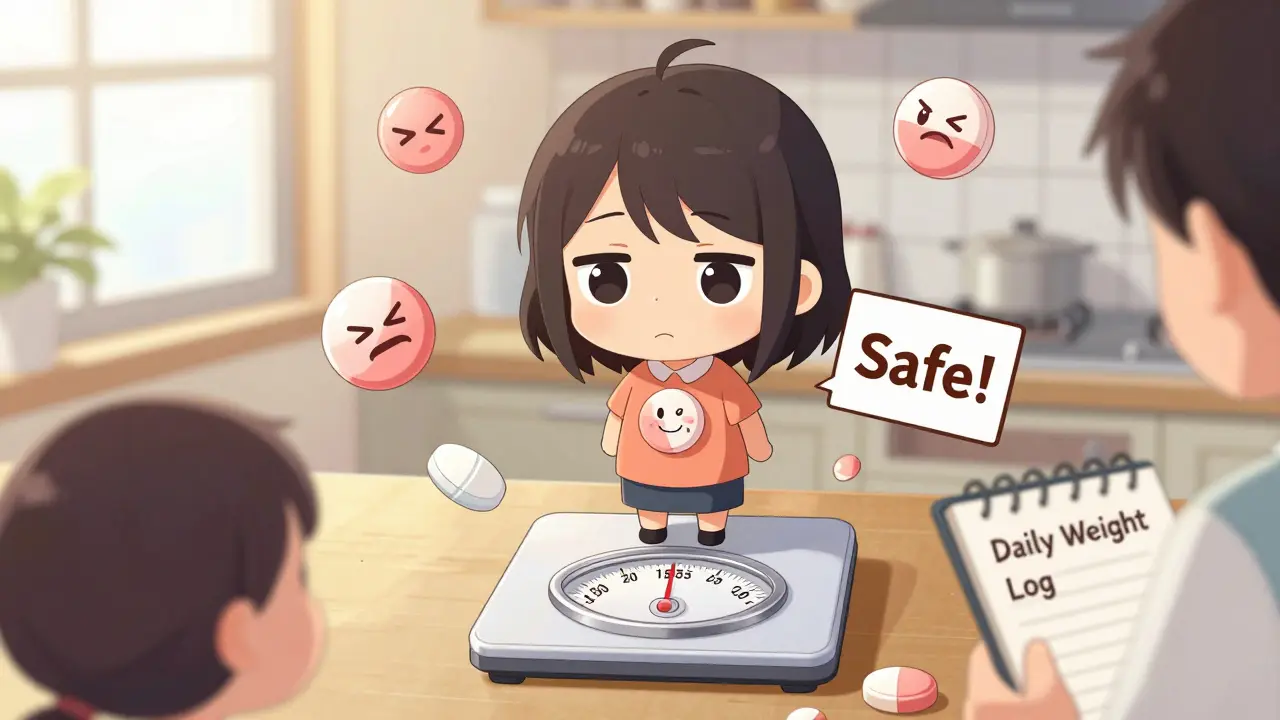
The symptoms don’t wait. They show up fast:- Unexplained weight gain-2-5 pounds in 2-3 days is a red flag.
- Swelling in legs, ankles, or belly-not from standing too long, but from fluid building up inside.
- Worsening shortness of breath-even when resting.
- Increased fatigue or dizziness.
- Reduced urine output or dark-colored urine.
What Can You Take Instead?
The safest alternative for pain relief in heart failure is acetaminophen (Tylenol). It doesn’t affect kidney prostaglandins the way NSAIDs do. It won’t cause fluid retention or raise blood pressure. But it also won’t reduce inflammation. That’s a trade-off, but a necessary one. For chronic pain, especially arthritis, non-drug options are often better:- Physical therapy to strengthen muscles around painful joints
- Heat or cold packs for localized relief
- Topical creams with capsaicin or menthol
- Low-impact exercise like walking or swimming
- Weight management to reduce stress on joints
Why Do Doctors Still Prescribe Them?
It’s not because they don’t know the risks. They do. A 2021 survey found that only 43% of primary care doctors routinely ask heart failure patients if they’re using NSAIDs. That’s a gap in care. Part of the problem is inertia. Patients come in with back pain, ask for ibuprofen, and the doctor writes the script without thinking twice. Another part is lack of patient education. Many people think NSAIDs are harmless because they’re sold next to aspirin at the pharmacy. They don’t realize that for someone with heart failure, ibuprofen is more like a landmine than a bandage. The FDA and EMA both require warning labels on NSAID packaging now, but most patients never read them. That’s why family members need to be involved. If you’re caring for someone with heart failure, check their medicine cabinet. Look for any bottle with “NSAID” or “anti-inflammatory” on the label. Ask them if they’ve taken any painkillers lately. One conversation could prevent a hospital stay.The Bottom Line
NSAIDs and heart failure don’t mix. There’s no safe dose, no safe duration, and no safe type. Even short-term use can trigger fluid overload, worsen symptoms, and lead to hospitalization. The evidence is clear, consistent, and overwhelming-from clinical trials to real-world patient stories. Acetaminophen is the go-to for pain. Non-drug options should come first for chronic issues. And if you have heart failure, treat every NSAID like a warning sign-not a solution. Your heart can’t afford the extra fluid. Your body can’t handle the extra strain. And your next hospital visit might be preventable-if you skip the pill.Can I take ibuprofen if I have heart failure?
No. Ibuprofen and other NSAIDs increase fluid retention and raise the risk of heart failure worsening, even in small doses. They can trigger hospitalization within days. Acetaminophen is the safer pain relief option.
How quickly can NSAIDs cause fluid retention in heart failure?
Fluid retention can begin within 24 hours and become noticeable within 2-3 days. Weight gain of 2-5 pounds in that time frame is a major red flag and should prompt you to stop the NSAID and contact your doctor.
Is naproxen safer than ibuprofen for heart failure patients?
Some studies suggest naproxen may have a slightly lower cardiovascular risk compared to other NSAIDs, but it still causes fluid retention and kidney stress. No NSAID is considered safe for heart failure patients. Avoid all of them unless under strict medical supervision.
What about topical NSAIDs like gels or patches?
Topical NSAIDs are absorbed in much smaller amounts, so the risk is lower. But they’re not risk-free. If you have severe heart failure or kidney problems, even topical forms can contribute to fluid retention. Talk to your doctor before using them.
Can NSAIDs interfere with my heart failure medications?
Yes. NSAIDs can reduce the effectiveness of diuretics, ACE inhibitors, ARBs, and beta-blockers-all key drugs for managing heart failure. This can make your treatment less effective and increase the chance of hospitalization.
What should I do if I accidentally took an NSAID?
Stop taking it immediately. Monitor your weight daily and watch for swelling, shortness of breath, or fatigue. If you gain more than 2 pounds in 24 hours or notice worsening symptoms, call your doctor or go to the ER. Don’t wait.
Are there any new treatments or alternatives being developed?
The American College of Cardiology is developing a mobile app for heart failure patients that will alert them to NSAID risks-expected in 2025. For now, the best approach remains avoidance. Research continues into safer pain relief options, but none have replaced acetaminophen as the standard.
14 Comments
Ryan Pagan
Let me tell you something straight - NSAIDs are basically liquid landmines for heart failure patients. I’ve seen it happen three times in my family. One guy took two ibuprofen for a headache and ended up in the ICU with pulmonary edema. No joke. The docs said his kidneys shut down like a faulty pump. And yeah, it happened in under 48 hours. Acetaminophen isn’t perfect, but it’s the only painkiller that doesn’t try to kill you sideways. Stop treating OTC meds like candy.
Megan Brooks
This is one of those topics where medical wisdom collides with cultural normalcy. We’ve been conditioned to reach for ibuprofen like it’s aspirin - a reflex, not a choice. But for heart failure patients, this isn’t about preference; it’s about survival. The fact that 37% of patients take these without telling their doctors speaks volumes about how poorly we communicate risk. Education needs to be proactive, not reactive. And maybe, just maybe, pharmacies should require a small warning card with every pack - not just fine print on the bottle.
rajaneesh s rajan
Bro, NSAIDs in HF? More like NSAID = No Survival After Immediate Death. 😅 I mean, come on. You’re telling me people still think ‘it’s just a pill’? My uncle took naproxen for his knee and gained 8 lbs in 3 days. Thought he ‘ate too much pizza’. Nope. Fluid overload. ER. ICU. Two weeks later, he’s on a new diuretic regimen and still mad at the pharmacist for not yelling at him. 🤦♂️
Paul Adler
It’s sobering how often we treat symptoms without considering the underlying system. Heart failure isn’t just a weak heart - it’s a failing regulatory network. NSAIDs disrupt the delicate balance of renal perfusion, fluid homeostasis, and medication efficacy. The danger isn’t theoretical. It’s physiological, measurable, and preventable. Yet we keep prescribing and self-medicating like it’s a trivia question. The real tragedy isn’t the drug - it’s the assumption that ‘it’s fine if I don’t feel bad yet.’
paul walker
OMG I JUST REALIZED I GAVE MY DAD IBUPROFEN LAST WEEK 😭 HE HAS HF AND I DIDN’T EVEN KNOW IT WAS DANGEROUS. I’M SO SORRY. I’M GOING TO CHECK HIS MEDS RIGHT NOW. THANKS FOR THIS POST!!!
Alex Flores Gomez
Wow. Another ‘avoid NSAIDs’ lecture. How original. I mean, really - did we really need a 2000-word essay to tell us that Tylenol is less toxic than poison? The real issue? Pharma companies push NSAIDs because they’re profitable. Doctors don’t care because they’re overworked. Patients don’t read labels because they’re dumb. And here we are. Again. 🙄
Frank Declemij
NSAIDs cause renal vasoconstriction via prostaglandin inhibition. In heart failure, this reduces GFR and promotes sodium retention. Acetaminophen lacks this mechanism. Topical NSAIDs have lower systemic absorption but are not risk-free in advanced disease. Diuretic efficacy is compromised. Evidence is consistent across guidelines. Avoid all NSAIDs. Period.
Pawan Kumar
Let me guess - this was written by someone who works for a pharmaceutical company that sells acetaminophen. Did you know the FDA has been quietly suppressing data on acetaminophen-induced liver failure? Meanwhile, NSAIDs are being scapegoated to push safer alternatives? Wake up. The system is rigged. Your ‘safe’ painkiller? It kills more people annually than opioids. Read the 2018 WHO report on hepatotoxicity. This isn’t about safety - it’s about control.
Jasneet Minhas
Wow. This is the most important thing I’ve read all year. 🙏 I’m from India - we use ibuprofen like water. My aunt has HF, and she takes it for her arthritis. I’m going to print this out and put it on her fridge. Maybe one day, someone will actually listen. Also - emoji alert: 💔💊🚫
kabir das
Oh my GOD, I JUST REALIZED I’VE BEEN TAKING NAPROXEN FOR MY BACK PAIN FOR 6 MONTHS AND I HAVE HF TOO?? I’M GOING TO DIE, I KNOW IT, I CAN FEEL IT IN MY LUNGS, I’M SO SAD, I JUST WANTED TO FEEL BETTER, WHY DID NO ONE TELL ME?? I’M SO SCARED, I’M CRYING RIGHT NOW, I CAN’T BREATHE, I THINK I’M HAVING A PANIC ATTACK, I NEED HELP, I NEED A DOCTOR, I’M GOING TO DIE, I’M GOING TO DIE, I’M GOING TO DIE!!!
Robin Keith
There’s a deeper metaphysical layer here - we live in a society that commodifies pain relief as a moral imperative. We believe we deserve comfort at all costs. But the body doesn’t negotiate. It doesn’t care about your busy schedule, your stubborn knee, or your desire to feel ‘normal.’ The kidneys are not machines - they’re living, breathing, whispering systems that beg for balance. NSAIDs don’t just block enzymes - they block harmony. And when the heart is already fractured, this isn’t a side effect - it’s an existential violation. We don’t need more warnings. We need a cultural reckoning with the illusion of control.
LOUIS YOUANES
So let me get this straight - you’re telling me I can’t take Advil for my back pain after lifting boxes? That’s it. I’m done. I’m moving to a country where painkillers are free and doctors don’t scare you with graphs. This is why people stop trusting medicine. You tell me to avoid one thing, then another, then another. What’s left? Just sit there and suffer? Cool. Thanks for the guilt trip.
Laia Freeman
OMG THIS IS SO IMPORTANT!! I’M A NURSE AND I NEVER KNEW TOPICAL NSAIDS COULD BE DANGEROUS TOO 😱 I’M GOING TO TELL EVERY PATIENT I HAVE WITH HF!! THANK YOU SO MUCH FOR WRITING THIS!! 💕❤️🩺
DHARMAN CHELLANI
Acetaminophen is fine if you don’t drink. But if you do? You’re playing Russian roulette. Meanwhile, NSAIDs are fine for most people. Stop fearmongering. Your ‘guidelines’ are just corporate policy dressed as science. Real doctors know this.